
Does It Run in Families Like a Single Gene?
This reading contains every idea and every piece of evidence needed for today's decision. The research links at the end are optional.
Why this matters
The threshold model explains how many small risks can create a discrete developmental outcome.
The question you are trying to answer
Can one small weight tip the scale by itself?
Begin with the idea you already earned
A syndrome claim requires a repeatable pattern of features, not a cleft plus a familiar gene name.
Study the analogy before the biology
- Can one small weight tip the scale by itself?
- Why might two people carry different combinations?
- What changes when the total crosses the line?
Turn the analogy into three rules
Limit: Biological liability cannot be measured as literal weights in one person.
Map those rules onto the biology
Multifactorial means that more than one factor contributes. Liability is the combined underlying tendency toward an outcome.
If total liability crosses a developmental threshold, a cleft can occur. Below the threshold, it does not.
The model explains risk patterns but does not give one exact cause for Mateo.
Read Mateo's labeled case evidence
Mateo's pedigree does not show clean vertical transmission.
A fully penetrant dominant model is a poor fit.
Isolated cleft risk is influenced by many genetic loci and non-genetic factors.
Multiple contributors are expected.
A person can carry risk factors without developing a cleft.
Penetrance is not all-or-none for each risk factor.
Make the concrete decision
You are selecting the inheritance model for the case board.
The board offers either one dominant allele with complete penetrance or a multifactorial threshold model.
- Choose the multifactorial threshold model.
- Choose complete dominant inheritance despite unaffected parents.
- Say genetics cannot affect isolated clefts.
Choose the model and cite both pedigree and population evidence.
Claim ceiling: You may choose the best-fit model. You may not calculate Mateo's exact liability or identify each contributor.
Write the 10-year takeaway
Most isolated clefts fit a multifactorial threshold model in which many small influences add to risk.
- Why is the outcome discrete even when liability is graded?
- What evidence makes simple dominant inheritance less likely?
Glossary in plain English
A lesson term defined by the surrounding model and case evidence.
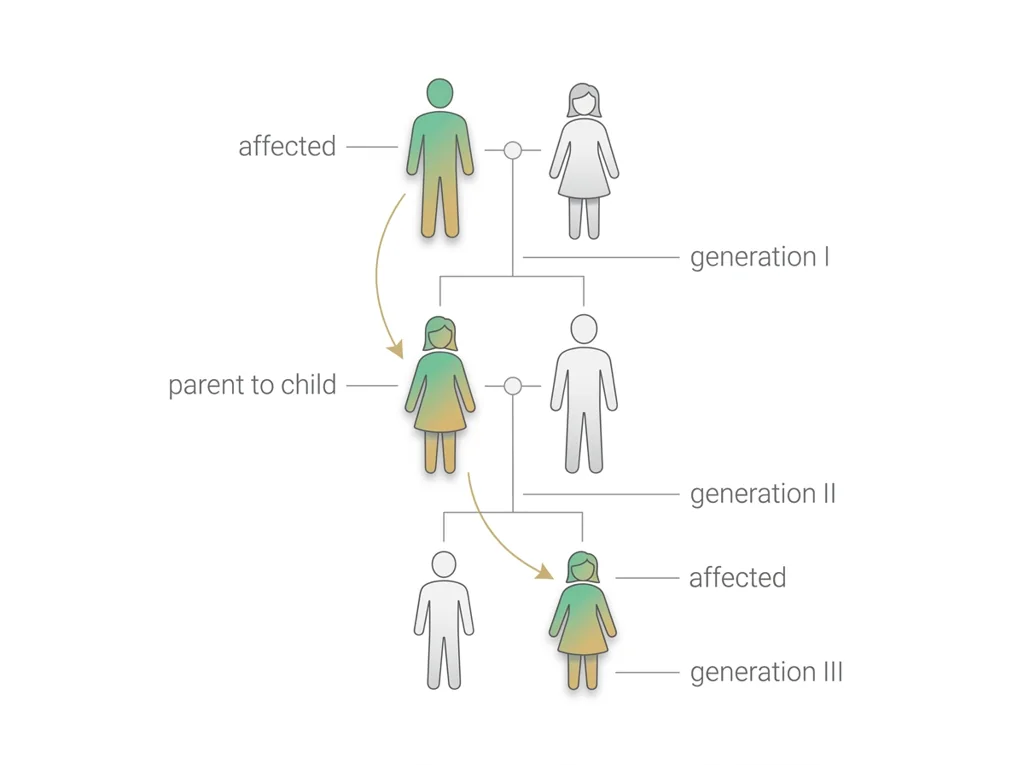
A trait appearing in nearly every generation, passed directly from parent to child, the signature pattern of a dominant inheritance.
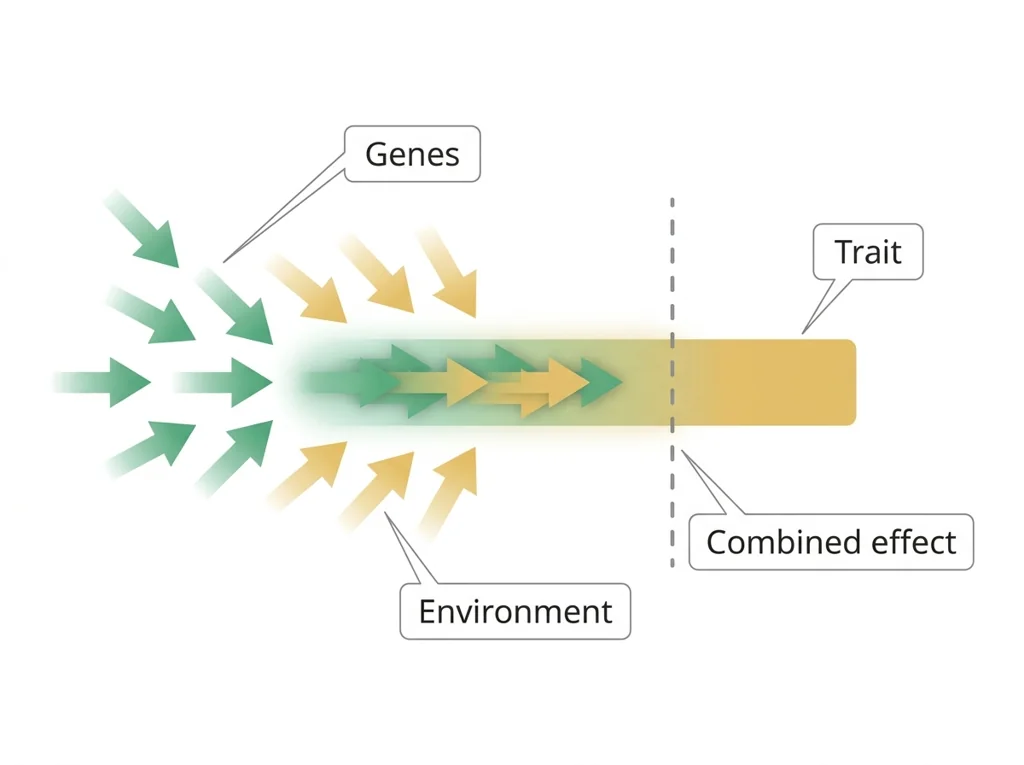
A trait caused by many small genetic and environmental factors adding up together, rather than by a single gene alone.
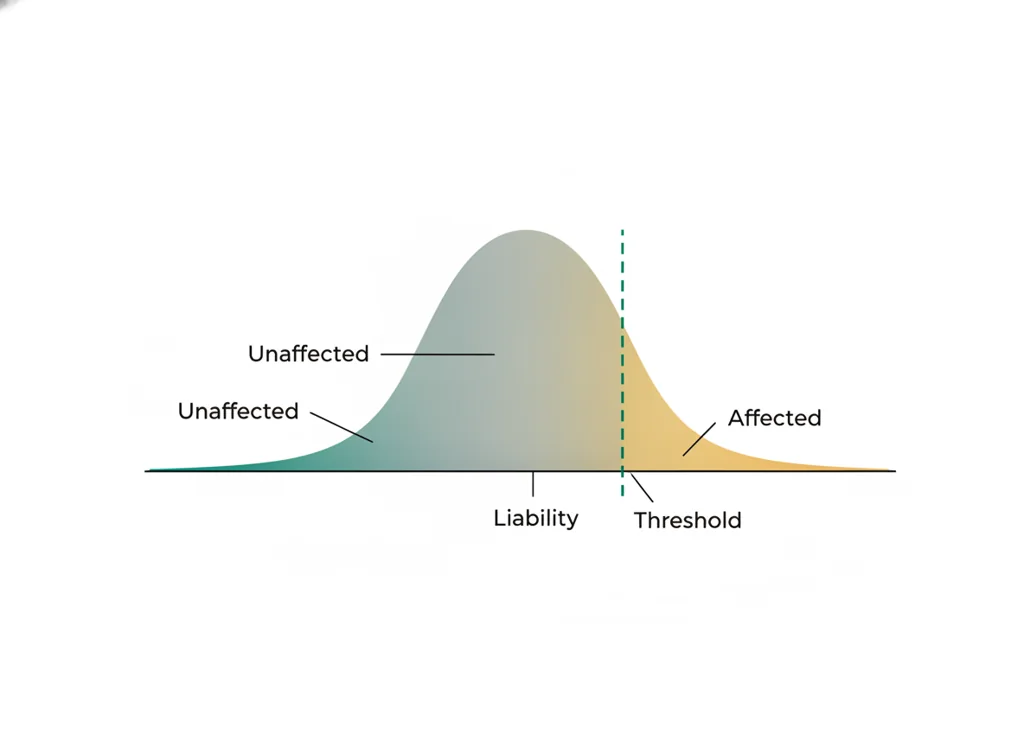
The idea that a trait appears only when a person's combined liability from genes and environment crosses a set line.
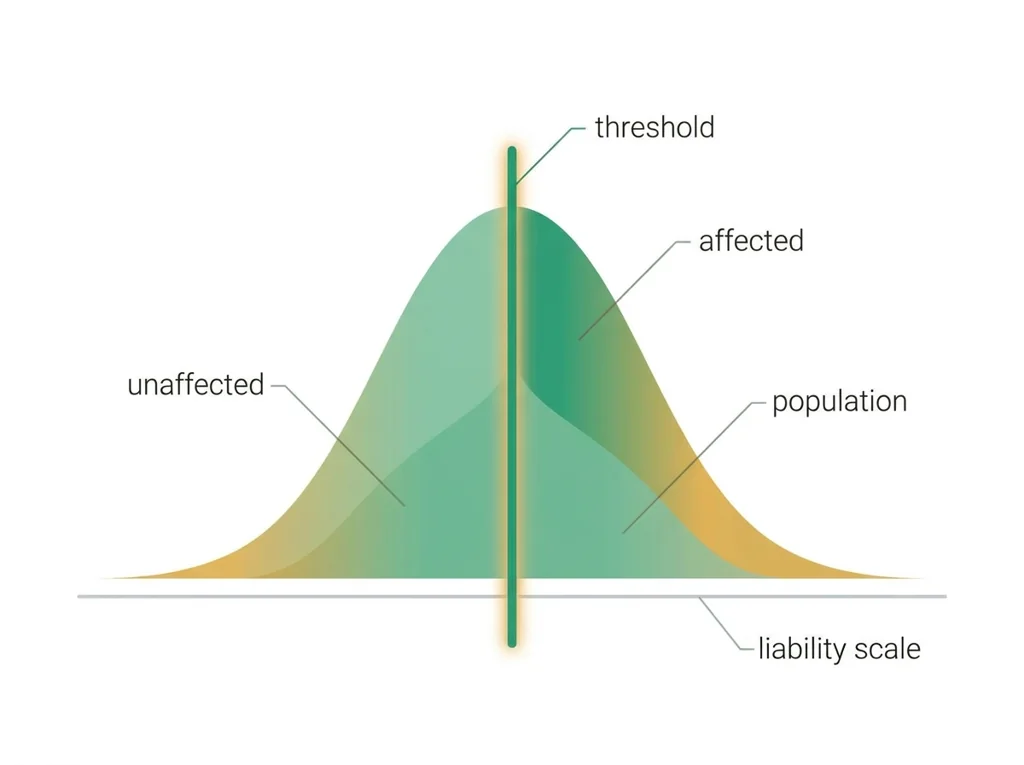
A person's total built-up risk for a trait from all their genetic and environmental factors combined, often pictured on a continuous scale.
Research citation trail (advanced)
You do not need these papers or database records to finish the lesson. They document where the plain-language explainer's claims come from and are intended for teachers or advanced readers.