
What Is Mateo's Complete Genetic Story?
This reading contains every idea and every piece of evidence needed for today's decision. The research links at the end are optional.
Why this matters
The final lesson rewards scientific restraint and prepares anatomy, clinical care, and experimental design.
The question you are trying to answer
Which items are direct case facts?
Begin with the idea you already earned
An ethical decision weighs benefit, harm, autonomy, heritability, access, and alternatives before technical possibility.
Study the analogy before the biology
- Which items are direct case facts?
- Which items come from research models?
- Which claim remains unresolved without a lab result?
Turn the analogy into three rules
Limit: A medical case conference is collaborative care, not an adversarial trial.
Map those rules onto the biology
Mateo's pedigree and phenotype are direct case evidence. They support an isolated-appearing, multifactorial model.
IRF6 research provides a detailed example from gene and enhancer to periderm and tissue fusion.
The case file does not include a proven pathogenic variant for Mateo. The responsible conclusion uses IRF6 to explain possibility, not to invent diagnosis.
Read Mateo's labeled case evidence
Mateo has an isolated-appearing cleft and no strong family pattern in the composite file.
The case fits a multifactorial model better than a proven dominant syndrome.
IRF6 coding and regulatory studies explain how epithelial differentiation and cleft risk can change.
IRF6 is a strong pathway exemplar.
No pathogenic IRF6 result or single causal exposure is supplied for Mateo.
The individual cause remains open.
Make the concrete decision
You are the lead geneticist at the final conference.
The team must approve one conclusion that will be shared with every other domain.
- Use a multifactorial, IRF6-informed model while stating that Mateo's cause is unproven.
- Declare a pathogenic IRF6 variant that was never tested.
- Say genetics contributes no useful information.
Choose the conclusion and cite case evidence plus the molecular limit.
Claim ceiling: You may synthesize the best-supported model. You may not add a molecular diagnosis absent from the case file.
Write the 10-year takeaway
Mateo's strongest genetic story is multifactorial and evidence-bounded: IRF6 explains a pathway, not a proven individual cause.
- What is direct evidence about Mateo?
- What useful IRF6 claim remains below the ceiling?
Glossary in plain English
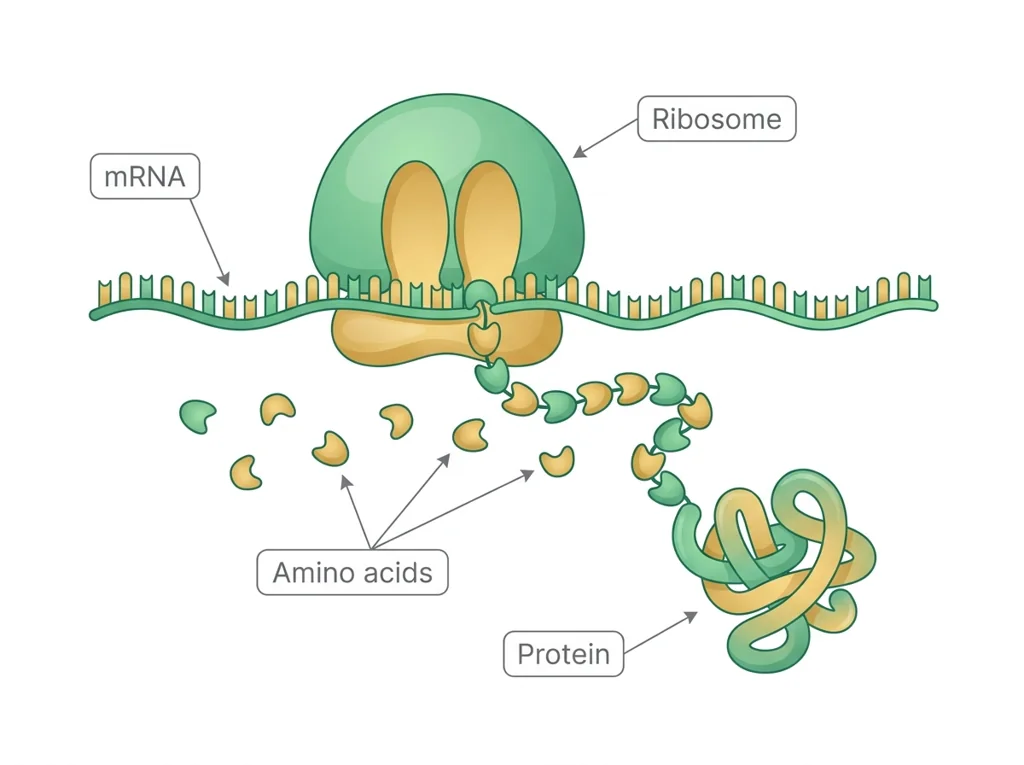
Building a molecule in the cell, as in protein synthesis (making a protein from mRNA).
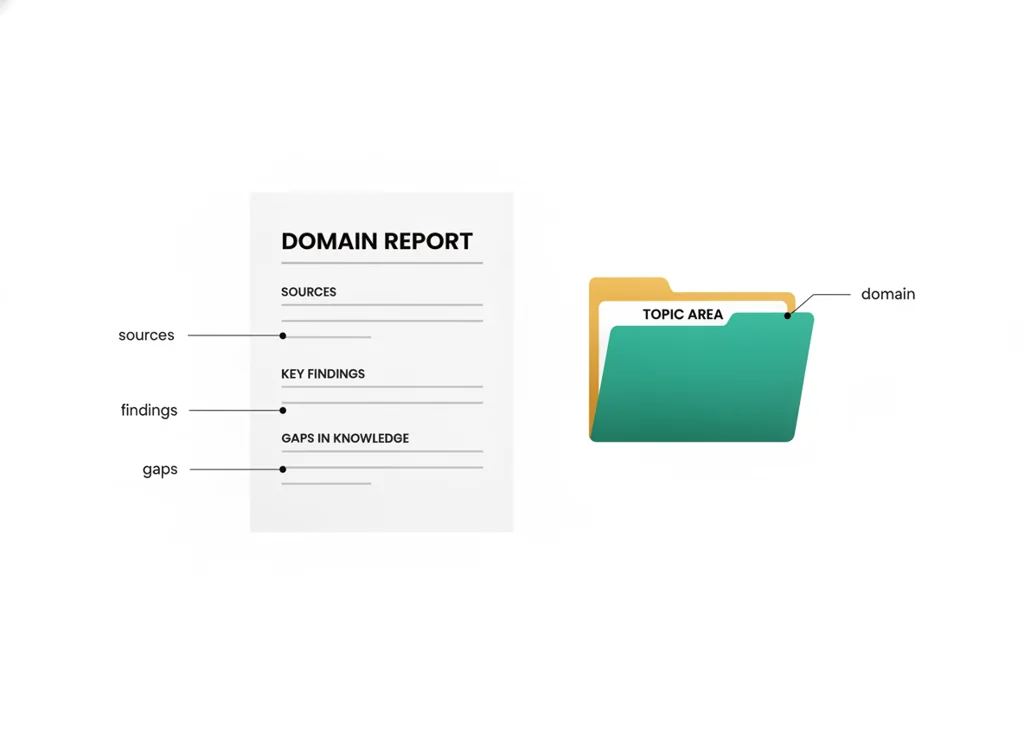
A focused summary of the current research and evidence within one specific topic area, used to organize knowledge before drawing conclusions.
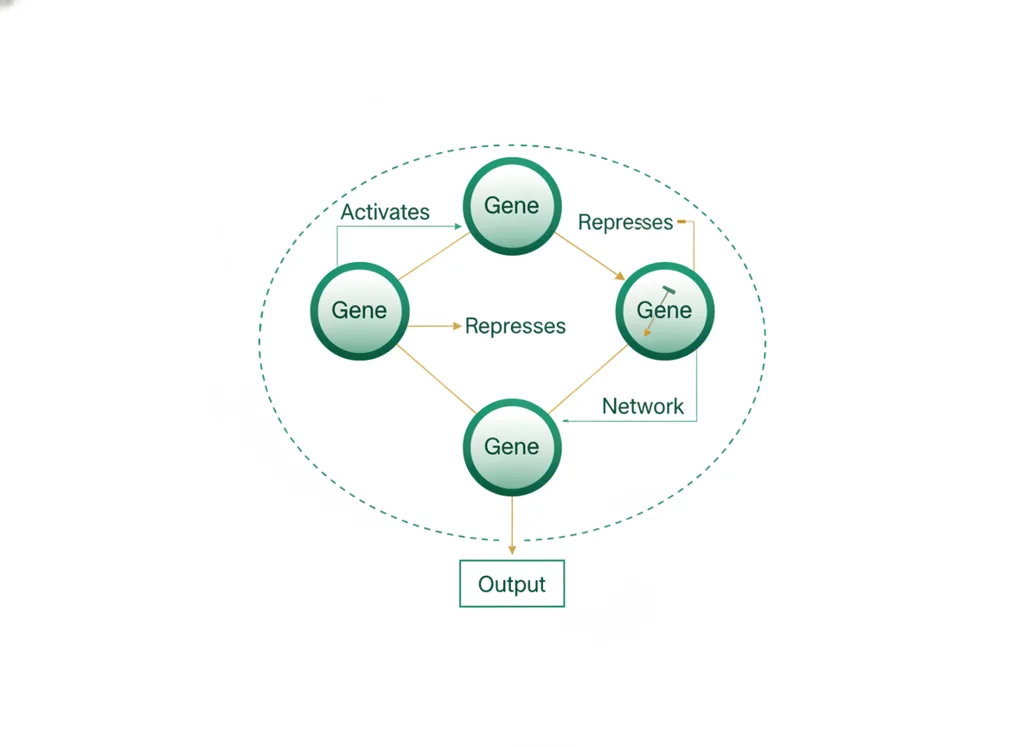
The web of genes that turn each other on and off to control a process such as palate fusion.
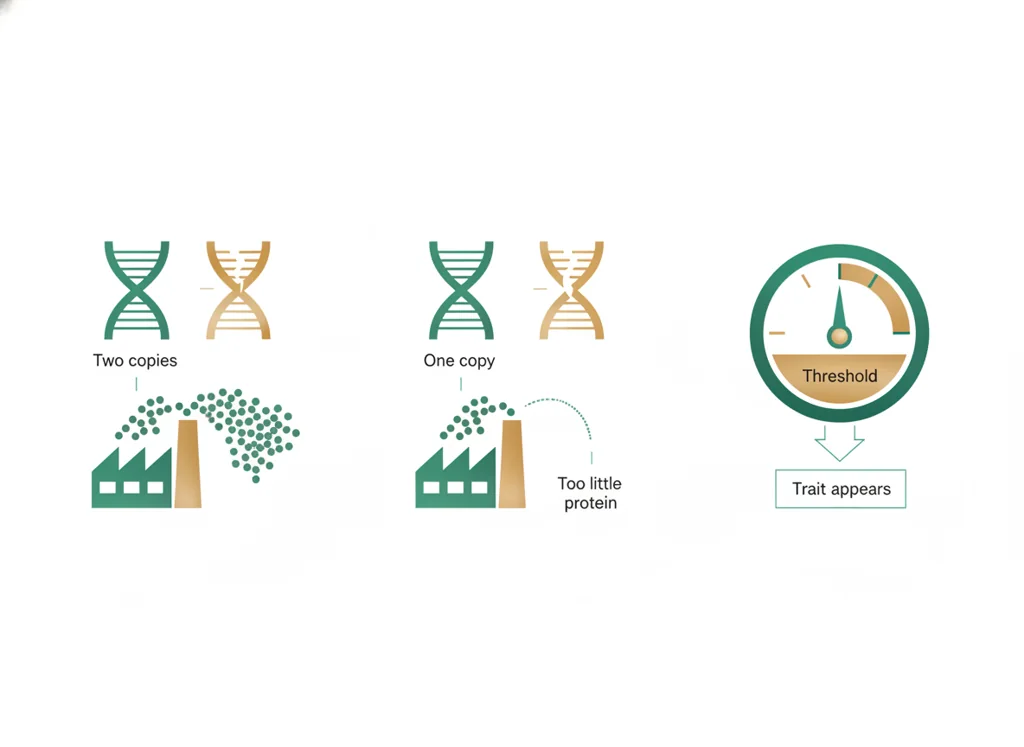
When one working copy of a gene cannot make enough product on its own, so losing the second copy causes the trait.
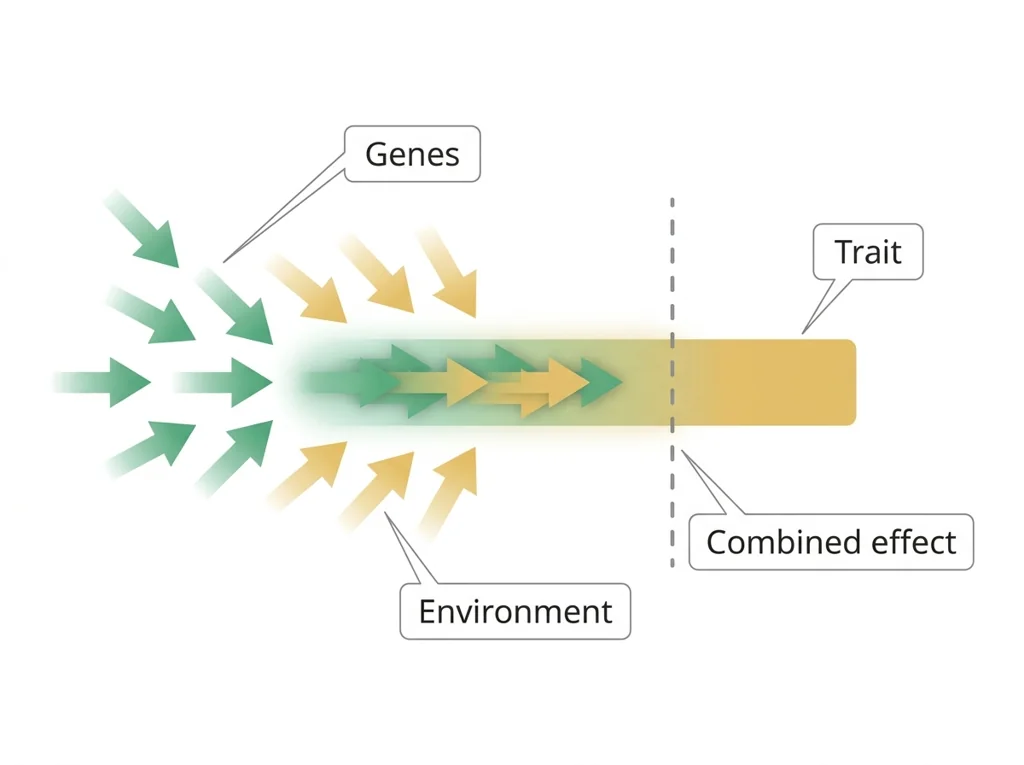
A trait caused by many small genetic and environmental factors adding up together, rather than by a single gene alone.
Research citation trail (advanced)
You do not need these papers or database records to finish the lesson. They document where the plain-language explainer's claims come from and are intended for teachers or advanced readers.