
What Is the Family's Recurrence Risk?
This reading contains every idea and every piece of evidence needed for today's decision. The research links at the end are optional.
Why this matters
Good counseling combines numbers, uncertainty, and respect for family choices.
The question you are trying to answer
How does a forecast help if it is not certain?
Begin with the idea you already earned
Population differences reflect allele frequencies, effect sizes, environments, and sampling, not biological ranking of groups.
Study the analogy before the biology
- How does a forecast help if it is not certain?
- What information changes the forecast?
- How should uncertainty be communicated?
Turn the analogy into three rules
Limit: Recurrence risk is based on genetic and family data, not weather systems.
Map those rules onto the biology
Recurrence risk is the chance that a trait occurs again in a family. Empiric estimates come from many similar families.
The best estimate depends on the cleft pattern, affected relatives, ancestry, and any confirmed molecular diagnosis.
A range is more honest than a promise. A real family receives individualized counseling from qualified clinicians.
Read Mateo's labeled case evidence
Mateo's case is isolated-appearing with unaffected parents.
Syndrome-specific dominant risk is not established.
Empiric recurrence estimates come from outcomes in similar families.
The number is evidence-based but population-level.
A confirmed pathogenic familial variant would change the counseling model.
Molecular results can refine recurrence risk.
Make the concrete decision
You are the genetic counselor meeting Mateo's parents.
They ask for one guaranteed percentage before deciding about future pregnancy.
- Give a sourced empiric range and explain what could refine it.
- Promise an exact outcome.
- Refuse to discuss uncertainty.
Choose the counseling approach and cite case fit plus uncertainty.
Claim ceiling: You may provide an educational empiric range from the supplied source. You may not personalize medical advice beyond the composite evidence.
Write the 10-year takeaway
Recurrence counseling uses empiric family data and uncertainty; it gives a range, not a promise.
- What evidence could refine recurrence risk?
- Why is an empiric estimate not a guarantee?
Glossary in plain English
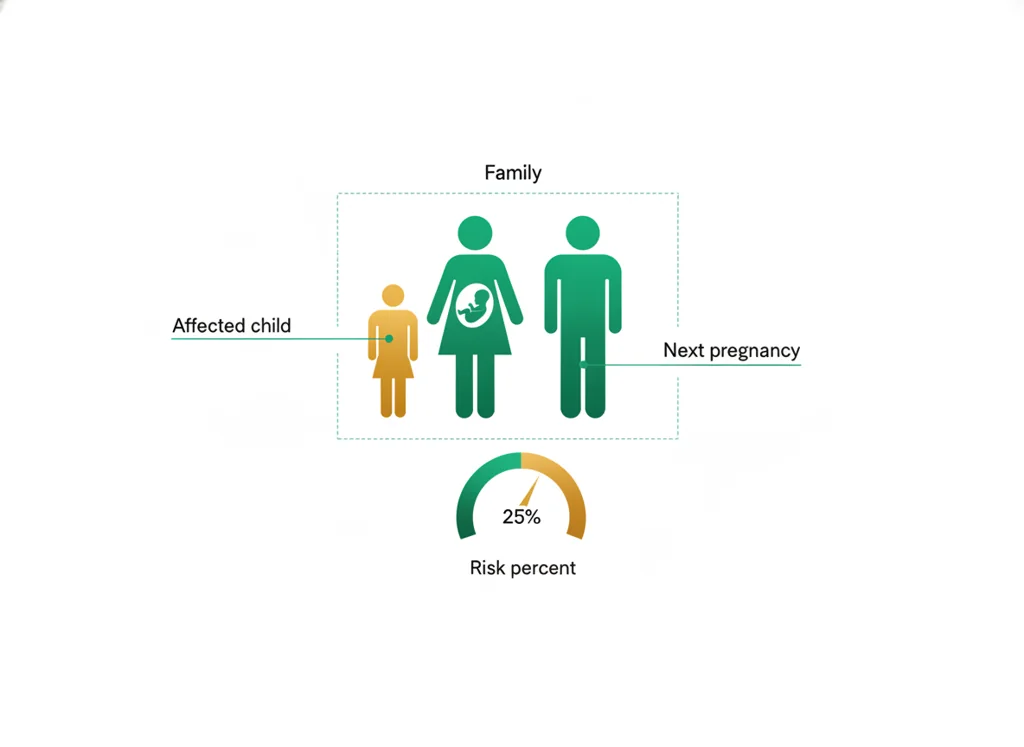
The chance that a future child in the same family will also be affected by a given condition.
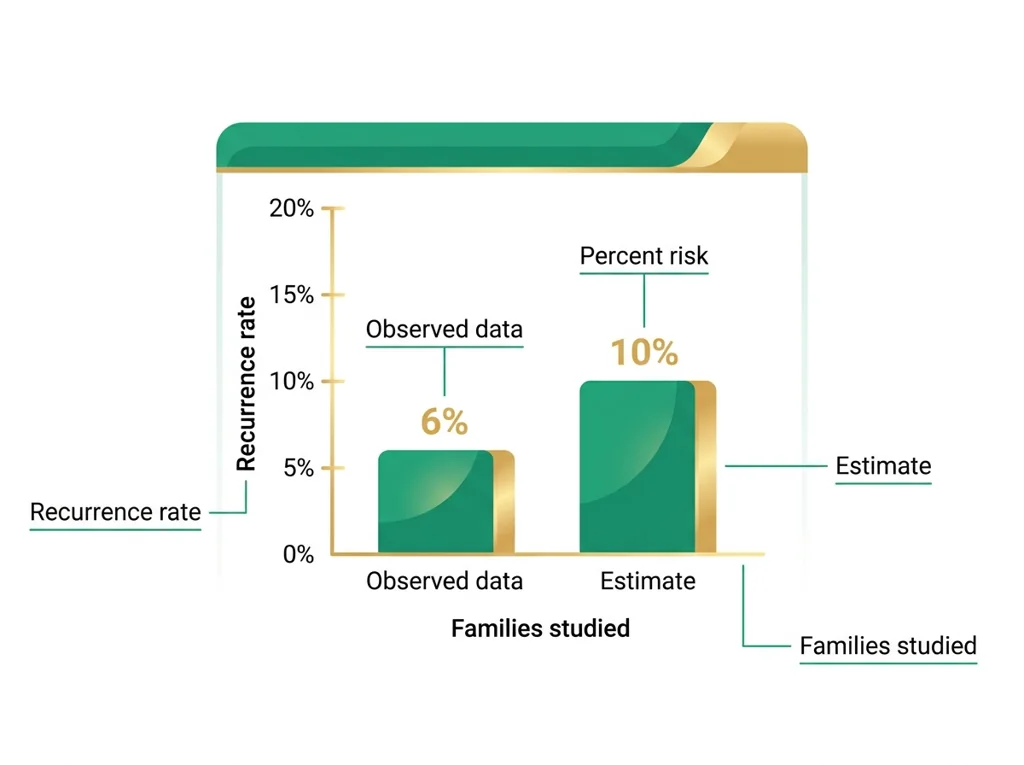
A recurrence risk estimated from observed family and population data rather than from a single-gene inheritance calculation.
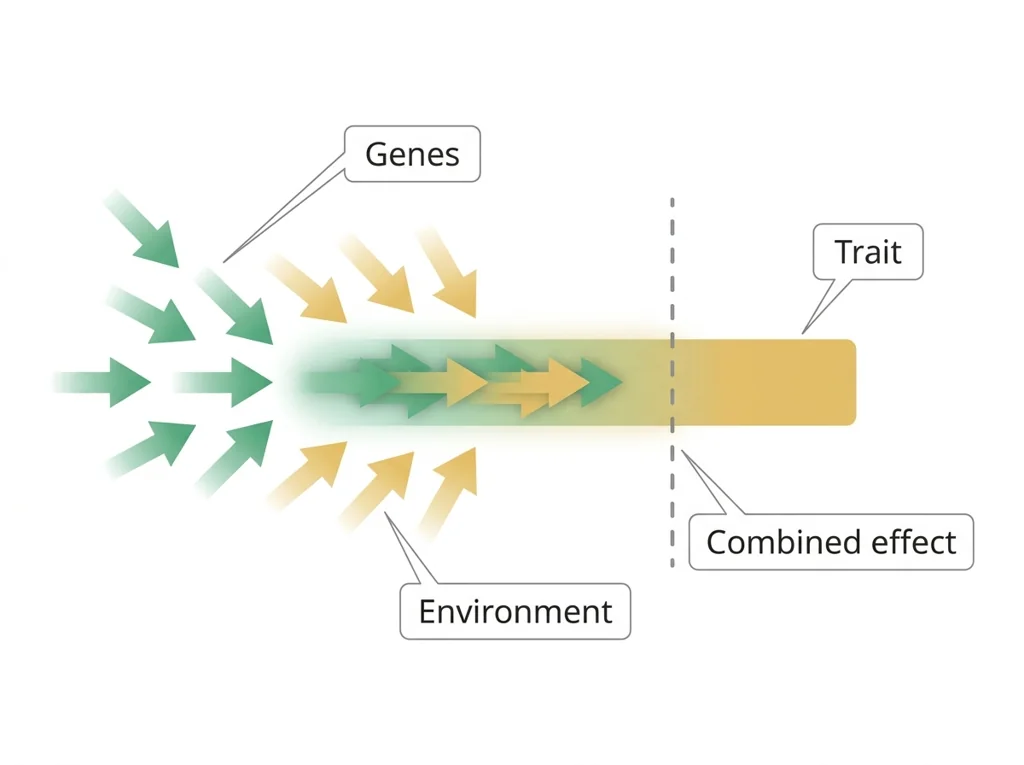
A trait caused by many small genetic and environmental factors adding up together, rather than by a single gene alone.
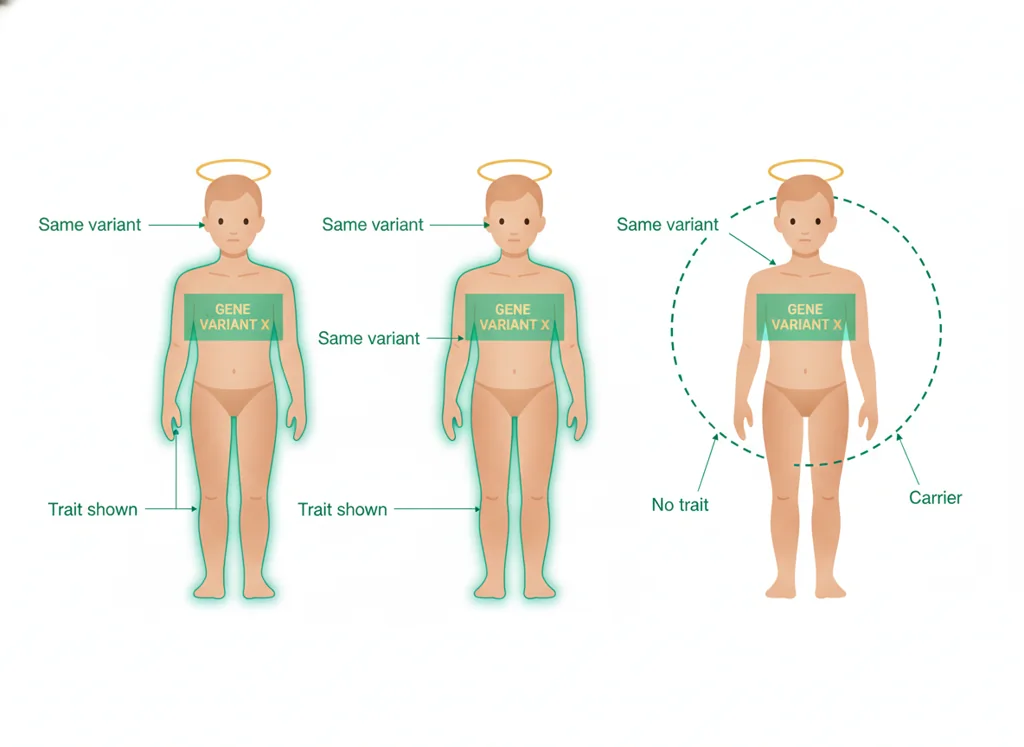
When a person carries a disease-linked variant but never shows the associated trait or condition.
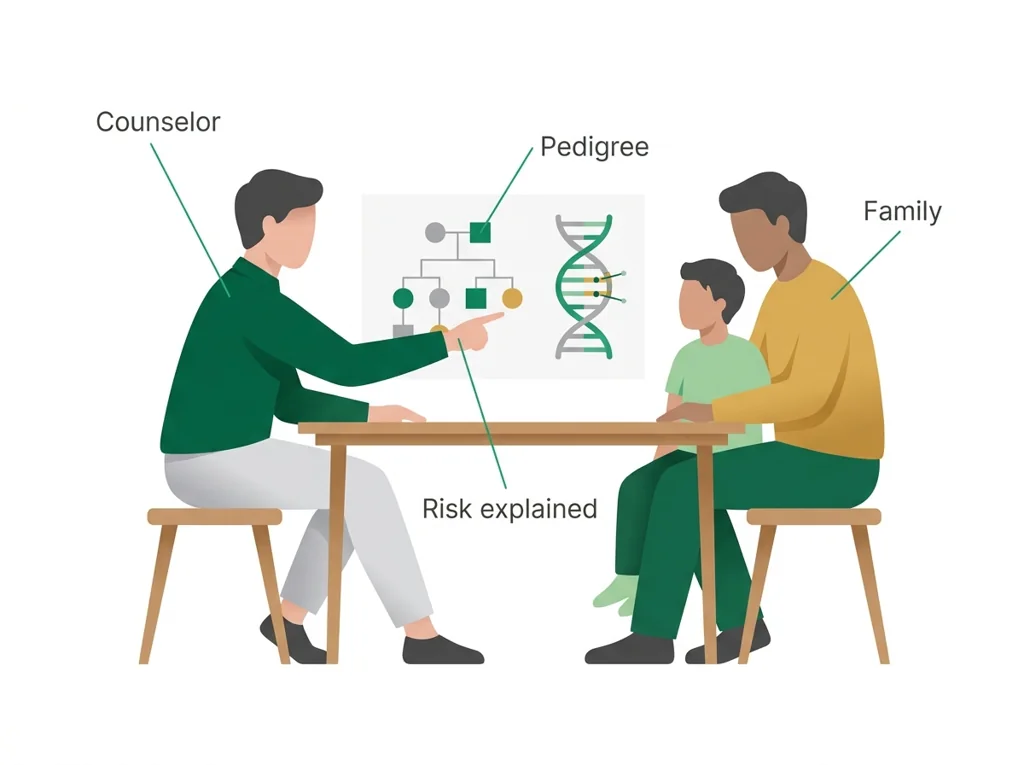
A specialist who explains genetic test results and recurrence risk to families and supports them in making their own decisions.
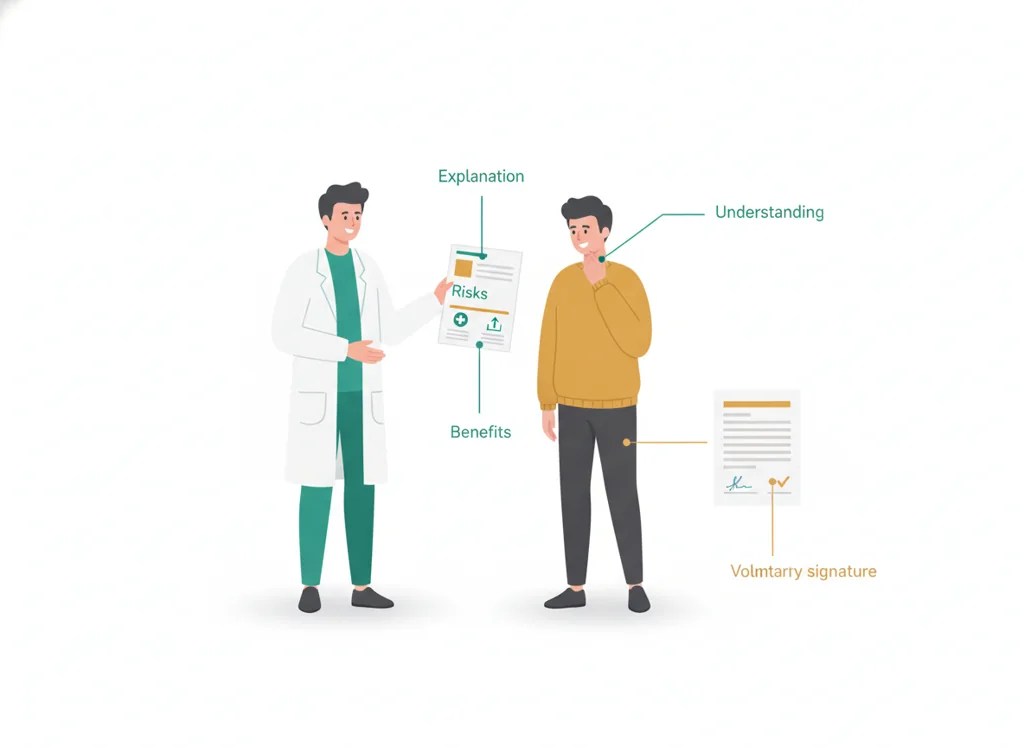
Agreeing to a treatment or study only after truly understanding its purpose, risks, benefits, and alternatives; the understanding, not the signature, is the ethics.
Research citation trail (advanced)
You do not need these papers or database records to finish the lesson. They document where the plain-language explainer's claims come from and are intended for teachers or advanced readers.