Rough draft.This research track is under review with Dr. Atit's lab. Content and sequence may still change.
The Baby Mateo Case
Genetics domainMedical Interventions (MI), with PBS overlapLesson 17 of 20Your seat: Genetic counselor

What Is the Family's Recurrence Risk?

Discovery question

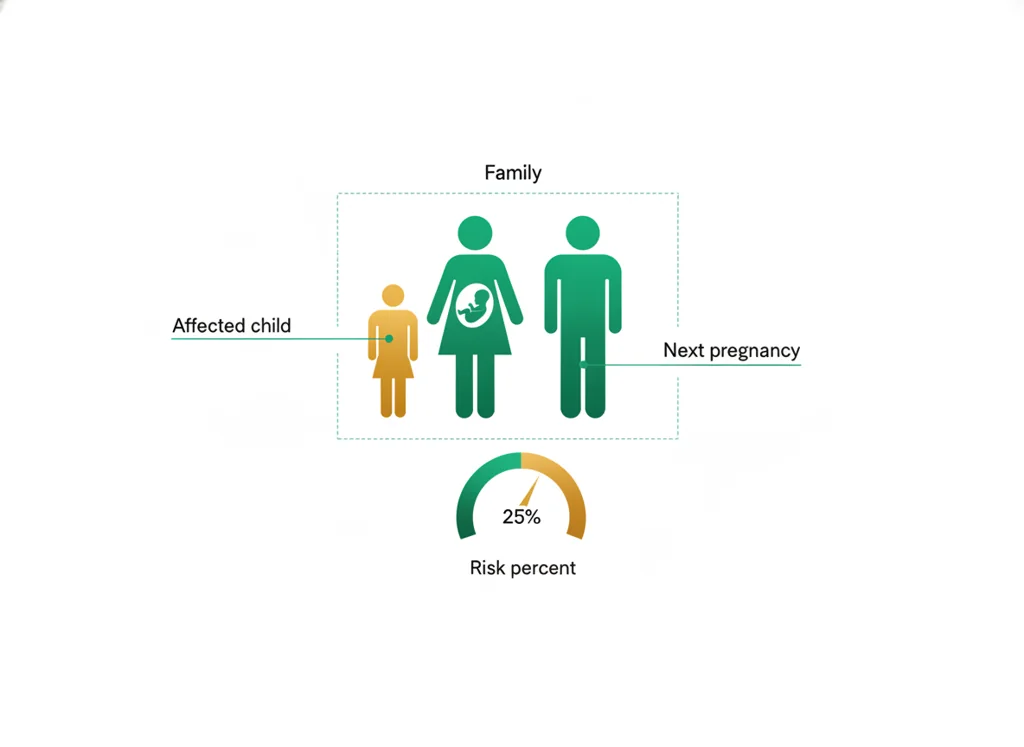
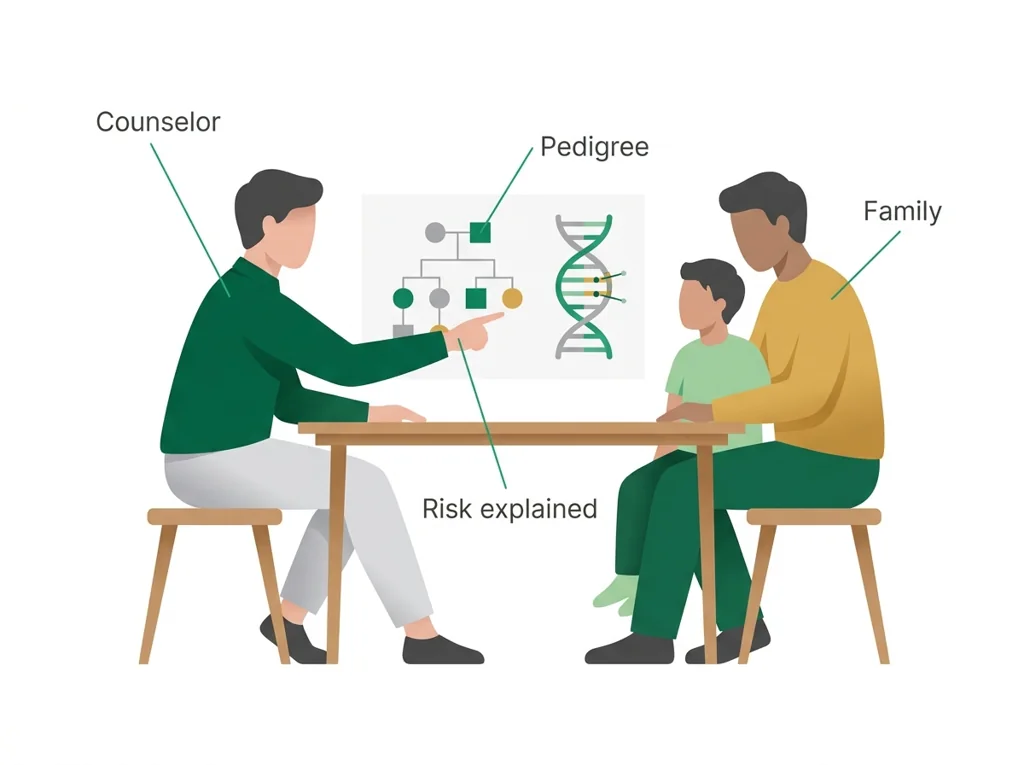
What is the for Mateo's family, and how do you communicate it honestly?

💡 Nonsyndromic, multifactorial clefting uses empiric (a range from real families), not a 50% Mendelian number, and the counselor delivers it in honest, non-directive language.

The plan

Prerequisite check

Before this page, you should know
  • is how common a particular version of a gene is in a population; it differs by ancestry.
  • An reports how many times more likely an outcome is per copy of a (1.0 means no effect).
Today's new idea is only
Nonsyndromic, multifactorial clefting uses empiric (a range from real families), not a 50% Mendelian number, and the counselor delivers it in honest, non-directive language.
Learn first

What you will learn

Goal: Apply Mendelian and multifactorial empiric recurrence-risk figures to estimate the chance of a in a family's next child, and describe the counselor's non-directive ethical role.

Know by the end
  • is the chance a future child is affected given the family already has an affected child.
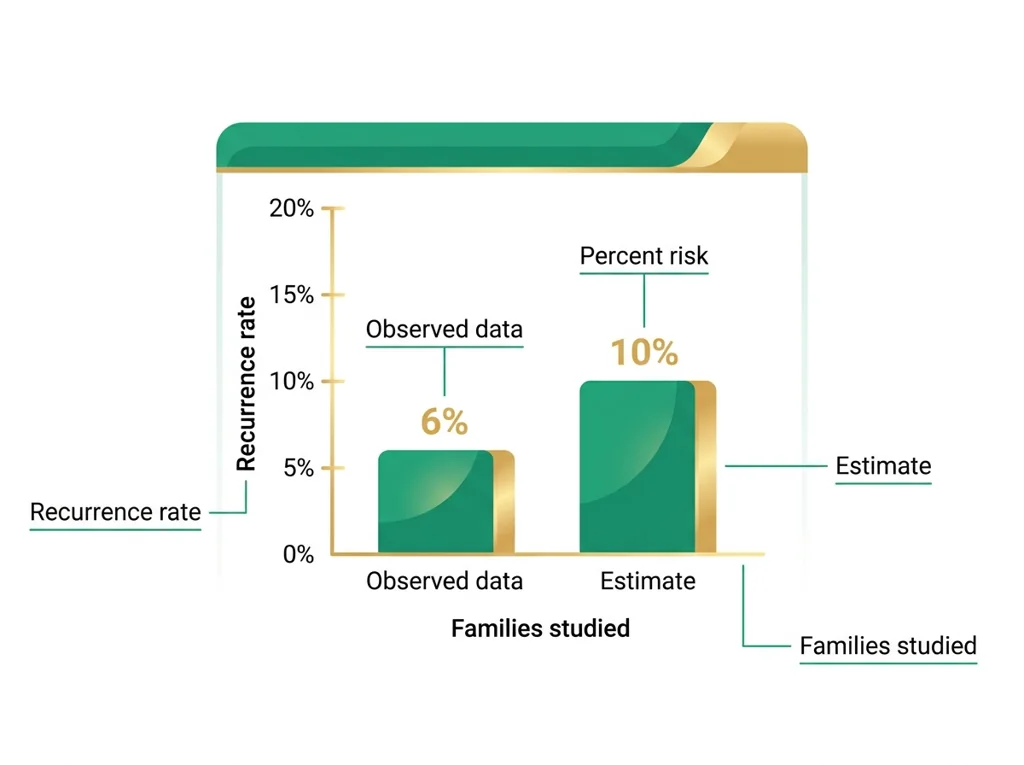
  • For nonsyndromic, multifactorial CL/P, counselors use measured from real families (about 2.5% after one , about 4.6% after CLP), not a Punnett square.
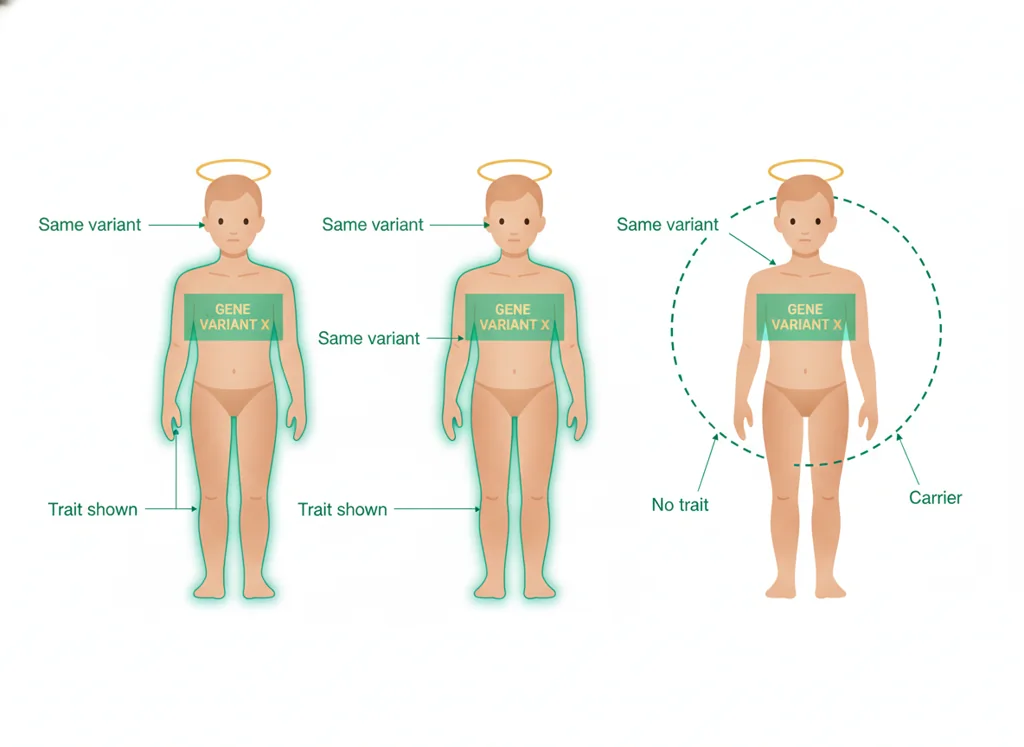
  • For an autosomal dominant condition like Van der Woude, a parent has a 50% chance of passing the variant, but nonpenetrance and variable expressivity mean the child may show only , a full , or nothing visible.
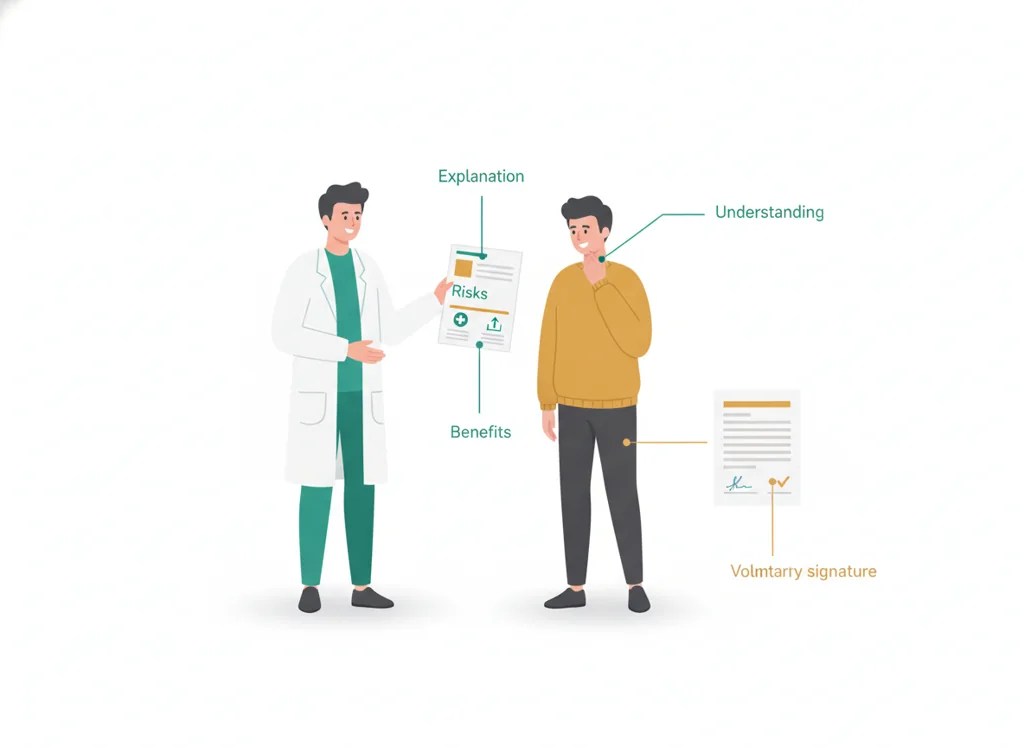
  • The gives risk in plain, non-directive language and supports , so the family decides.
Learn first

Model: Two families on the same clinic day, and two kinds of recurrence number

Family A has a child with a lip and , no , no other anomalies, and a careful exam of both parents finds no lip pits or clefts, with no other confirmed affected relatives. Everything gathered (a negative syndrome screen, a non-dominant pedigree, a common regulatory ) points to isolated, multifactorial CL/P. Family B is a contrast case: a child has cleft lip plus small lower-lip pits, the father has the same lip pits but no cleft, and the pattern passes through three generations, which fits autosomal dominant .

Counselors use different tools for each. For nonsyndromic, multifactorial CL/P they use : recurrence percentages measured by following many real families, about 2.5% after one and about 4.6% after a cleft lip and ; first-degree relative recurrence is strongly raised compared with the general population. For an autosomal dominant condition like Family B's Van der Woude, the carrying parent has a 50% chance of passing the variant to each child, but nonpenetrance and variable expressivity mean a child who inherits it may show only , a full cleft, or rarely nothing visible.

Read this in pieces, one chunk at a time
Do the work

Explore (work the model before reading on)

  1. What single physical clue separates Family B from Family A?
  2. Which recurrence number fits a clearly autosomal dominant family: the 50% figure or the 2.5% empiric figure?
  3. Why can you not use a simple 50% Punnett-square number for a nonsyndromic family? What kind of inheritance is it instead?
  4. Family B's father has the variant but only . How does nonpenetrance or variable expressivity make counseling that family harder than a textbook dominant trait?
  5. Suppose Family A goes on to have a second affected child. Predict whether the empiric for a third child goes up, stays the same, or goes down, and explain using the threshold idea from Lesson 16.
The plan

Guided notes

1

Which recurrence number, and why

Model start: is the chance a future child is affected, given the family already has an affected child. The tool you reach for depends on the kind of inheritance.
  • For nonsyndromic CL/P we use ____ risk: percentages measured by tracking many real families, not predicted from Mendelian ratios.
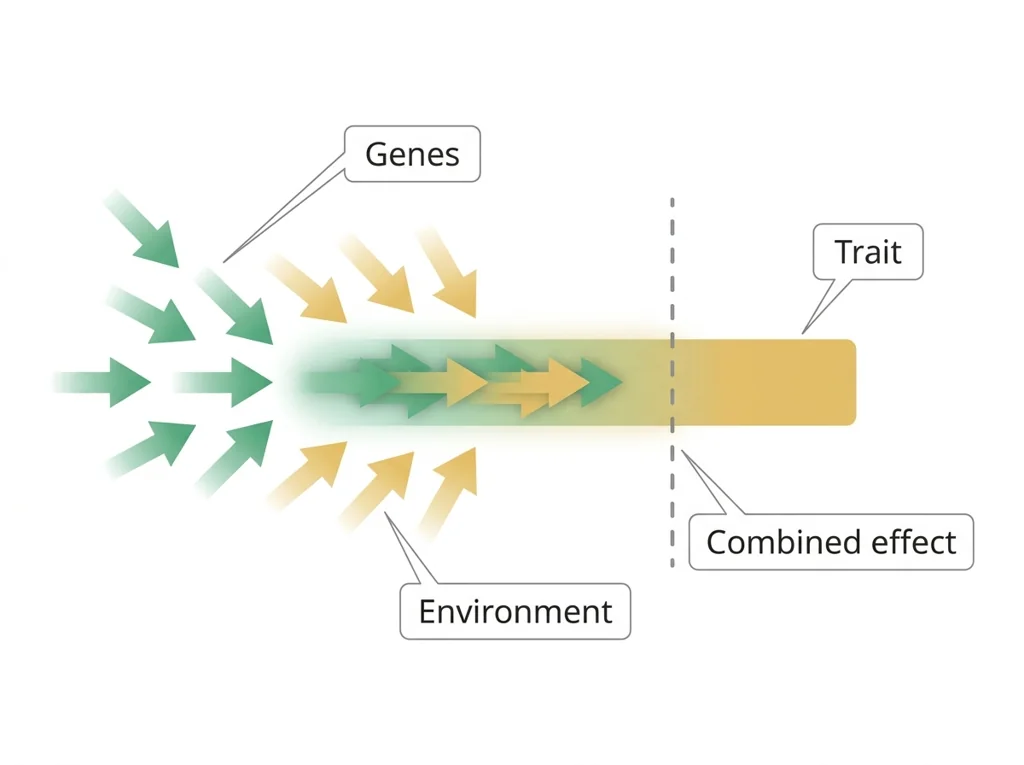
  • We use it because the trait is ____ (many genes plus environment crossing a threshold).
  • For a nonsyndromic family the honest estimate is roughly ____ to 5% for a future sibling.
2

The counselor's role

  • When a clear Mendelian cause is present (Van der Woude), a parent has ____% per child, but nonpenetrance means the child's signs can range from to a full .
  • The gives risk in plain, ____ (directive / non-directive) language and supports informed ____, so the family decides.
Explore

Reading the Research

What to read
Read the title and the abstract only, not the whole paper. Babai & Irving 2023, Orofacial Clefts: empiric recurrence figures (Genes)
Why this source matters
This is the published evidence behind today's idea: Nonsyndromic, multifactorial clefting uses empiric (a range from real families), not a 50% Mendelian number, and the counselor delivers it in honest, non-directive language.
Reading moves
  1. Skim the title and abstract first to get the gist.
  2. Circle the one sentence that states the main claim.
  3. Box the evidence the authors give for that claim.
  4. Mark one sentence that confuses you, and move on.
Stop point
You do not need the methods or statistics yet. If a sentence is about lab technique or math you have not learned, mark it and skip it.
Your output
Write one claim-evidence sentence: what this source claims, and the one piece of evidence that backs it up.
Where this fits
Tested on (Ohio WebXam)
Genetics of Disease · 072130
PLTW lesson
MI · Genetics domain · Genetic counseling and risk communication
WebXam domain
Bio-Molecular Technology
Evidence to produce
Role-play in four to six sentences of dialogue. The counselor must (1) give the recurrence-risk range honestly, (2) explain why it is a range and not one exact number, (3) avoid telling the family what choice to make, and (4) offer a next step (such as prenatal ultrasound or referral). Then underline the one sentence where the counselor stays non-directive.
Lab / skill
Medical Interventions (MI) · AP Biology
Words

Vocabulary (the same words your classes use)

The plan

Track your progress today

Check these off as you work through the lesson, then submit. This tells Mr. Mendoza how you're doing so he can help the class. It does not replace turning in your producible.

Use the code Mr. Mendoza gave you, not your name. Saved on this device.

Check off as you finish
  • Read the Model and answered the Explore questions.
  • Filled in the guided notes in my own words.
  • Defined the new vocabulary with an example.
  • Built the producible: Role-play in four to six sentences of dialogue. The counselor must (1) give the recurrence-risk range honestly, (2) explain why it is a range and not one exact number, (3) avoid telling the family what choice to make, and (4) offer a next step (such as prenatal ultrasound or referral). Then underline the one sentence where the counselor stays non-directive.
  • Wrote my Claim, Evidence, and Reasoning exit ticket.
Pick your period and code first.
Check yourself

Exit ticket (Claim, Evidence, Reasoning)

  • Claim: State the recurrence-risk range you would give Mateo's parents.
  • Evidence: For a the empiric figures are about ____% after a and about 4.6% after a one.
  • Reasoning: , not a 50% Mendelian number, is correct here because the trait is ____, not single-gene dominant.
How this is graded (rubric)
For: Role-play in four to six sentences of dialogue. The counselor must (1) give the recurrence-risk range honestly, (2) explain why it is a range and not one exact number, (3) avoid telling the family what choice to make, and (4) offer a next step (such as prenatal ultrasound or referral). Then underline the one sentence where the counselor stays non-directive.
CriterionProficientDevelopingBeginning
CompleteEvery required part of the artifact is present and filled in.Most parts are present, but one is missing or left blank.Several parts are missing.
AccurateThe science and data are correct and match the evidence.Mostly correct, with a small factual slip.Key science or data is wrong.
Scientific reasoning (CER)States a claim, backs it with specific evidence, and explains the reasoning.Has a claim and evidence, but the reasoning is thin or missing.Gives an answer with no evidence or reasoning.
Professional communicationClear, organized, and labeled the way a clinician or scientist would write it.Readable but disorganized or missing labels.Hard to follow.
SubmittedTurned in the right way (Schoology for routine work) and confirmed.Turned in, but in the wrong place or unconfirmed.Not turned in.
How the model answer scores against this rubric
  • CompleteProficient: Nothing is left blank: the model fills every part of "Role-play in four to six sentences of dialogue. The counselor must (1) give the recurrence-risk range honestly, (2) explain why it is a range and not one exact number, (3) avoid telling the family what choice to make, and (4) offer a next step (such as prenatal ultrasound or referral). Then underline the one sentence where the counselor stays non-directive.".
  • AccurateProficient: Every number and claim matches the case evidence.
  • Scientific reasoning (CER)Proficient: It names a claim, cites the specific evidence, and explains the reasoning, not just the answer.
  • Professional communicationProficient: It is organized and labeled like a real chart note.
  • SubmittedProficient: It would be turned in on Schoology and confirmed.
Explore

Where this leads: careers

Genetic Counselor Clinical Geneticist

What's next: We can now counsel the family honestly about the odds, but giving a number does not change the gene. Sooner or later a family asks the bolder question: instead of measuring the risk, could we repair the underlying genetic problem itself? Can we fix the code? We chase that next.