
What Does IRF6 Actually Do in the Embryo?
This reading contains every idea and every piece of evidence needed for today's decision. The research links at the end are optional.
Why this matters
A cleft can affect feeding and speech, so researchers need the missing cell step between an instruction change and the child's final face shape.
The question you are trying to answer
How can one faulty instruction make two mouth surfaces stick at the wrong time?
Begin with the idea you already earned
IRF6 works in a regulatory network, so similar phenotypes can arise when different connected genes fail.
Study the analogy before the biology
- Why must the protection exist before contact?
- What happens if the wrong surfaces stick first?
- When can the protective layer safely change?
Turn the analogy into three rules
Limit: Periderm is living tissue controlled by a network, not manufactured paper.
Map those rules onto the biology
IRF6 helps oral epithelial cells differentiate. A temporary surface layer called periderm prevents tissues from sticking to the wrong neighbor.
In Irf6-deficient models, periderm is abnormal or missing and oral adhesions form.
The adhesions can block palatal shelf movement. This is a model mechanism, not a molecular diagnosis for Mateo.
Read Mateo's labeled case evidence
IRF6 is active in oral epithelium and periderm differentiation.
The gene acts in a relevant cell type.
Irf6-deficient models lose normal periderm and develop abnormal oral adhesions.
Gene loss changes a specific cell behavior.
Those adhesions can block palatal elevation and closure.
The cell defect connects to the tissue phenotype.
Make the concrete decision
You are building the molecular-to-anatomy chain for the case board.
The board requires one sequence from gene to cell to tissue outcome.
- IRF6 network failure, periderm defect, wrong adhesion, blocked closure.
- IRF6 instantly creates a hole in the palate.
- Periderm has no relationship to fusion.
Choose the sequence and cite cell plus tissue evidence.
Claim ceiling: You may explain an established model mechanism. You may not claim Mateo has IRF6 loss without a result.
Write the 10-year takeaway
The IRF6 network helps oral epithelial cells form periderm, preventing wrong adhesions before correct fusion.
- What cell behavior links IRF6 to palate closure?
- Which claim about Mateo remains unsupported?
Glossary in plain English
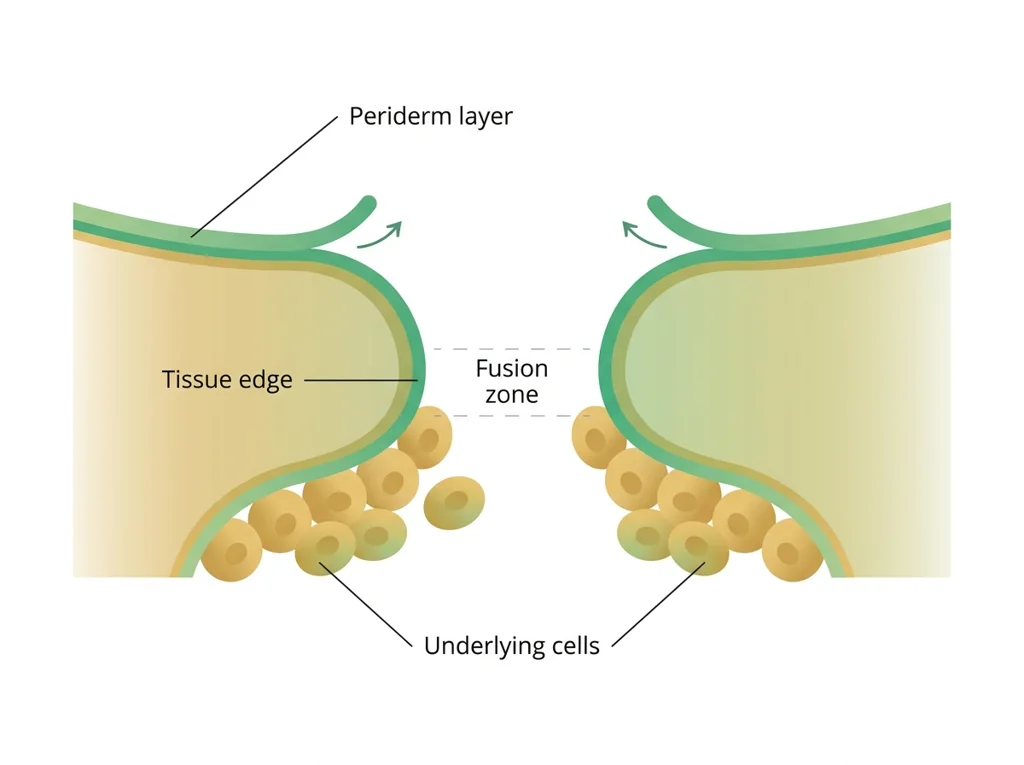
A thin temporary outer cell layer of the embryo; if it sticks where it should not, the growing edges cannot fuse.
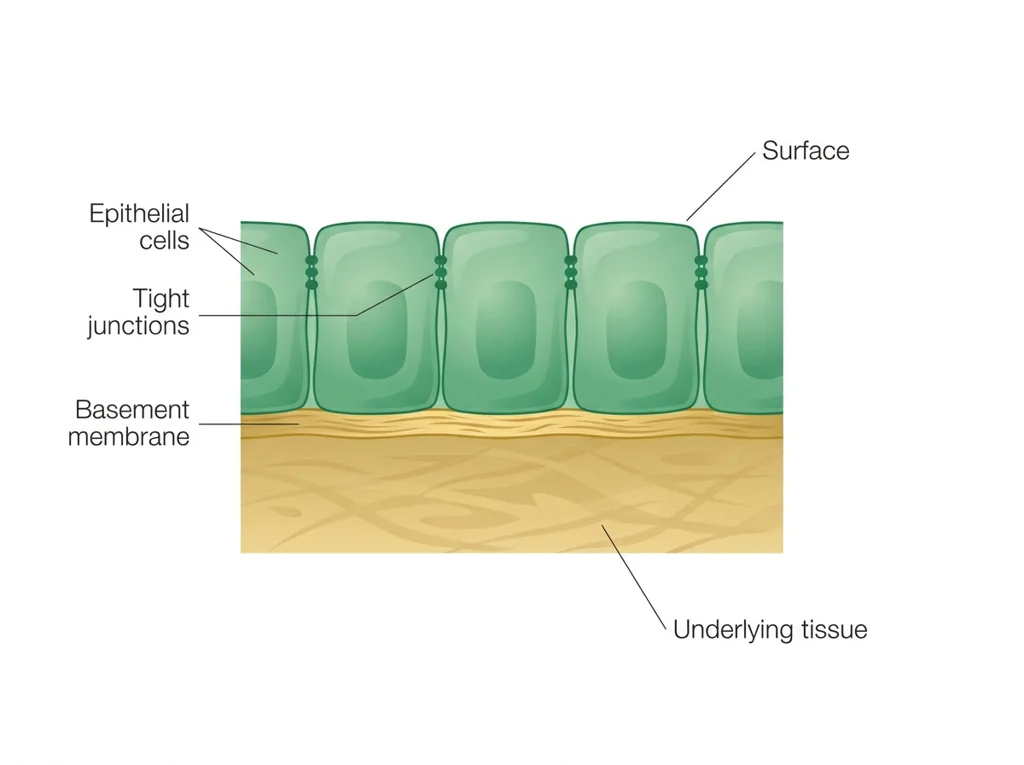
A sheet of tightly joined surface cells, such as the lining whose edges must clear away for the palatal shelves to fuse.
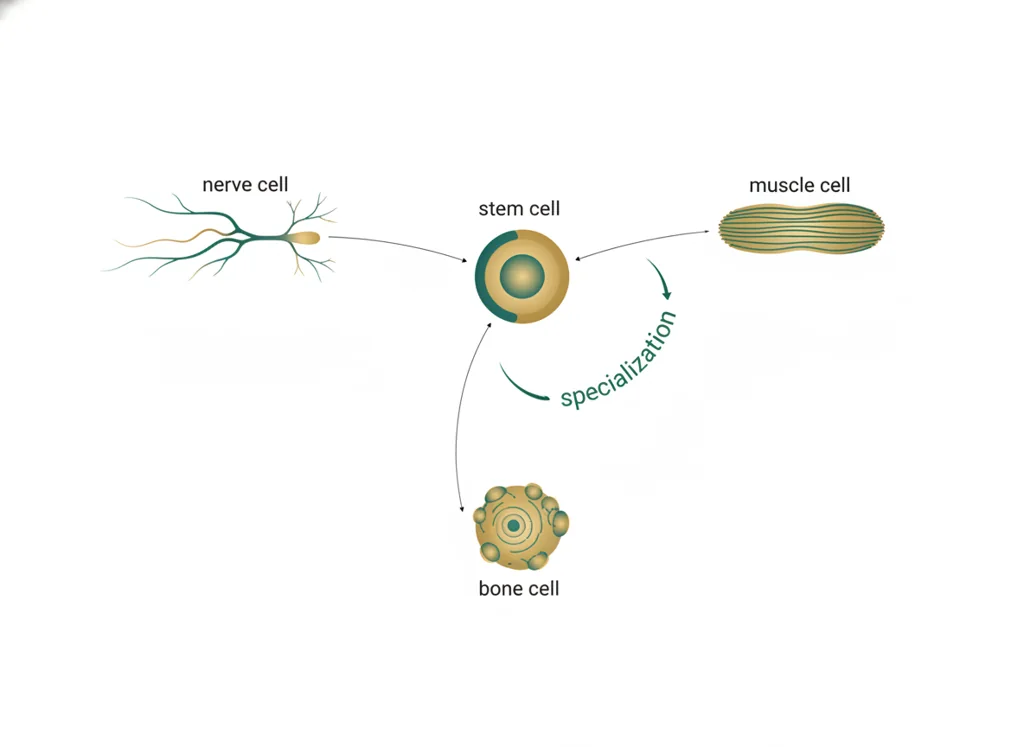
The process by which an unspecialized cell turns on specific genes and becomes a specialized cell type with a defined job.
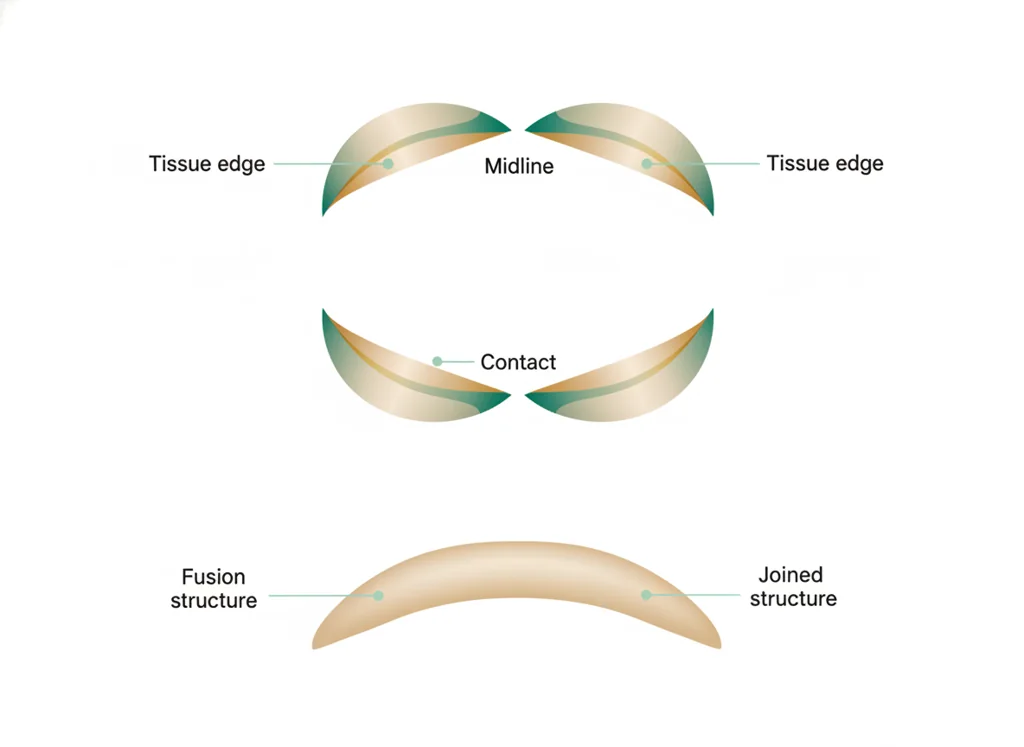
When two growing tissue edges meet at the midline and join into one continuous structure, as the lip and palate do during development.
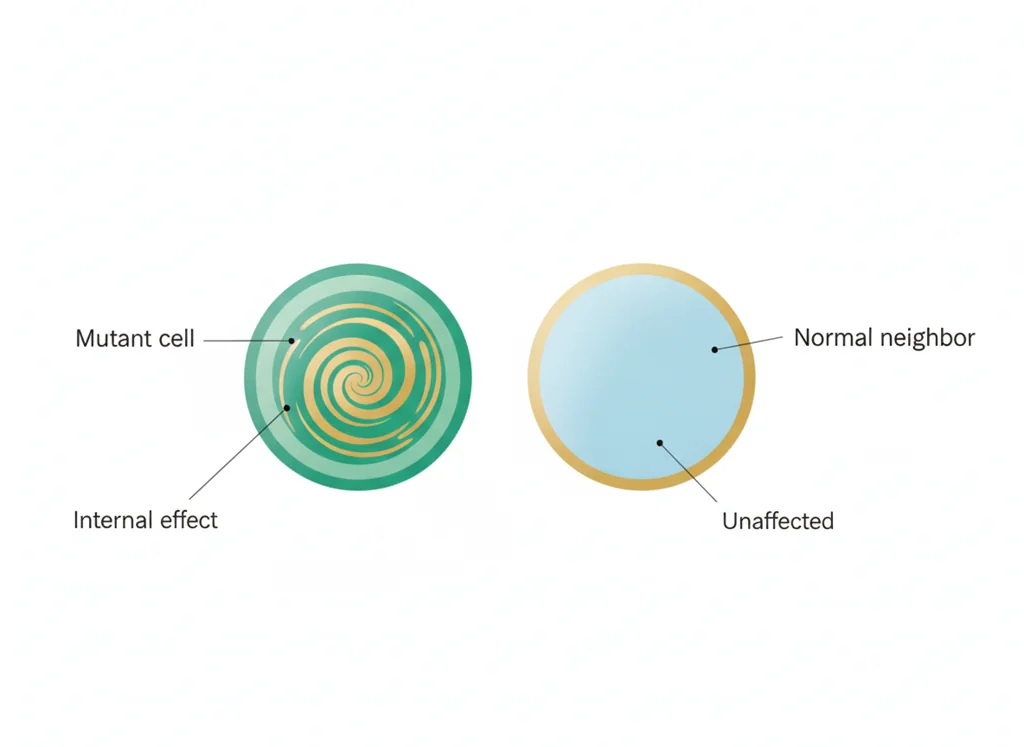
Describing an effect that plays out inside the very cell carrying the change, rather than in its neighbors.
Research citation trail (advanced)
You do not need these papers or database records to finish the lesson. They document where the plain-language explainer's claims come from and are intended for teachers or advanced readers.
- Kousa et al. 2017, IRF6 in basal epithelium partially rescues Irf6 knockout mice (Dev Dyn)
- Carroll et al. 2020, Irf6-Esrp1/2 axis in midface morphogenesis (Development)
- Liu et al. 2015, Irf6 directly regulates Klf17 and Klf4 (Hum Mol Genet)
- What GEO is and how to browse gene-expression data (NCBI)
- About FaceBase, the craniofacial data hub