
How Does One Wrong Amino Acid Break the Protein?
This reading contains every idea and every piece of evidence needed for today's decision. The research links at the end are optional.
Why this matters
A computer model can suggest how a change may matter, but families should not receive a diagnosis from a prediction alone.
The question you are trying to answer
How can changing one building block stop a whole tool from working?
Begin with the idea you already earned
Evolutionary conservation marks positions that tolerated little change, adding evidence that a new change may matter.
Study the analogy before the biology
- Which tiny shape difference prevents fitting?
- Why might another key change still work?
- What direct test would show loss of grip?
Turn the analogy into three rules
Limit: Proteins are flexible molecular structures, not rigid metal keys.
Map those rules onto the biology
A missense variant replaces one amino acid with another. Side chains differ in charge, size, and shape.
If the change occurs at a DNA-contact or folding site, it may disrupt function. Protein models help visualize that possibility.
AlphaFold predicts a likely fold. A laboratory assay is needed to test binding or activity directly.
Read Mateo's labeled case evidence
Arg84 lies in the conserved IRF6 DNA-binding domain.
The position is functionally plausible.
Replacing arginine changes side-chain chemistry and may alter DNA contact or local folding.
A structural mechanism can be proposed.
AlphaFold predicts structure but does not measure variant function.
Experimental validation remains necessary.
Make the concrete decision
You are deciding whether a structure image completes a variant report.
The model predicts an altered DNA-contact surface, but no binding experiment has been run.
- Report a supported hypothesis and request functional testing.
- Call the prediction direct proof.
- Ignore position and chemistry.
Choose the report language and cite prediction versus experiment.
Claim ceiling: You may propose a structure-function mechanism. You may not present a prediction as measured protein behavior.
Write the 10-year takeaway
A missense variant matters when its side-chain change disrupts a specific protein interaction or fold.
- What chemical features can change in a missense variant?
- What can a model not measure?
Glossary in plain English
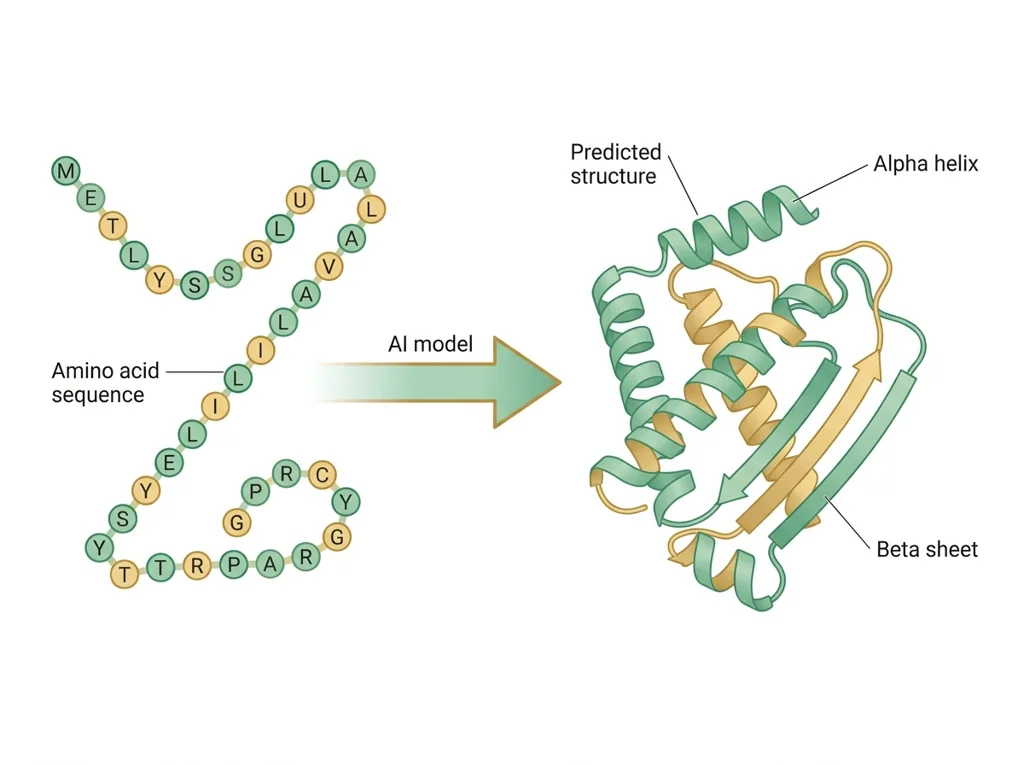
An artificial intelligence system from DeepMind that predicts a protein's three-dimensional folded shape directly from its amino acid sequence.
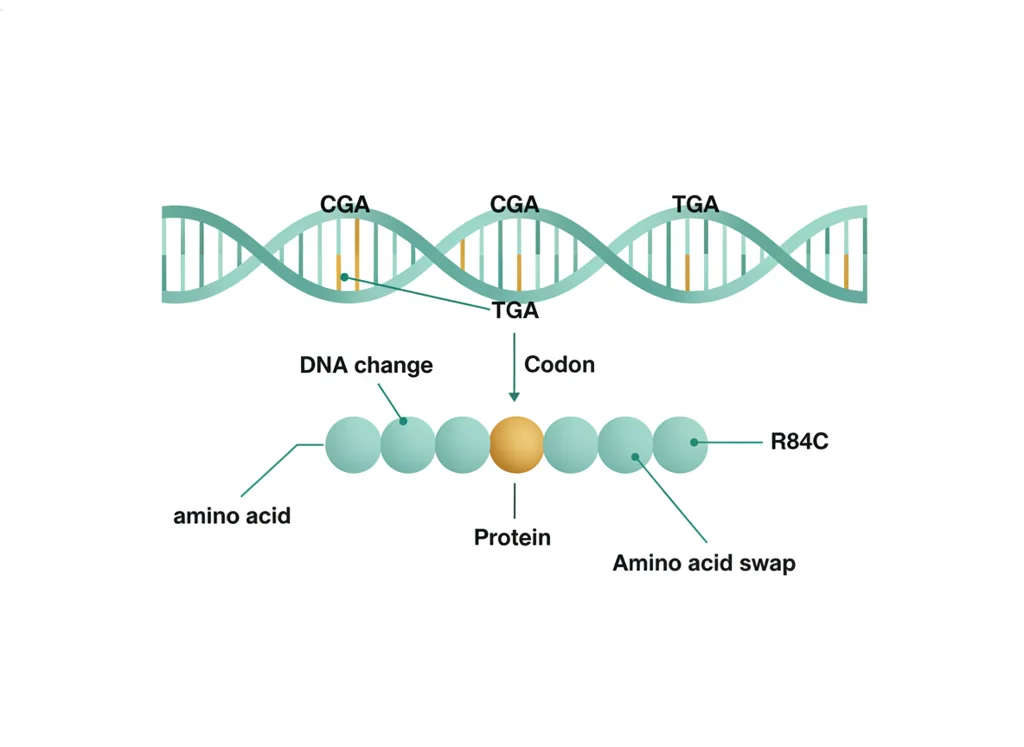
A DNA change that swaps one amino acid for another in the protein, such as the IRF6 R84C change.
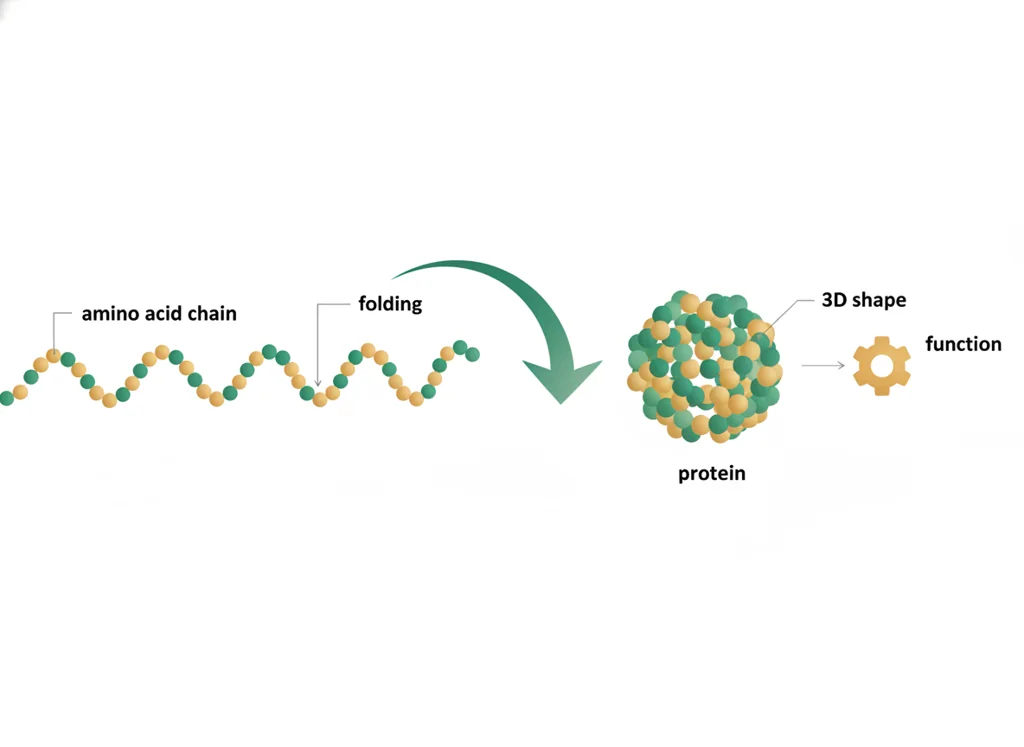
How a chain of amino acids settles into its specific three-dimensional shape, which determines what the protein can do.
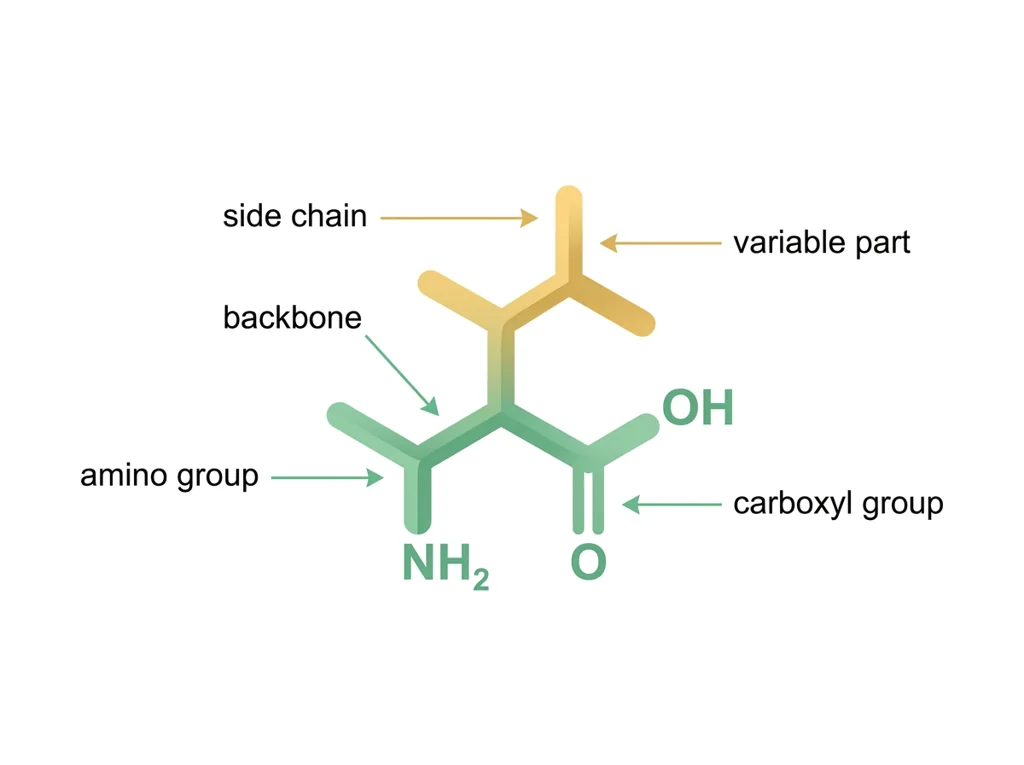
The variable part of an amino acid that gives it its chemistry, so changing it can alter how a protein folds or works.
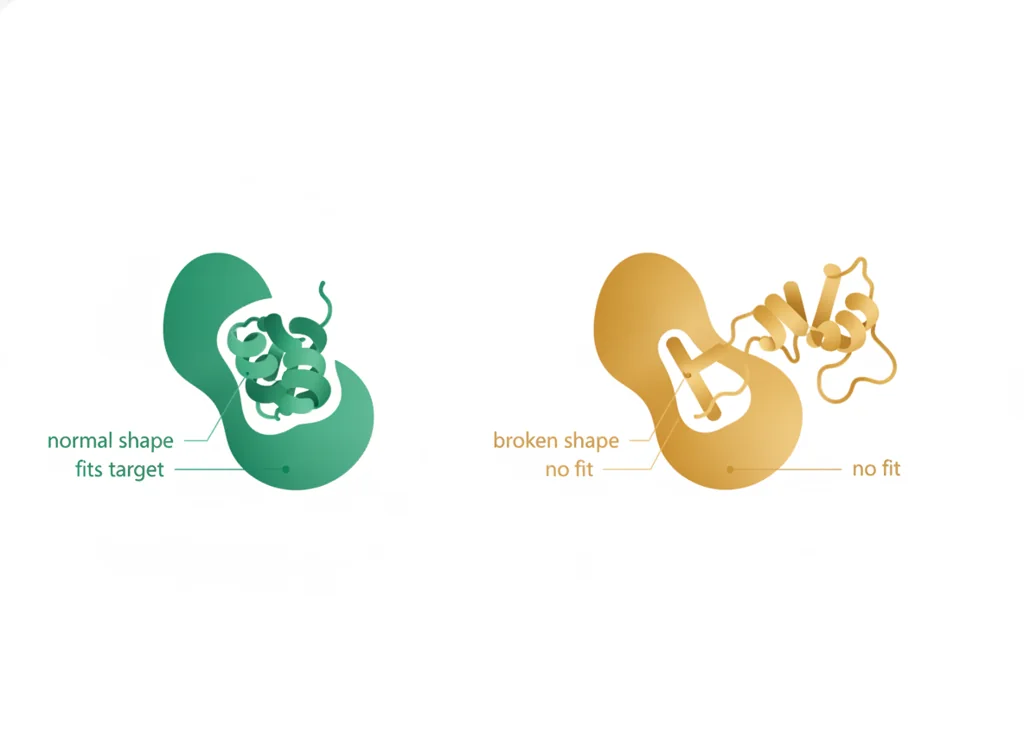
The principle that a molecule's three-dimensional shape determines what it can do, so breaking the shape breaks the job.
Research citation trail (advanced)
You do not need these papers or database records to finish the lesson. They document where the plain-language explainer's claims come from and are intended for teachers or advanced readers.