
Taking a Gene to the Bench
This reading contains every idea and every piece of evidence needed for today's decision. The research links at the end are optional.
Why this matters
About 1 in 700 babies is born with a cleft, so each lab method must answer a clear question before its result can guide the next study.
The question you are trying to answer
Which test shows where an instruction is used, and which test shows what it does?
Begin with the idea you already earned
Many tests inflate false positives, so thresholds and independent replication must be planned before results are seen.
Study the analogy before the biology
- Which light shows where the message is?
- Which shows where the working part is?
- Which reveals what changes when the part is missing?
Turn the analogy into three rules
Limit: Assays produce measured signals with noise and controls, not perfectly revealing beams.
Map those rules onto the biology
In situ hybridization can show where RNA is present. Immunohistochemistry uses antibodies to show where a protein is located.
A knockout or knockdown asks what changes when gene function is reduced. Each method needs controls for background signal and handling.
Expression shows opportunity for a gene to act. Perturbation adds functional evidence, but alternative effects and model limits still matter.
Read Mateo's labeled case evidence
RNA signal appears in developing palatal shelves at the relevant stage.
The gene is transcribed in a useful place and time.
Protein staining appears in palatal epithelium and is absent in the no-primary-antibody control.
The protein location is supported by a specificity control.
Perturbed embryos show altered shelf elevation more often than matched controls.
Changing the gene is associated with a phenotype, but other effects still need checks.
Make the concrete decision
You are planning the bench follow-up to a replicated locus.
The team has funding for three assays and must decide whether one expression image alone proves function.
- Combine RNA location, protein location, perturbation, and controls.
- Use one bright stain as proof the gene causes cleft palate.
- Skip controls because the candidate came from GWAS.
Choose the assay set and state the specific question each assay answers.
Claim ceiling: You may connect expression and perturbation evidence. You may not treat location alone as causal proof.
Write the 10-year takeaway
Orthogonal assays answer different mechanism questions: where RNA or protein is and what changes after perturbation.
- What does in situ hybridization locate?
- Why is expression alone not proof of function?
Glossary in plain English
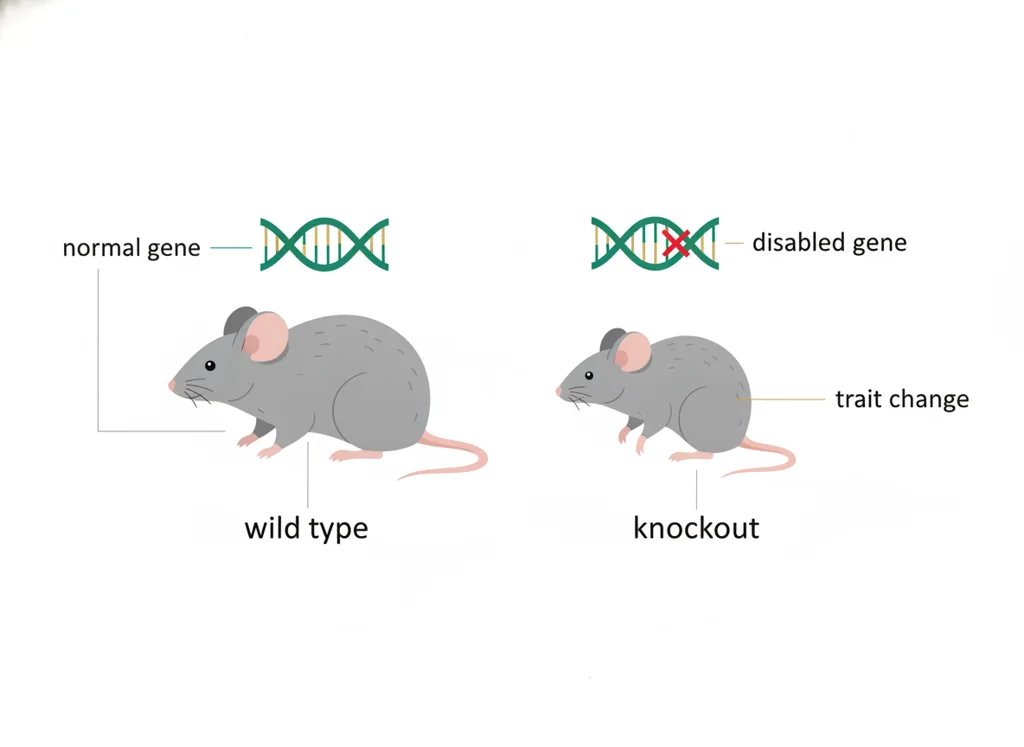
An organism or cell engineered to have a specific gene switched off, used to reveal what that gene normally does.
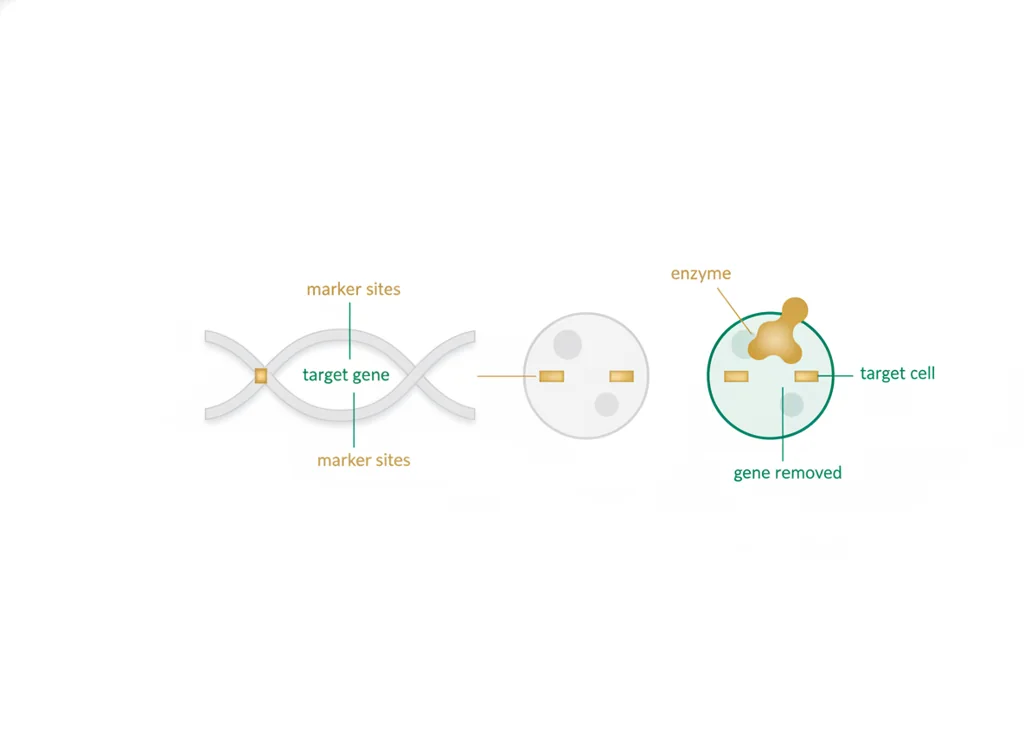
A genetic tool that switches a gene off only in certain cells or at a chosen time, so researchers can study its role without affecting the whole animal.
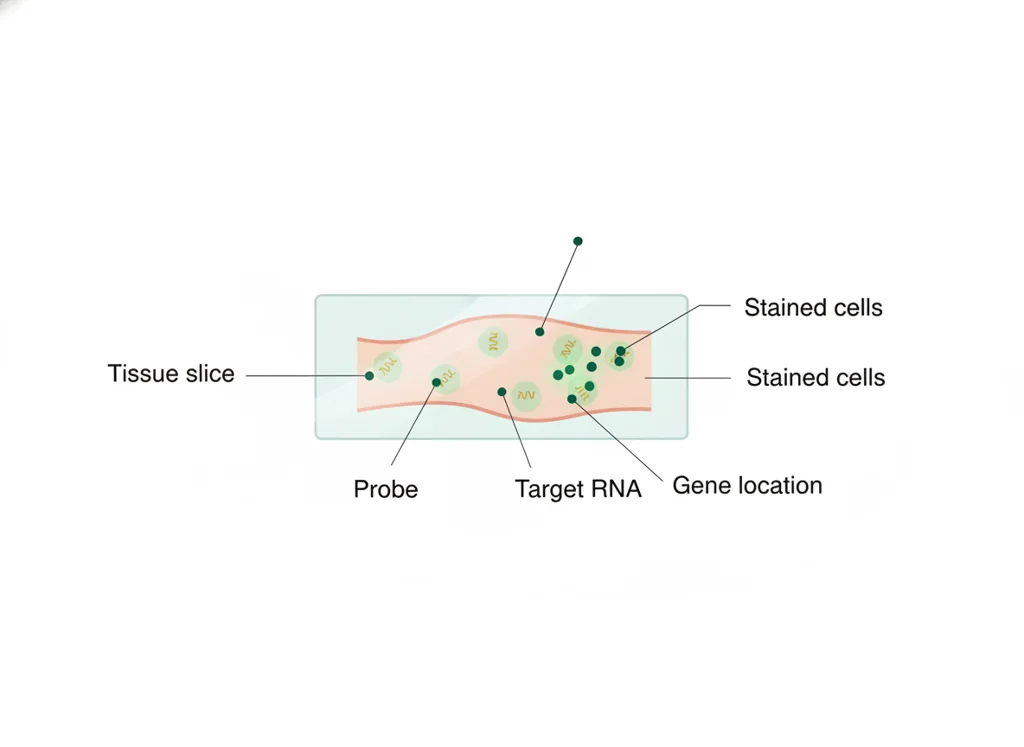
A lab method that uses a labeled probe to show exactly where a specific gene's RNA or DNA sits inside a tissue or cell.
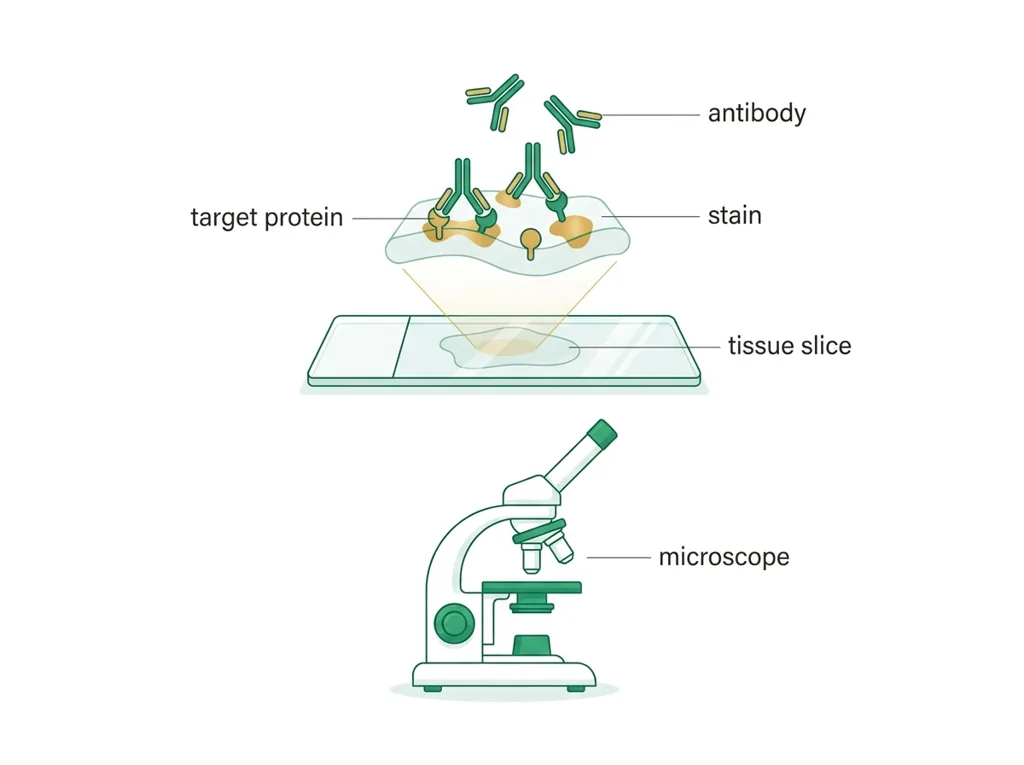
A lab technique that uses antibodies tagged with stain to show exactly where a specific protein sits within a tissue slice.
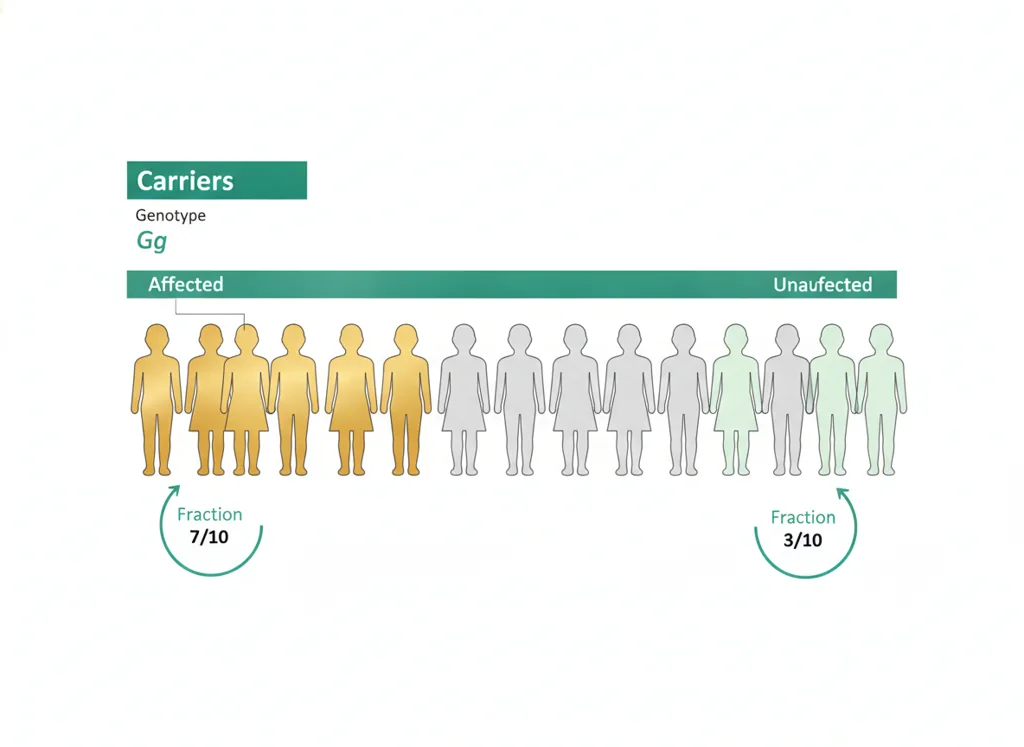
The fraction of people carrying a disease-linked genotype who actually show the trait.
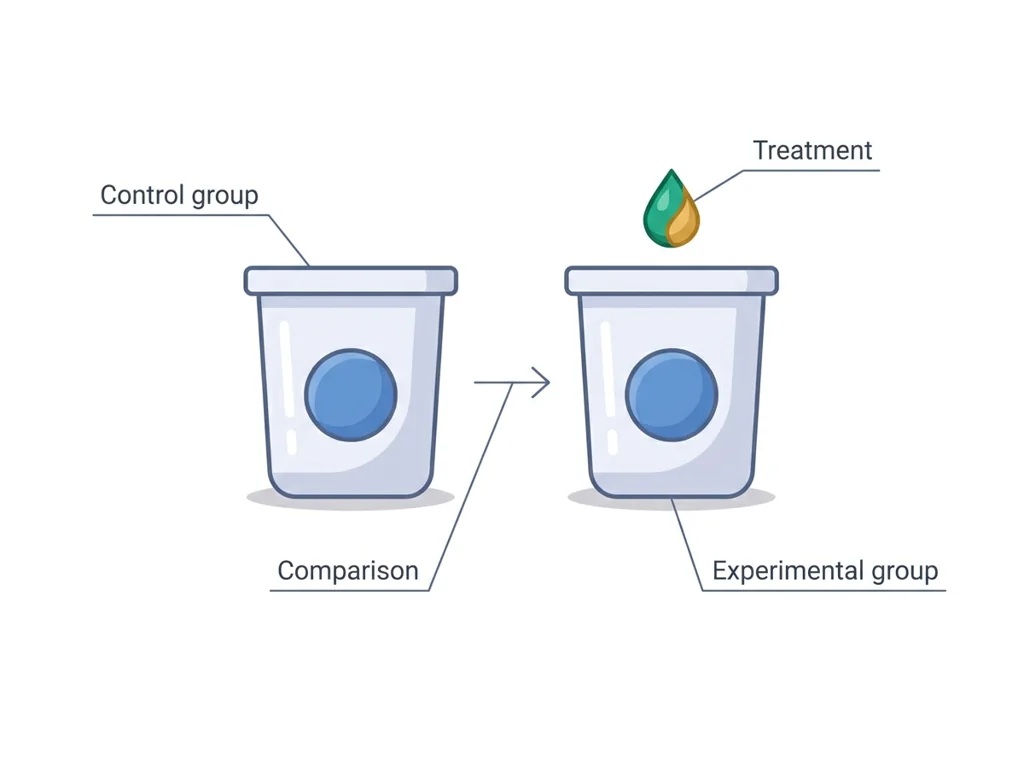
The comparison condition that isolates the effect of the variable being tested by keeping everything else the same.
Research citation trail (advanced)
You do not need these papers or database records to finish the lesson. They document where the plain-language explainer's claims come from and are intended for teachers or advanced readers.