Rough draft.This research track is under review with Dr. Atit's lab. Content and sequence may still change.
The Baby Mateo Case
Experimental Design domainBiomedical Innovations (BI)Lesson 9 of 20Your seat: Lab scientist on the cleft research team

Taking a Gene to the Bench

Discovery question

How do we test a gene's actual job at the bench?

💡 A asks if a gene is necessary, in situ asks where it is switched on, and asks where its sits, each read against careful controls.

The plan

Prerequisite check

Before this page, you should know
  • A problem appears the moment you test many hypotheses on the same data, because each test gets its own chance to throw a .
  • At p < 0.05, running 1,000,000 tests with no real effect yields on average about 50,000 false alarms by chance.
Today's new idea is only
A asks if a gene is necessary, in situ asks where it is switched on, and asks where its sits, each read against careful controls.
Learn first

What you will learn

Goal: Students will describe how a , an , and an experiment each test a different part of a gene's job, and match each method to the question it answers.

Know by the end
  • A deletes a gene to see what breaks; a removes it only in chosen cells at a chosen time, so an animal survives long enough to be scored.
  • uses a labeled probe to show which cells are transcribing a gene (it detects messenger RNA); uses an to show where a sits.
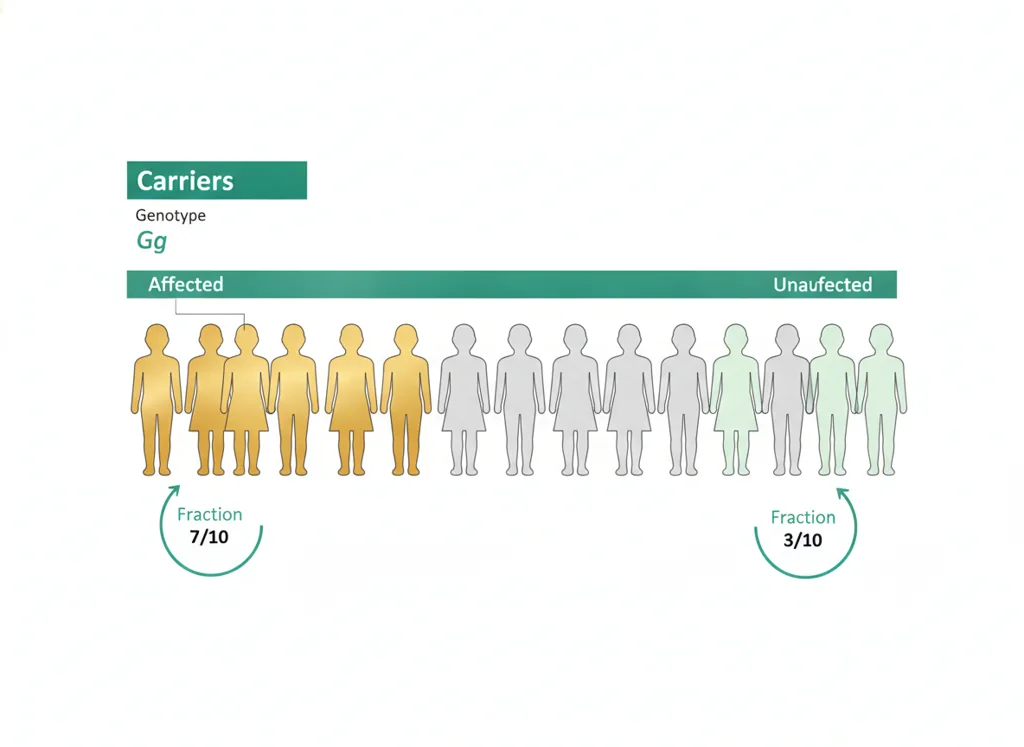
  • Penetrance is the percent of mutants that actually show the phenotype; in the anchor study only about 20 percent of conditional mutants developed a .
  • Every staining run needs a (should light up) and a (should stay dark), plus real counting and statistics rather than one cherry-picked image.
Learn first

Model: Three bench methods from one real cleft study

The Atit-lab-style anchor study investigated the gene Ezh2 in the developing mouse , using three kinds of experiment, each answering a different question [PMID:37435868].

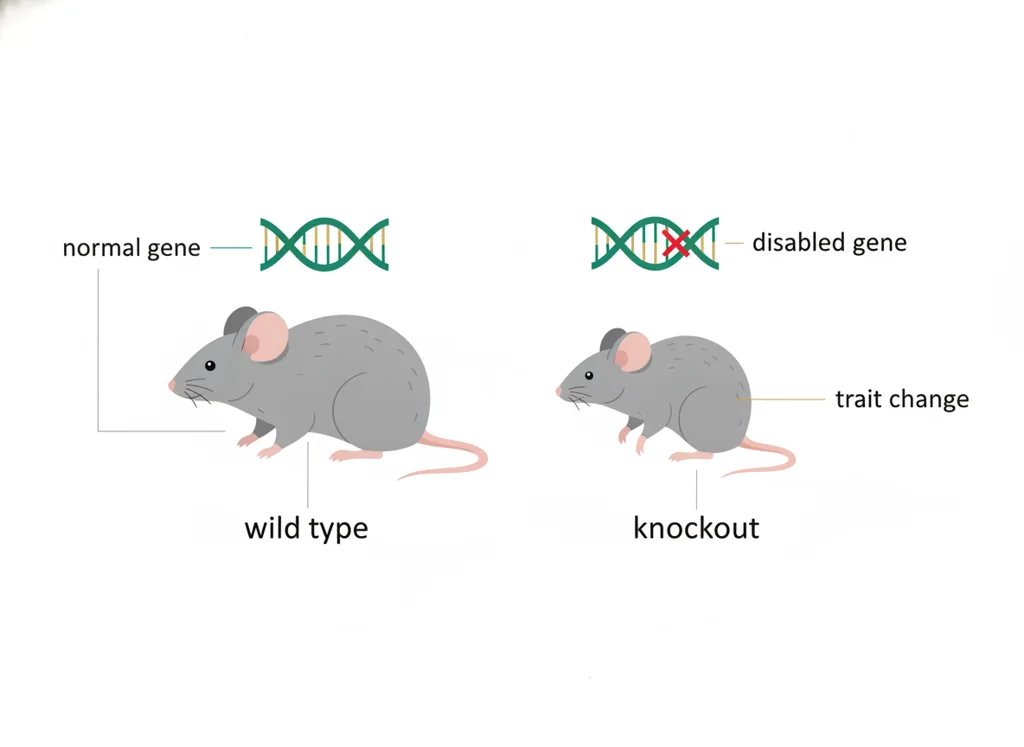
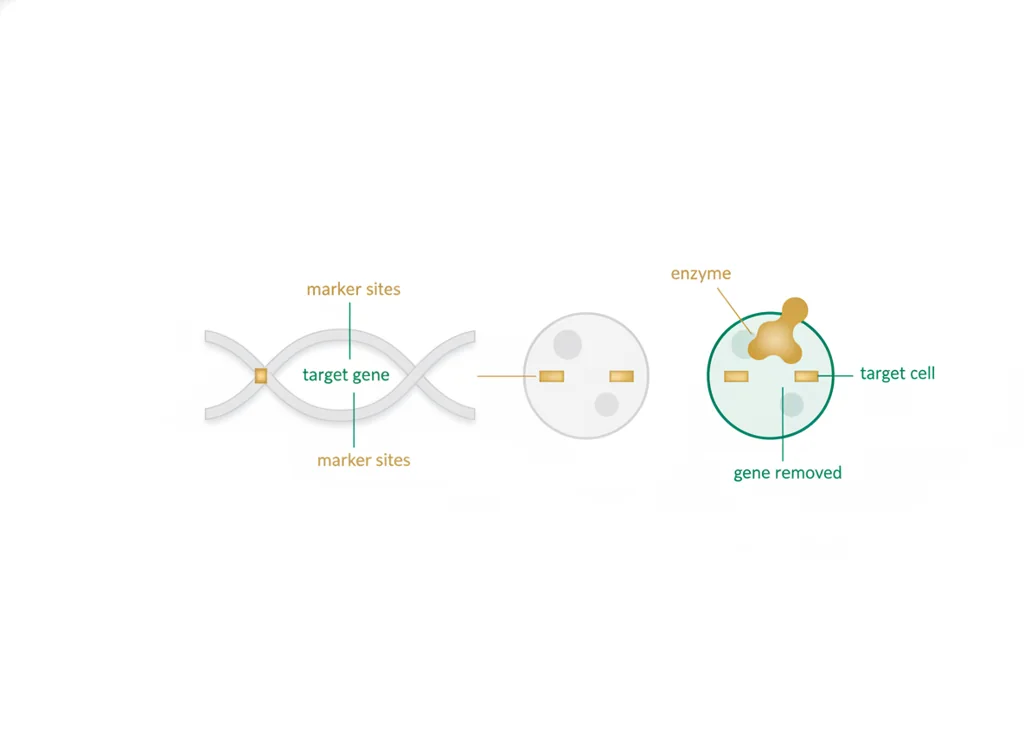
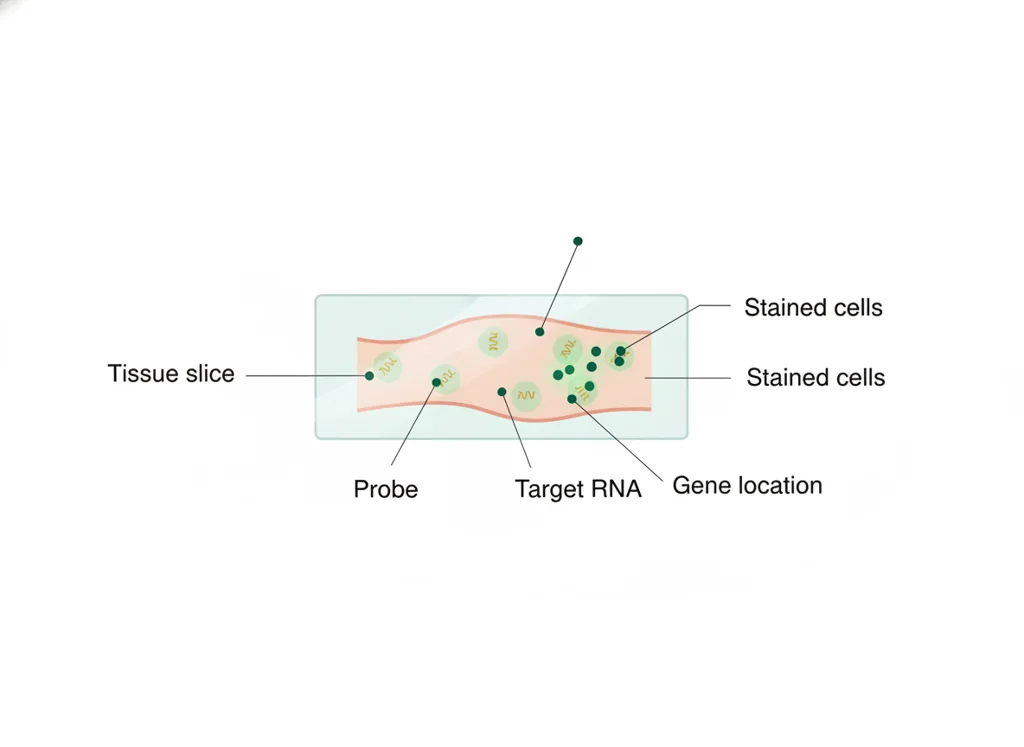
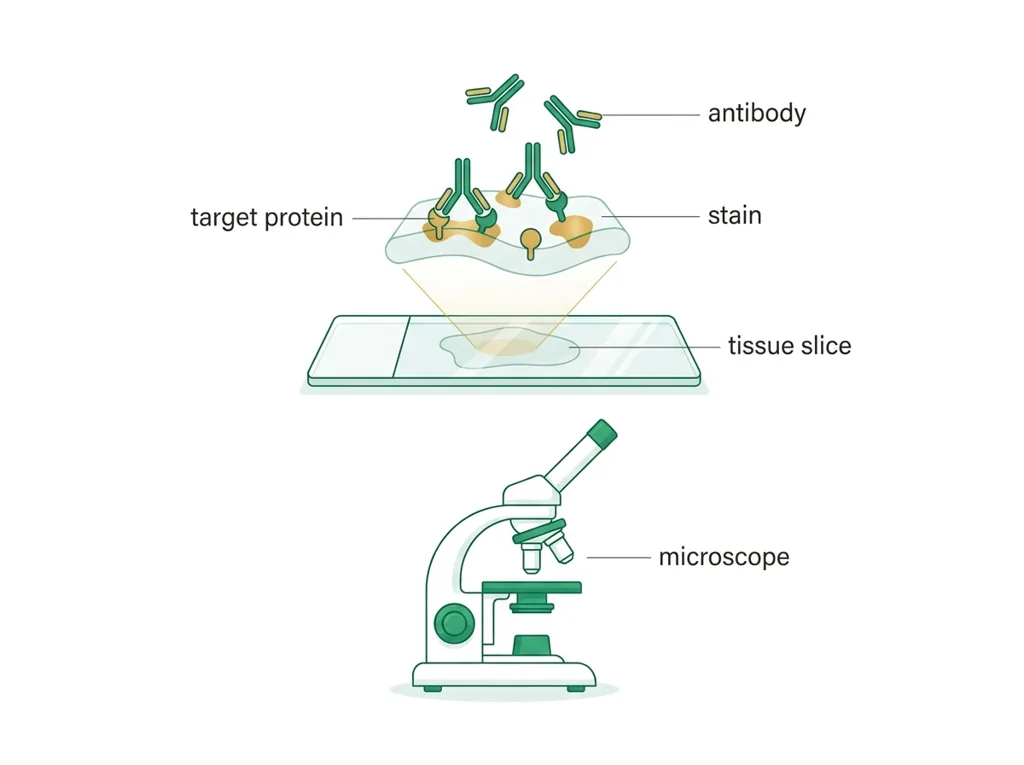
(remove the gene, see what breaks): deleting Ezh2 from the whole mouse from conception is lethal in mid-pregnancy, before the even forms, so a straight knockout cannot be scored. The team used a , removing Ezh2 only in the palate with a -specific Cre driver at the right time, so the survives long enough to read the palate. About 20 percent of the conditional mutants showed palate. (find where a gene is switched on): a labeled probe sticks to a specific messenger RNA in a thin tissue slice, lighting up the exact cells transcribing that gene. or immunofluorescence (find where a sits): an binds a specific protein in a tissue slice; the anchor team stained for proteins like Ki67 (dividing cells) and cleaved caspase-3 (dying cells). On every staining run they included a (should light up) and a (should stay dark), and they counted stained cells in software and compared genotypes with a statistical test. Without controls, a glowing slide proves nothing, because the antibody might be sticking to the wrong thing.

Read this in pieces, one chunk at a time
Do the work

Explore (work the model before reading on)

  1. Which method removes a gene? Which two methods only look at where something is?
  2. Why could the team not use a straight whole-body of Ezh2?
  3. detects messenger RNA; detects . Why might a team want both instead of just one?
  4. Only about 20 percent of conditional mutants showed a ; the other 80 percent looked normal. Does that mean the gene does not matter, and what problem does it create for scoring did it cleft, yes or no?
  5. You suspect IRF6 acts in the surface cells () that keep the shelves from sticking to the wrong . Which method would you run first to test simply where IRF6 is switched on in the , and why?
  6. In one sentence, what pattern did your team find about matching a method to the question it answers?
The plan

Guided notes

1

Three classic moves

Model start: A tests whether a gene is necessary; in situ finds the RNA (where it is switched on); finds the .
  • A deletes a gene to see what breaks; many genes are essential, so deleting them everywhere kills the before the forms, which is why we use a that removes the gene only in chosen cells at a chosen time.
  • shows which cells are transcribing a gene (it finds the ____, messenger RNA); shows where a ____ () sits.
2

Penetrance

  • Penetrance is the percent of mutants that actually show the phenotype; in the anchor study only about ____ percent (20 percent) of conditional mutants developed a .
  • So you cannot expect a clean yes on every animal, and partial penetrance is normal in biology rather than a failed experiment.
3

Controls keep it honest

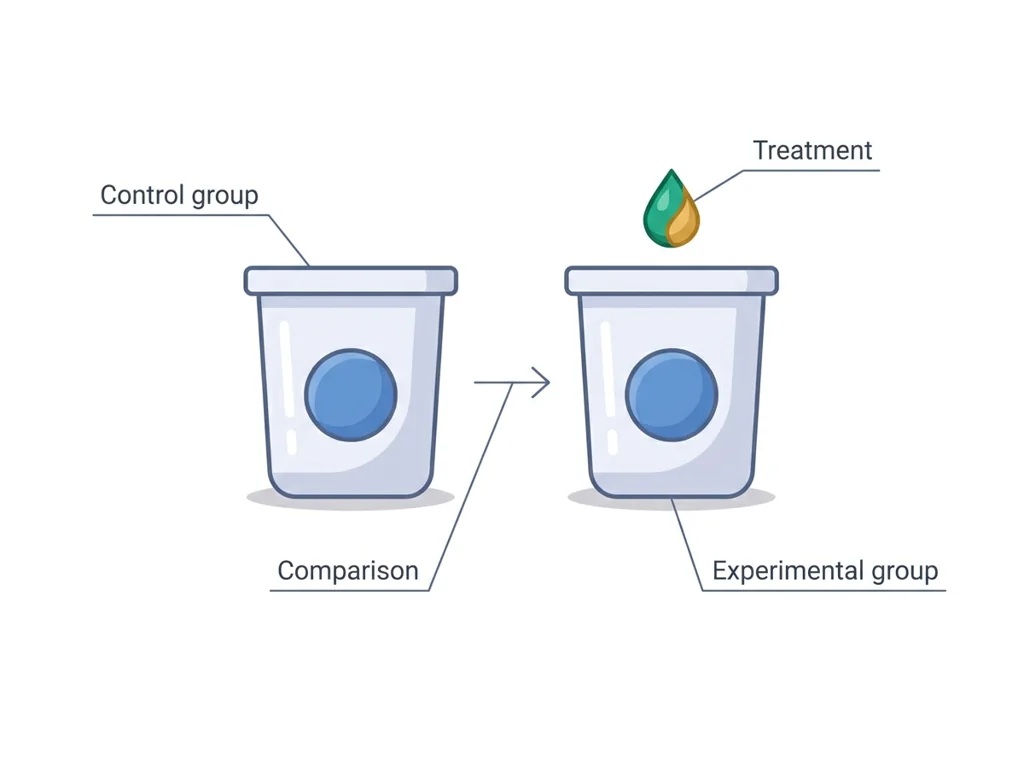
  • Every experiment needs a control: a that should light up and a that should not, on every run.
  • And you count stained cells with real statistics instead of admiring one cherry-picked image, because a glowing slide alone proves nothing.
Explore

Reading the Research

Why this source matters
This is the published evidence behind today's idea: A asks if a gene is necessary, in situ asks where it is switched on, and asks where its sits, each read against careful controls.
Words to unlock first
knockoutconditional knockoutin situ hybridizationimmunohistochemistrypenetrance
Reading moves
  1. Skim the title and abstract first to get the gist.
  2. Circle the one sentence that states the main claim.
  3. Box the evidence the authors give for that claim.
  4. Mark one sentence that confuses you, and move on.
Stop point
You do not need the methods or statistics yet. If a sentence is about lab technique or math you have not learned, mark it and skip it.
Your output
Write one claim-evidence sentence: what this source claims, and the one piece of evidence that backs it up.
Where this fits
Tested on (Ohio WebXam)
Genetics of Disease · 072130
PLTW lesson
MI · Experimental Design domain · Laboratory methods, from association to mechanism
WebXam domain
Bio-Molecular Technology
Evidence to produce
For each question, name the single best method (knockout, in situ hybridization, or immunohistochemistry) and one control: does removing IRF6 from the palate epithelium stop fusion; which cells switch IRF6 messenger RNA on and when; is the IRF6 protein present in surface periderm cells as the shelves touch. Then explain how you would honestly report a 30 percent penetrance result.
Lab / skill
Biomedical Innovations (BI) · Medical Interventions (MI)
Words

Vocabulary (the same words your classes use)

The plan

Track your progress today

Check these off as you work through the lesson, then submit. This tells Mr. Mendoza how you're doing so he can help the class. It does not replace turning in your producible.

Use the code Mr. Mendoza gave you, not your name. Saved on this device.

Check off as you finish
  • Read the Model and answered the Explore questions.
  • Filled in the guided notes in my own words.
  • Defined the new vocabulary with an example.
  • Built the producible: For each question, name the single best method (knockout, in situ hybridization, or immunohistochemistry) and one control: does removing IRF6 from the palate epithelium stop fusion; which cells switch IRF6 messenger RNA on and when; is the IRF6 protein present in surface periderm cells as the shelves touch. Then explain how you would honestly report a 30 percent penetrance result.
  • Wrote my Claim, Evidence, and Reasoning exit ticket.
Pick your period and code first.
Check yourself

Exit ticket (Claim, Evidence, Reasoning)

  • Claim: A is the right tool to test whether IRF6 is needed for .
  • Evidence: In the anchor study, a straight of an essential gene was ____ (lethal) before the palate formed, so the team removed it only in the ____ (palate ).
  • Reasoning: A lets the animal ____ (survive) long enough to score the , so we can see whether losing the gene breaks .
How this is graded (rubric)
For: For each question, name the single best method (knockout, in situ hybridization, or immunohistochemistry) and one control: does removing IRF6 from the palate epithelium stop fusion; which cells switch IRF6 messenger RNA on and when; is the IRF6 protein present in surface periderm cells as the shelves touch. Then explain how you would honestly report a 30 percent penetrance result.
CriterionProficientDevelopingBeginning
CompleteEvery required part of the artifact is present and filled in.Most parts are present, but one is missing or left blank.Several parts are missing.
AccurateThe science and data are correct and match the evidence.Mostly correct, with a small factual slip.Key science or data is wrong.
Scientific reasoning (CER)States a claim, backs it with specific evidence, and explains the reasoning.Has a claim and evidence, but the reasoning is thin or missing.Gives an answer with no evidence or reasoning.
Professional communicationClear, organized, and labeled the way a clinician or scientist would write it.Readable but disorganized or missing labels.Hard to follow.
SubmittedTurned in the right way (Schoology for routine work) and confirmed.Turned in, but in the wrong place or unconfirmed.Not turned in.
How the model answer scores against this rubric
  • CompleteProficient: Nothing is left blank: the model fills every part of "For each question, name the single best method (knockout, in situ hybridization, or immunohistochemistry) and one control: does removing IRF6 from the palate epithelium stop fusion; which cells switch IRF6 messenger RNA on and when; is the IRF6 protein present in surface periderm cells as the shelves touch. Then explain how you would honestly report a 30 percent penetrance result.".
  • AccurateProficient: Every number and claim matches the case evidence.
  • Scientific reasoning (CER)Proficient: It names a claim, cites the specific evidence, and explains the reasoning, not just the answer.
  • Professional communicationProficient: It is organized and labeled like a real chart note.
  • SubmittedProficient: It would be turned in on Schoology and confirmed.
Explore

Where this leads: careers

Developmental biologist Laboratory scientist Research technician

What's next: A removes a gene and a stain shows where it sits, but both are slow and blunt; building a conditional-knockout mouse takes many crosses and many months. Is there a faster, more precise way to edit a gene on purpose and read out exactly what it does?