Rough draft.This research track is under review with Dr. Atit's lab. Content and sequence may still change.
The Baby Mateo Case
Experimental Design domainBiomedical Innovations (BI)Lesson 20 of 20Your seat: Principal Investigator (the whole team)

What New Question About Mateo Would You Investigate, and How?

Discovery question

What new question about Mateo's is worth investigating, and how would you design a sound, ethical study to answer it?

💡 Every study you read this year ran on the same eleven-step backbone, and across designs the evidence converges on one answer: Mateo's is nonsyndromic and multifactorial, many small genetic and environmental pushes, not one broken gene.

The plan

Prerequisite check

Before this page, you should know
  • Audits of animal papers found randomization reported in only about 30 to 40%, in roughly 20%, and a sample-size justification in under 10%, which is why reporting standards exist.
  • Each study type has its own reporting checklist: CONSORT for randomized trials, STROBE for observational studies, PRISMA for systematic reviews, and ARRIVE for animal research.
Today's new idea is only
Every study you read this year ran on the same eleven-step backbone, and across designs the evidence converges on one answer: Mateo's is nonsyndromic and multifactorial, many small genetic and environmental pushes, not one broken gene.
Learn first

What you will learn

Goal: Design an original, ethical, well-controlled study to answer a new question about Mateo's using the full experimental-design checklist, and state what converging evidence taught us about how scientists tell isolated from syndromic clefting.

Know by the end
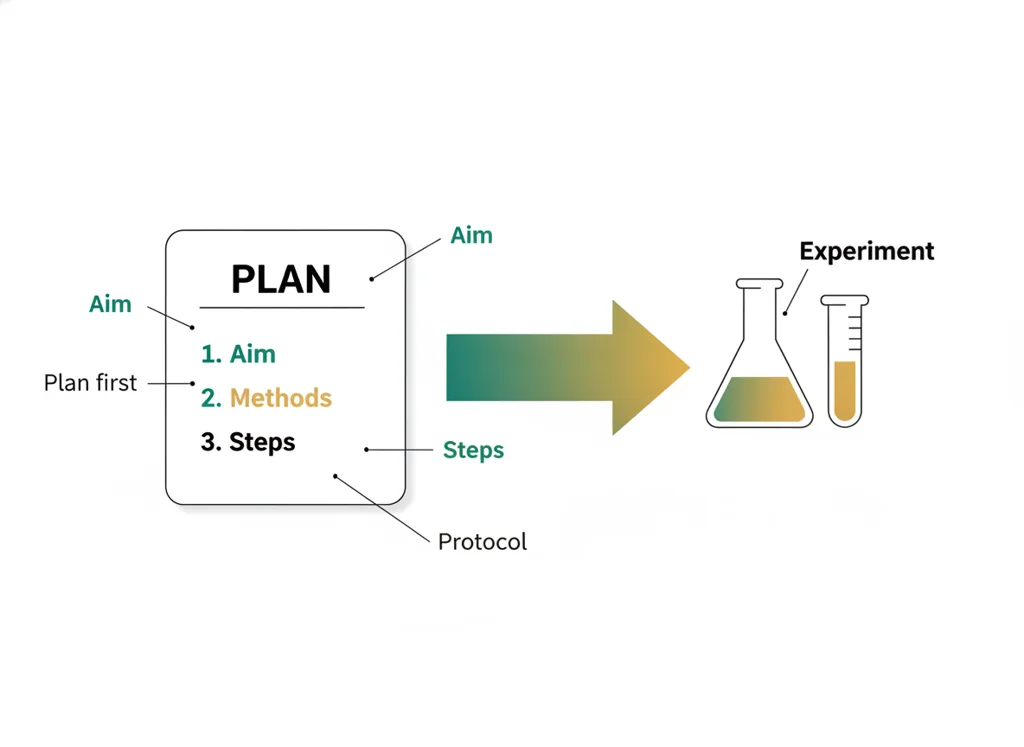
  • A is the complete written plan, all eleven steps, finalized before any data are collected, so no one can change the rules after seeing the results.
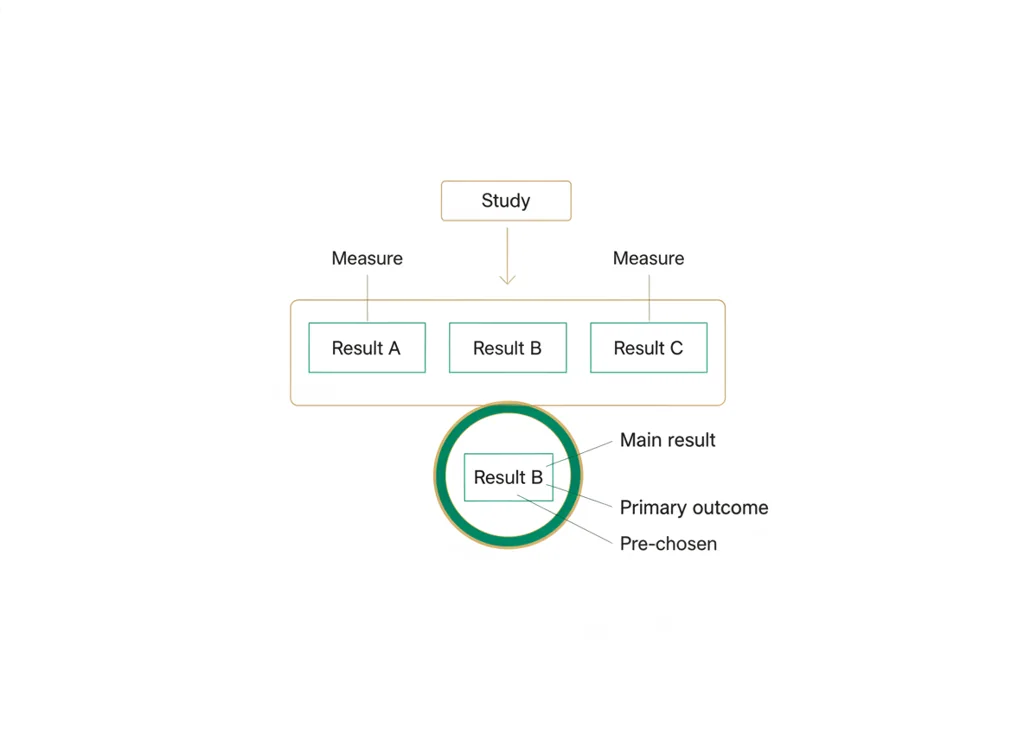
  • The is the single, pre-defined, objective measure chosen in advance to answer the question; TOPS chose at age 5.
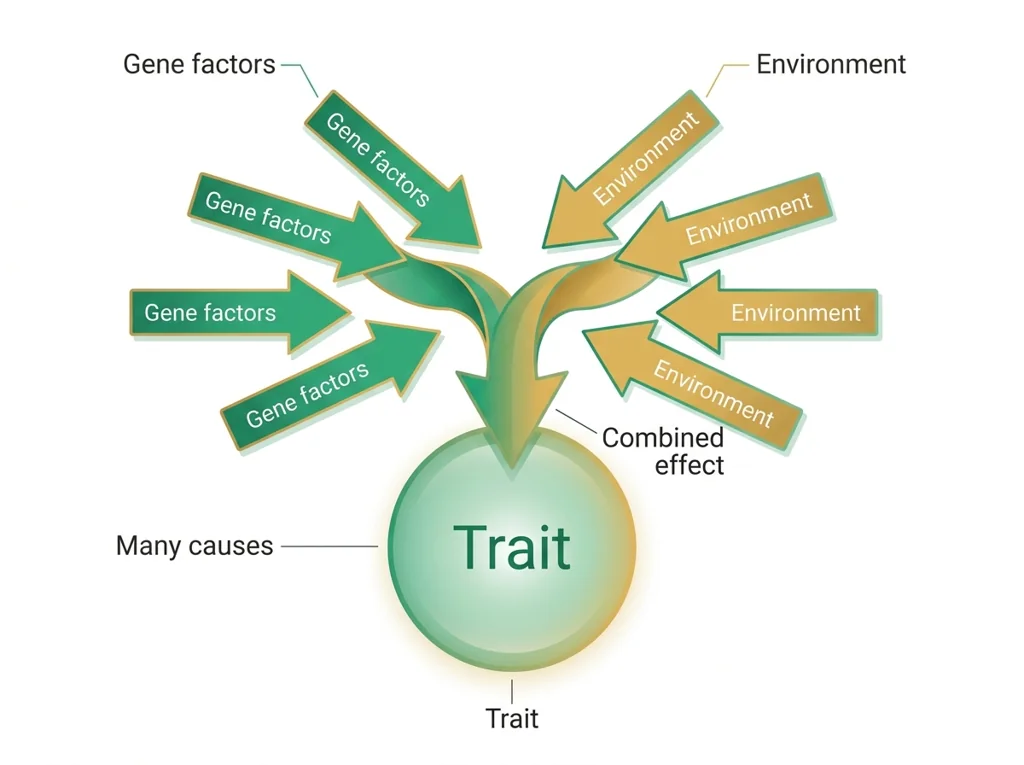
  • Multifactorial means caused by many small genetic and environmental factors acting together, rather than a single gene; agreement across different designs is stronger evidence than any one study.
  • Converging designs (case-parent trios, twin and heritability, case-control epidemiology, and the isolated clinical picture) point to a nonsyndromic, multifactorial , with a common regulatory IRF6 variant as one plausible small contributor.
Learn first

Model: The investigator's checklist, and what the converging evidence has been saying

Every study you read this year, from the IRF6 trios to the TOPS trial, was built on the same backbone. As a blueprint: (1) one specific testable Question; (2) a Hypothesis and what would prove you wrong; (3) the simplest Design that answers it cleanly (RCT for a treatment effect, case-control for a rare-outcome , cohort or twin for inheritance, for gene function); (4) Variables, the one you change, the one you measure, what you hold constant; (5) Controls, including a comparison group; (6) Bias defense, randomize, blind, and match where you can; (7) , a before data; (8) one primary, objective, pre-defined Outcome; (9) Statistics chosen in advance, with multiple-testing correction planned; (10) Ethics, IRB or IACUC, consent and assent, ; (11) a Report detailed enough for a stranger to repeat (CONSORT, STROBE, PRISMA, ARRIVE).

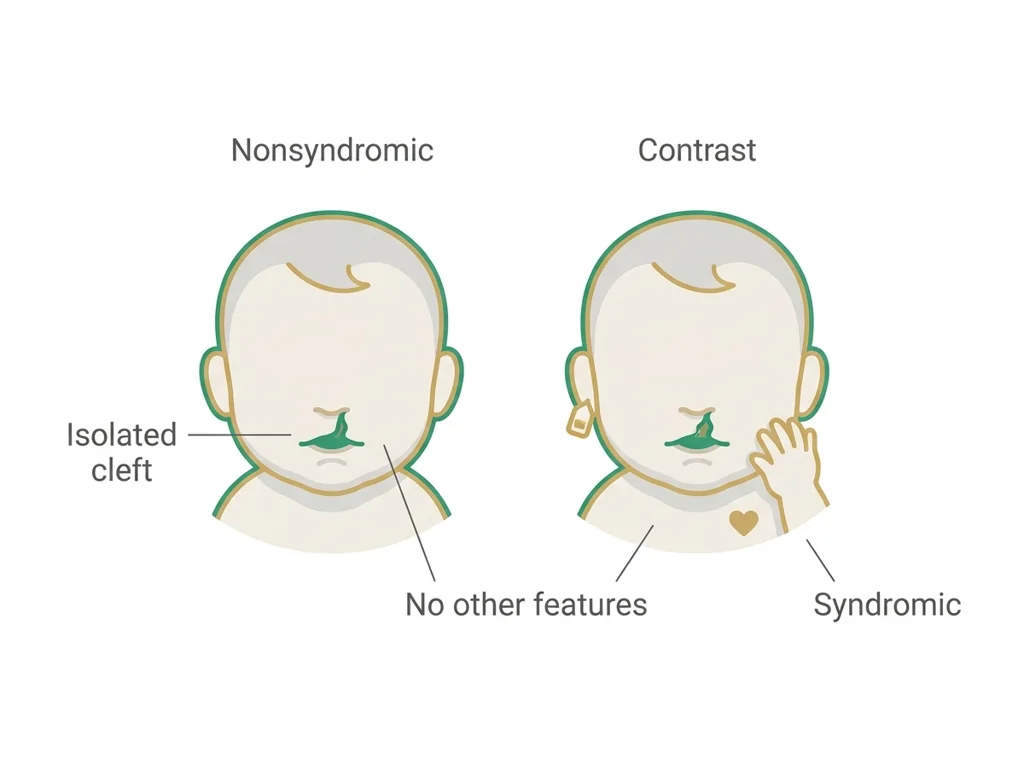
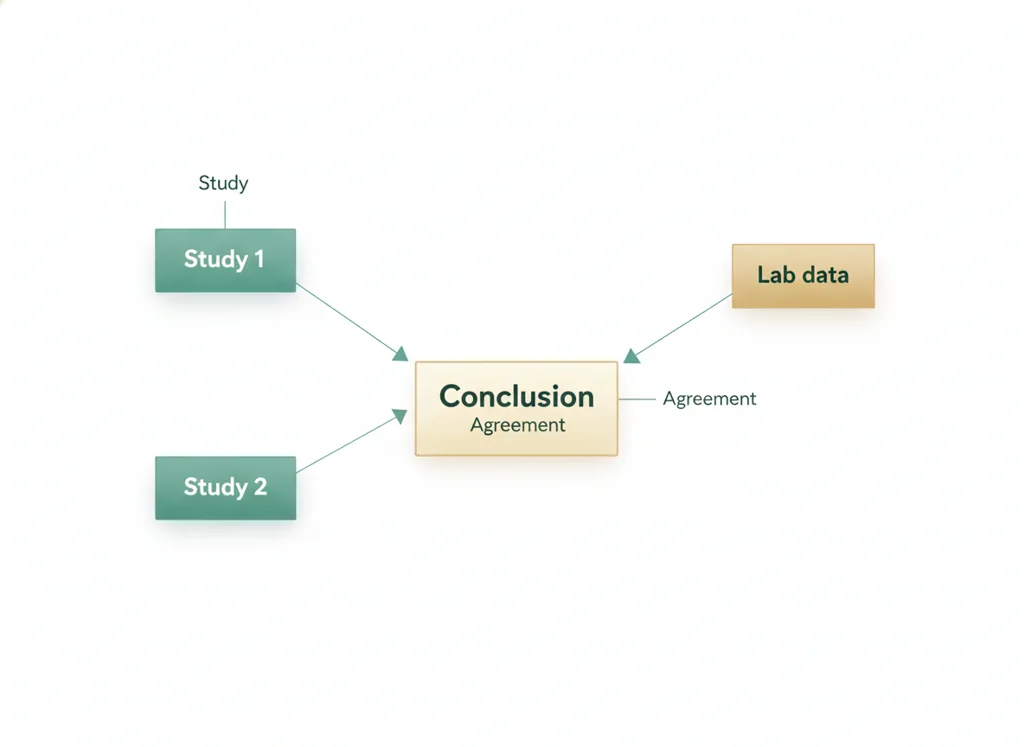
Now look at the pattern, not any one lesson. Case-parent trios found a common regulatory IRF6 risk variant that raises risk only a little, the signature of a small-effect , not a single broken gene. Twin and heritability designs found that clefts run partly in families, yet identical twins are often not both affected, so genes alone do not decide it. Case-control epidemiology found that environment matters too. The clinical picture is an , no other birth defects, no , no syndrome features. Many small genetic pushes plus environment plus chance, with no single syndrome behind it.

Read this in pieces, one chunk at a time
Do the work

Explore (work the model before reading on)

  1. In the checklist, which step tells you to choose your comparison group?
  2. Which two steps are purely about protecting people and reporting honestly?
  3. Did identical twins always both have a ? What does that tell you about genes alone?
  4. Several different designs all pointed toward 'not a single broken gene, not a syndrome.' Why is agreement across different designs stronger evidence than any one study?
  5. Pick one thing about Mateo's that is still unknown to you (a cause, a treatment timing, a long-term outcome, a way to predict recurrence) and turn it into a single, specific, testable question. This becomes the seed of your study.
The plan

Guided notes

1

Protocol and primary outcome

Model start: Writing the protocol first, before any data, is what makes a study honest, because no one can change the rules after seeing the results.
  • A is the complete written plan, every one of the eleven steps, written down ____ you collect any data.
  • The is the single, pre-defined, objective measure you decide in advance will answer your question; choosing one stops you from fishing through many measures and reporting whichever looked ____.
  • TOPS chose one : at age ____.
2

The discovery this domain was building toward

  • The converging evidence points to a that is isolated (no syndrome, no other defects) and ____: caused by many small genetic risks acting with environment and chance, not one broken gene.
  • That is why no single design could 'find the gene'; the honest description is a nonsyndromic, ____ lip and , with a common regulatory IRF6 variant as one plausible small contributor.
  • You were not told this; you ____ your way to it across the evidence, the way a real investigator does.
Explore

Reading the Research

What to read
Why this source matters
This is the published evidence behind today's idea: Every study you read this year ran on the same eleven-step backbone, and across designs the evidence converges on one answer: Mateo's is nonsyndromic and multifactorial, many small genetic and environmental pushes, not one broken gene.
Words to unlock first
study protocolprimary outcomemultifactorialnonsyndromicconvergent evidence
Reading moves
  1. Skim the title and abstract first to get the gist.
  2. Circle the one sentence that states the main claim.
  3. Box the evidence the authors give for that claim.
  4. Mark one sentence that confuses you, and move on.
Stop point
You do not need the methods or statistics yet. If a sentence is about lab technique or math you have not learned, mark it and skip it.
Your output
Write one claim-evidence sentence: what this source claims, and the one piece of evidence that backs it up.
Where this fits
Tested on (Ohio WebXam)
Genetics of Disease · 072130
PLTW lesson
MI · Experimental Design domain · Experimental design capstone: full study protocol and convergent evidence for multifactorial causation
WebXam domain
Bio-Molecular Technology
Evidence to produce
Take the question you wrote in Explore and build a full study around it. As Principal Investigator, write a one-page mini-protocol covering all eleven steps. At minimum, clearly state: (1) Question and hypothesis, plus what would prove you wrong; (2) Design and why a simpler one would not work; (3) Variables and controls; (4) Bias defenses (randomize, blind, or match); (5) Outcome and the test chosen in advance; (6) Ethics, IRB approval, who consents, whether assent is needed, and whether you have genuine equipoise. Then trade protocols with another team and play peer reviewer: find the one weakest step and suggest a fix.
Lab / skill
Biomedical Innovations (BI) · AP Biology
Words

Vocabulary (the same words your classes use)

The plan

Track your progress today

Check these off as you work through the lesson, then submit. This tells Mr. Mendoza how you're doing so he can help the class. It does not replace turning in your producible.

Use the code Mr. Mendoza gave you, not your name. Saved on this device.

Check off as you finish
  • Read the Model and answered the Explore questions.
  • Filled in the guided notes in my own words.
  • Defined the new vocabulary with an example.
  • Built the producible: Take the question you wrote in Explore and build a full study around it. As Principal Investigator, write a one-page mini-protocol covering all eleven steps. At minimum, clearly state: (1) Question and hypothesis, plus what would prove you wrong; (2) Design and why a simpler one would not work; (3) Variables and controls; (4) Bias defenses (randomize, blind, or match); (5) Outcome and the test chosen in advance; (6) Ethics, IRB approval, who consents, whether assent is needed, and whether you have genuine equipoise. Then trade protocols with another team and play peer reviewer: find the one weakest step and suggest a fix.
  • Wrote my Claim, Evidence, and Reasoning exit ticket.
Pick your period and code first.
Check yourself

Exit ticket (Claim, Evidence, Reasoning)

  • Claim: Mateo's is a nonsyndromic, multifactorial cleft lip and , and I can design an original study to learn more about it.
  • Evidence: Cite two different study designs from this domain that together point to many-small-causes rather than one broken gene or a syndrome.
  • Reasoning: Explain why your own study design (name its key control or bias defense) would give a trustworthy answer to the new question you chose.
How this is graded (rubric)
For: Take the question you wrote in Explore and build a full study around it. As Principal Investigator, write a one-page mini-protocol covering all eleven steps. At minimum, clearly state: (1) Question and hypothesis, plus what would prove you wrong; (2) Design and why a simpler one would not work; (3) Variables and controls; (4) Bias defenses (randomize, blind, or match); (5) Outcome and the test chosen in advance; (6) Ethics, IRB approval, who consents, whether assent is needed, and whether you have genuine equipoise. Then trade protocols with another team and play peer reviewer: find the one weakest step and suggest a fix.
CriterionProficientDevelopingBeginning
CompleteEvery required part of the artifact is present and filled in.Most parts are present, but one is missing or left blank.Several parts are missing.
AccurateThe science and data are correct and match the evidence.Mostly correct, with a small factual slip.Key science or data is wrong.
Scientific reasoning (CER)States a claim, backs it with specific evidence, and explains the reasoning.Has a claim and evidence, but the reasoning is thin or missing.Gives an answer with no evidence or reasoning.
Professional communicationClear, organized, and labeled the way a clinician or scientist would write it.Readable but disorganized or missing labels.Hard to follow.
SubmittedTurned in the right way (Schoology for routine work) and confirmed.Turned in, but in the wrong place or unconfirmed.Not turned in.
How the model answer scores against this rubric
  • CompleteProficient: Nothing is left blank: the model fills every part of "Take the question you wrote in Explore and build a full study around it. As Principal Investigator, write a one-page mini-protocol covering all eleven steps. At minimum, clearly state: (1) Question and hypothesis, plus what would prove you wrong; (2) Design and why a simpler one would not work; (3) Variables and controls; (4) Bias defenses (randomize, blind, or match); (5) Outcome and the test chosen in advance; (6) Ethics, IRB approval, who consents, whether assent is needed, and whether you have genuine equipoise. Then trade protocols with another team and play peer reviewer: find the one weakest step and suggest a fix.".
  • AccurateProficient: Every number and claim matches the case evidence.
  • Scientific reasoning (CER)Proficient: It names a claim, cites the specific evidence, and explains the reasoning, not just the answer.
  • Professional communicationProficient: It is organized and labeled like a real chart note.
  • SubmittedProficient: It would be turned in on Schoology and confirmed.
Explore

Where this leads: careers

Principal Investigator Clinical Researcher Genetic Epidemiologist Physician-Scientist

What's next: We answered the whole domain's question with this one: you can take a fresh question about Mateo's and design a sound, ethical study, and you discovered his cleft is nonsyndromic and multifactorial by reasoning across the evidence, not by being told. The studies you read this year were designed by scientists years ago. The next generation of evidence about clefts like Mateo's will come from studies that students like you design. So the question that opens onto the rest of your life: what will you ask, and who will you become to answer it?