
What Makes Research on Children Ethical?
This reading contains every idea and every piece of evidence needed for today's decision. The research links at the end are optional.
Why this matters
Children can contribute important evidence only when the study respects their welfare and developing autonomy.
The question you are trying to answer
Who reviews the plan before anyone joins?
Begin with the idea you already earned
Systematic reviews reduce cherry-picking, while meta-analysis is credible only when studies and pooling assumptions support it.
Study the analogy before the biology
- Who reviews the plan before anyone joins?
- Whose permission is needed?
- How can a child show an affirmative choice?
Turn the analogy into three rules
Limit: Research ethics is governed by regulations, context, and individual capacity, not one school-trip form.
Map those rules onto the biology
In the United States, federal Subpart D rules add protections for children in research. An IRB reviews risk, benefit, privacy, permission, and assent.
Parental permission is similar to informed consent from a parent or guardian. Information must be understandable, voluntary, and honest.
Assent is a child's affirmative agreement when capable. Researchers explain the study at an appropriate level and respect dissent within the approved plan.
Read Mateo's labeled case evidence
The study involves children, coded recordings, and no change from accepted care.
The IRB must assess risk, privacy, and added protections.
The protocol gives caregivers plain-language information and time for questions.
Permission should be informed and voluntary.
Children who can understand receive an age-appropriate explanation and are asked for affirmative agreement.
Assent is more than silence or failure to object.
Make the concrete decision
You are the pediatric IRB reviewer.
A protocol says parental signature alone is enough and children should not be told because that is faster.
- Require IRB-approved protections, permission, and capability-based assent.
- Use only the parent signature for every capable child.
- Treat a child's silence as affirmative assent.
Choose the ethics correction and explain the role of the IRB, permission, and assent.
Claim ceiling: You may apply the supplied educational ethics framework. You may not replace local IRB review or legal guidance.
Write the 10-year takeaway
Child research requires favorable risk and benefit, IRB review, parental permission, and affirmative assent when the child is capable.
- What extra review protects children?
- Why is silence not assent?
Glossary in plain English
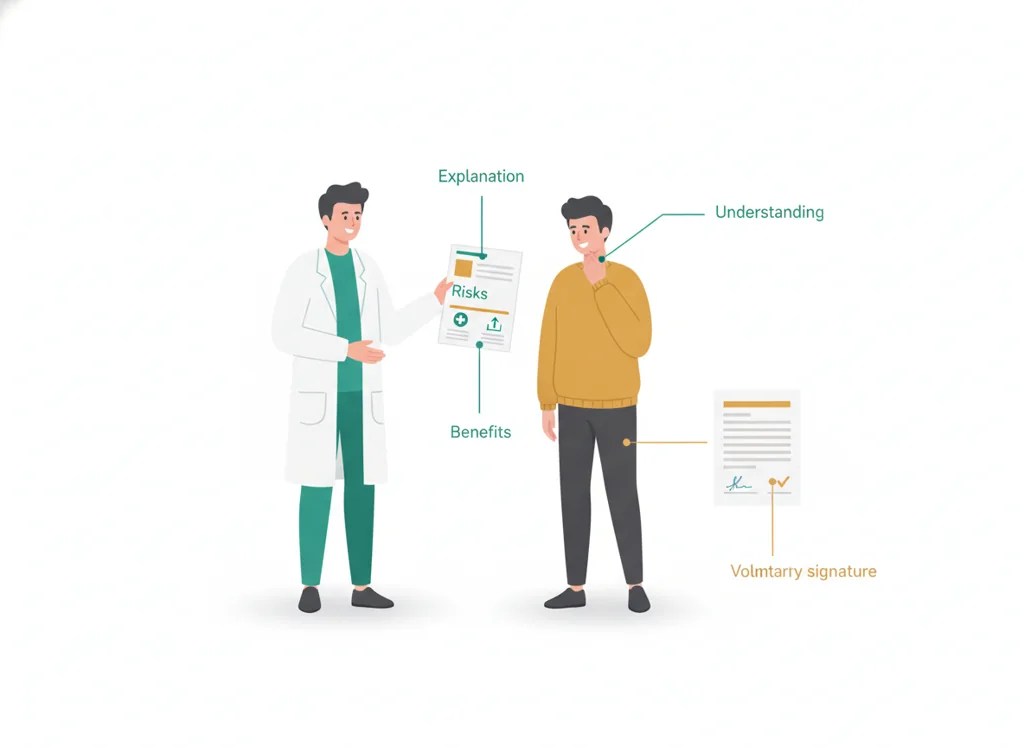
Agreeing to a treatment or study only after truly understanding its purpose, risks, benefits, and alternatives; the understanding, not the signature, is the ethics.
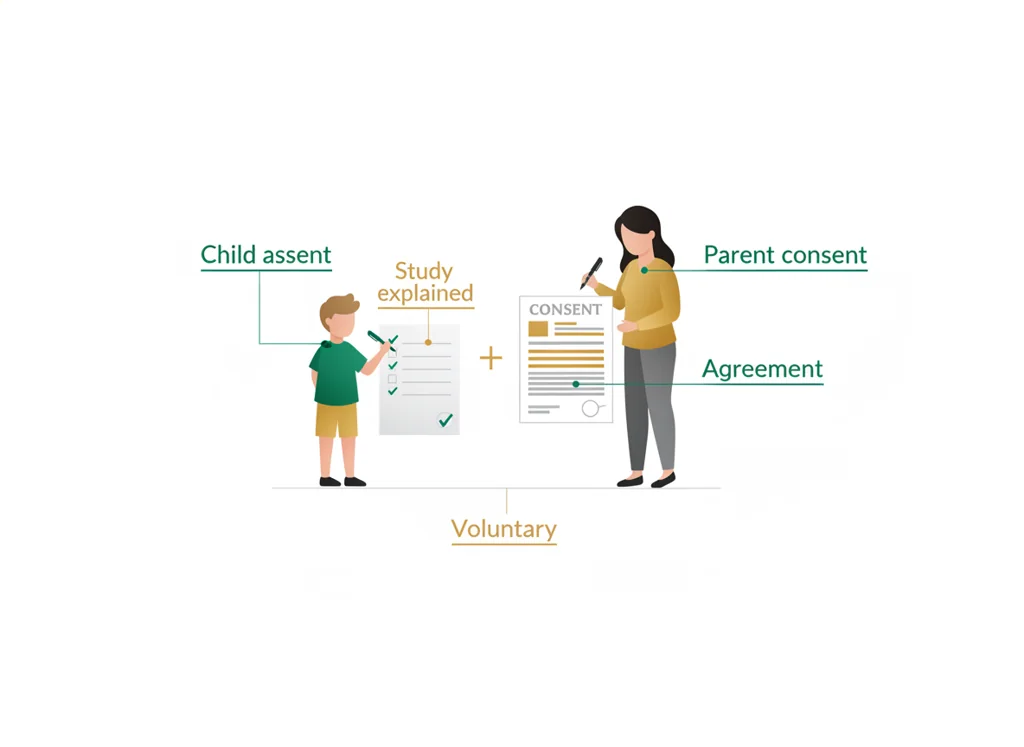
A child or teen's own agreement to take part in a study, given alongside a parent's legal permission, after the study is explained at their level.
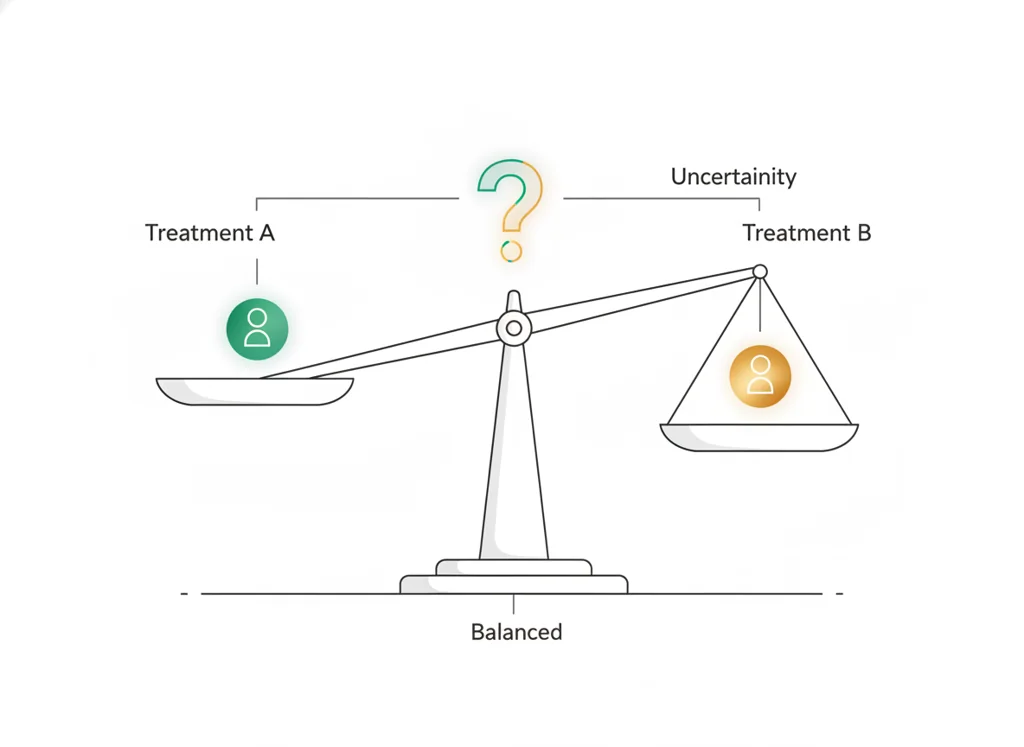
Genuine uncertainty in the expert community about which treatment is better, which is what makes randomly assigning patients in a trial ethical.
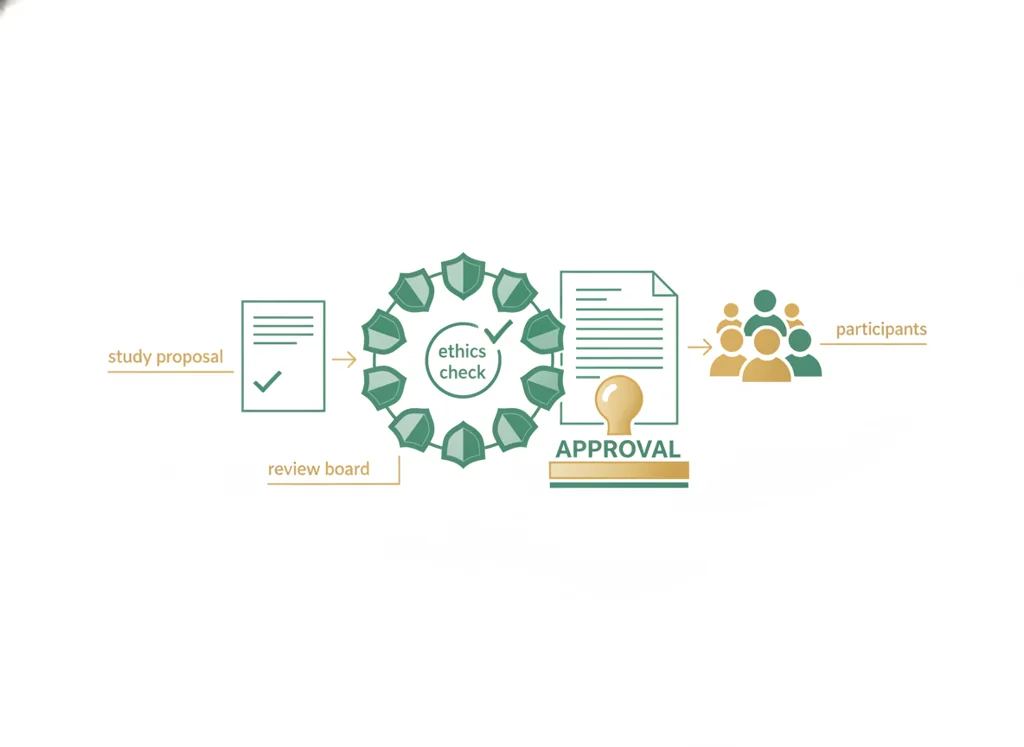
A committee that reviews research involving people to make sure it is ethical and that participants are protected from harm.
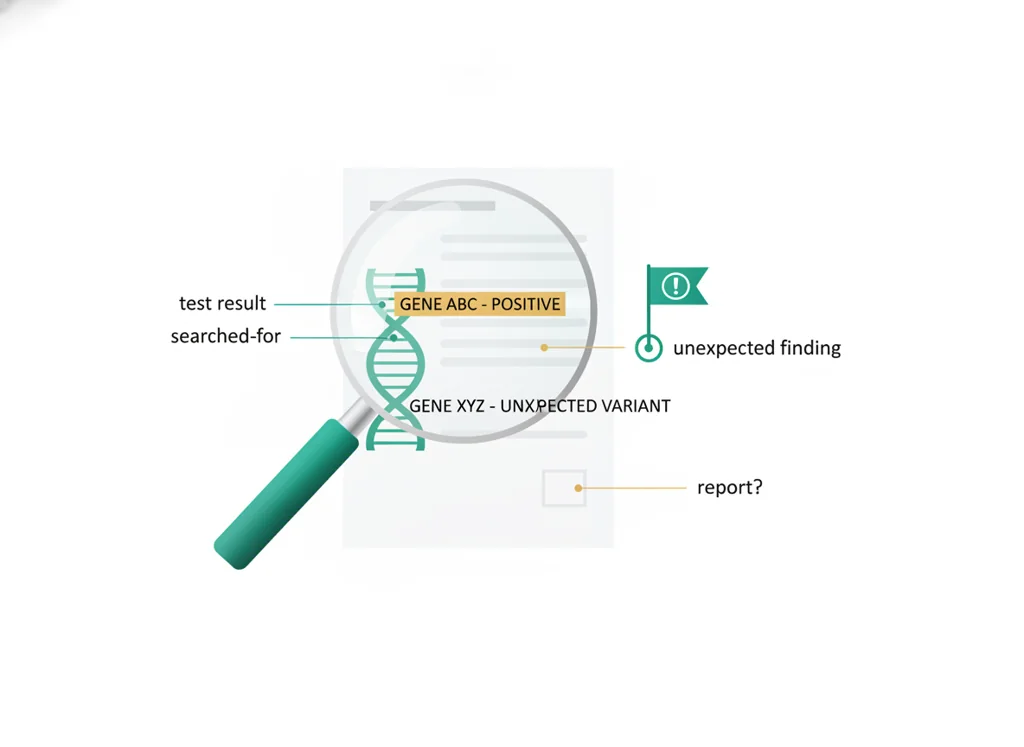
Unexpected health results discovered by a test that was looking for something else, raising questions about whether to report them.
Research citation trail (advanced)
You do not need these papers or database records to finish the lesson. They document where the plain-language explainer's claims come from and are intended for teachers or advanced readers.
- HHS OHRP. Research with Children FAQs and Subpart D protections.
- Gamble et al. 2023, TOPS trial ethics approvals and consent (NEJM)
- Park et al. 2007, IRF6 and nonsyndromic CL/P in four populations, case-parent trios (Genet Med)
- Percie du Sert et al. 2020, ARRIVE 2.0 (power as a Reduction and ethics tool, PLoS Biol)