Rough draft.This research track is under review with Dr. Atit's lab. Content and sequence may still change.
The Baby Mateo Case
Experimental Design domainBiomedical Innovations (BI)Lesson 16 of 20Your seat: Biostatistician

What Could Fool Us Into the Wrong Conclusion?

Discovery question

What could fool us into thinking we found the right cause, when we did not?

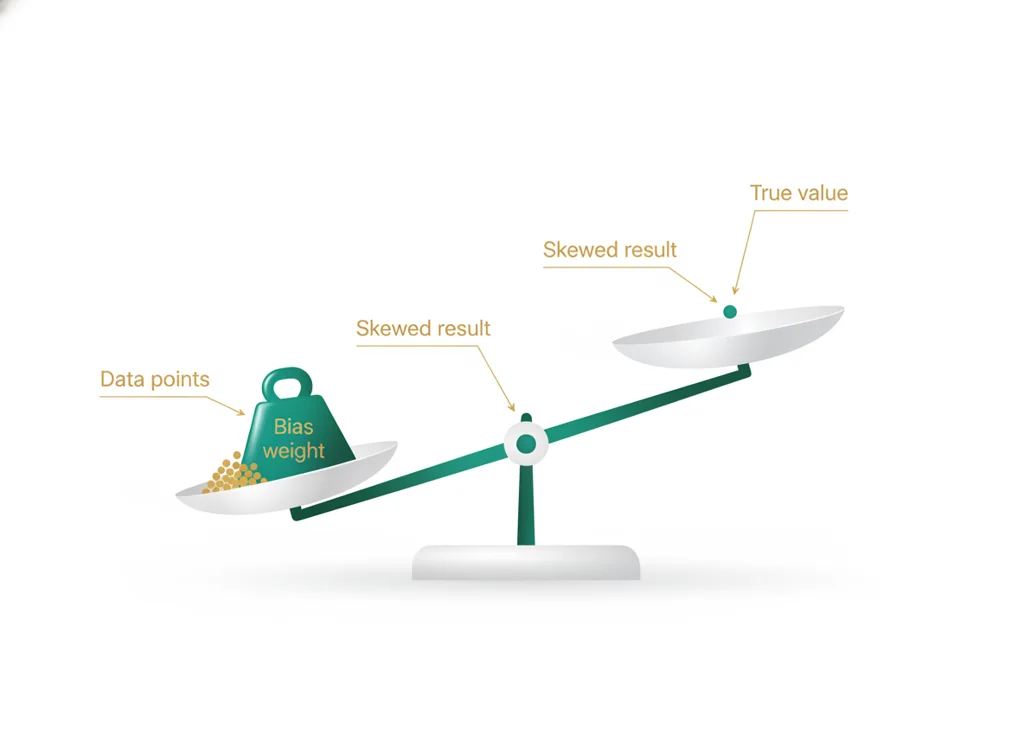
💡 Bias is a built-in one-direction error in how a study is run or measured, while confounding is a hidden third variable; good design defends with standardization, , randomization, and matching.

The plan

Prerequisite check

Before this page, you should know
  • An is the specific, defined thing a study counts; an is the exact written rule for what you observe and how you score it.
  • TOPS did not score 'good speech'; it scored a velopharyngeal composite (VPC-Sum) from 0 to 6 on a fixed single-word test, with 4 or higher defined as insufficiency.
Today's new idea is only
Bias is a built-in one-direction error in how a study is run or measured, while confounding is a hidden third variable; good design defends with standardization, , randomization, and matching.
Learn first

What you will learn

Goal: Identify bias, confounding, and the surgeon-as-confounder problem in a real study, and name the design defenses (matching, randomization, ).

Know by the end
  • Bias is a built-in error in how a study is run or measured that pushes results one direction; (a measurement bias) and survival bias (a selection bias) are two examples.
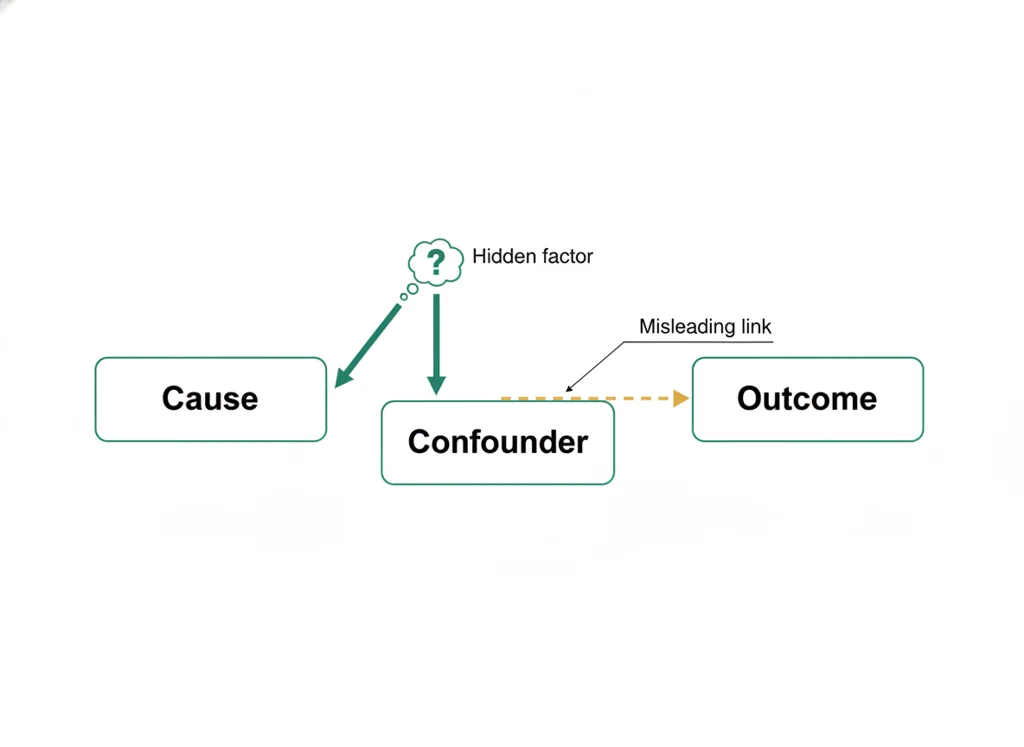
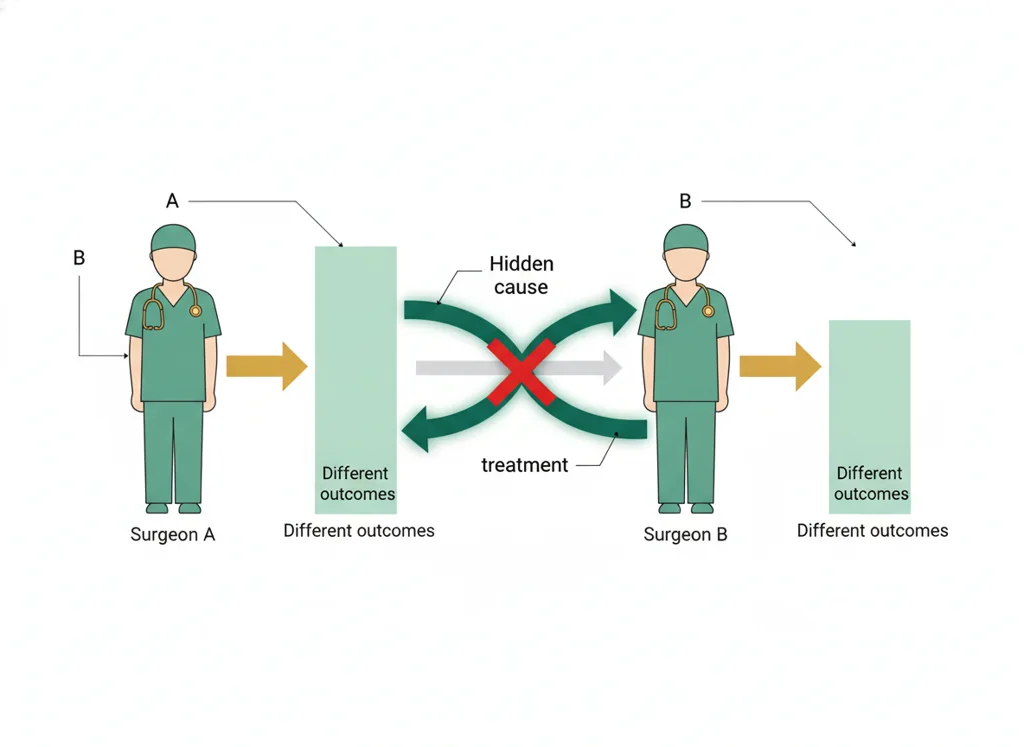
  • Confounding happens when a hidden third variable is tangled with both the thing you changed and the thing you measured, so it can masquerade as the cause.
  • In a real UCLP trial the dental-arch outcome tracked with which surgeon operated, not the technique, the surgeon-as-confounder problem; a skilled surgeon got good results with either technique.
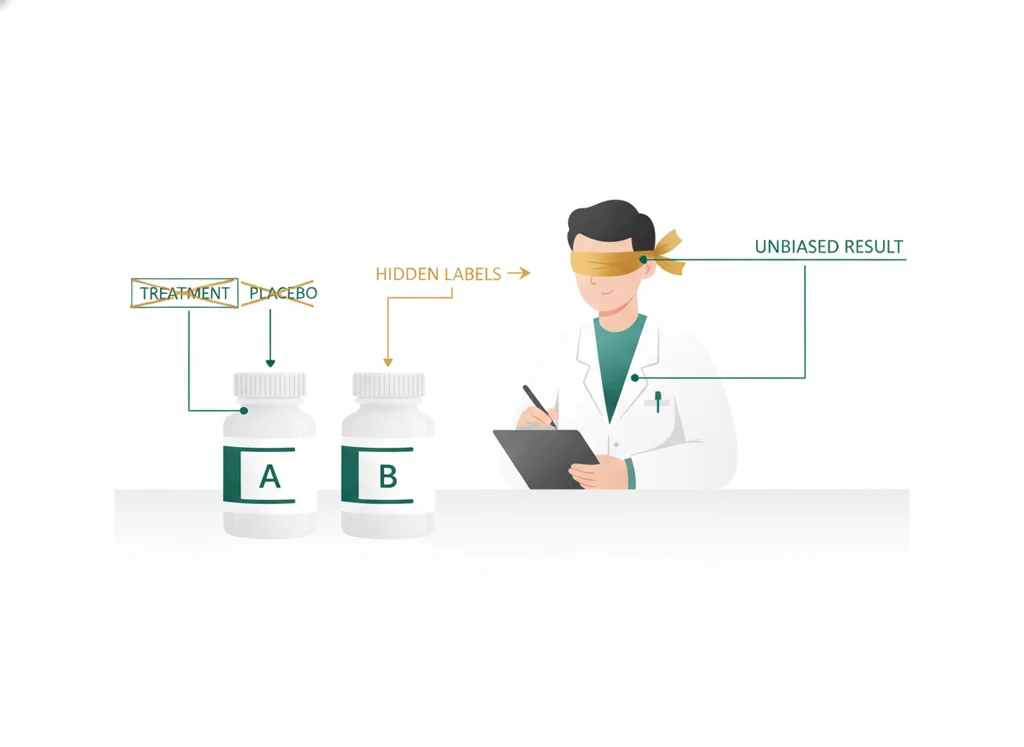
  • Design defenses differ by trap: standardize and blind the measurement to fight bias; randomize, match, or measure and adjust to fight confounding; you can blind the judge but never the surgeon.
Learn first

Model: Two surgeons wearing a technique costume, and mothers remembering a pregnancy

In a randomized clinical trial of children with lip and , researchers compared two ways of repairing the palate and asked which gave better dental-arch growth, scored 1 to 5 on the GOSLON yardstick by outside judges who did not know which technique a child received. Here is the twist: the dental-arch outcome did not track with the surgical technique at all. It tracked with which surgeon did the operation. A skilled surgeon got good results with either technique. The technique effect the team almost reported was really a surgeon effect wearing a technique costume.

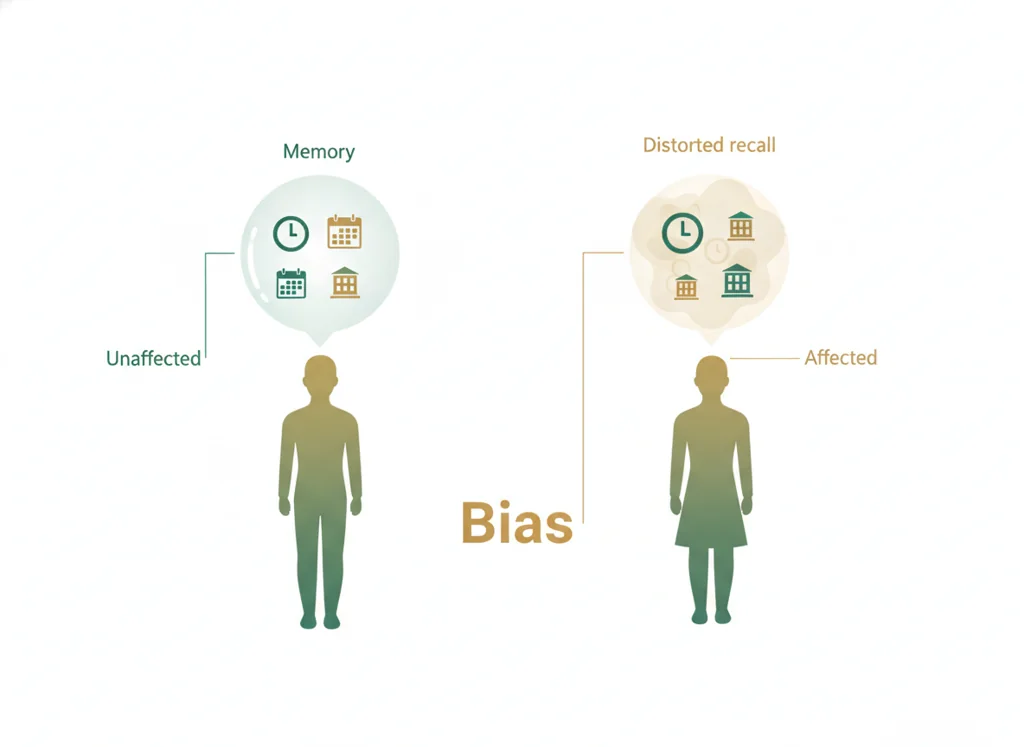
In a separate five-country , mothers of babies with clefts were asked to recall pregnancy exposures, and so were mothers of babies without clefts. Mothers of an affected baby tend to search their memory harder ('what did I do?'), so they report more exposures, not because they had more, but because they remember more intensely. That is : the way the exposure was measured differed between the two groups.

Read this in pieces, one chunk at a time
Do the work

Explore (work the model before reading on)

  1. In the surgeon study, what did the judges not know when they scored the dental arches?
  2. Name the variable the team almost credited and the variable that truly mattered.
  3. In the , which group of mothers reported more exposures, and was that because they truly had more?
  4. The surgeon is tangled up with the technique (good surgeons may favor one technique). How does that tangling make the result hard to read?
  5. Imagine the dental judges had known which technique each child received. Predict how their scores might shift, and why that would weaken the study.
The plan

Guided notes

1

Bias and confounding, kept separate

Model start: A study can give the wrong answer in classic ways, and good design fights each one. Anchor the difference: bias is in HOW you run or measure the study; confounding is a real third variable.
  • Bias is a built-in error that pushes results one direction; mothers of affected babies recalling exposures more intensely is ____ bias, a kind of measurement bias.
  • Confounding happens when a hidden ____ variable is tangled with both the thing you changed and the thing you measured.
  • In the surgeon trial, the ____ was tangled with the technique and was the real driver of dental-arch growth (the surgeon-as-confounder problem).
2

Matching defenses to traps

  • To fight bias (a built-in, one-direction error), standardize and ____ the measurement.
  • To fight confounding (a hidden third variable), ____, match, or measure and adjust for it.
  • The hardest honest truth in surgery: you can blind the judge, but you cannot blind the ____, who always knows the operation they are doing.
Explore

Reading the Research

What to read
Why this source matters
This is the published evidence behind today's idea: Bias is a built-in one-direction error in how a study is run or measured, while confounding is a hidden third variable; good design defends with standardization, , randomization, and matching.
Words to unlock first
biasconfoundingblindingrecall biassurgeon-as-confounder
Reading moves
  1. Skim the title and abstract first to get the gist.
  2. Circle the one sentence that states the main claim.
  3. Box the evidence the authors give for that claim.
  4. Mark one sentence that confuses you, and move on.
Stop point
You do not need the methods or statistics yet. If a sentence is about lab technique or math you have not learned, mark it and skip it.
Your output
Write one claim-evidence sentence: what this source claims, and the one piece of evidence that backs it up.
Where this fits
Tested on (Ohio WebXam)
Genetics of Disease · 072130
PLTW lesson
MI · Experimental Design domain · Bias, confounding, and the surgeon-as-confounder problem; matching design defenses to traps
WebXam domain
Bio-Molecular Technology
Evidence to produce
You are reviewing a draft claim about Mateo's care: 'Technique A repairs cleft palates better than Technique B.' As biostatistician, do three things: (1) name one confounder that could fake this result (hint: think surgeon); (2) name one design step that would defend against it; (3) decide whether the team should publish as written or revise, and write one sentence of advice to the PI.
Lab / skill
Biomedical Innovations (BI) · AP Biology
Words

Vocabulary (the same words your classes use)

The plan

Track your progress today

Check these off as you work through the lesson, then submit. This tells Mr. Mendoza how you're doing so he can help the class. It does not replace turning in your producible.

Use the code Mr. Mendoza gave you, not your name. Saved on this device.

Check off as you finish
  • Read the Model and answered the Explore questions.
  • Filled in the guided notes in my own words.
  • Defined the new vocabulary with an example.
  • Built the producible: You are reviewing a draft claim about Mateo's care: 'Technique A repairs cleft palates better than Technique B.' As biostatistician, do three things: (1) name one confounder that could fake this result (hint: think surgeon); (2) name one design step that would defend against it; (3) decide whether the team should publish as written or revise, and write one sentence of advice to the PI.
  • Wrote my Claim, Evidence, and Reasoning exit ticket.
Pick your period and code first.
Check yourself

Exit ticket (Claim, Evidence, Reasoning)

  • Claim: In a study of two surgical techniques, the result we see may be caused by something other than the technique.
  • Evidence: In a real UCLP trial, dental-arch outcome tracked with ____ rather than technique.
  • Reasoning: Explain how this confounder could fool a team, and name one design defense that would have caught it.
How this is graded (rubric)
For: You are reviewing a draft claim about Mateo's care: 'Technique A repairs cleft palates better than Technique B.' As biostatistician, do three things: (1) name one confounder that could fake this result (hint: think surgeon); (2) name one design step that would defend against it; (3) decide whether the team should publish as written or revise, and write one sentence of advice to the PI.
CriterionProficientDevelopingBeginning
CompleteEvery required part of the artifact is present and filled in.Most parts are present, but one is missing or left blank.Several parts are missing.
AccurateThe science and data are correct and match the evidence.Mostly correct, with a small factual slip.Key science or data is wrong.
Scientific reasoning (CER)States a claim, backs it with specific evidence, and explains the reasoning.Has a claim and evidence, but the reasoning is thin or missing.Gives an answer with no evidence or reasoning.
Professional communicationClear, organized, and labeled the way a clinician or scientist would write it.Readable but disorganized or missing labels.Hard to follow.
SubmittedTurned in the right way (Schoology for routine work) and confirmed.Turned in, but in the wrong place or unconfirmed.Not turned in.
How the model answer scores against this rubric
  • CompleteProficient: Nothing is left blank: the model fills every part of "You are reviewing a draft claim about Mateo's care: 'Technique A repairs cleft palates better than Technique B.' As biostatistician, do three things: (1) name one confounder that could fake this result (hint: think surgeon); (2) name one design step that would defend against it; (3) decide whether the team should publish as written or revise, and write one sentence of advice to the PI.".
  • AccurateProficient: Every number and claim matches the case evidence.
  • Scientific reasoning (CER)Proficient: It names a claim, cites the specific evidence, and explains the reasoning, not just the answer.
  • Professional communicationProficient: It is organized and labeled like a real chart note.
  • SubmittedProficient: It would be turned in on Schoology and confirmed.
Explore

Where this leads: careers

Biostatistician Epidemiologist Clinical Trialist

What's next: We answered today's question: bias, confounding, and weak can all fool us. But even a careful single study can be a fluke or can disagree with the next study. How do we gather every study on a question and combine them into one trustworthy answer? We chase that next time.