
How Do You Measure Something as Fuzzy as Speech?
This reading contains every idea and every piece of evidence needed for today's decision. The research links at the end are optional.
Why this matters
Speech affects daily communication, so 'better' must mean the same thing for every child in a study.
The question you are trying to answer
How do you turn 'speech sounds better' into a fair measure?
Begin with the idea you already earned
TOPS supports a narrow claim: earlier repair lowered VPI in its eligible population, with uncertainty and limits.
Study the analogy before the biology
- Where are the scoring boundaries?
- Why do listeners use the same examples?
- Which experience is only visible to the speaker?
Turn the analogy into three rules
Limit: Speech varies by language, dialect, development, task, and context, so no single score captures the whole experience.
Map those rules onto the biology
An operational definition states exactly how a concept will be measured. For speech, it names the task, recording method, scale, and scoring rule.
Training, coded recordings, and agreement checks reduce rater drift. Language and dialect must be considered so normal differences are not mislabeled.
Patient-reported outcomes ask how speech affects communication or daily life. They add information that a clinician score may miss.
Read Mateo's labeled case evidence
The protocol defines VPI using specified ratings from standardized speech samples.
Every group is measured with the same rule.
Assessors are trained, blinded to timing, and agreement is checked on duplicate coded recordings.
The process tests whether scoring is reliable.
A validated child or caregiver measure records speech participation and burden.
The study includes an outcome that clinical resonance scores may miss.
Make the concrete decision
You are the speech-outcomes lead finalizing the protocol.
The draft outcome is simply 'speech sounds better,' with no task, rule, or patient voice.
- Define the task, rubric, training, blinding, reliability check, and reported outcome.
- Keep the phrase because every listener knows better speech.
- Use only one surgeon's impression.
Choose the measurement plan and explain what each measure adds.
Claim ceiling: You may define reliable study outcomes. You may not claim one score represents every language, dialect, or lived experience.
Write the 10-year takeaway
An operational definition makes speech scoring repeatable, while patient-reported outcomes capture effects clinician scores can miss.
- What belongs in an operational definition?
- Why add a patient-reported outcome?
Glossary in plain English
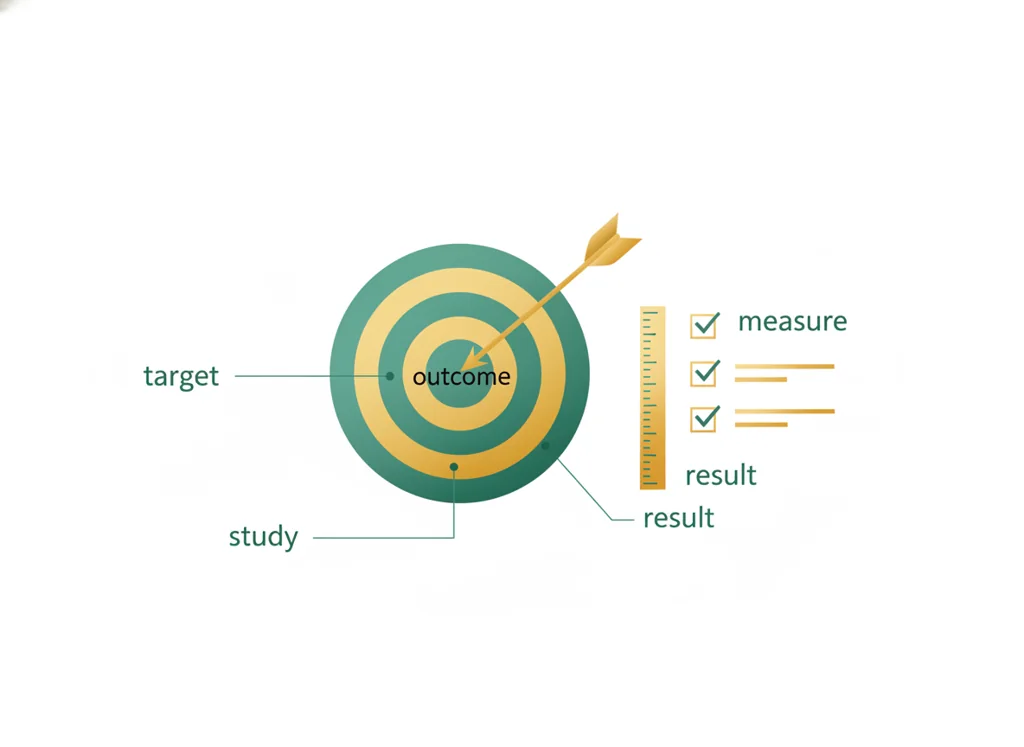
The specific, defined result a study tracks to judge whether a treatment worked, such as speech quality or healing rate.
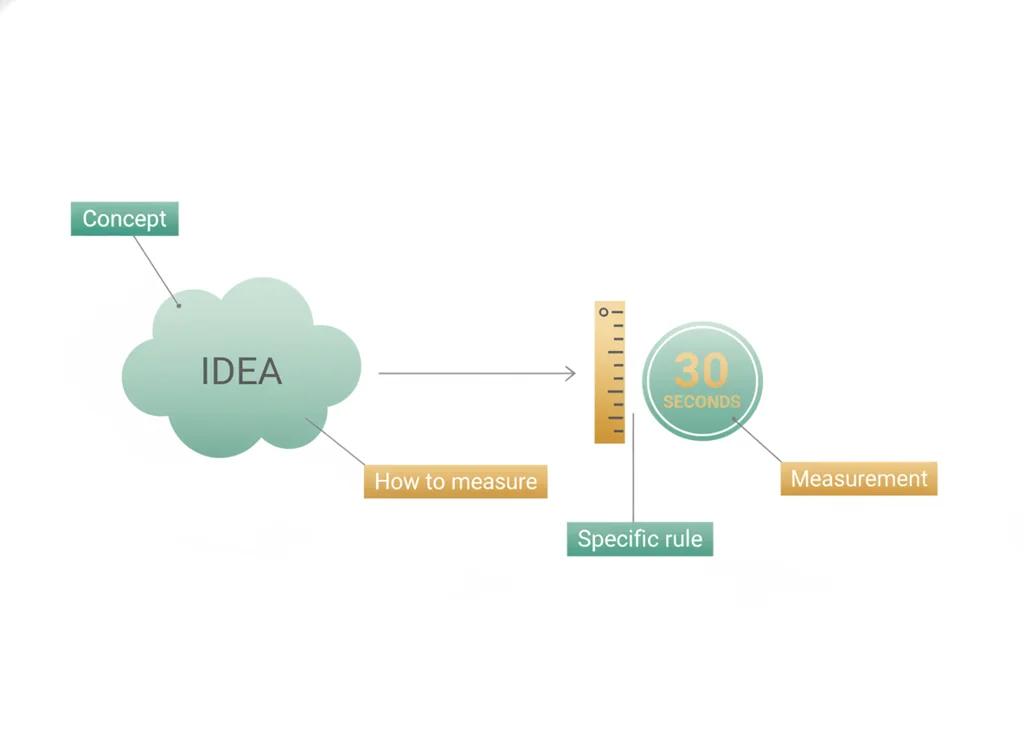
A precise statement of how a concept will be measured or observed in a study, so anyone can apply it the same way.
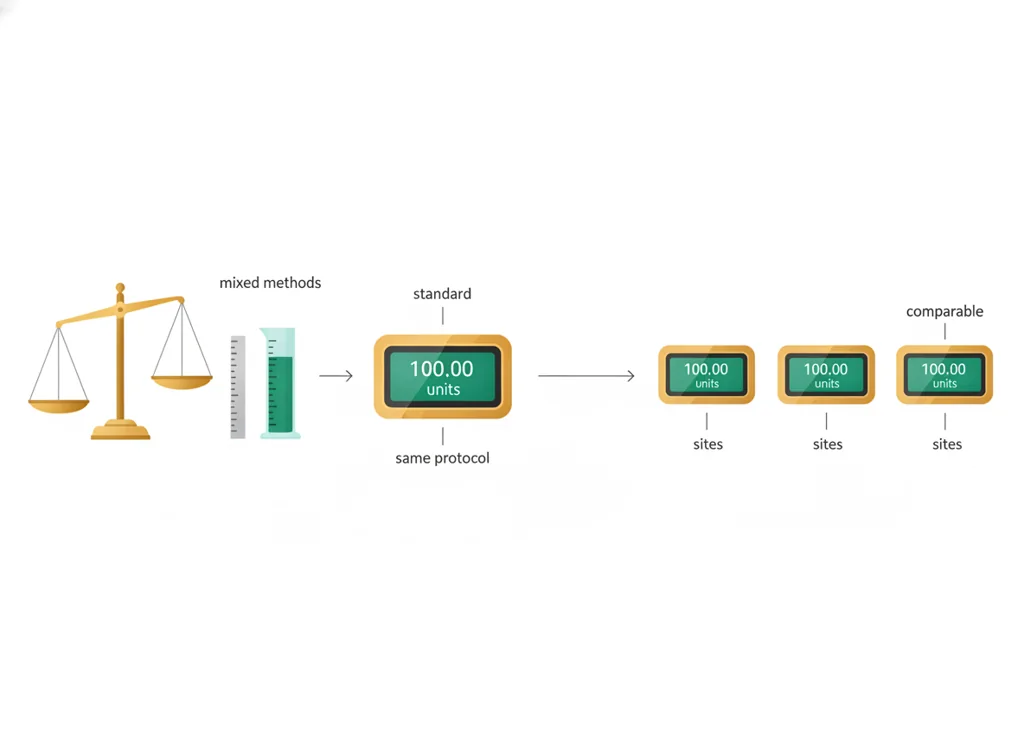
Making methods, measurements, or definitions the same across a study or site, so results can be fairly compared.
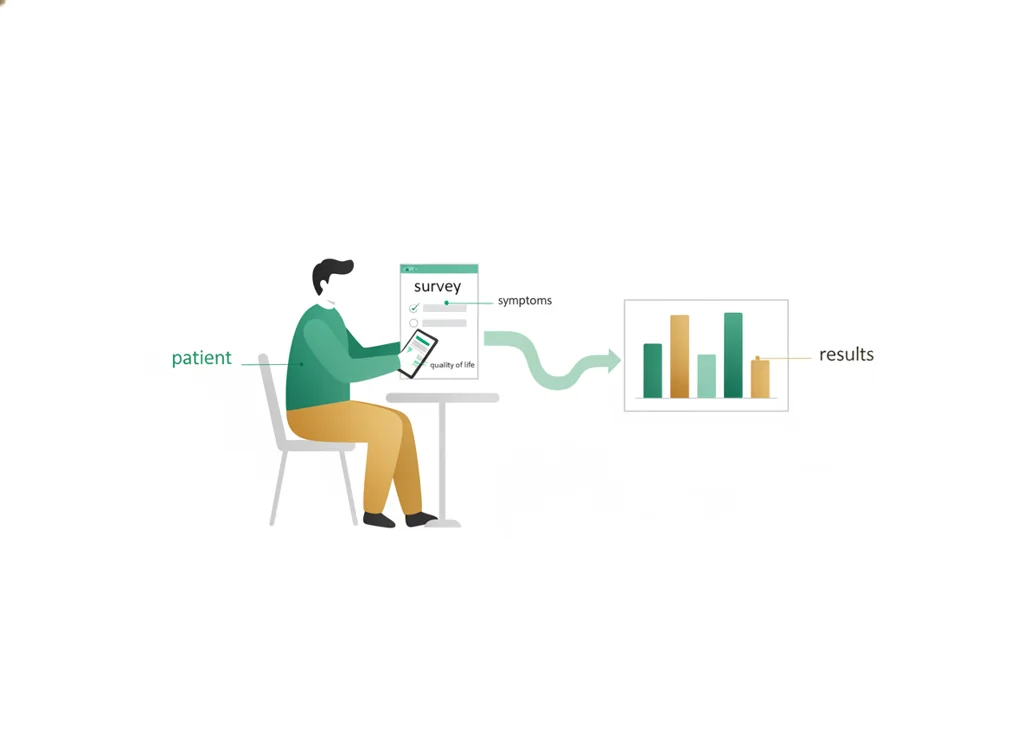
A result measured directly from what the patient says about their own health, symptoms, or quality of life.
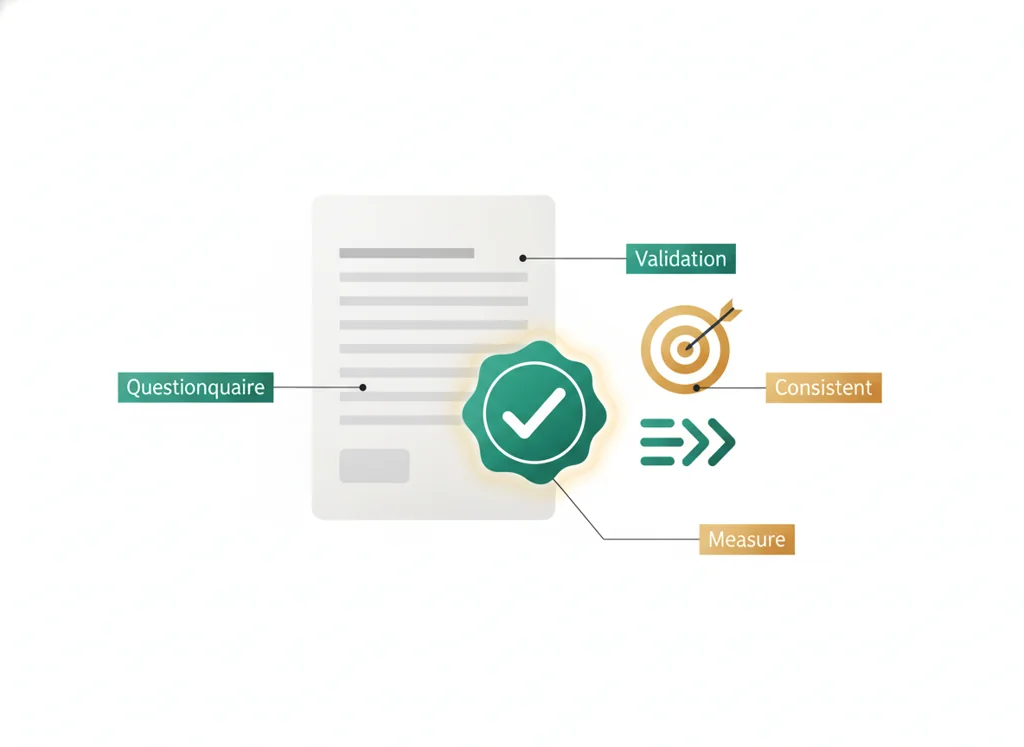
A survey or test that has been formally checked to make sure it measures what it claims to, consistently and accurately.
Research citation trail (advanced)
You do not need these papers or database records to finish the lesson. They document where the plain-language explainer's claims come from and are intended for teachers or advanced readers.