
The Fairest Test: How to Compare Two Treatments in Real Children
This reading contains every idea and every piece of evidence needed for today's decision. The research links at the end are optional.
Why this matters
Children in research need a comparison that is both fair and ethical before its result can guide care.
The question you are trying to answer
How do you make a fair comparison between two treatments for children?
Begin with the idea you already earned
Loss plus targeted rescue strengthens causation when the rescue is specific, verified, and compared with controls.
Study the analogy before the biology
- Who knows the lane before assignment?
- What is hidden from judges?
- Why keep runners in their assigned lane during analysis?
Turn the analogy into three rules
Limit: Clinical trials cannot blind every participant or clinician, and patient care must continue throughout the study.
Map those rules onto the biology
Equipoise means the expert community has genuine uncertainty between acceptable options. Without it, random assignment can be unethical.
Allocation concealment prevents recruiters from predicting the next group. Blinded outcome assessment reduces expectation effects.
Intention-to-treat analyzes participants in their assigned groups. It protects the original comparison even when schedules change.
Read Mateo's labeled case evidence
Both timings are accepted options and experts remain uncertain about their balance of outcomes.
Clinical equipoise can support randomization.
A central system reveals assignment only after an eligible infant is enrolled.
Allocation concealment reduces selection manipulation.
Speech assessors receive coded recordings and analysis keeps participants in assigned groups.
Blinding and intention-to-treat protect the comparison.
Make the concrete decision
You are the clinical-trial methods chair.
A surgeon wants to choose timing after seeing the next assignment and remove crossovers from analysis.
- Use concealed randomization, coded assessment, and intention-to-treat.
- Let the recruiter predict and change assignments.
- Analyze only participants who perfectly followed the schedule.
Choose the fair-trial plan and explain the threat controlled by each safeguard.
Claim ceiling: You may design the comparison when both options are acceptable. You may not randomize repair versus knowingly harmful no repair.
Write the 10-year takeaway
Fair treatment trials require equipoise, concealed randomization, unbiased outcome assessment, and analysis by assigned group.
- What must exist before randomization is ethical?
- Why keep crossovers in their assigned group?
Glossary in plain English
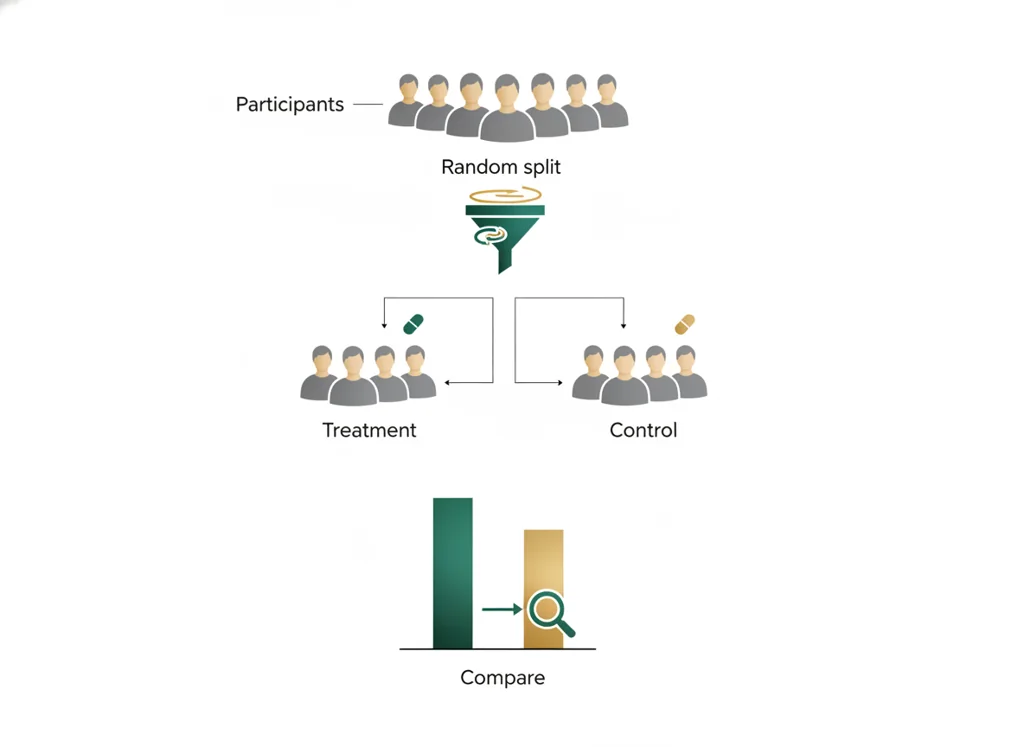
A study that randomly assigns participants to a treatment or a control group, the strongest design for showing a treatment truly works.
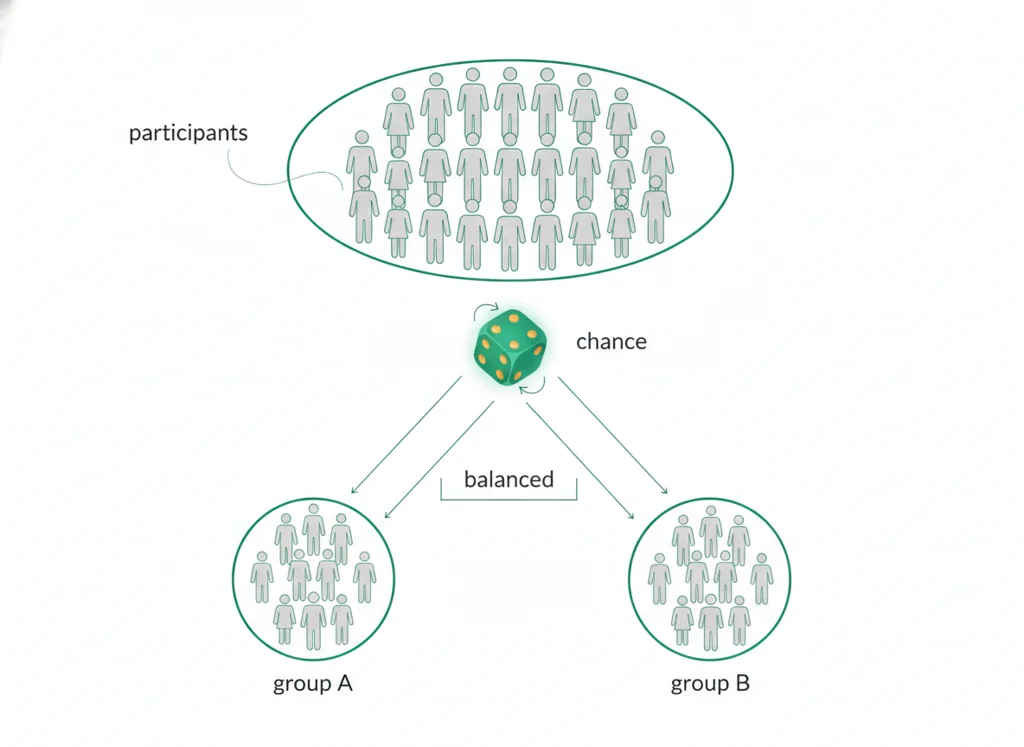
Assigning participants to study groups purely by chance, so the groups start out similar and the comparison stays fair.
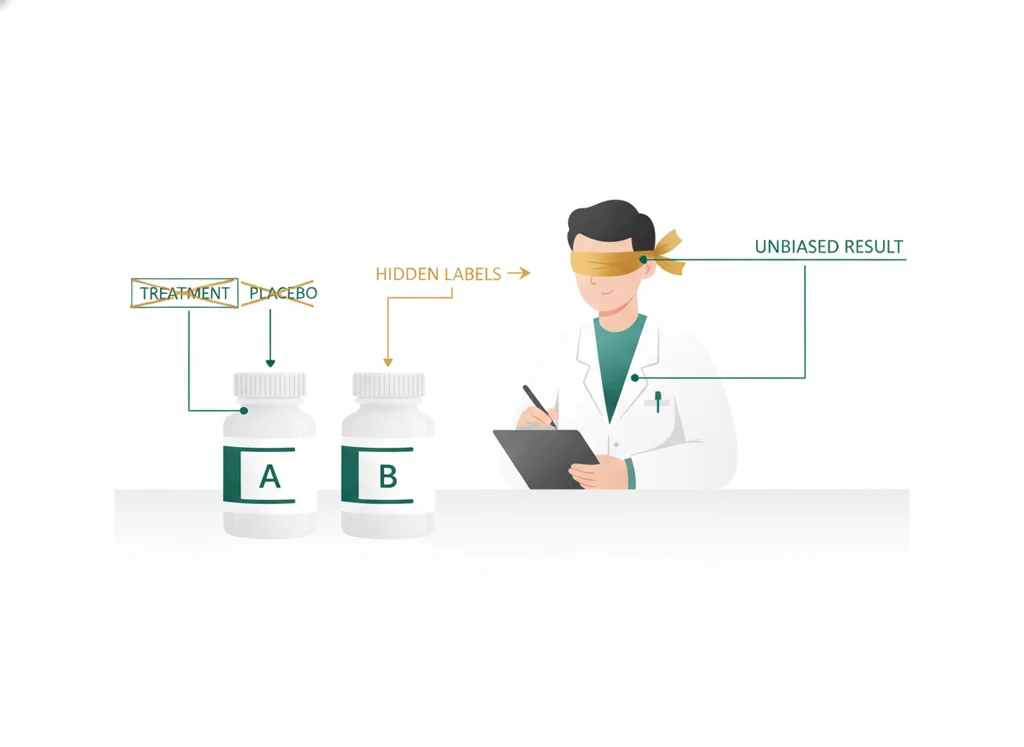
Keeping participants, researchers, or both unaware of who got which treatment so expectations cannot bias the results.
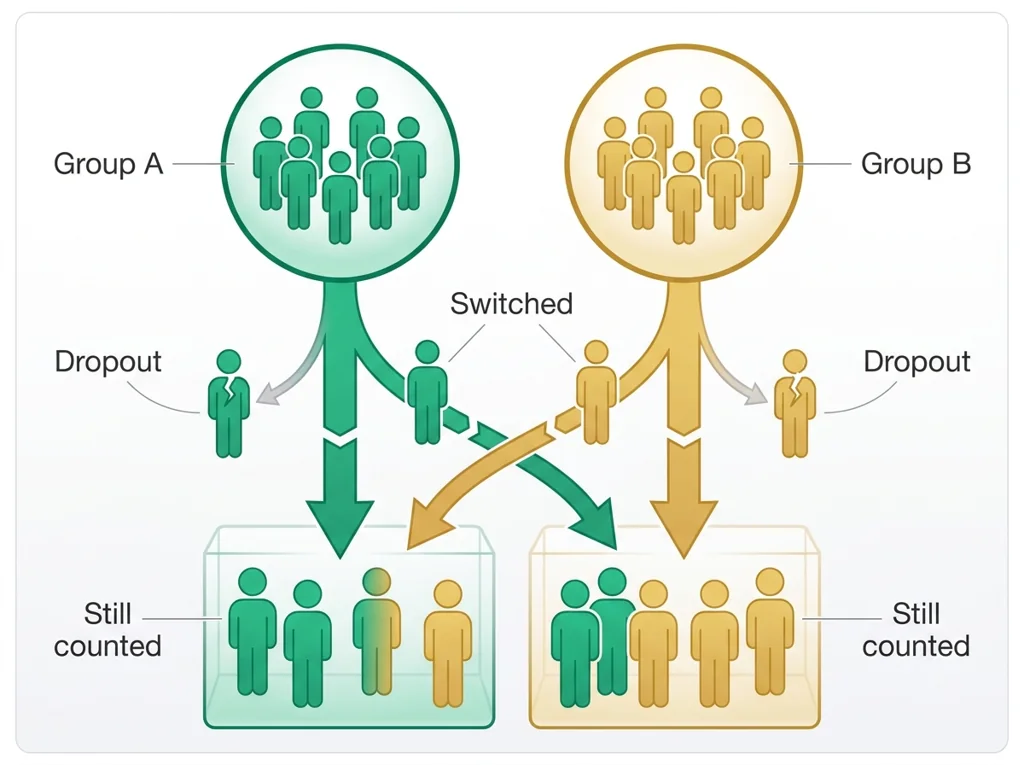
A way to analyze a trial that keeps every patient in their first-assigned group, even if they switched or quit, to give an honest result.
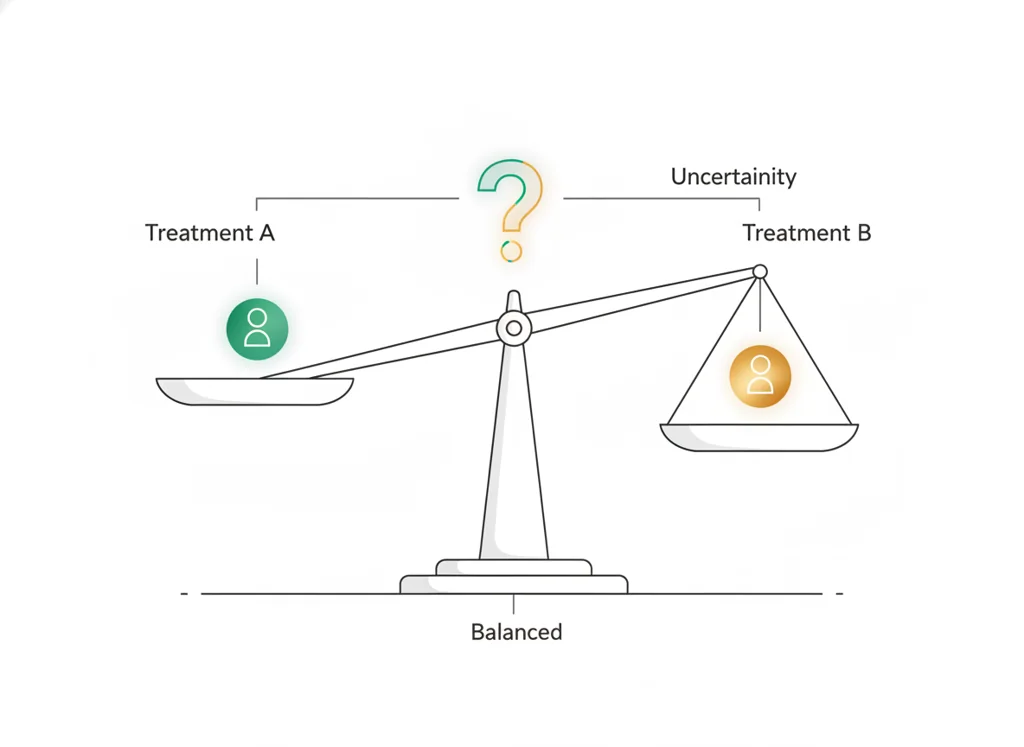
Genuine uncertainty in the expert community about which treatment is better, which is what makes randomly assigning patients in a trial ethical.
Research citation trail (advanced)
You do not need these papers or database records to finish the lesson. They document where the plain-language explainer's claims come from and are intended for teachers or advanced readers.
- NEJM. Timing of Primary Surgery for Cleft Palate (TOPS), 2023.
- CONSORT 2025. Updated reporting guidance for randomized trials.
- Gamble et al. 2023, Timing of Primary Surgery for Cleft Palate (TOPS trial, NEJM)
- Ozawa et al. 2020, Surgical technique and timing in UCLP, a randomized clinical trial (Orthod Craniofac Res)