
Knock It Out, Then Put It Back: Proving a Gene Causes a Defect
This reading contains every idea and every piece of evidence needed for today's decision. The research links at the end are optional.
Why this matters
Families deserve stronger evidence than 'the problem appeared,' especially when several causes can reach the same ending.
The question you are trying to answer
What extra test shows that a missing part caused the problem?
Begin with the idea you already earned
A model earns relevance by matching the mechanism and outcome needed for the question while following Replace, Reduce, and Refine.
Study the analogy before the biology
- What changes after the part is removed?
- Which replacement restores function?
- Why test a wrong or empty replacement?
Turn the analogy into three rules
Limit: Working parts act together, so a repair can be partial and may follow more than one route.
Map those rules onto the biology
A knockout tests what happens when gene function is lost. A rescue restores the gene or pathway in a planned tissue and time.
If the phenotype improves after targeted rescue but not after an empty control, the causal explanation becomes stronger.
Rescue may be partial, and it does not prove that the gene works alone. Researchers still check dose, timing, background, and delivery.
Read Mateo's labeled case evidence
Wild-type cultures fuse in 18 of 20 samples, while knockout cultures fuse in 4 of 20.
Loss of function is associated with a large defect in this model.
Targeted epithelial rescue restores fusion in 15 of 20 knockout samples.
Restoring function in the relevant tissue recovers much of the outcome.
Empty-vector rescue produces fusion in 5 of 20 samples.
The delivery procedure alone does not explain the targeted rescue.
Make the concrete decision
You are the mechanism-review panelist.
The team must decide whether knockout alone is enough for its strongest causal claim.
- Use knockout plus targeted rescue and controls to strengthen the model-specific causal claim.
- Claim the gene is sufficient for normal human palate development from knockout alone.
- Ignore the empty-vector group because rescue improved.
Choose the claim and compare all four supplied groups.
Claim ceiling: You may claim that targeted restoration strengthens causation in this model. You may not claim strict sufficiency or a patient-specific cause.
Write the 10-year takeaway
Loss plus targeted rescue strengthens causation when the rescue is specific, verified, and compared with controls.
- What does the empty-vector group control?
- Why is rescue not automatic proof of strict sufficiency?
Glossary in plain English
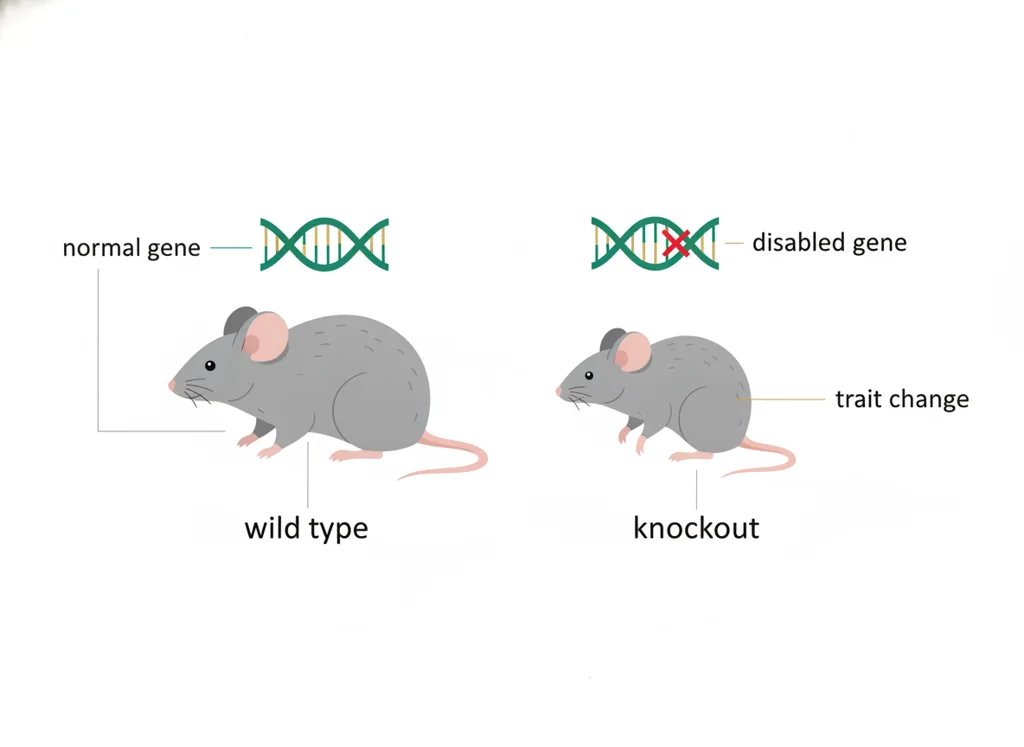
An organism or cell engineered to have a specific gene switched off, used to reveal what that gene normally does.
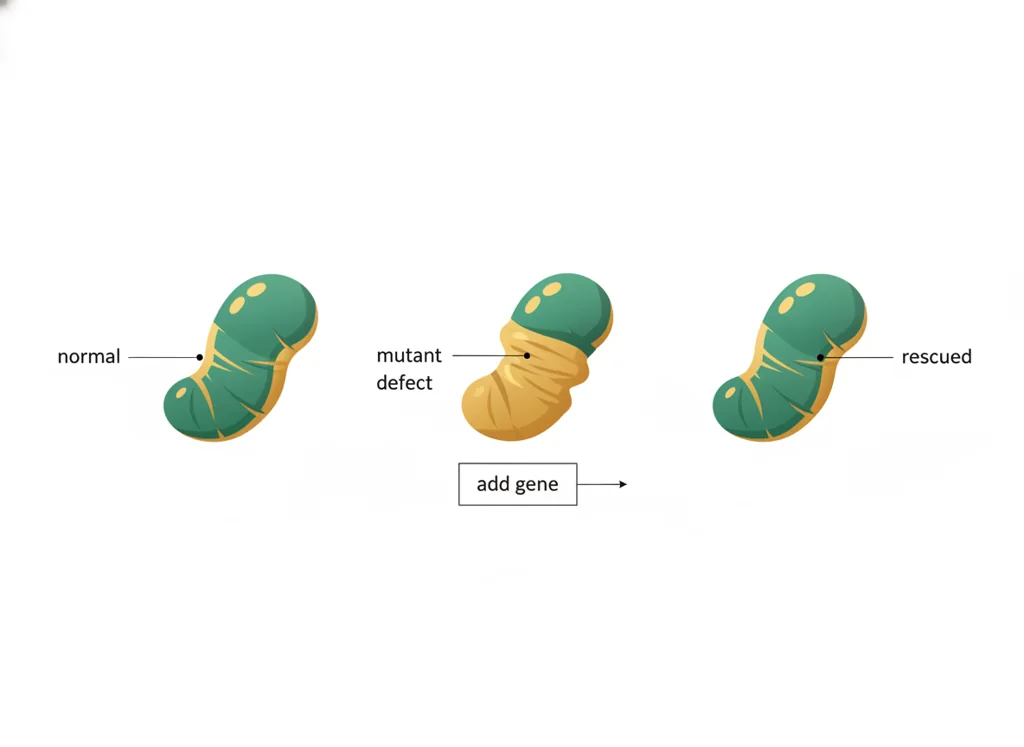
Adding a working gene back into a mutant to see if it restores the normal trait, which proves that gene was responsible.
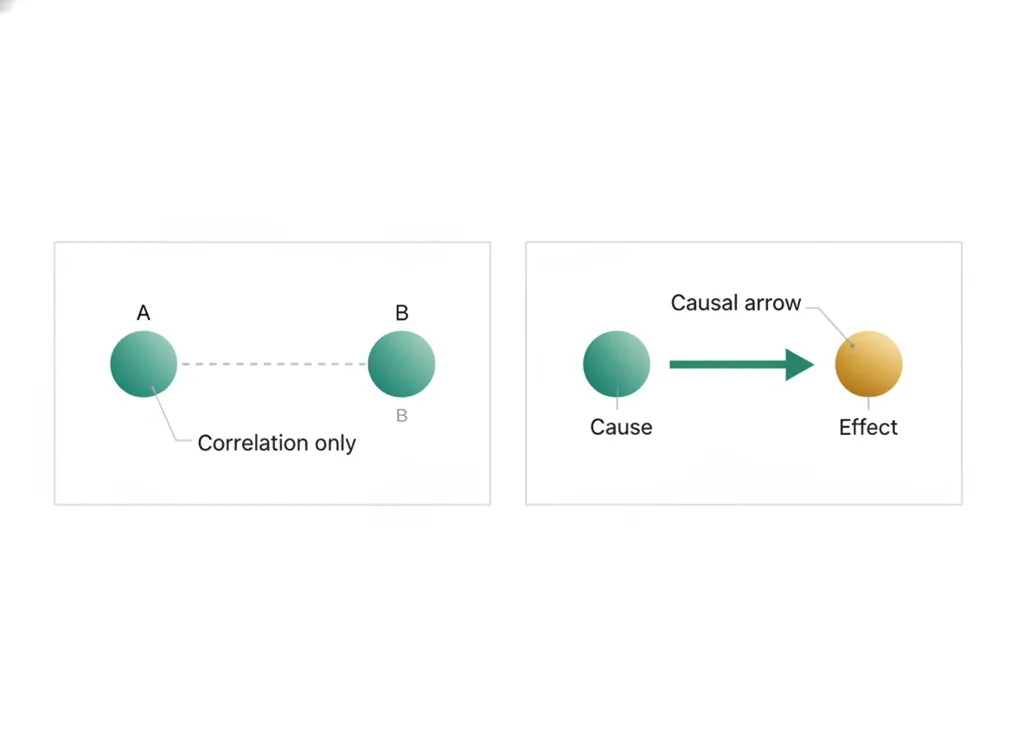
When one factor actually brings about another, shown by controlled evidence rather than by the two simply appearing together.
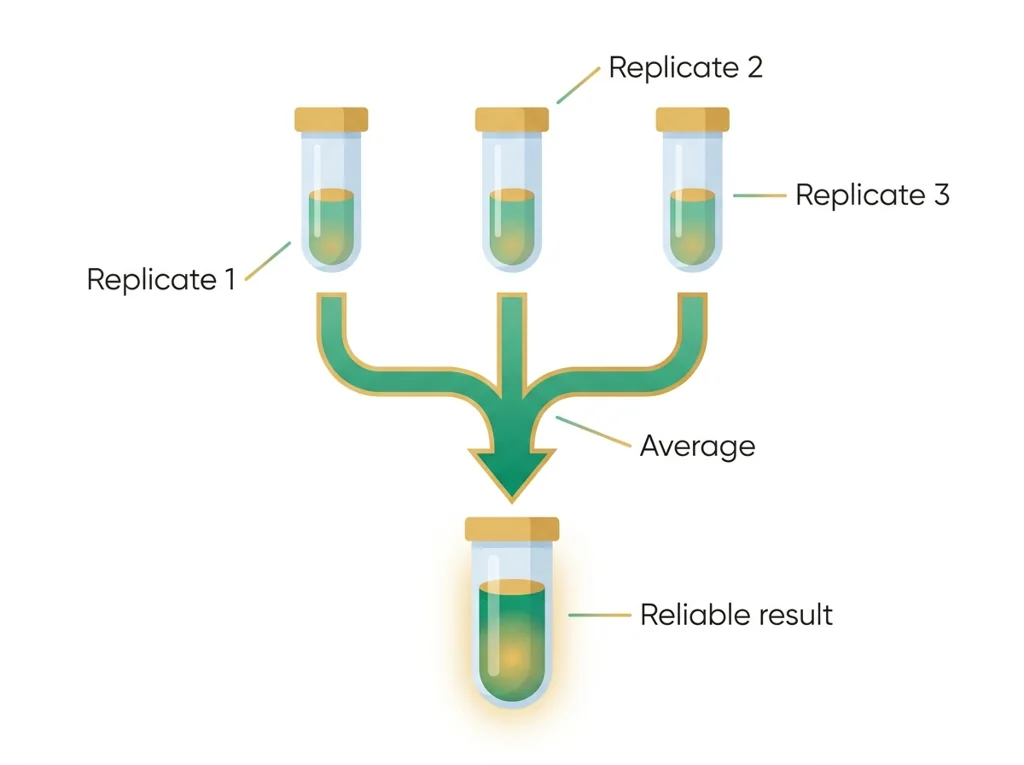
Repeating measurements or samples in an experiment so a single fluke does not drive the conclusion.
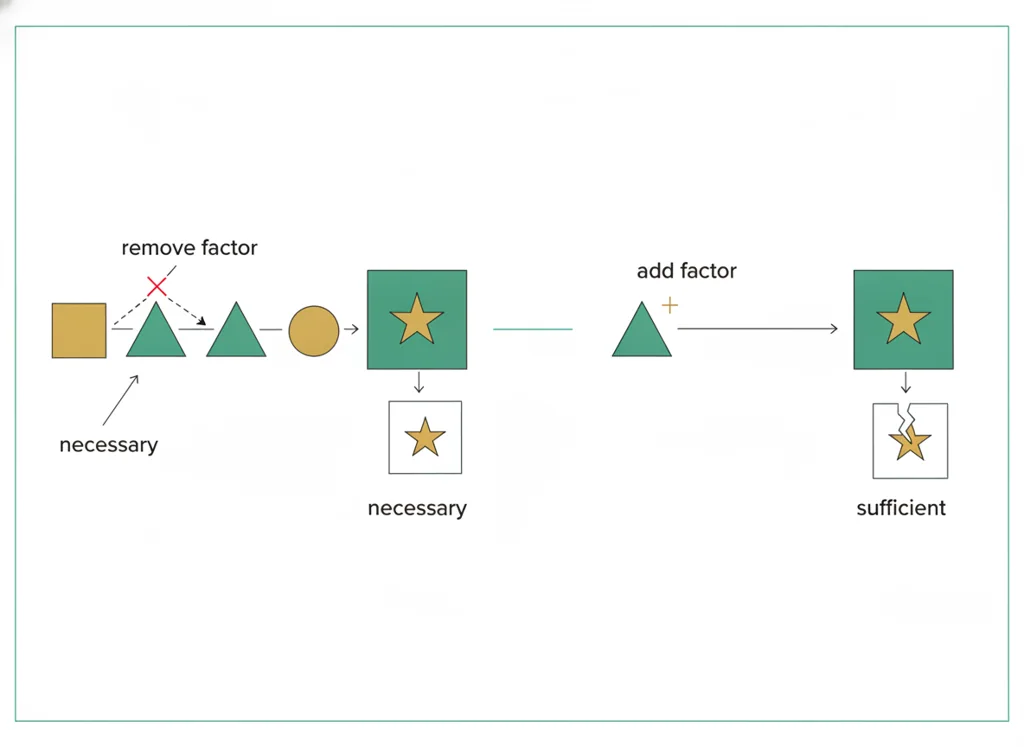
Two tests of a cause: necessary means the result fails without it, and sufficient means the factor alone can produce the result.
Research citation trail (advanced)
You do not need these papers or database records to finish the lesson. They document where the plain-language explainer's claims come from and are intended for teachers or advanced readers.