Rough draft.This research track is under review with Dr. Atit's lab. Content and sequence may still change.
The Baby Mateo Case
Disease domainShared clinical backbone (the cleft team)Lesson 9 of 20Your seat: Pediatrician / geneticist (cleft team)

What Caused Mateo's Cleft?

Discovery question

What caused Mateo's : his genes, something in the pregnancy, or both?

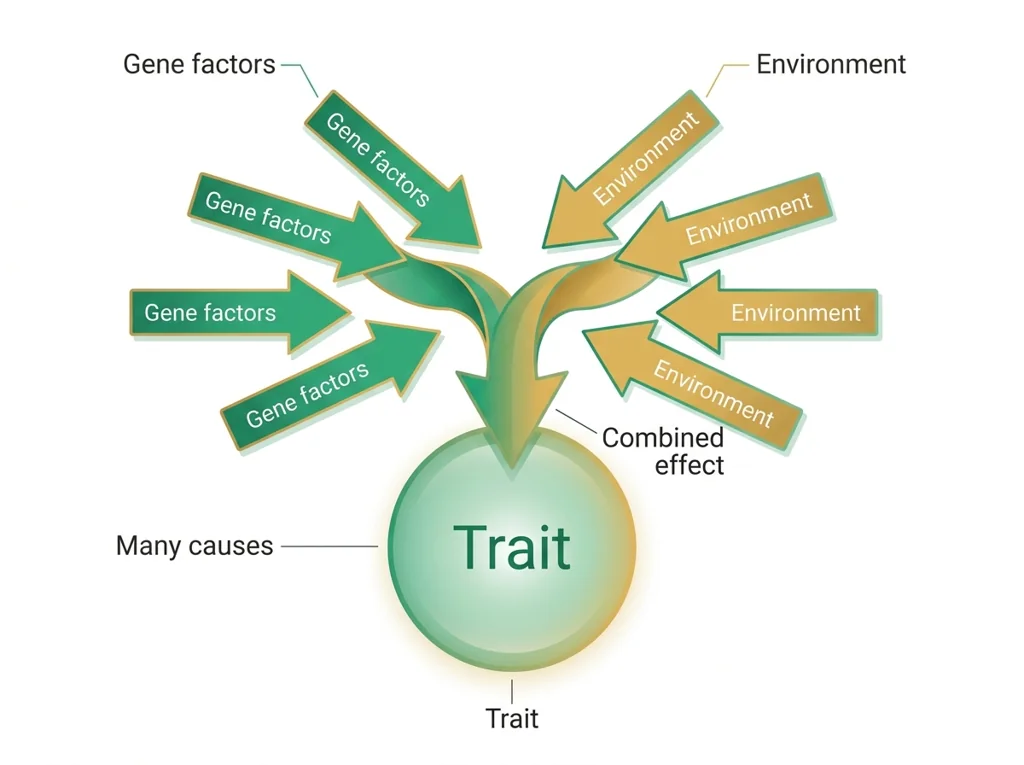
💡 A common like Mateo's is multifactorial: many small genetic influences plus environment crossing a threshold, with usually no single thing to blame.

The plan

Prerequisite check

Before this page, you should know
  • is the number of affected babies per total births; orofacial clefting affects about 1 in 700 live births worldwide, so it is common, not rare.
  • By type, lip and together (CLP) is most common at about 45%, with cleft palate only about 40% and cleft lip alone about 15 to 25%.
Today's new idea is only
A common like Mateo's is multifactorial: many small genetic influences plus environment crossing a threshold, with usually no single thing to blame.
Learn first

What you will learn

Goal: Students will explain that nonsyndromic clefts arise from many small genetic influences combined with environmental factors (multifactorial cause), using real twin and risk-factor data, and apply that model to Mateo without blaming a single cause.

Know by the end
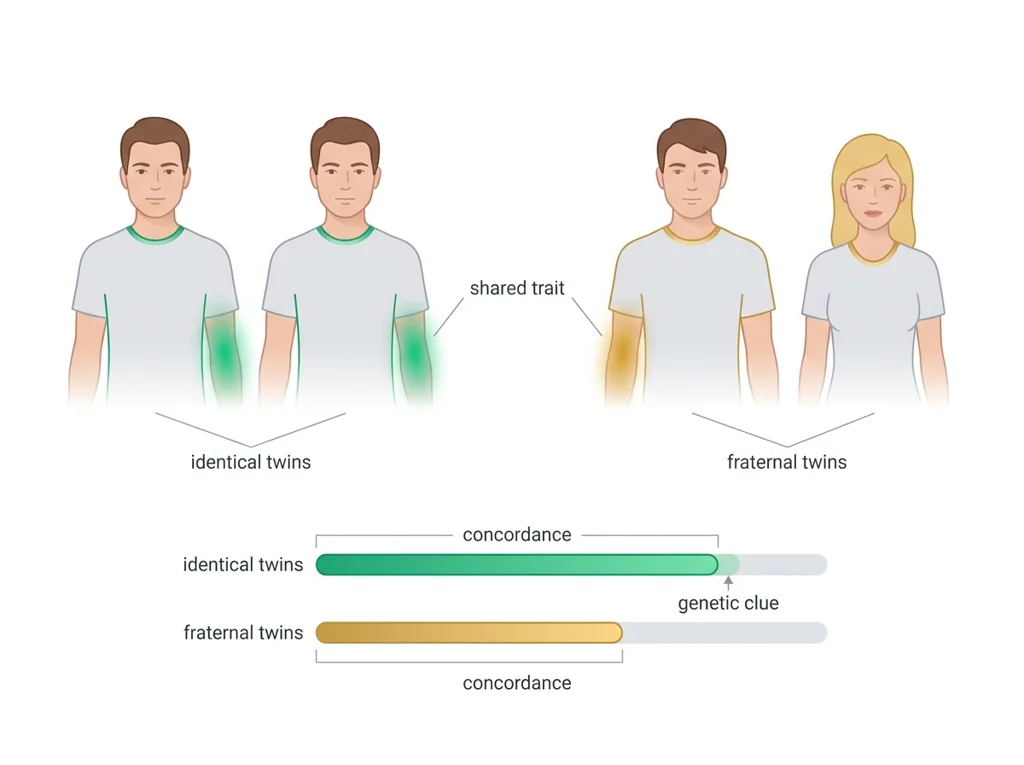
  • compares how often both twins are affected; identical twins are about 60% concordant for nonsyndromic clefts versus about 5 to 10% for fraternal twins and siblings.
  • That identical twins are far more concordant than siblings shows genes clearly matter, but not 100% concordance shows genes are not the whole story.
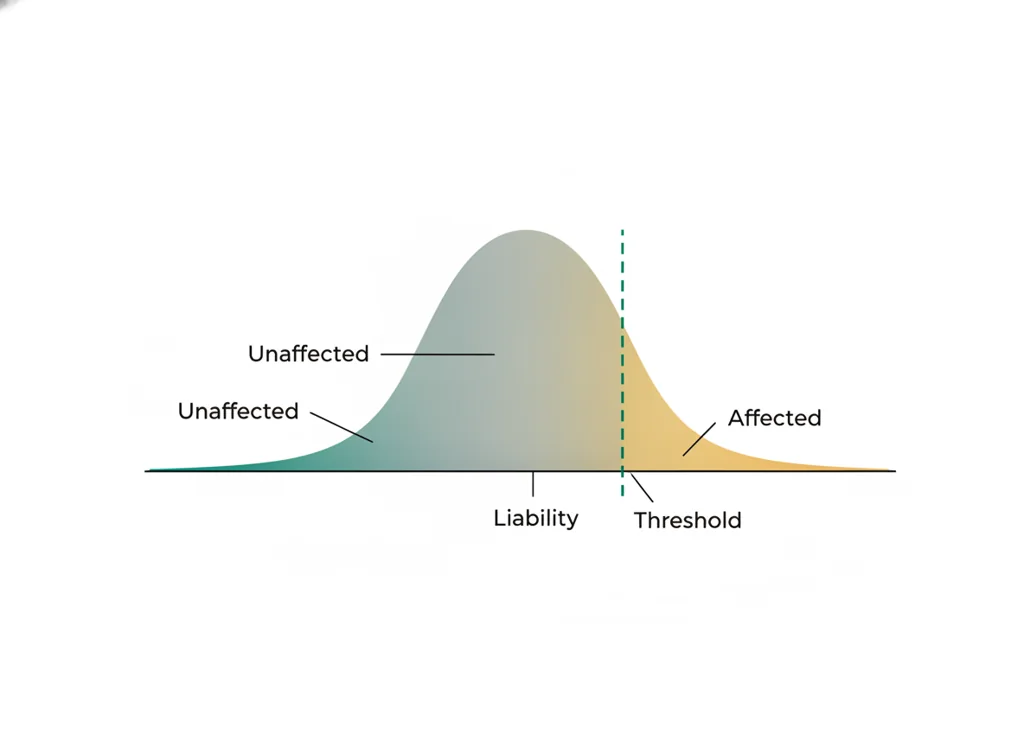
  • The favored model is multifactorial threshold inheritance: many small-effect genes plus environment, with a appearing only when total liability crosses a threshold.
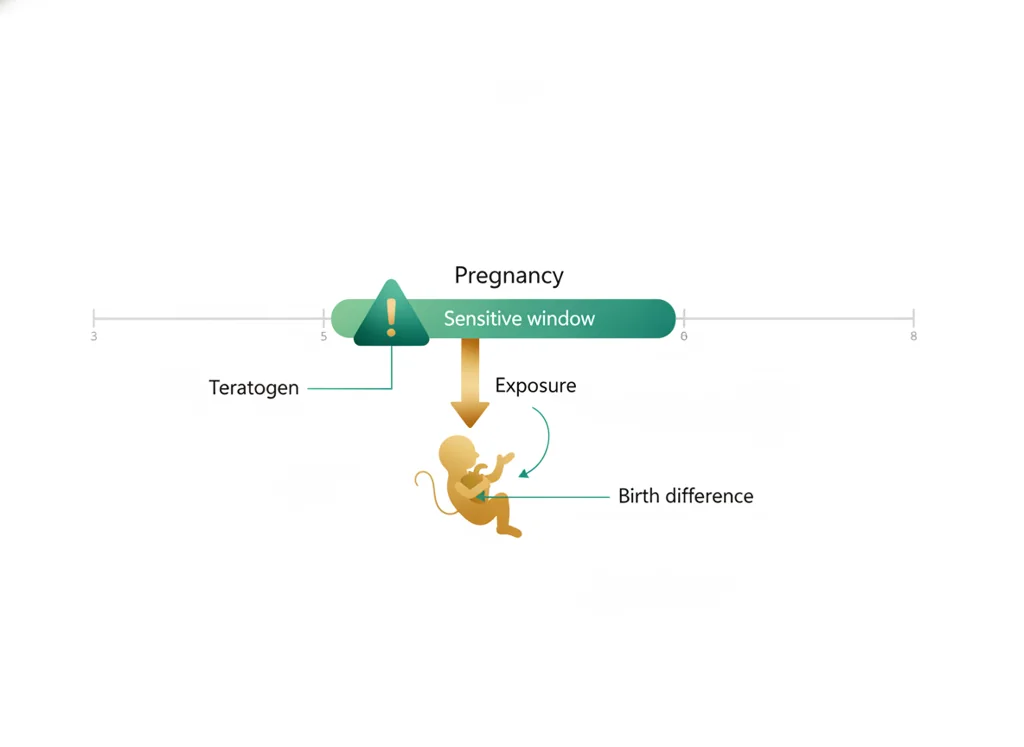
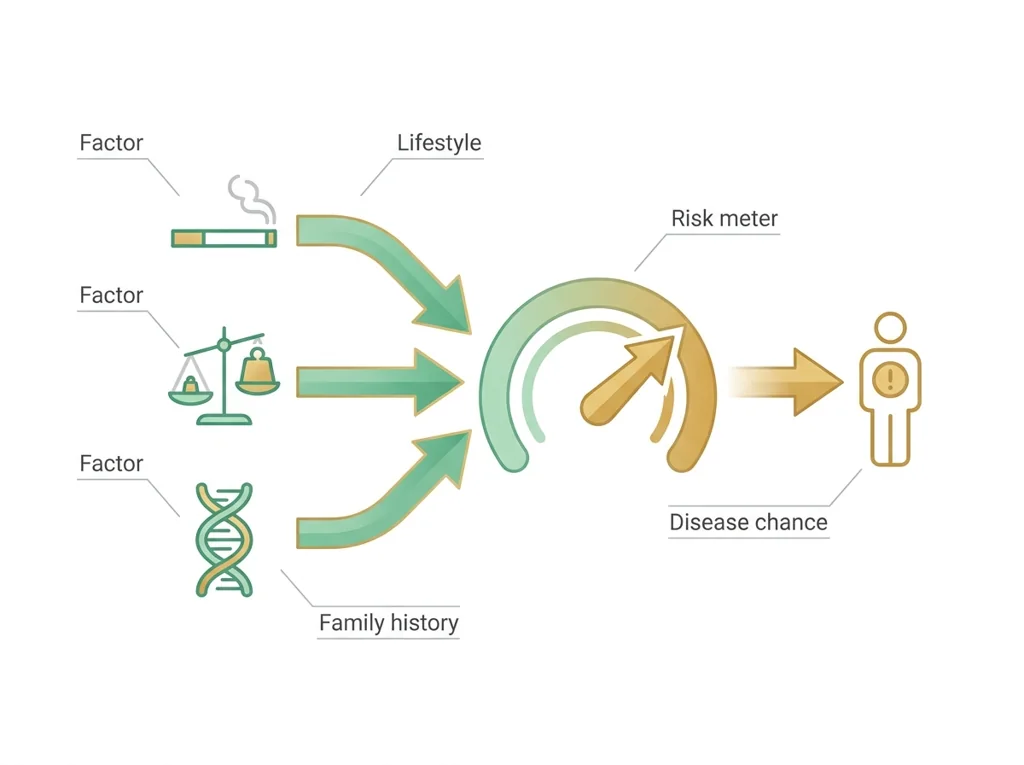
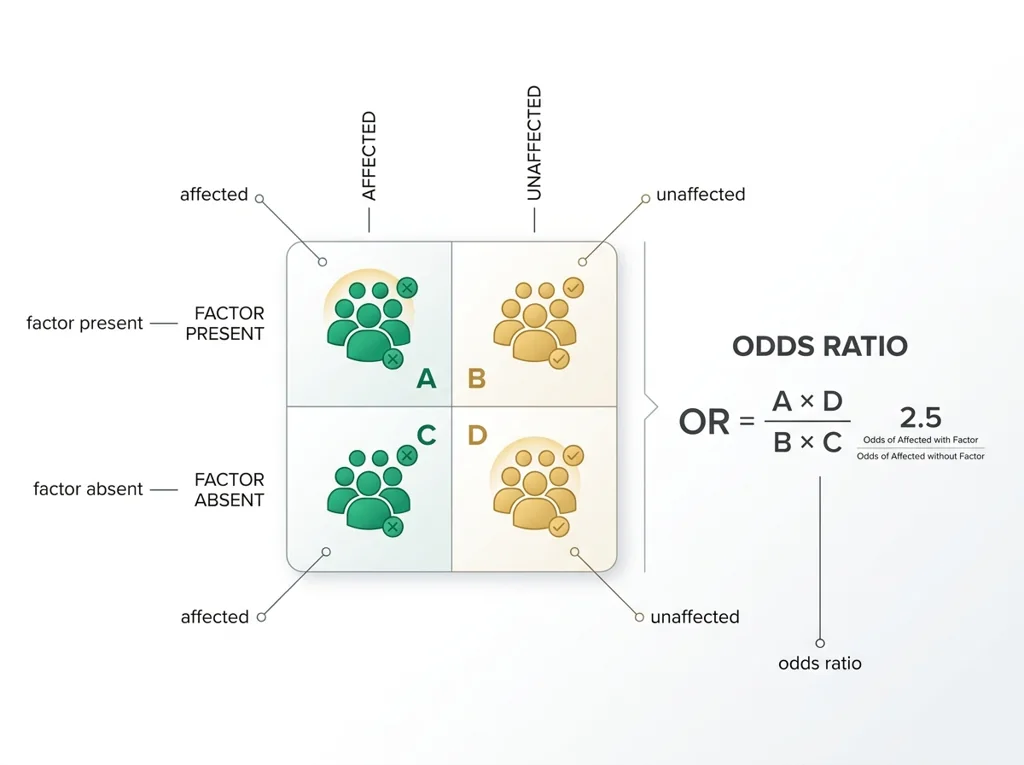
  • Among environmental risk factors, maternal smoking is the most robust ( about 1.3, a small nudge); valproic acid raises risk especially for ; 's protective magnitude is debated and presented as an association.
Learn first

Model: Twin concordance and real pregnancy risk factors

Concordance means: given that one twin has a , how often does the other twin also have one? Real concordance data for nonsyndromic clefts: identical (monozygotic) twins share nearly 100% of their DNA and are about 60% concordant, while fraternal (dizygotic) twins and ordinary siblings share about 50% of their DNA and are about 5 to 10% concordant. The reasoning: if a cleft were caused purely by genes, identical twins should be concordant close to 100% of the time; if it were caused purely by environment, sharing DNA should not matter at all.

Real environmental risk factors during pregnancy, with direction and rough effect size (an near 1.0 means little change; above 1.0 means higher risk): maternal cigarette smoking, higher risk, OR about 1.3, the most robust environmental factor; valproic acid (an epilepsy medicine), higher risk especially , a well-established teratogen; heavy or binge alcohol, higher risk roughly 1.5 to 4.7x and dose-dependent; (a B vitamin) deficiency, associated with higher risk with supplementation appearing protective in some studies, but the magnitude is debated so it is not overstated. Note that even the strongest single factor (smoking, OR about 1.3) is a small nudge, not a switch, and many mothers with none of these factors still have a child with a cleft, like Mateo's mother.

Read this in pieces, one chunk at a time
Do the work

Explore (work the model before reading on)

  1. What percent of identical twins are both affected? What percent of fraternal twins or siblings?
  2. Which single environmental factor has the strongest, most reliable effect, and how big is its ?
  3. Identical twins share all their DNA, yet they are both affected only about 60% of the time, not 100%. What does that gap (the missing 40%) tell you about whether genes are the WHOLE story?
  4. Identical twins are concordant about 60% while siblings are only 5 to 10%. What does that big difference tell you about whether genes matter AT ALL? Put both ideas in one sentence.
  5. Mateo's parents do not smoke, took no valproic acid, and report a healthy pregnancy, yet Mateo has a . Using both models, predict whether you can point to one single cause for Mateo, and what kind of cause picture fits a common condition where genes matter but do not fully decide.
  6. In one sentence, what pattern did your team find about what causes a like Mateo's?
The plan

Guided notes

1

What the twin data say

Model start: (about 60% identical versus 5 to 10% siblings) shows genes matter but do not fully decide.
  • Because identical twins are far more often concordant than siblings (about 60% versus 5 to 10%), genes clearly matter.
  • But because identical twins are not concordant 100% of the time, genes are not the whole story; something else varies too.
2

The multifactorial model

  • The favored model is multifactorial: many small-effect genetic variants combine with environmental factors.
  • A forms only when total liability crosses a ______ (the ); no single gene and no single exposure decides it.
3

Risk factors, kept honest

  • Maternal smoking, the strongest reliable factor, raises risk only modestly ( about ______); valproic acid raises risk especially for ______.
  • deficiency is associated with higher risk and supplementation looks protective in some studies, but the magnitude is debated, so it is presented as an association, not a guarantee.
Explore

Reading the Research

Why this source matters
This is the published evidence behind today's idea: A common like Mateo's is multifactorial: many small genetic influences plus environment crossing a threshold, with usually no single thing to blame.
Words to unlock first
multifactorialtwin concordanceteratogenrisk factorodds ratio
Reading moves
  1. Skim the title and abstract first to get the gist.
  2. Circle the one sentence that states the main claim.
  3. Box the evidence the authors give for that claim.
  4. Mark one sentence that confuses you, and move on.
Stop point
You do not need the methods or statistics yet. If a sentence is about lab technique or math you have not learned, mark it and skip it.
Your output
Write one claim-evidence sentence: what this source claims, and the one piece of evidence that backs it up.
Where this fits
Tested on (Ohio WebXam)
Genetics of Disease · 072130
PLTW lesson
MI · Disease domain · Medical Interventions (MI), Unit 2 inheritance and risk
WebXam domain
Bio-Molecular Technology
Evidence to produce
Write a 3 to 4 sentence counseling response to Mateo's mother asking 'Was it something I did?' that is (1) honest about cause (multifactorial, genes plus environment, threshold), (2) specific (uses one real number), and (3) non-blaming (reflects that she had none of the major risk factors and most clefts happen without one).
Lab / skill
Clinical backbone (cleft team) · Clinical backbone (cleft team)
Words

Vocabulary (the same words your classes use)

The plan

Track your progress today

Check these off as you work through the lesson, then submit. This tells Mr. Mendoza how you're doing so he can help the class. It does not replace turning in your producible.

Use the code Mr. Mendoza gave you, not your name. Saved on this device.

Check off as you finish
  • Read the Model and answered the Explore questions.
  • Filled in the guided notes in my own words.
  • Defined the new vocabulary with an example.
  • Built the producible: Write a 3 to 4 sentence counseling response to Mateo's mother asking 'Was it something I did?' that is (1) honest about cause (multifactorial, genes plus environment, threshold), (2) specific (uses one real number), and (3) non-blaming (reflects that she had none of the major risk factors and most clefts happen without one).
  • Wrote my Claim, Evidence, and Reasoning exit ticket.
Pick your period and code first.
Check yourself

Exit ticket (Claim, Evidence, Reasoning)

  • Claim: Mateo's was most likely caused by ________ (one cause / many small causes together).
  • Evidence: Identical twins are concordant about ________ percent while siblings are about ________ percent, and the strongest environmental factor (smoking) has an of only about ________.
  • Reasoning: Because genes clearly matter but do not fully decide, and environment nudges but rarely decides alone, the cause is best described as ________, which means there is usually no single thing to blame.
How this is graded (rubric)
For: Write a 3 to 4 sentence counseling response to Mateo's mother asking 'Was it something I did?' that is (1) honest about cause (multifactorial, genes plus environment, threshold), (2) specific (uses one real number), and (3) non-blaming (reflects that she had none of the major risk factors and most clefts happen without one).
CriterionProficientDevelopingBeginning
CompleteEvery required part of the artifact is present and filled in.Most parts are present, but one is missing or left blank.Several parts are missing.
AccurateThe science and data are correct and match the evidence.Mostly correct, with a small factual slip.Key science or data is wrong.
Scientific reasoning (CER)States a claim, backs it with specific evidence, and explains the reasoning.Has a claim and evidence, but the reasoning is thin or missing.Gives an answer with no evidence or reasoning.
Professional communicationClear, organized, and labeled the way a clinician or scientist would write it.Readable but disorganized or missing labels.Hard to follow.
SubmittedTurned in the right way (Schoology for routine work) and confirmed.Turned in, but in the wrong place or unconfirmed.Not turned in.
How the model answer scores against this rubric
  • CompleteProficient: Nothing is left blank: the model fills every part of "Write a 3 to 4 sentence counseling response to Mateo's mother asking 'Was it something I did?' that is (1) honest about cause (multifactorial, genes plus environment, threshold), (2) specific (uses one real number), and (3) non-blaming (reflects that she had none of the major risk factors and most clefts happen without one).".
  • AccurateProficient: Every number and claim matches the case evidence.
  • Scientific reasoning (CER)Proficient: It names a claim, cites the specific evidence, and explains the reasoning, not just the answer.
  • Professional communicationProficient: It is organized and labeled like a real chart note.
  • SubmittedProficient: It would be turned in on Schoology and confirmed.
Explore

Where this leads: careers

Genetic counselor Pediatrician Teratology / birth-defects researcher

What's next: Mateo's came from many small influences working together, not one fixable thing. So if no single cause can be removed, what is the actual plan for the next 18 years of his care?