
Protecting Mateo's Hearing
This reading contains every idea and every piece of evidence needed for today's decision. The research links at the end are optional.
Why this matters
A cleft can lead to ear fluid and hearing trouble, which can affect the speech sounds a child hears.
The question you are trying to answer
Why can a change in the palate lead to fluid behind the eardrum?
Begin with the idea you already earned
Clear pressure sounds need the soft palate to move upward and seal the mouth from the nose.
Study the analogy before the biology
- What happens when the drain stays closed?
- Why can the surface look fine while fluid collects behind it?
- How would you test whether flow is blocked?
Turn the analogy into three rules
Limit: The Eustachian tube actively opens and the middle ear is not a sink. The analogy models drainage only.
Map those rules onto the biology
The Eustachian tube drains the middle ear and helps balance pressure. Muscles near the palate help open it.
In children with cleft palate, the tube may not open well. Fluid can collect and make sound quieter, called conductive hearing loss.
Regular ear examinations and hearing tests catch changes early enough to protect speech and learning.
Read Mateo's labeled case evidence
Mateo passed the newborn hearing screen.
Hearing was adequate at that moment, not guaranteed for all later months.
At follow-up, both eardrums show reduced movement and middle-ear fluid.
Sound conduction may now be reduced.
Mateo sometimes does not turn toward soft speech sounds.
The functional observation supports prompt audiology testing.
Make the concrete decision
You are the audiologist reviewing a passed newborn screen and new ear findings.
The family asks whether the original pass means no further hearing checks are needed.
- Complete age-appropriate hearing testing and coordinate ear management
- Wait until Mateo fails a school hearing screen
- Assume speech delay is unrelated to hearing
Choose the plan and explain why the newborn result does not cancel the new evidence.
Claim ceiling: You may say hearing is at risk and testing is needed. You may not state the degree of loss before audiology results.
Write the 10-year takeaway
Cleft-related middle-ear fluid can reduce hearing, so repeated hearing checks protect speech development.
- Why can hearing change after a passed newborn screen?
- How can middle-ear fluid affect speech development?
Glossary in plain English
A lesson term defined by the surrounding model and case evidence.
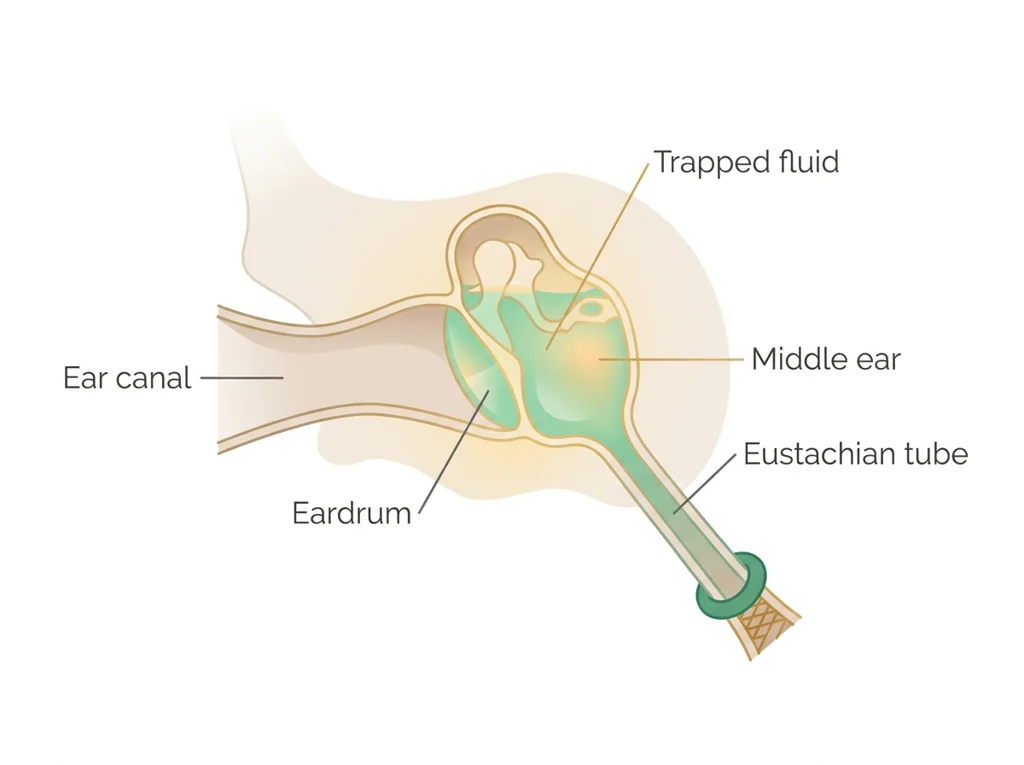
Fluid trapped behind the eardrum without active infection, common in cleft palate, which can muffle a child's hearing.
A lesson term defined by the surrounding model and case evidence.
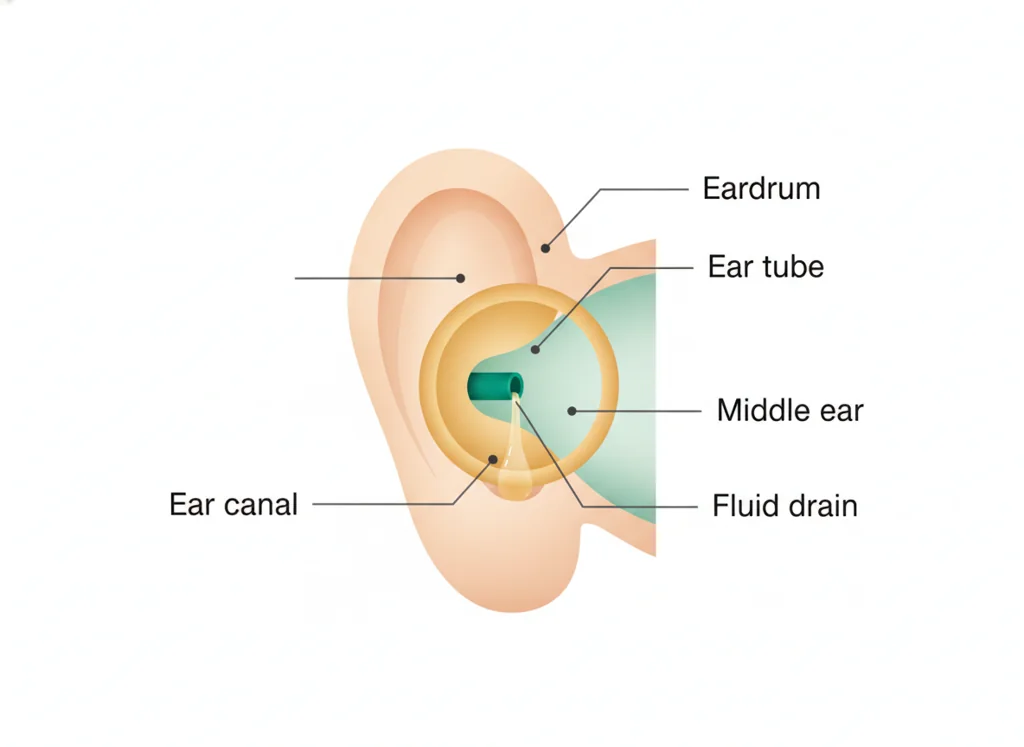
Tiny tubes a surgeon places through the eardrum to drain fluid and prevent ear infections, common in children with cleft palate.
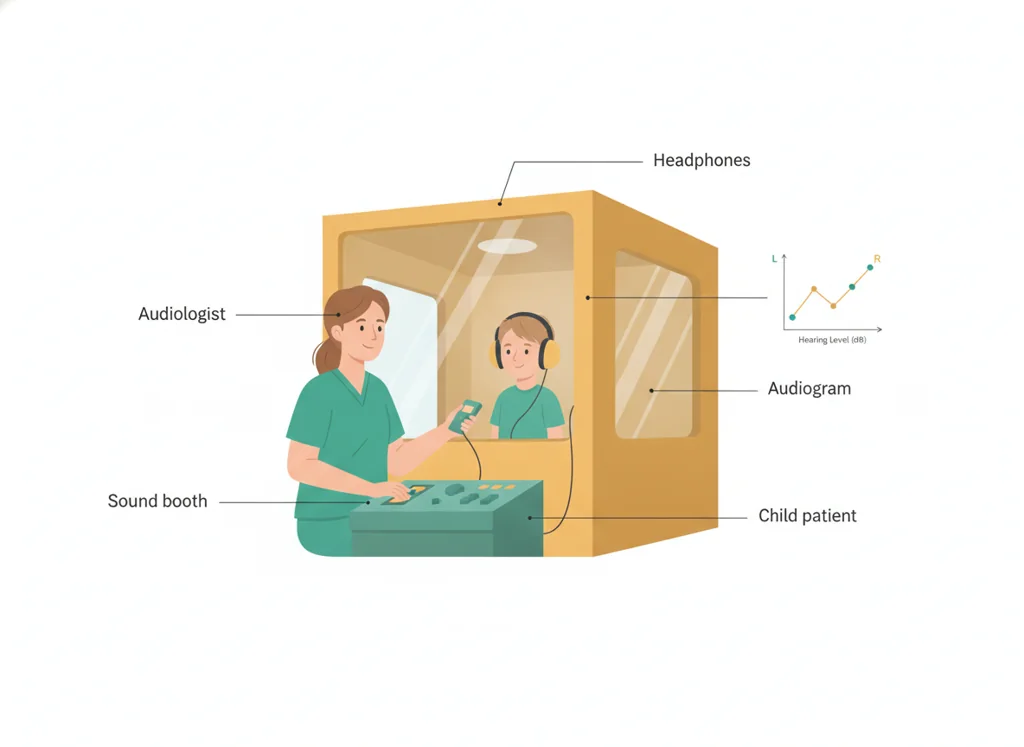
A health professional who tests hearing and balance and manages hearing loss, an important team member for children with cleft palate.
Research citation trail (advanced)
You do not need these papers or database records to finish the lesson. They document where the plain-language explainer's claims come from and are intended for teachers or advanced readers.