
What the Surgeries Are Actually For
This reading contains every idea and every piece of evidence needed for today's decision. The research links at the end are optional.
Why this matters
Lip repair often happens at 3 to 6 months and palate repair at 9 to 15 months because the two operations solve different problems.
The question you are trying to answer
Why are the lip and palate repaired in separate operations?
Begin with the idea you already earned
Cleft care follows developmental windows, so the right action depends on what the child needs next.
Study the analogy before the biology
- Which repair changes the outside form?
- Which repair separates two spaces?
- Why would the jobs occur at different times?
Turn the analogy into three rules
Limit: Surgery is not home repair. The analogy only separates structure, purpose, and timing.
Map those rules onto the biology
Lip repair joins the lip tissues and helps reshape the nose. Its main early goal is form.
Palate repair closes the opening between the mouth and nose and rebuilds the muscles needed for speech. Its main early goals are separation and function.
The two operations happen in stages because the structures, risks, and developmental goals are different.
Read Mateo's labeled case evidence
Mateo's parents want the lip and nose to have continuous form.
This concern maps to lip repair.
The open palate connects the mouth and nose and cannot support normal oral pressure for speech.
This functional problem maps to palate repair.
Speech sounds begin developing during the same period in which palate repair is commonly planned.
Timing protects a developmental window.
Make the concrete decision
You are the surgeon explaining the first two operations.
The family asks why both problems cannot be fixed in one visit and forgotten.
- Explain two structures, two jobs, and individualized timing
- Describe both operations as cosmetic
- Promise that surgery ends all future care
Choose the explanation and match each evidence ID to the operation it supports.
Claim ceiling: You may explain typical goals and timing. You may not promise a specific operation date or outcome.
Write the 10-year takeaway
Lip repair restores form, while palate repair separates spaces and supports speech; different jobs require staged operations.
- Which operation mainly restores form?
- Why is palate timing connected to speech?
Glossary in plain English
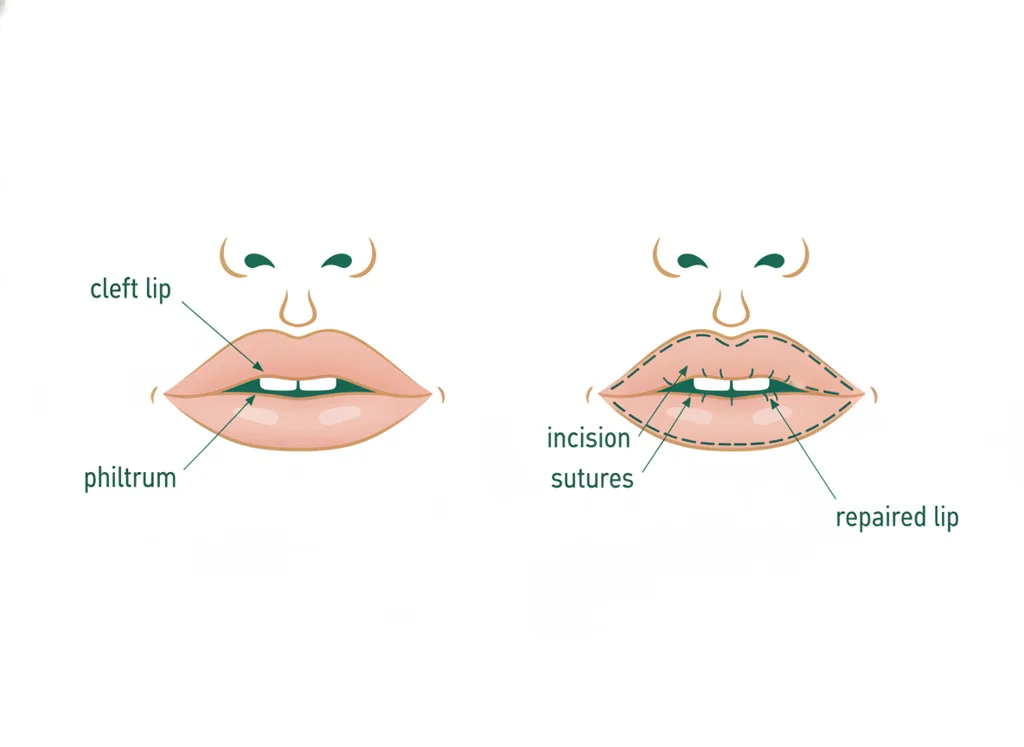
The surgical repair of a cleft lip, rejoining the separated lip tissue to restore a continuous lip and a more typical appearance.
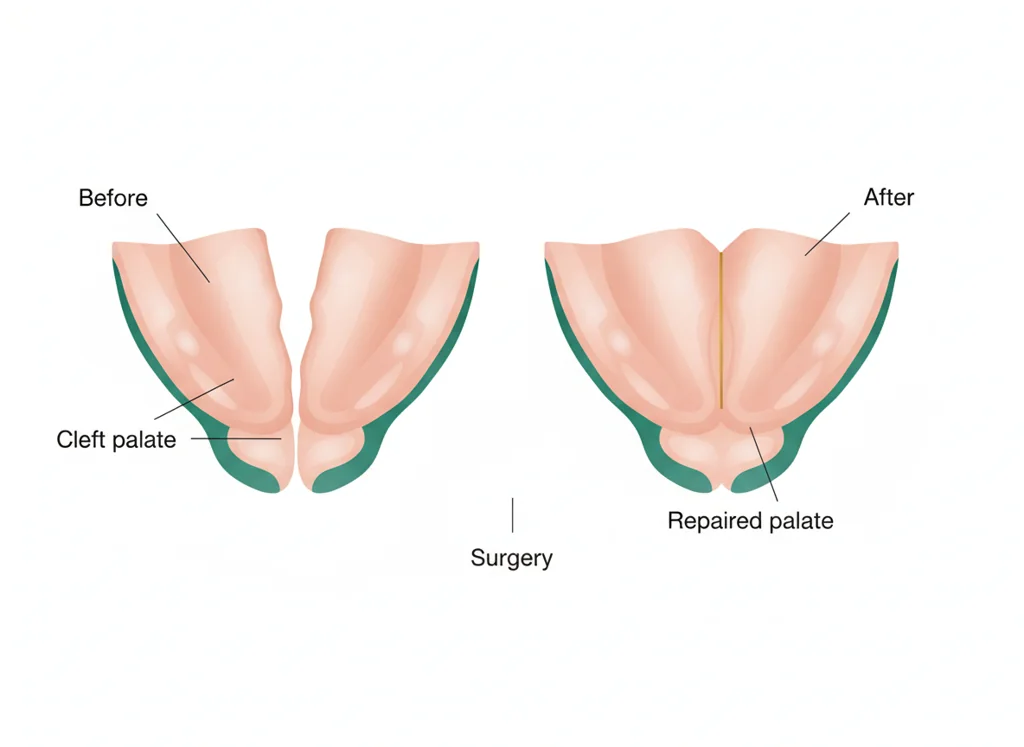
Surgery that closes a cleft in the roof of the mouth so the palate can separate the nose from the mouth and support speech.
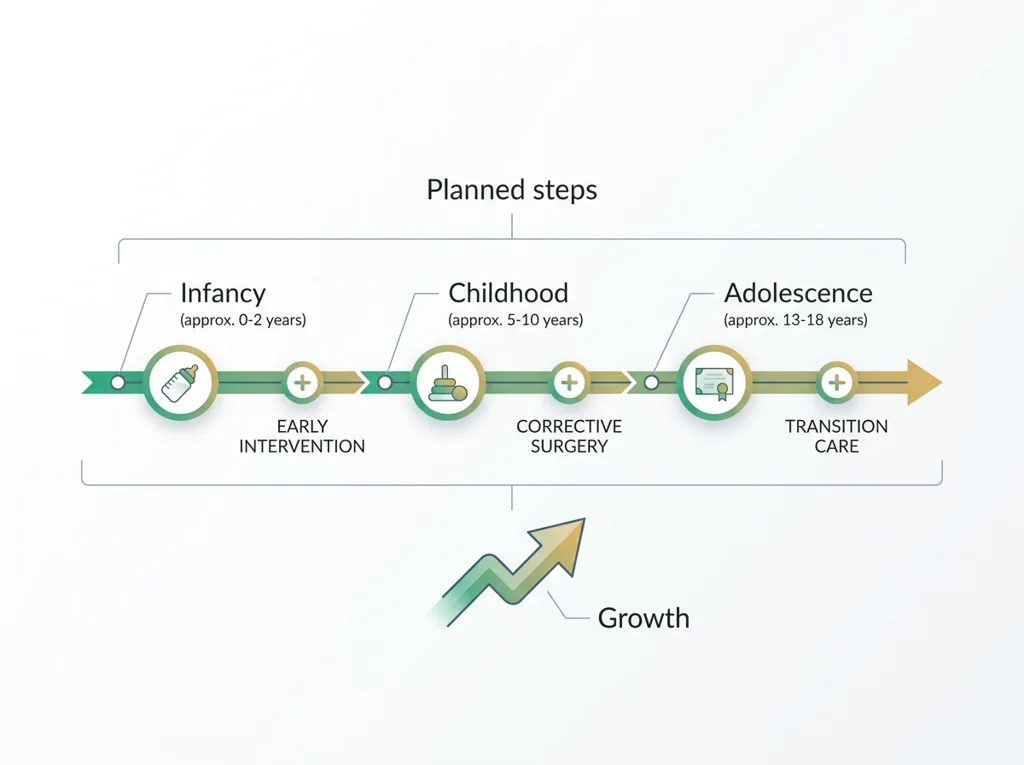
A treatment plan delivered in planned steps across years, matching each procedure to the right point in a child's growth.
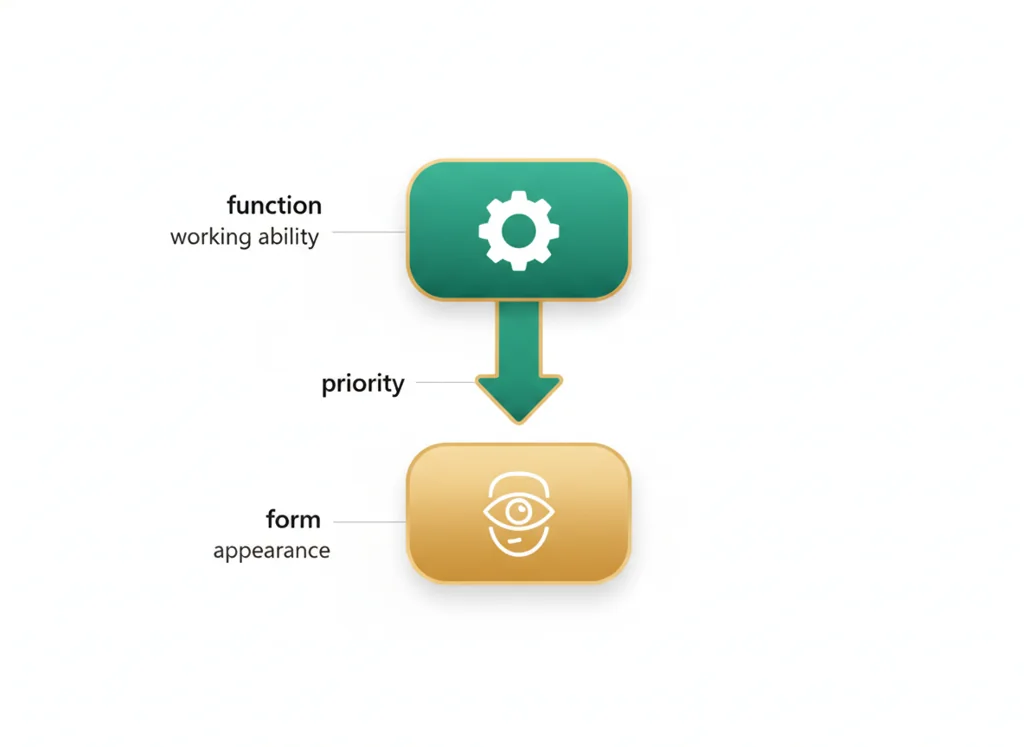
A care principle that fixing how a structure works, like feeding or speech, takes priority over how it looks.
Research citation trail (advanced)
You do not need these papers or database records to finish the lesson. They document where the plain-language explainer's claims come from and are intended for teachers or advanced readers.
- American Cleft Palate Craniofacial Association. 2024 Parameters of Care.
- Vyas T, et al. 2020. Cleft of lip and palate: A review. J Family Med Prim Care. [PMID:32984097]
- James JN, et al. 2014. Management of cleft lip and palate and orthognathic considerations. Oral Maxillofac Surg Clin North Am. [PMID:25438882]
- Dixon MJ, et al. 2011. Cleft lip and palate: genetic and environmental influences. Nat Rev Genet. [PMID:21331089]