
Rebuilding the Lip
This reading contains every idea and every piece of evidence needed for today's decision. The research links at the end are optional.
Why this matters
Students can label each surgical step with the same force-and-continuity rules developed in the analogy.
The question you are trying to answer
Which hidden moving part must reconnect?
Begin with the idea you already earned
Presurgical molding changes the starting geometry before repair; it does not fuse tissue, and long-term benefits remain uncertain.
Study the analogy before the biology
- Which hidden moving part must reconnect?
- Which surface landmarks must meet?
- Why could the cover look closed while the machine still pulls unevenly?
Turn the analogy into three rules
Limit: Surgery involves living tissue, blood supply, healing, and individualized technique, not mechanical replacement parts.
Map those rules onto the biology
Primary cleft lip repair aims to restore both form and function. The surgeon finds the separated orbicularis fibers and rebuilds a continuous sphincter.
Skin, vermilion, mucosa, and nasal-base landmarks are aligned in layers.
Several repair designs are used. A strong plan is judged by anatomy, function, blood supply, healing, and outcomes, not by a technique name alone.
Read Mateo's labeled case evidence
Mateo's orbicularis fibers insert along the cleft margins.
The muscle must be identified and redirected across the gap.
The philtral column, cutaneous roll, vermilion, and mucosa are misaligned.
Visible subunits require precise matching.
ACPA lists orbicularis reconstruction and balanced nasolabial form as primary principles while recognizing multiple protocols.
The goals are shared even when incision geometry differs.
Make the concrete decision
You are reviewing the primary lip repair plan.
Plan A closes skin only. Plan B identifies muscle, reconnects the ring, and aligns each lip layer and nasal base.
- Choose Plan B and explain the functional layer.
- Choose Plan A because a closed skin line proves muscle repair.
- Pick a named technique without checking anatomy.
Choose the plan and cite muscle plus landmark evidence.
Claim ceiling: You may identify reconstruction goals. You may not prescribe one technique as universally best.
Write the 10-year takeaway
Lip repair restores a continuous orbicularis ring and aligned lip landmarks, not merely a closed skin line.
- Which hidden layer restores lip seal?
- Why can more than one incision design be reasonable?
Glossary in plain English
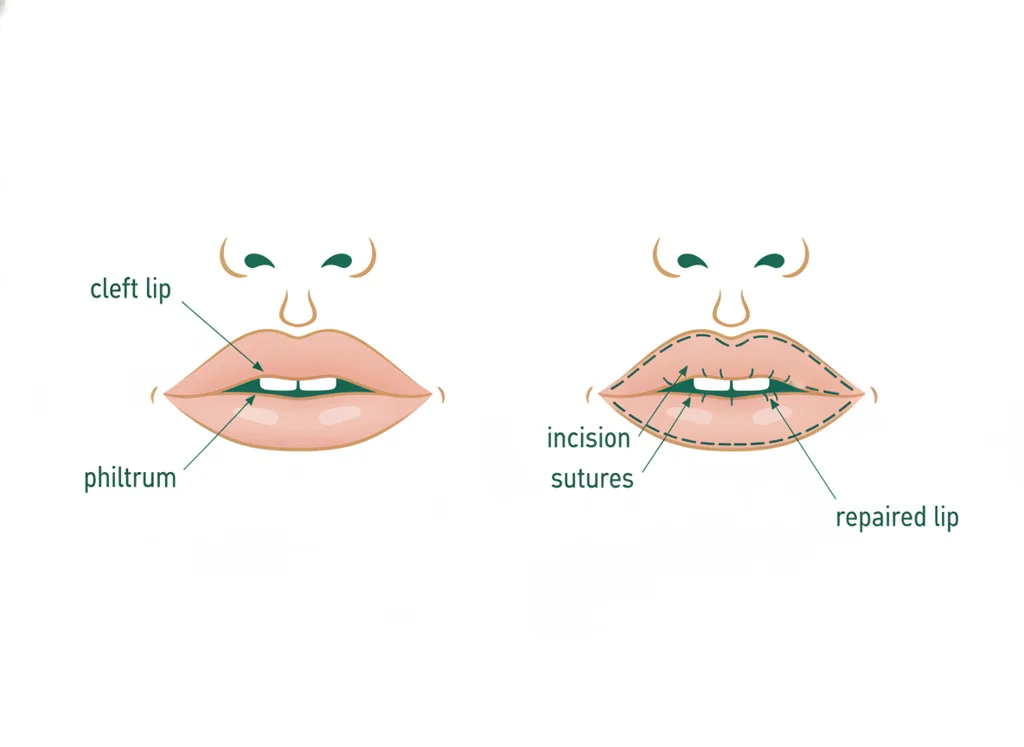
The surgical repair of a cleft lip, rejoining the separated lip tissue to restore a continuous lip and a more typical appearance.
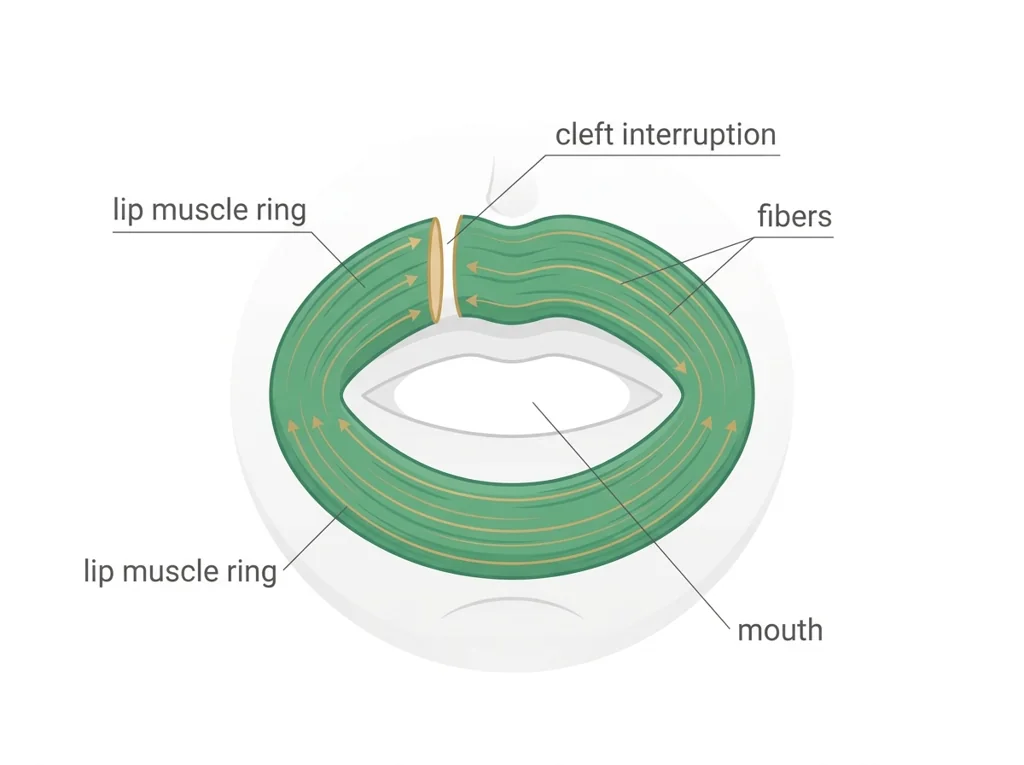
The ring of muscle encircling the mouth that closes and shapes the lips; its fibers are disrupted and repaired in cleft lip surgery.
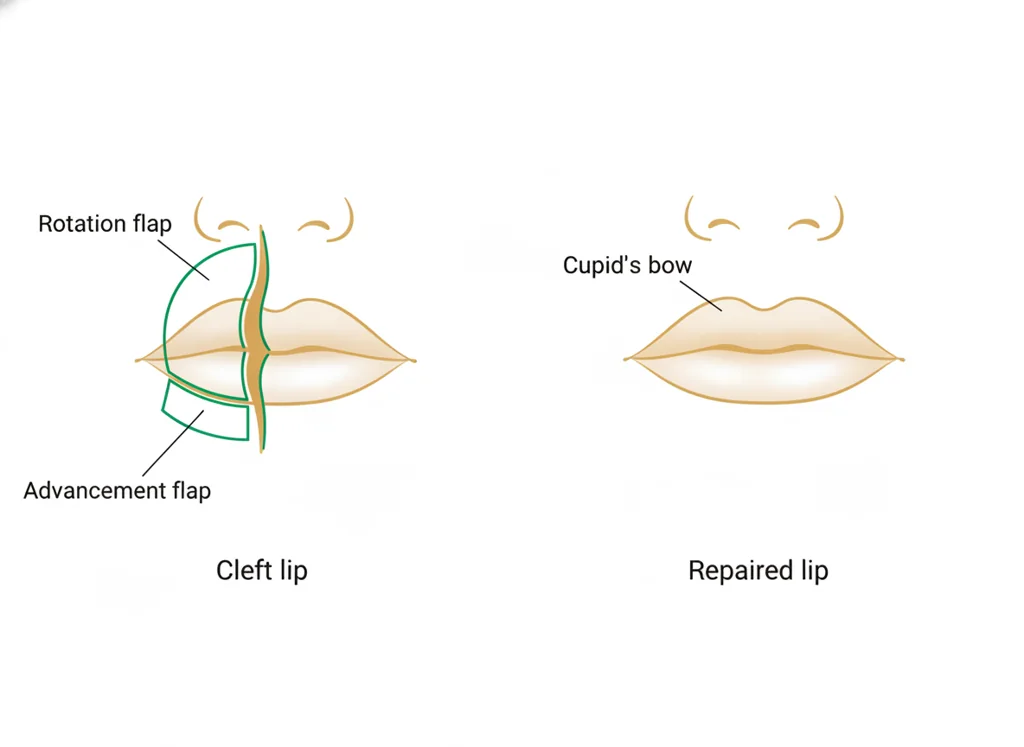
A cleft lip repair (the Millard technique) that rotates the lip down to level the Cupid's bow and advances a flap to fill the gap.
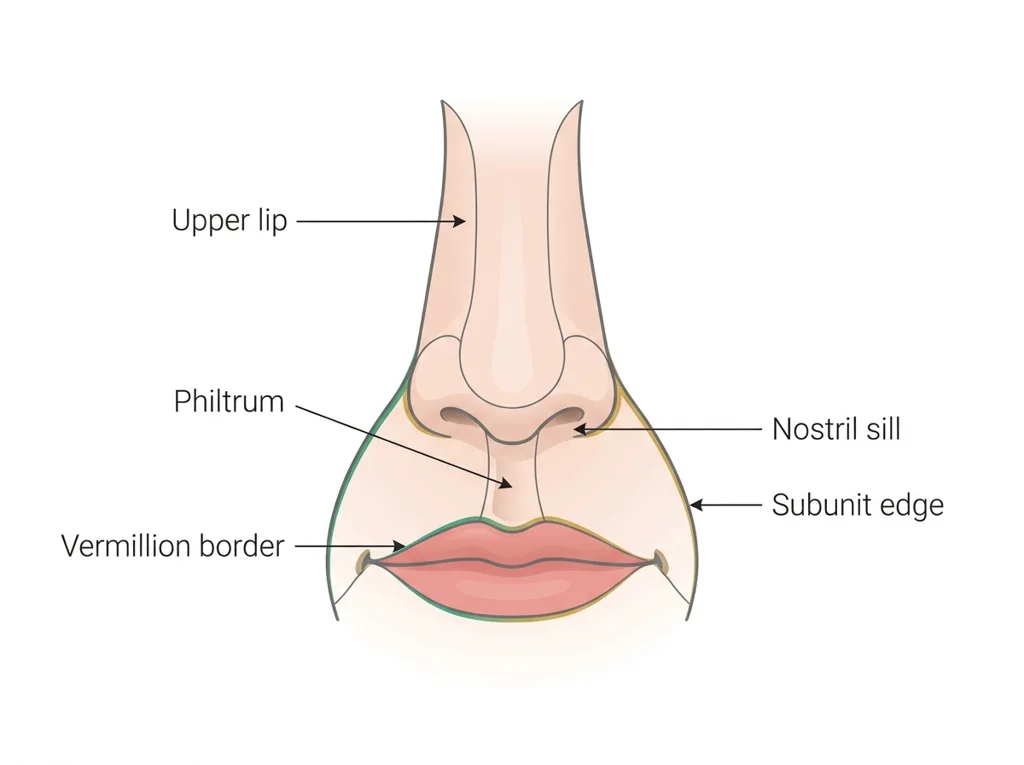
A natural region of a body part with its own borders, used by surgeons to plan repairs so scars hide along the edges between regions.
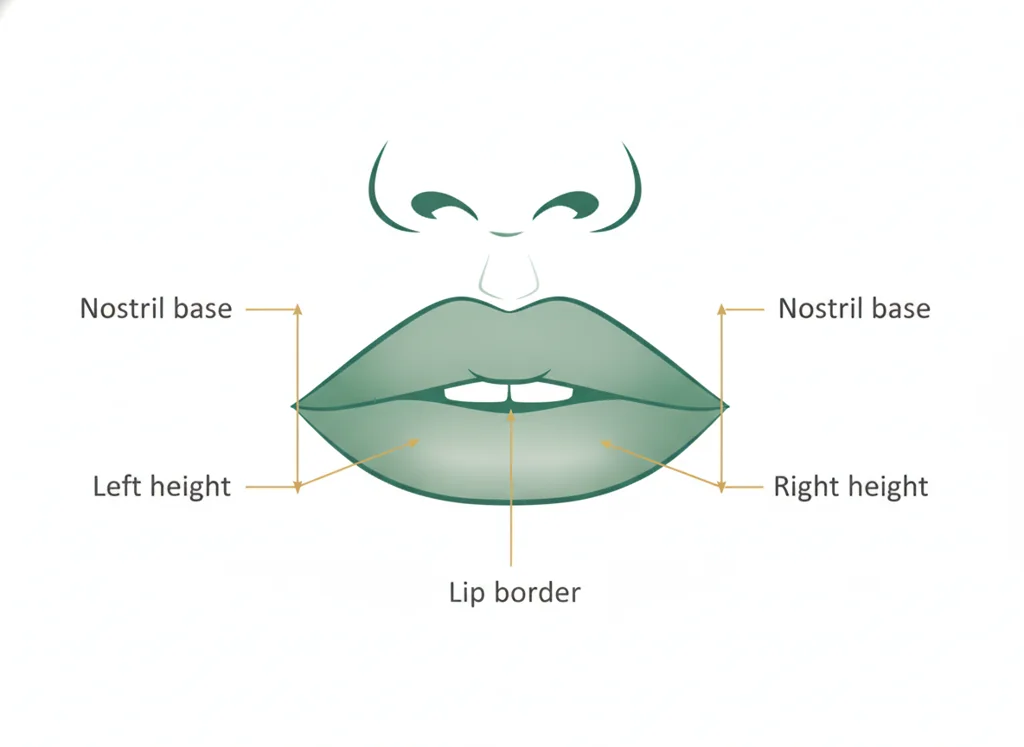
The vertical distance of the upper lip from its base to its edge, measured to judge symmetry and surgical repair results.
Research citation trail (advanced)
You do not need these papers or database records to finish the lesson. They document where the plain-language explainer's claims come from and are intended for teachers or advanced readers.