
Mateo's Complete Anatomical and Surgical Story
This reading contains every idea and every piece of evidence needed for today's decision. The research links at the end are optional.
Why this matters
The final synthesis checks whether students can make a useful clinical claim without crossing the evidence ceiling.
The question you are trying to answer
Which statements are direct observations?
Begin with the idea you already earned
Cleft care is a coordinated timeline because each specialty acts when anatomy, function, and development make its decision useful.
Study the analogy before the biology
- Which statements are direct observations?
- Which outcomes were measured after repair?
- Which choices still need comparison data?
Turn the analogy into three rules
Limit: A person's health story includes goals, experience, access, and quality of life beyond a technical report.
Map those rules onto the biology
Mateo's composite file supports a complete unilateral left cleft lip, alveolus, and palate. The palate component fits Veau III.
The cleft changes muscle direction, oral-nasal separation, feeding, speech risk, middle-ear risk, teeth, bone, facial growth, and nasal form. Care is staged and measured over time.
The anatomy can be clear while causes and best-treatment comparisons remain open. Those uncertainties become the starting questions for Experimental Design.
Read Mateo's labeled case evidence
The composite anatomy supports a complete unilateral left cleft lip, alveolus, and palate with a Veau III palate component.
The structural classification is well supported.
No supplied extra-anatomical pattern establishes a syndrome, and Genetics did not provide a patient-specific molecular cause.
The safest summary is isolated-appearing and evidence-bounded.
Several care choices still have competing techniques or uncertain long-term outcomes, including molding, palate protocols, VPI revision, and jaw advancement.
The next domain can turn these uncertainties into testable comparisons.
Make the concrete decision
You are the lead craniofacial surgeon at the final case conference.
The team must choose between a confident but overclaimed summary and an evidence-bounded report with open research questions.
- Present the supported anatomy, functional consequences, staged care, and named uncertainties.
- Claim one gene, one surgical cause, and one best technique without evidence.
- Avoid any conclusion because some questions remain open.
Choose the final report and cite classification, claim limit, and one open comparison.
Claim ceiling: You may synthesize the complete supplied anatomical story. You may not add a syndrome, molecular diagnosis, guaranteed outcome, or universal best operation.
Write the 10-year takeaway
A complete anatomical story can define structures, functions, repairs, and uncertainties while leaving treatment comparisons open to experiment.
- What anatomical label is supported?
- Which uncertainty should become an experiment?
Glossary in plain English
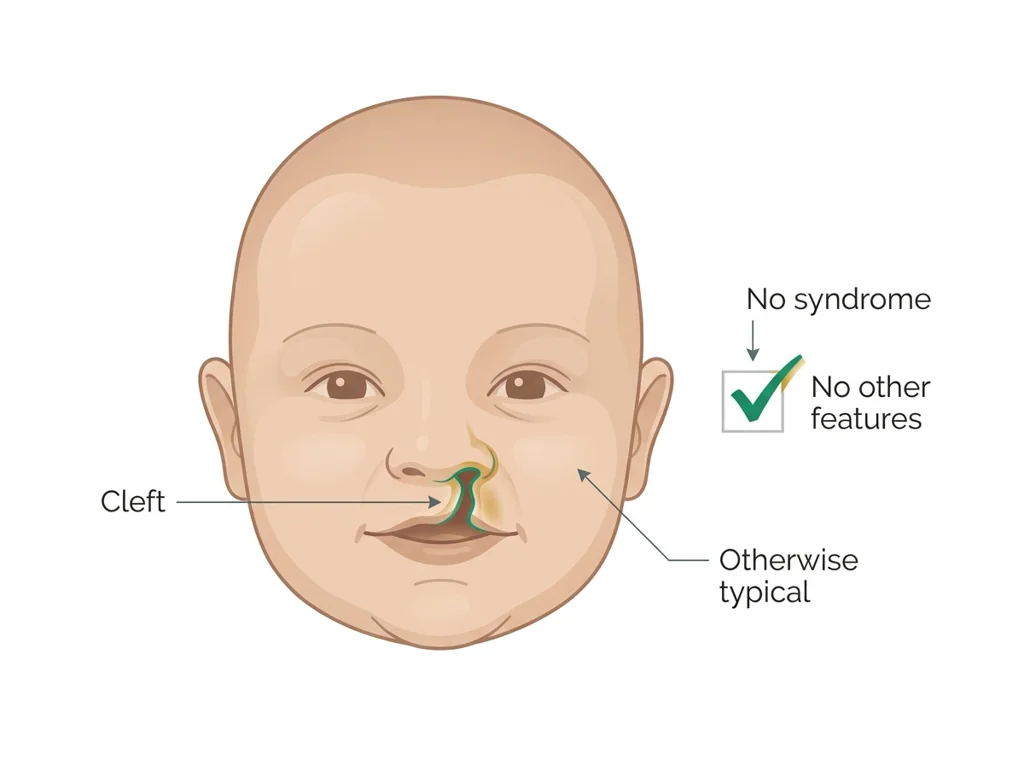
A cleft of the lip or palate that occurs on its own, without other birth differences or a recognized syndrome.
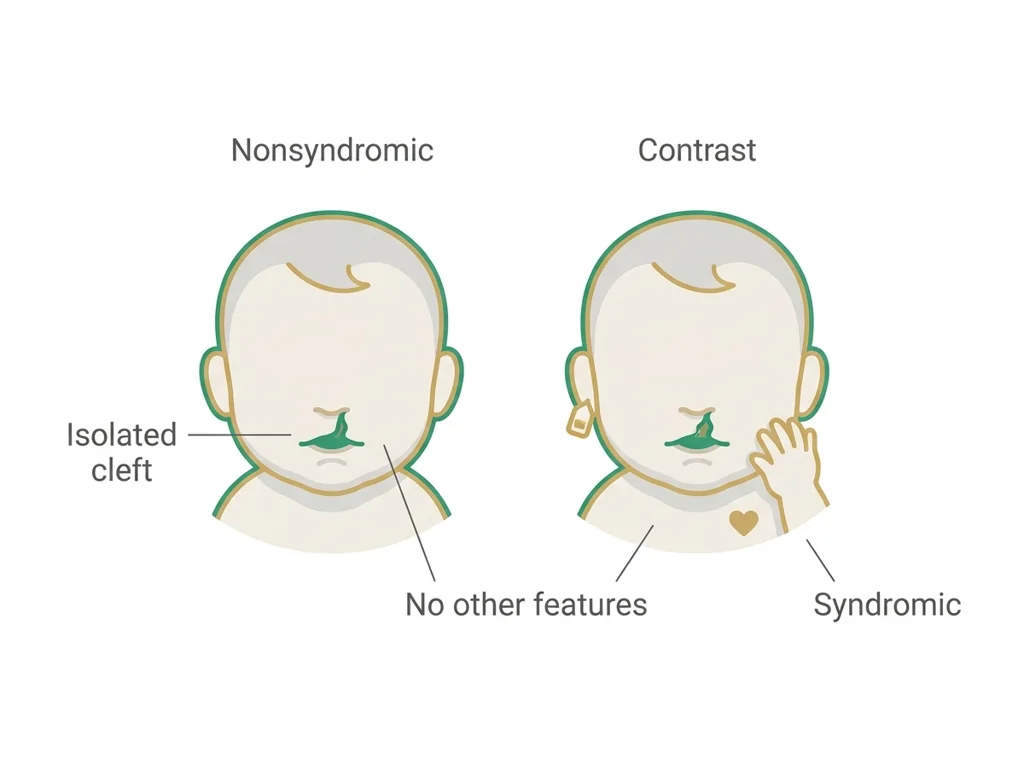
Describing a condition, such as a cleft, that occurs on its own without a set of other linked birth differences.
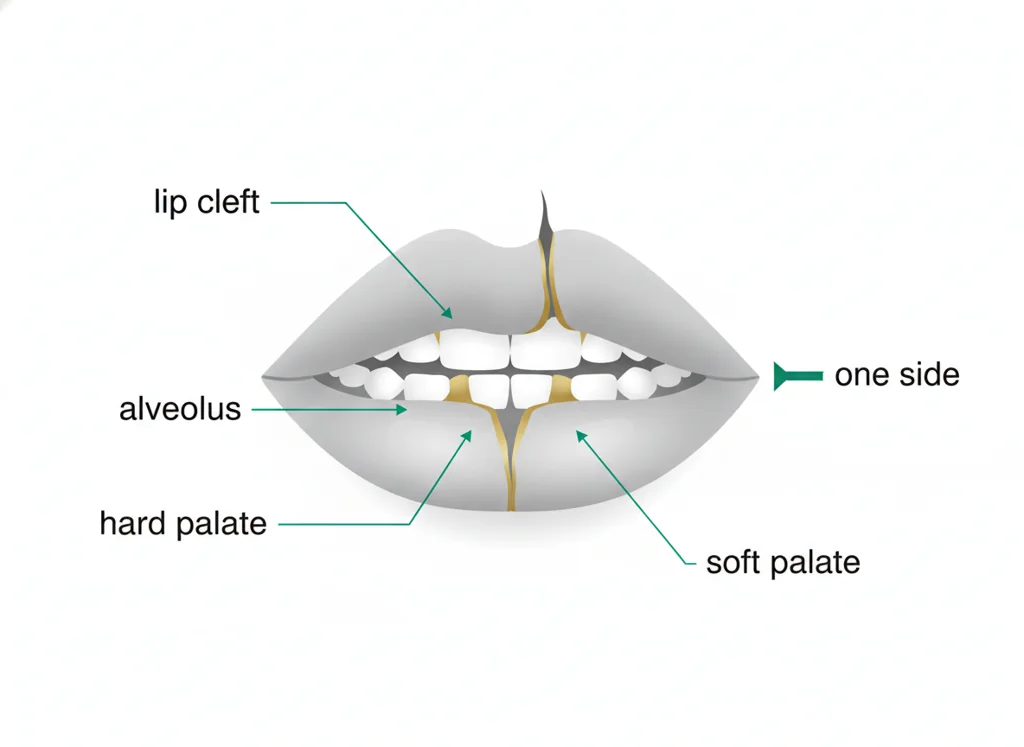
A cleft classification for a complete one-sided cleft running through the lip, gum, and both the hard and soft palate.
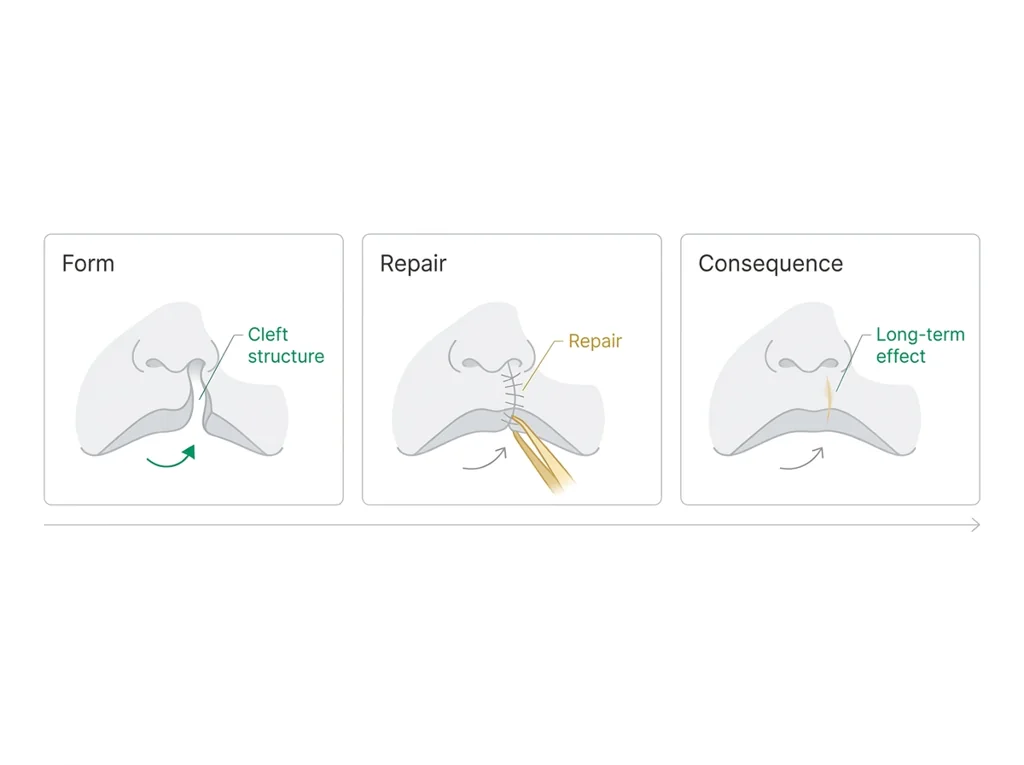
A way of thinking through cleft cases by asking how the structure formed, how it is repaired, and what long-term effects follow.
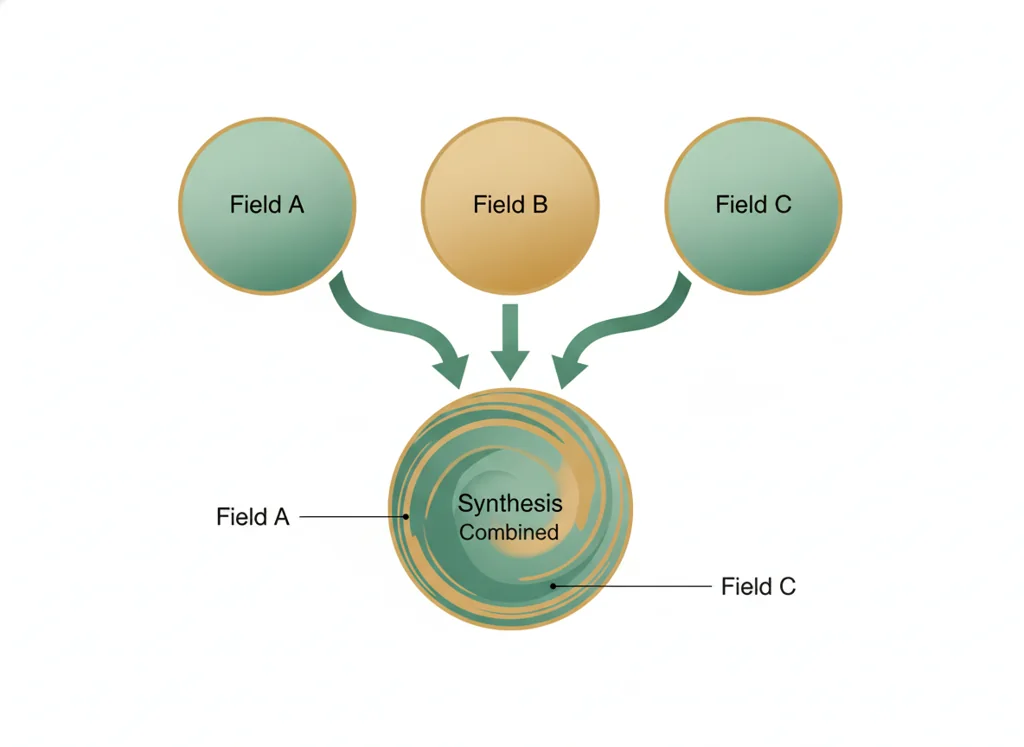
Pulling findings from many separate areas of knowledge together into one coherent picture or argument.
Research citation trail (advanced)
You do not need these papers or database records to finish the lesson. They document where the plain-language explainer's claims come from and are intended for teachers or advanced readers.
- American Cleft Palate Craniofacial Association. 2024 Parameters of Care.
- Houkes et al. 2023, Classification Systems of Cleft Lip, Alveolus and Palate: International Survey (Cleft Palate Craniofac J)
- Kotlarek et al. 2020, Levator Veli Palatini in Repaired Cleft Palate (J Speech Lang Hear Res)
- Taritsa et al. 2025, 12-Year Trends of Orofacial Clefts in the US: Racial/Ethnic Differences (Cleft Palate Craniofac J)