
The Cleft Nose and Its Repair
This reading contains every idea and every piece of evidence needed for today's decision. The research links at the end are optional.
Why this matters
Students see form, function, and growth converge in one staged anatomical decision.
The question you are trying to answer
Which problem changes appearance?
Begin with the idea you already earned
Severe maxillary retrusion may require moving the upper jaw, but the choice between methods depends on severity, growth, stability, burden, airway, and speech.
Study the analogy before the biology
- Which problem changes appearance?
- Which problem limits passage?
- Why might changing the wall below alter the doorway above?
Turn the analogy into three rules
Limit: Nasal airflow and cartilage mechanics are more complex than a rigid doorway.
Map those rules onto the biology
A unilateral cleft can flatten or displace nasal cartilage and shift the nostril base. The septum may also be deviated.
The nose should be assessed for both symmetry and airflow. Appearance and breathing are related but not identical outcomes.
Definitive septorhinoplasty usually waits until skeletal maturity. If jaw surgery is planned, the nasal operation often follows because maxillary movement can change the nose.
Read Mateo's labeled case evidence
Mateo's left alar base is displaced and the nostrils are asymmetric.
The unilateral cleft affects external nasal form.
The supplied nasal examination shows septal deviation and greater resistance on one side.
The case includes a breathing concern, not appearance alone.
ACPA recommends waiting until skeletal maturity for definitive septorhinoplasty and usually completing indicated orthognathic surgery first.
Growth and jaw sequence can change the final nasal plan.
Make the concrete decision
You are the adolescent cleft-nose team lead.
Mateo requests definitive nasal surgery but is also scheduled for maxillary advancement next year.
- Treat urgent airway needs as indicated and plan definitive septorhinoplasty after jaw surgery and skeletal maturity.
- Complete definitive nasal reshaping first without coordinating jaw movement.
- Discuss appearance only and ignore breathing.
Choose the sequence and cite airway plus timing evidence.
Claim ceiling: You may explain the educational sequence. You may not decide a real patient's nasal procedure or timing.
Write the 10-year takeaway
A unilateral cleft can distort nasal cartilage, base, and septum, so nose care addresses breathing and symmetry across growth.
- Which internal structure can narrow airflow?
- Why does definitive nasal surgery often follow jaw surgery?
Glossary in plain English
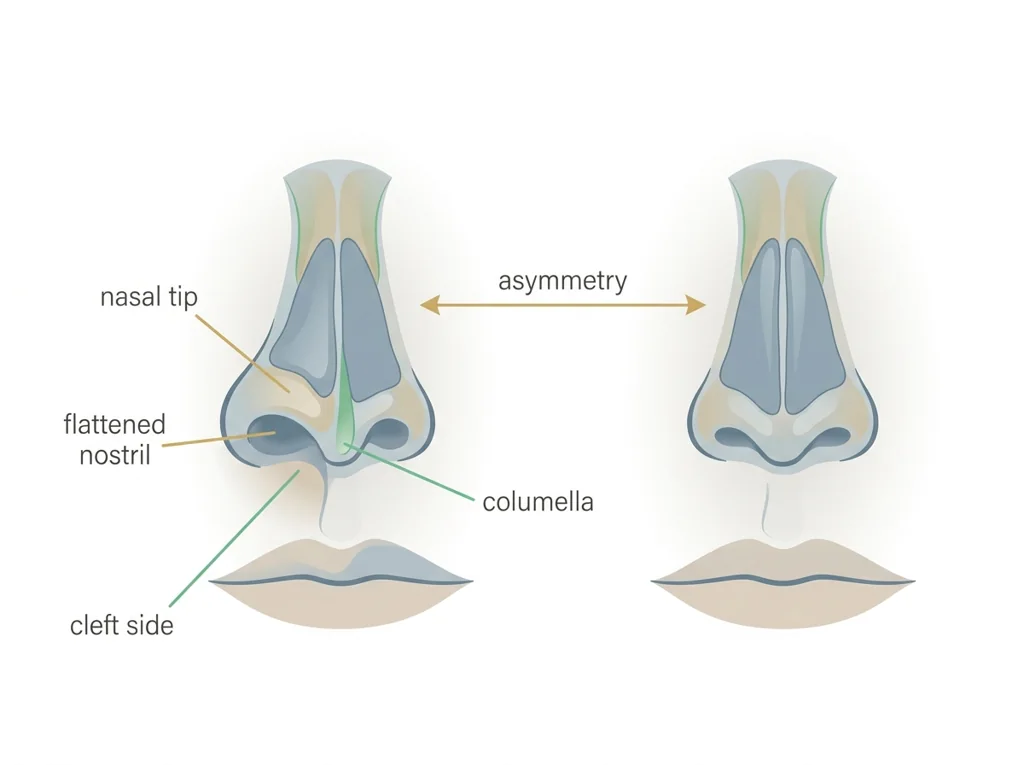
The change in nose shape that comes with a cleft lip, including a flattened, widened nostril and a leaning nasal tip on the cleft side.
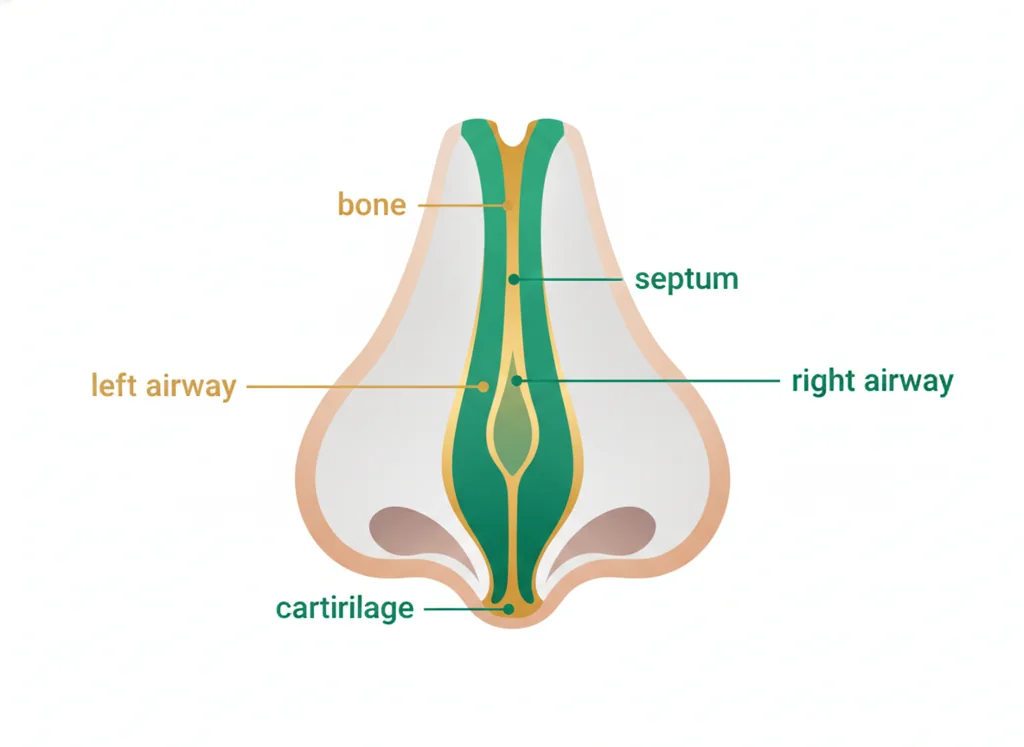
The wall of cartilage and bone running down the middle of the nose that separates it into left and right airways.
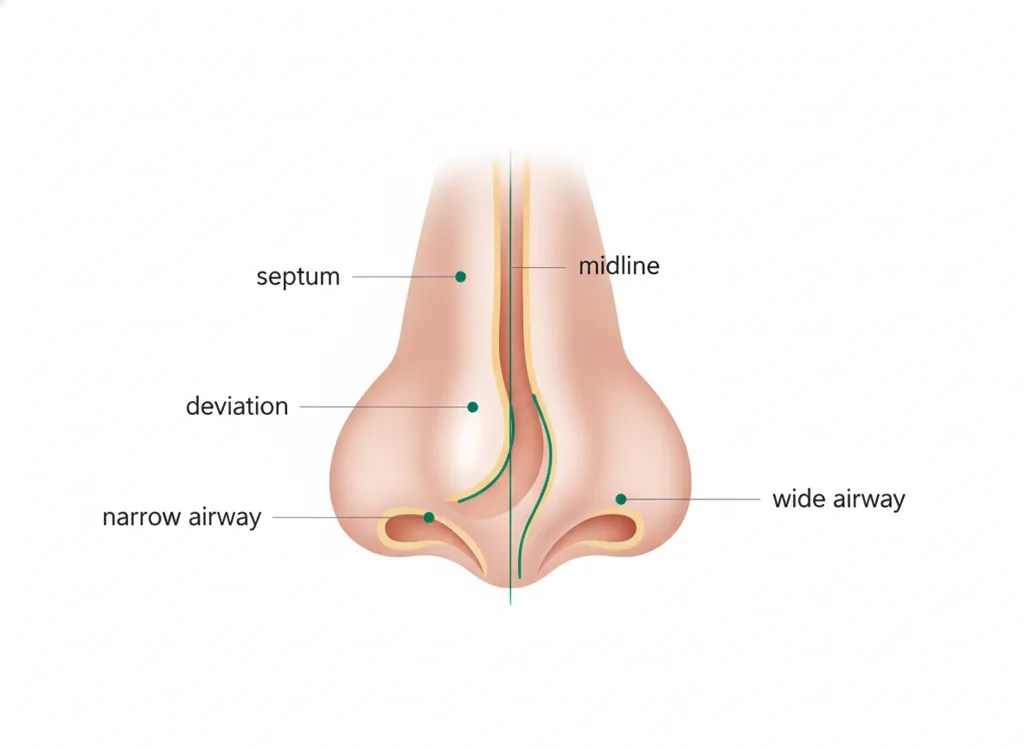
A bending or shift of the nasal septum away from the midline, which can narrow one airway and affect breathing.
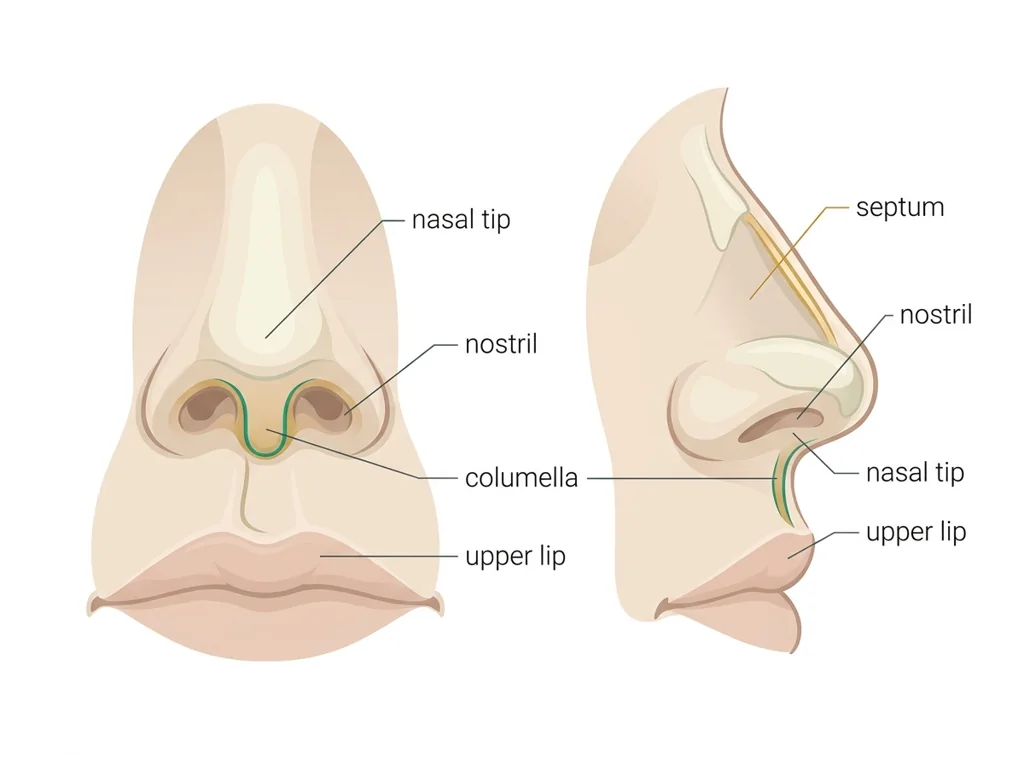
The thin strip of tissue between the two nostrils that connects the nasal tip to the upper lip and helps hold the nose's shape.
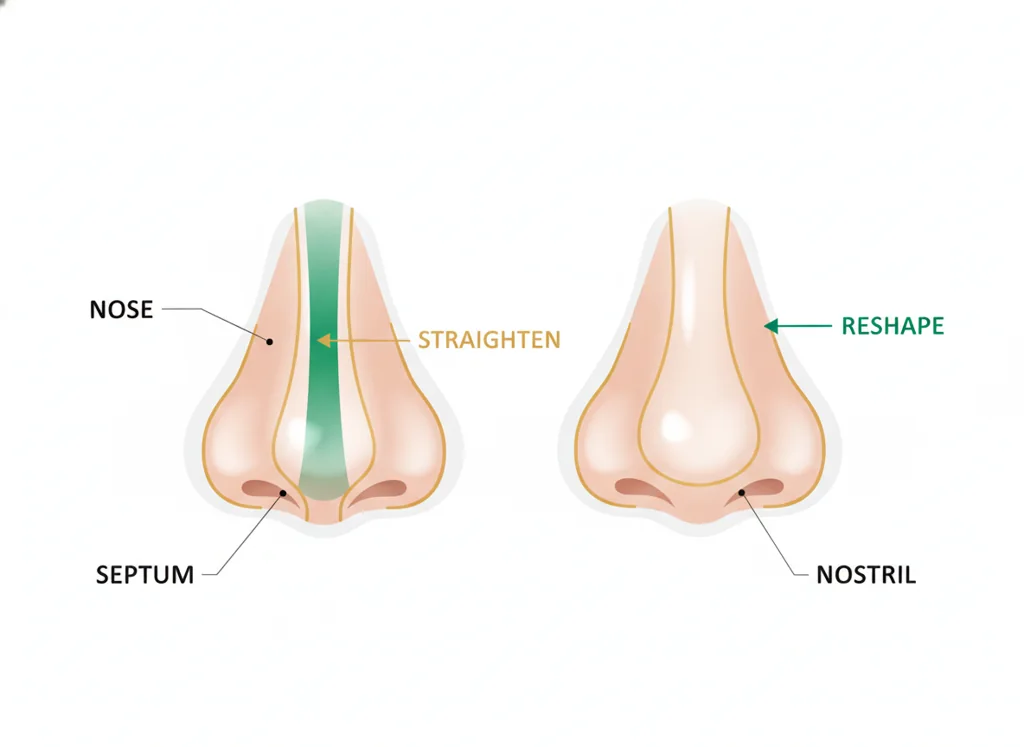
Surgery that reshapes the nose and straightens the inner wall (septum) between the nostrils to improve appearance and breathing.
Research citation trail (advanced)
You do not need these papers or database records to finish the lesson. They document where the plain-language explainer's claims come from and are intended for teachers or advanced readers.
- American Cleft Palate Craniofacial Association. 2024 Parameters of Care.
- Goksel & Ozcan 2023, CBCT Study of Osteomeatal Complex Variations in CLP (Cleft Palate Craniofac J)
- Paknahad et al. 2022, Maxillary Sinus Characteristics in CLP Using CBCT (Cleft Palate Craniofac J)
- Harrison et al. 2024, 3D Analysis of Racial and Ethnic Differences in Cleft Nasal Deformity (Cleft Palate Craniofac J)