
The Normal Lip and Palate, Part by Part
This reading contains every idea and every piece of evidence needed for today's decision. The research links at the end are optional.
Why this matters
A precise normal map gives students the reference needed to identify what a cleft interrupts.
The question you are trying to answer
Which surfaces create two separate spaces?
Begin with the idea you already earned
Mateo's strongest genetic story is multifactorial and evidence-bounded: IRF6 explains a pathway, not a proven individual cause.
Study the analogy before the biology
- Which surfaces create two separate spaces?
- What changes if the barrier has a gap?
- Which part must stay rigid and which part must move?
Turn the analogy into three rules
Limit: The palate is living tissue with muscles, nerves, vessels, and growth. It is not a building floor.
Map those rules onto the biology
The upper lip, alveolus, hard palate, and soft palate form one connected region with different tissues and jobs.
The incisive foramen is an important landmark. Structures in front belong to the primary palate; structures behind belong to the secondary palate.
The palate separates the mouth from the nose. The hard palate stays firm, while the soft palate moves during speech and swallowing.
Read Mateo's labeled case evidence
The incisive foramen separates the primary palate in front from the secondary palate behind.
It is a landmark for describing the extent of a cleft.
The hard palate is bony and the soft palate is muscular.
One provides a fixed roof while the other moves for speech and swallowing.
Mateo's composite file describes an opening from the lip through the palate.
The normal oral-nasal barrier is interrupted across more than one region.
Make the concrete decision
You are the pediatric anatomist orienting the cleft team.
A trainee labels the palate as one flat bone and cannot explain Mateo's feeding problem.
- Correct the map to include primary palate, hard palate, soft palate, and two cavities.
- Keep one label because every palate part has the same tissue and job.
- Skip the normal map and start with surgery.
Choose the anatomy correction and cite the landmark plus one function.
Claim ceiling: You may map normal structures and the barrier function. You may not classify Mateo's cleft until its full extent is supplied.
Write the 10-year takeaway
Anatomy becomes useful when each structure is tied to the job it performs.
- Which landmark divides the primary and secondary palate?
- Why must the soft palate move?
Glossary in plain English
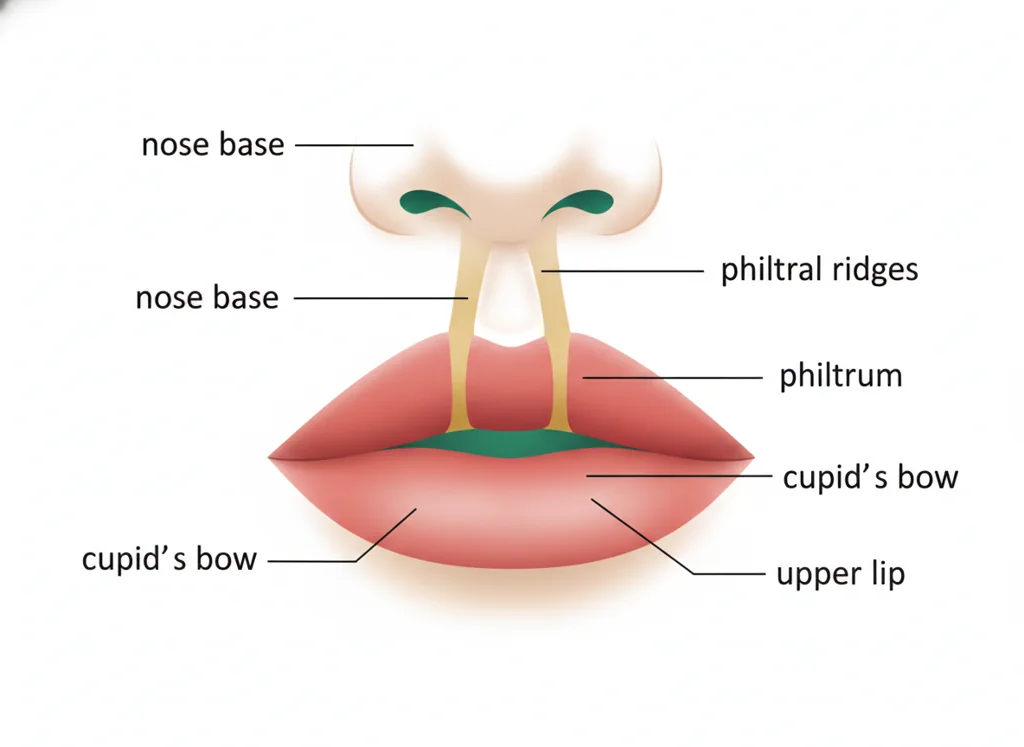
The vertical groove in the middle of the upper lip, bordered by two ridges, that forms where facial parts fuse during development.
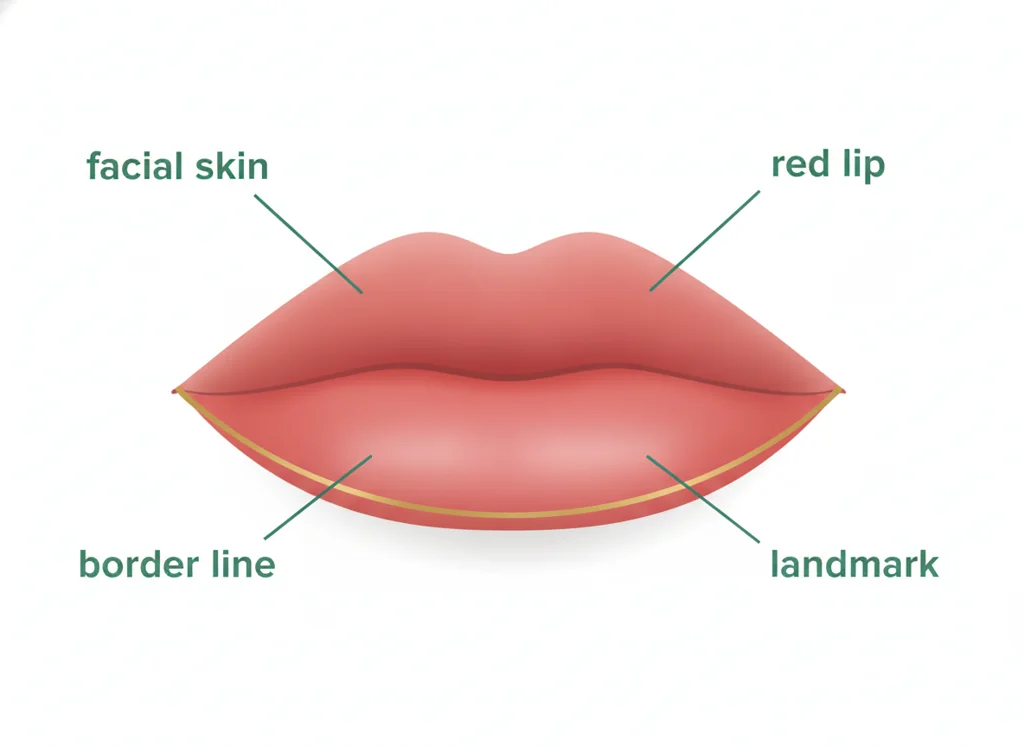
The sharp line where the colored part of the lip meets the surrounding facial skin, a key landmark that must align in cleft lip repair.
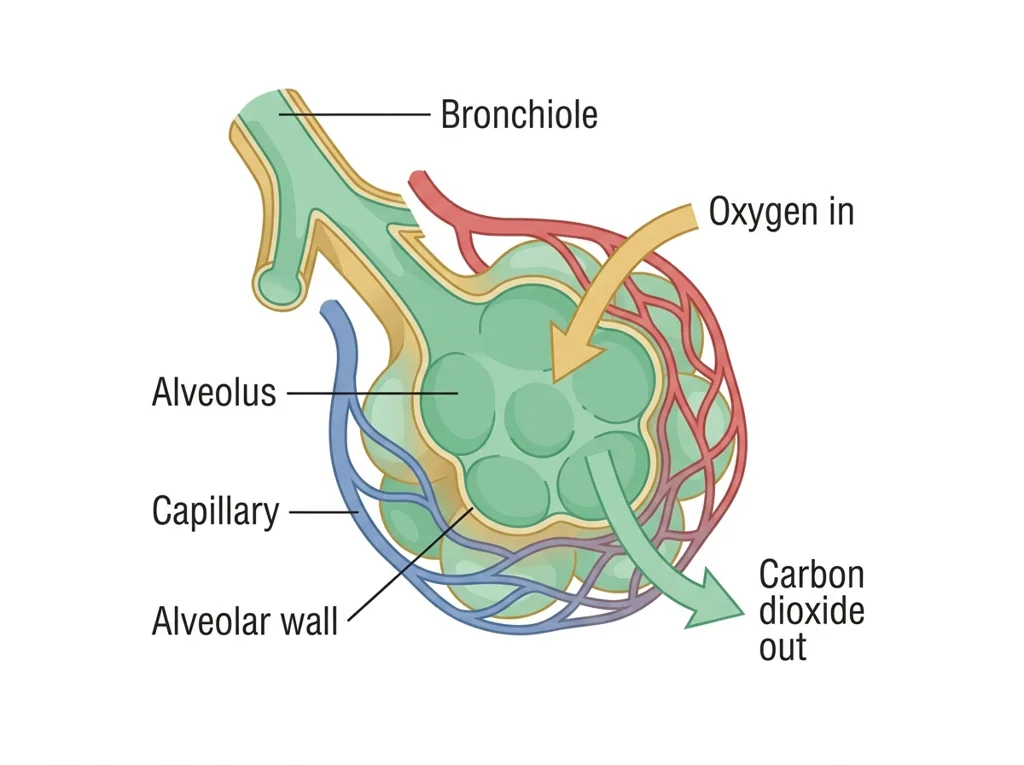
A tiny air sac at the end of an airway in the lung where oxygen enters the blood and carbon dioxide leaves it across a thin wall.
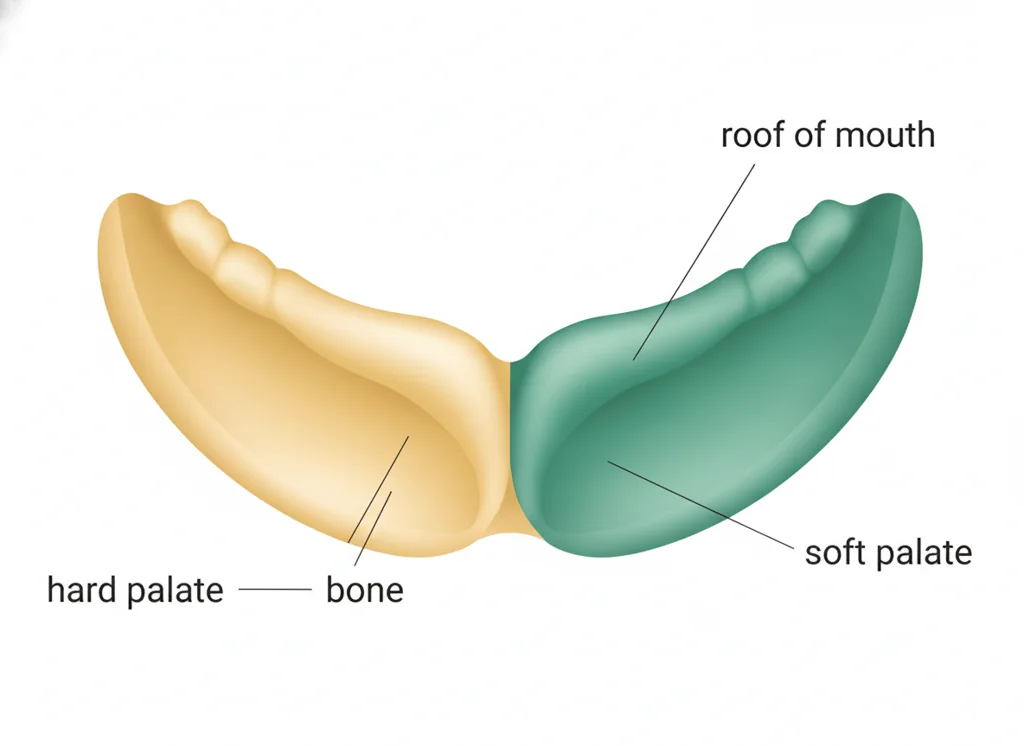
The bony front part of the roof of the mouth that separates the mouth from the nasal cavity and supports chewing and speech.
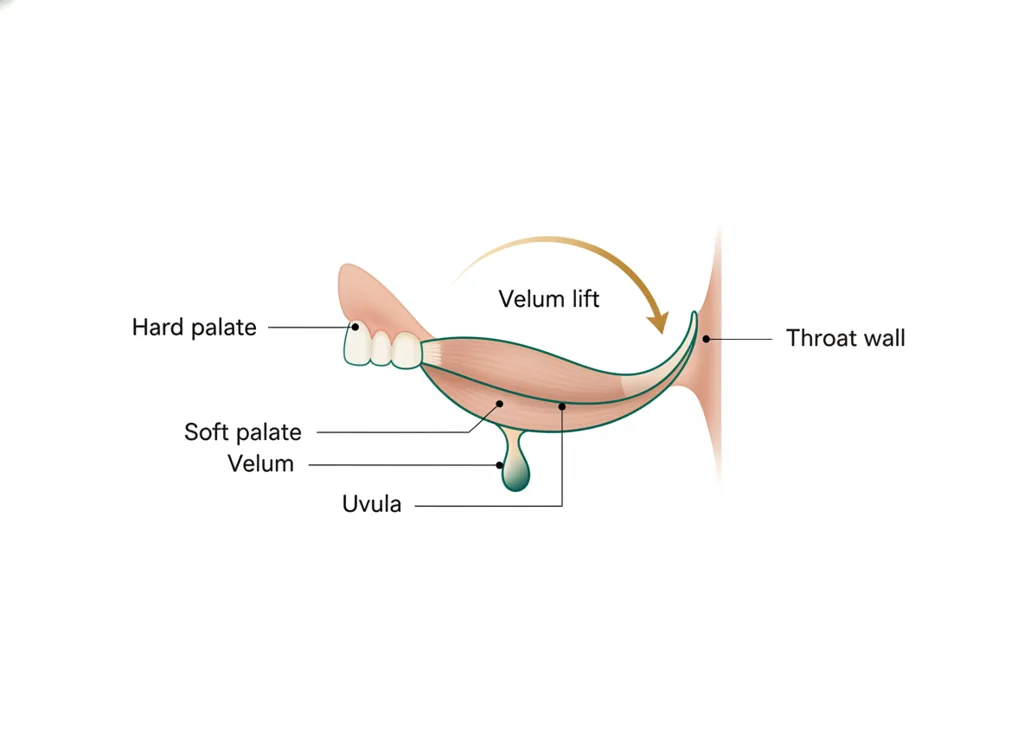
The flexible muscular back portion of the roof of the mouth that lifts to seal off the nose during speech and swallowing.
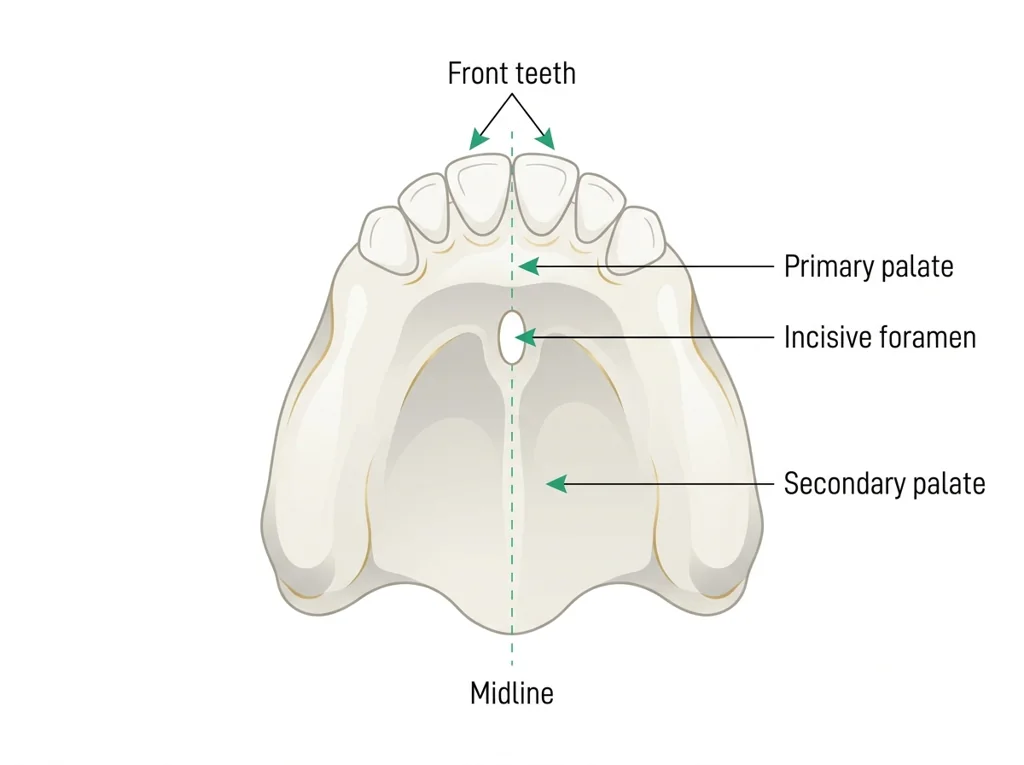
A small opening in the roof of the mouth just behind the front teeth that marks the boundary between the primary and secondary palate.
Research citation trail (advanced)
You do not need these papers or database records to finish the lesson. They document where the plain-language explainer's claims come from and are intended for teachers or advanced readers.