
The Hidden Regulatory Variant
This reading contains every idea and every piece of evidence needed for today's decision. The research links at the end are optional.
Why this matters
For most children born with a cleft, there is no one cause, so families need an explanation that informs care without assigning blame.
The question you are trying to answer
Why do most kids with a cleft carry no broken instruction at all?
Begin with the idea you already earned
Variant location can change mechanism: reduced dosage and altered DNA binding can produce different IRF6-related outcomes.
Study the analogy before the biology
- What stays identical in both machines?
- Which control changes the amount produced?
- Why would output depend on the room and time?
Turn the analogy into three rules
Limit: Enhancers integrate many factors and are not single household dimmers.
Map those rules onto the biology
Enhancers are DNA regions that help control when and where a gene is active.
The IRF6 variant rs642961 changes an AP-2alpha binding site in an enhancer. It does not change the IRF6 protein sequence.
The allele is associated with higher cleft risk in some populations, but many carriers are unaffected.
Read Mateo's labeled case evidence
rs642961 lies in an IRF6 enhancer rather than a protein-coding exon.
The variant does not change an IRF6 amino acid.
The risk allele disrupts an AP-2alpha binding site in laboratory assays.
A molecular regulatory mechanism is supported.
The allele is associated with increased cleft-lip risk but is found in unaffected people.
It is a risk allele, not a deterministic syndrome mutation.
Make the concrete decision
You are reviewing an isolated-cleft research result.
A report finds one rs642961 risk allele and no pathogenic coding variant.
- Describe a modest regulatory risk contribution, not a diagnosis.
- Call it a guaranteed cause.
- Dismiss it because the protein sequence is unchanged.
Choose the interpretation and cite regulatory mechanism plus penetrance.
Claim ceiling: You may describe association and mechanism. You may not claim the allele alone caused Mateo's cleft.
Write the 10-year takeaway
A regulatory variant changes when or how much a gene is used without changing the protein sequence.
- What changes in a regulatory variant?
- Why is risk allele more accurate than causal mutation here?
Glossary in plain English
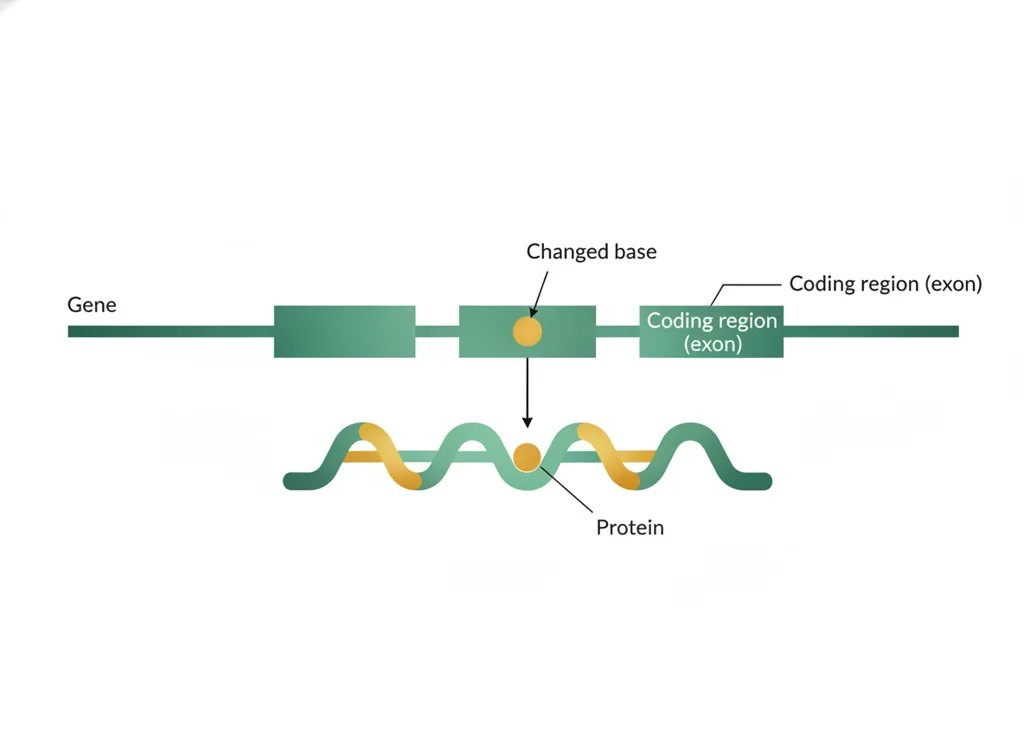
A DNA change located inside the protein-coding part of a gene, which can alter the protein the gene builds.
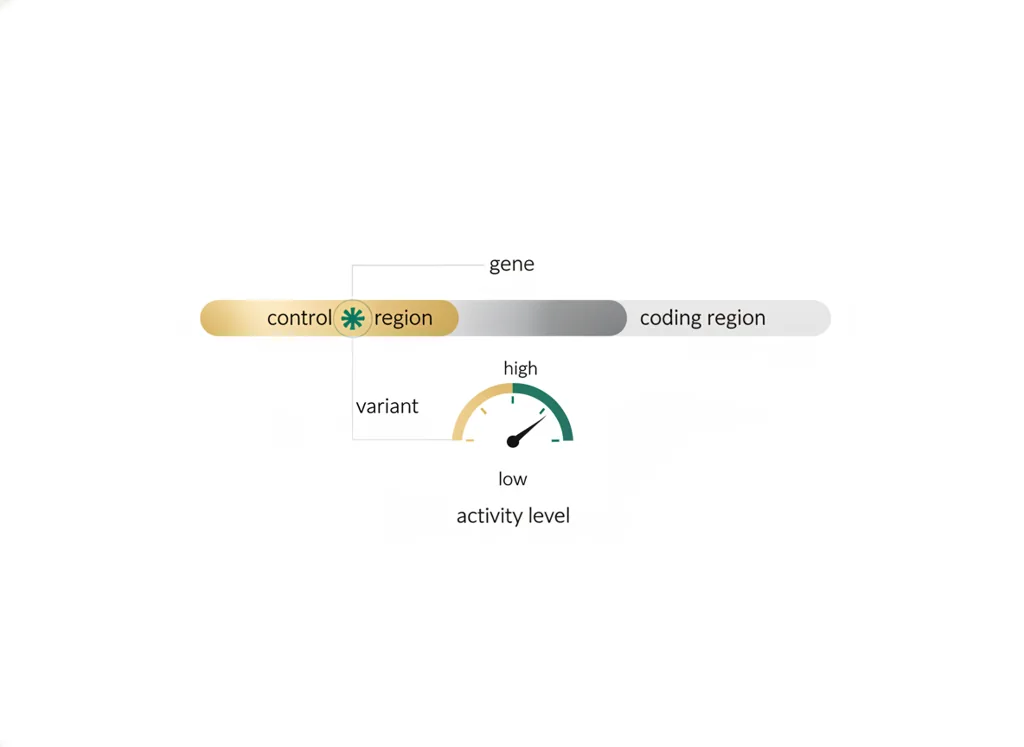
A DNA change outside a gene's coding region that alters when or how strongly the gene is switched on.
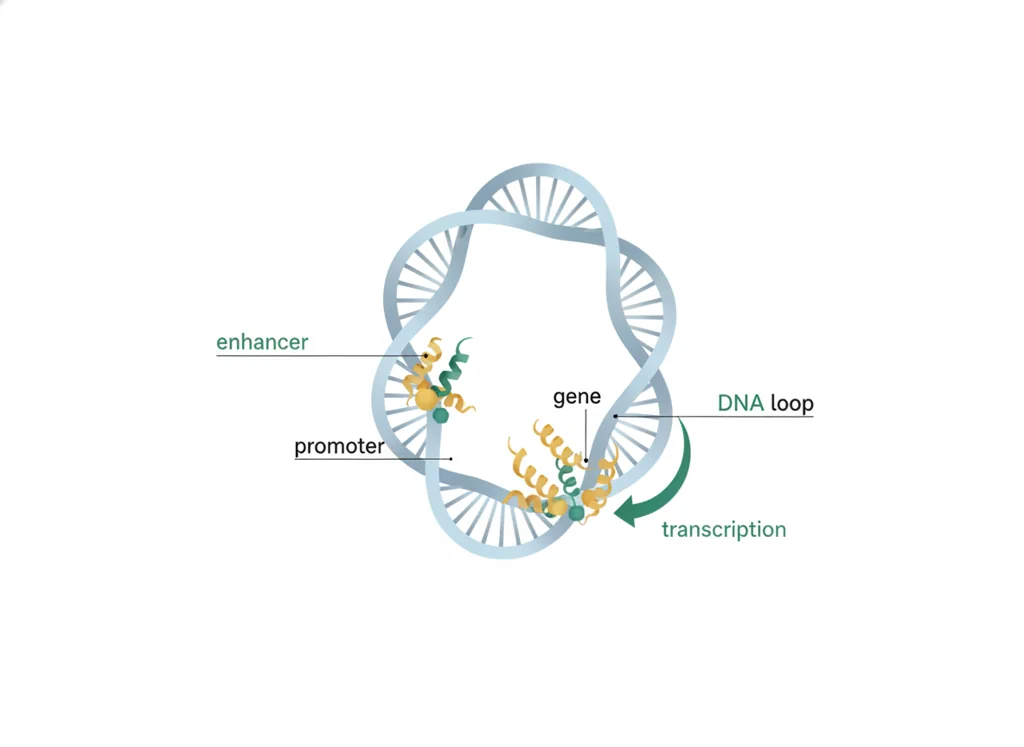
A stretch of regulatory DNA that boosts how strongly a nearby gene is transcribed, even from some distance away.
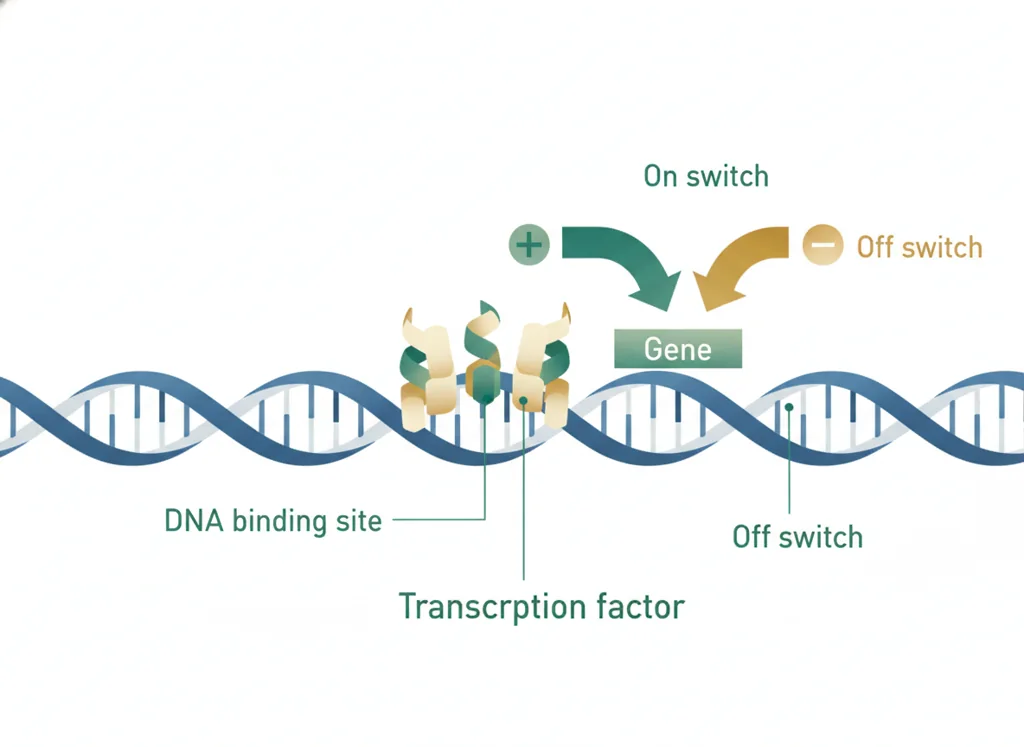
A protein that binds DNA and turns specific genes on or off, controlling what a cell becomes and does.
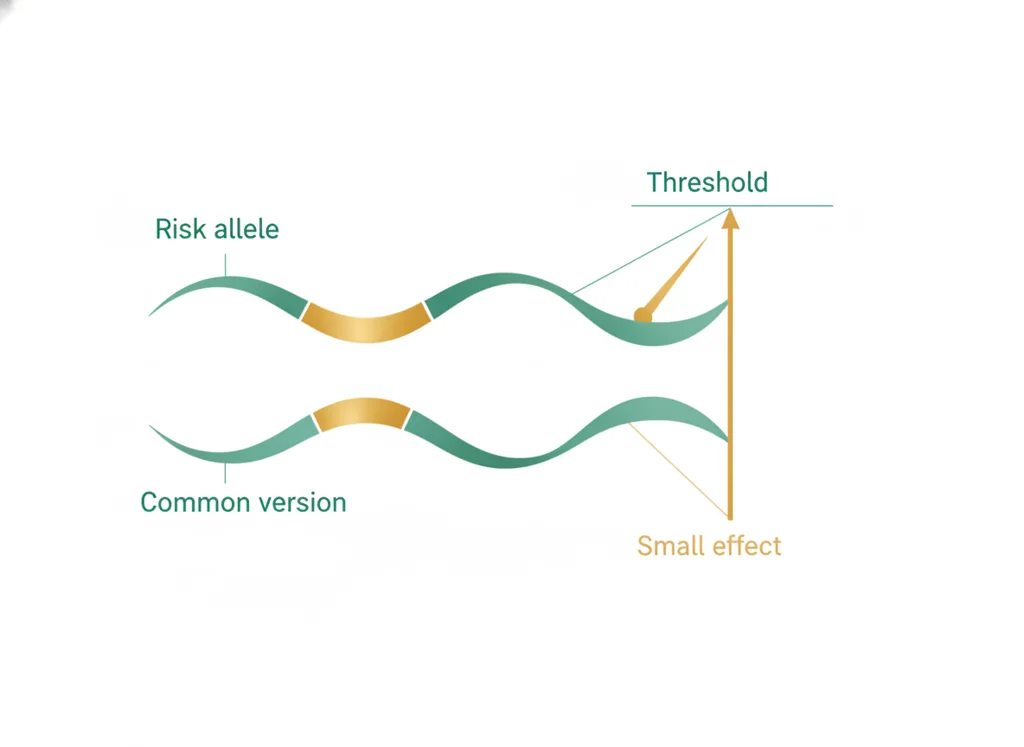
A common version of a gene that nudges the chance of a trait up a little, without causing the trait by itself.
Research citation trail (advanced)
You do not need these papers or database records to finish the lesson. They document where the plain-language explainer's claims come from and are intended for teachers or advanced readers.