
One Gene, Two Diseases
This reading contains every idea and every piece of evidence needed for today's decision. The research links at the end are optional.
Why this matters
Genotype-phenotype reasoning is strongest when students name both pattern and uncertainty.
The question you are trying to answer
What happens when one station is empty?
Begin with the idea you already earned
DNA variants change proteins in different ways, so variant type is evidence about mechanism, not a verdict by itself.
Study the analogy before the biology
- What happens when one station is empty?
- How is a wrong command different from no command?
- Which failure could disrupt the working operator too?
Turn the analogy into three rules
Limit: The effect of one instruction change can differ from another and is more complex than two operators.
Map those rules onto the biology
Haploinsufficiency means one working copy does not make enough functional product for typical development.
Some IRF6 missense variants alter the DNA-binding domain, including variants at amino acid 84.
Variant location helps, but the exact substitution, family data, and experiments still matter.
Read Mateo's labeled case evidence
Many Van der Woude variants reduce the amount of functional IRF6.
Haploinsufficiency is a supported disease mechanism.
Some severe PPS-associated variants cluster at Arg84 in the DNA-binding domain.
Location can alter protein behavior and phenotype.
Different substitutions at Arg84 do not always produce the same phenotype.
Position alone does not erase the exact amino-acid effect.
Make the concrete decision
You are comparing two IRF6 variant reports.
One creates an early stop. The other changes Arg84 in the DNA-binding domain.
- Discuss dosage loss versus domain-specific altered function.
- Call both mechanisms identical without evidence.
- Predict Mateo's phenotype from the gene name alone.
Choose the comparison and cite dosage plus domain evidence.
Claim ceiling: You may compare supported mechanisms. You may not guarantee syndrome severity from variant position alone.
Write the 10-year takeaway
Variant location can change mechanism: reduced dosage and altered DNA binding can produce different IRF6-related outcomes.
- How is reduced dosage different from an interfering protein?
- Why can two changes at the same position have different outcomes?
Glossary in plain English
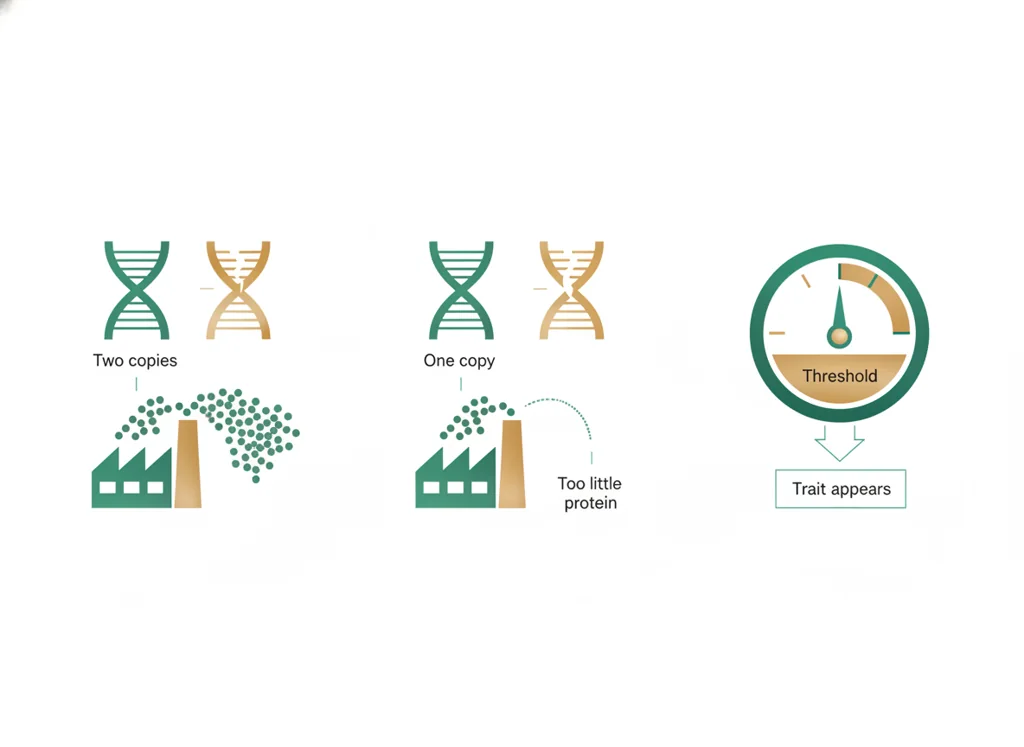
When one working copy of a gene cannot make enough product on its own, so losing the second copy causes the trait.
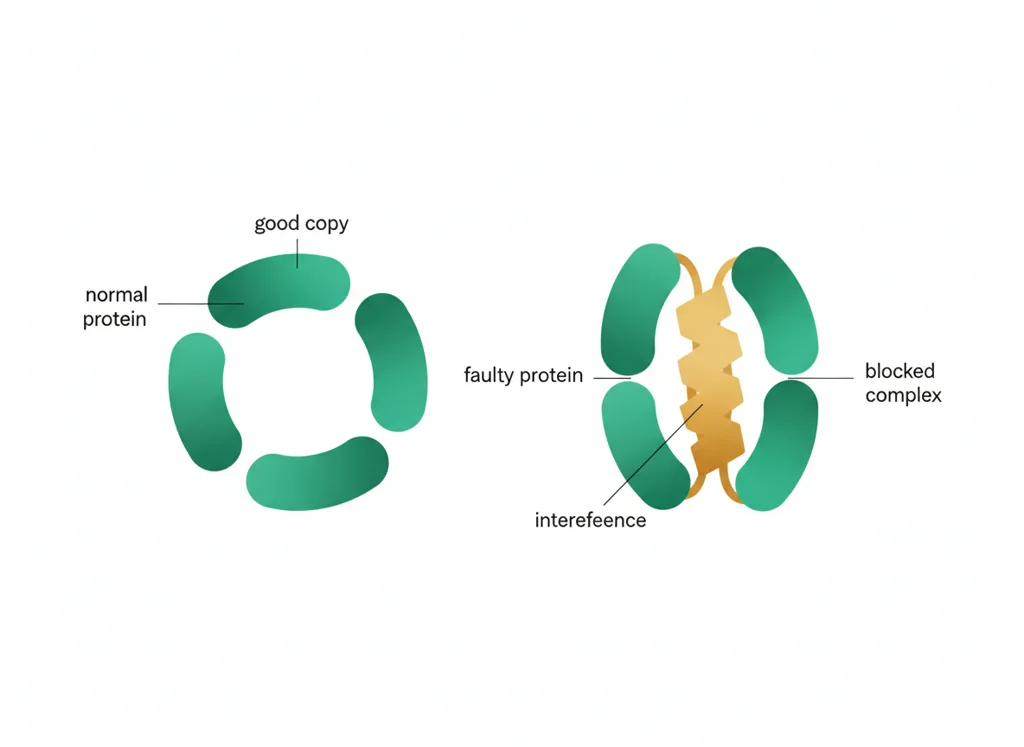
A faulty protein that not only fails at its own job but also blocks the working protein made from the normal gene copy.
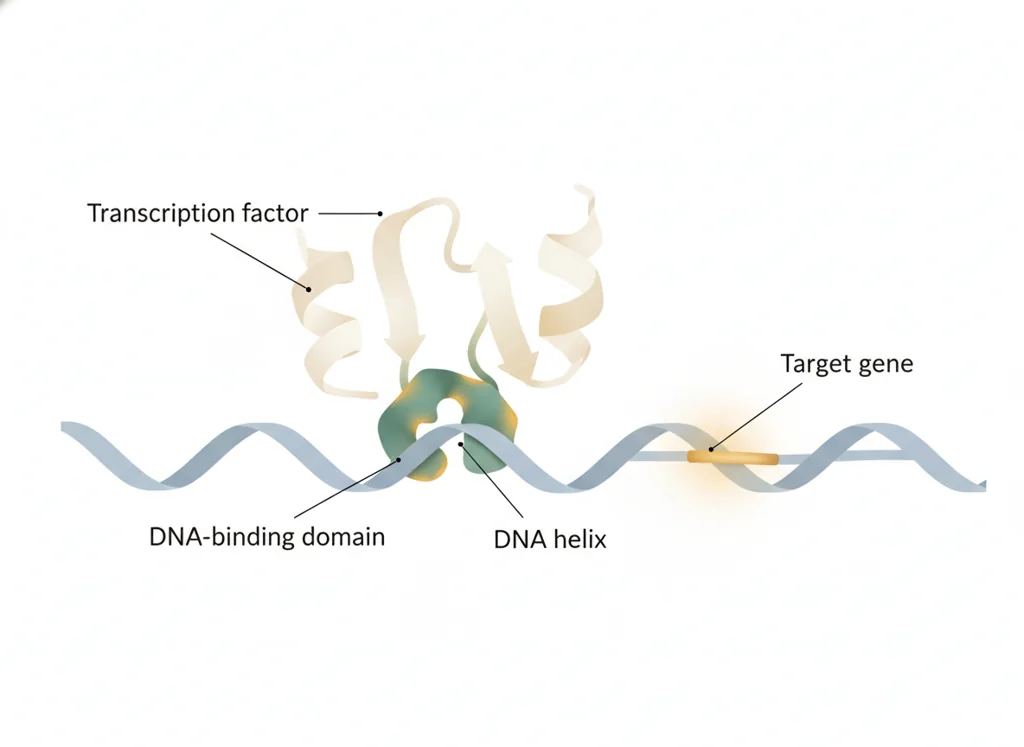
The part of a transcription factor that grips DNA so it can switch target genes on or off.
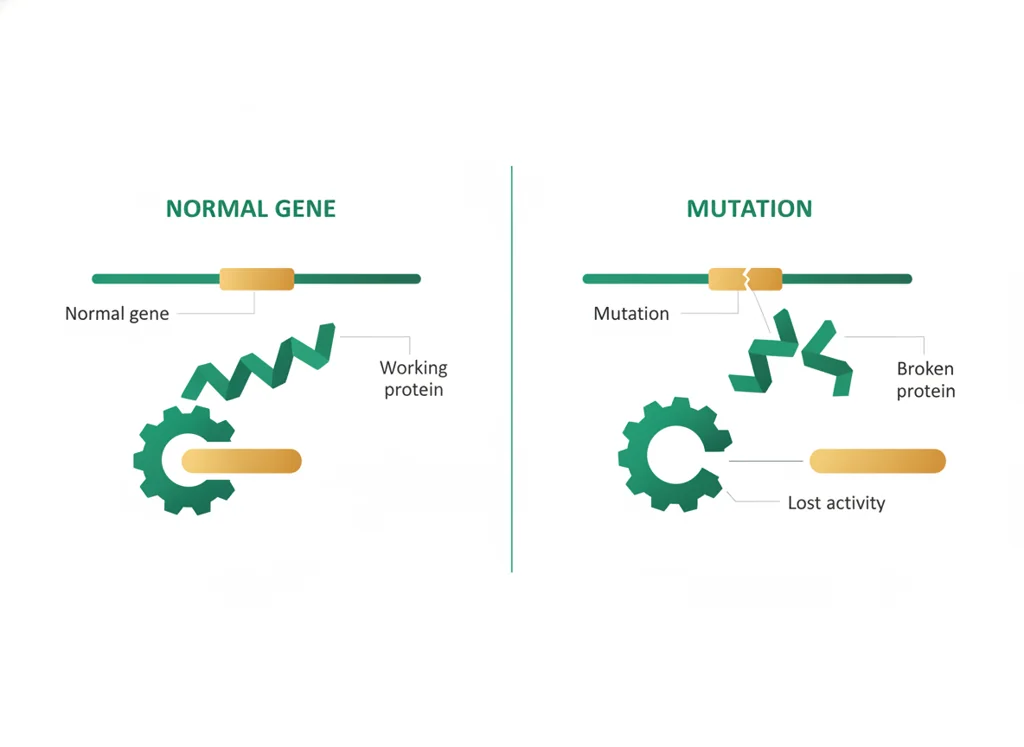
A genetic change that reduces or removes a protein's normal activity, so the cell loses what that protein usually does.
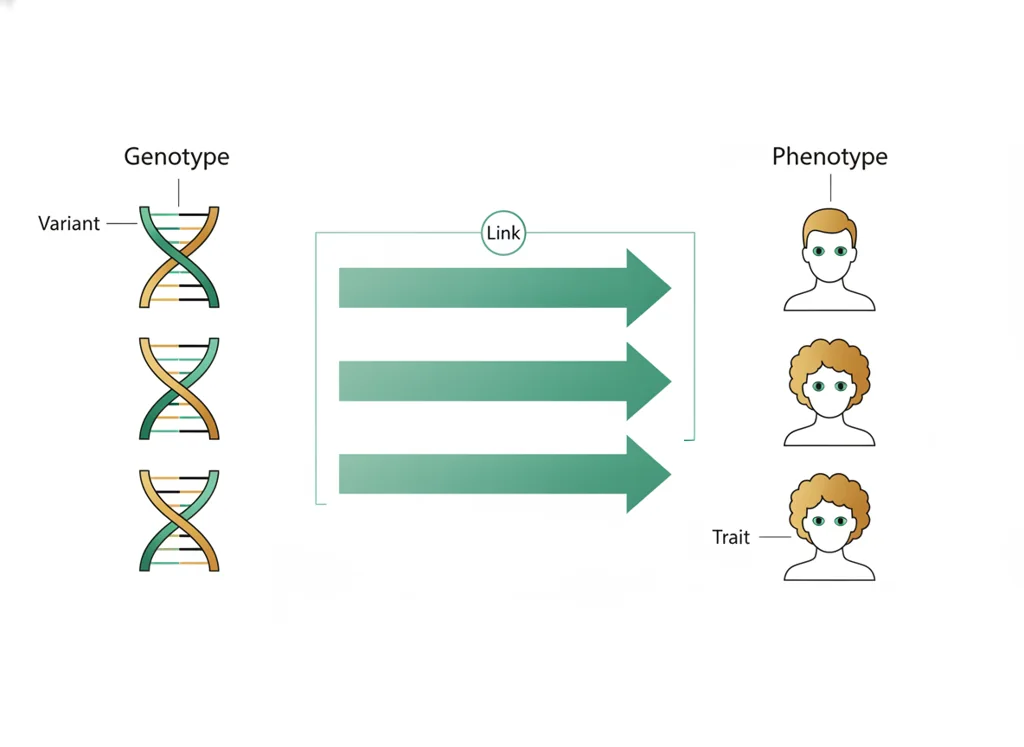
A link between which gene variant a person carries and which features or how severe a condition they show.
Research citation trail (advanced)
You do not need these papers or database records to finish the lesson. They document where the plain-language explainer's claims come from and are intended for teachers or advanced readers.
- Kondo S, et al. 2002. IRF6 mutations cause VWS and PPS. Nat Genet. [PMID:12219090]
- Leslie EJ, et al. 2012. IRF6 variants across 549 families. Genet Med. [PMID:23154523]
- UniProtKB O14896 (IRF6): DNA-binding domain residues 7 to 115
- OMIM VWS1 #119300; PPS #119500 (professional database; use MedlinePlus Genetics if blocked)