
Hunting the Exemplar Cleft Gene: Linkage to 1q32
This reading contains every idea and every piece of evidence needed for today's decision. The research links at the end are optional.
Why this matters
Linkage shows how scientists found genes before whole-genome sequencing became routine.
The question you are trying to answer
Which landmark stays with the truck most often?
Begin with the idea you already earned
Most isolated clefts fit a multifactorial threshold model in which many small influences add to risk.
Study the analogy before the biology
- Which landmark stays with the truck most often?
- What would a route change separate?
- How close must a landmark be to remain useful?
Turn the analogy into three rules
Limit: Chromosomes recombine biologically; they do not follow roads.
Map those rules onto the biology
A DNA marker is an inherited sequence position that can be followed through a family.
Nearby markers and a disease locus tend to travel together because recombination separates close sites less often.
Linkage narrowed Van der Woude syndrome to chromosome 1q32. Sequencing was still needed to identify IRF6.
Read Mateo's labeled case evidence
In large Van der Woude families, certain chromosome 1 markers co-segregated with the phenotype.
The disease locus was linked to that region.
Recombination events narrowed the shared interval to 1q32.
Family crossovers set region boundaries.
The interval still contained more than one possible gene.
Linkage gives an address range, not a gene name.
Make the concrete decision
You are the linkage analyst for a historical gene hunt.
A marker travels with the syndrome in nearly every informative relative, but several genes lie nearby.
- Prioritize the linked interval for sequencing.
- Declare the marker itself the causal gene.
- Ignore recombination boundaries.
Choose the next step and cite what linkage can and cannot locate.
Claim ceiling: You may prioritize a locus. You may not call a marker causal or name IRF6 before sequence evidence.
Write the 10-year takeaway
Linkage follows inherited chromosome markers to narrow a gene's address before sequencing names the gene.
- What does co-segregation mean?
- Why is a linked marker not automatically causal?
Glossary in plain English
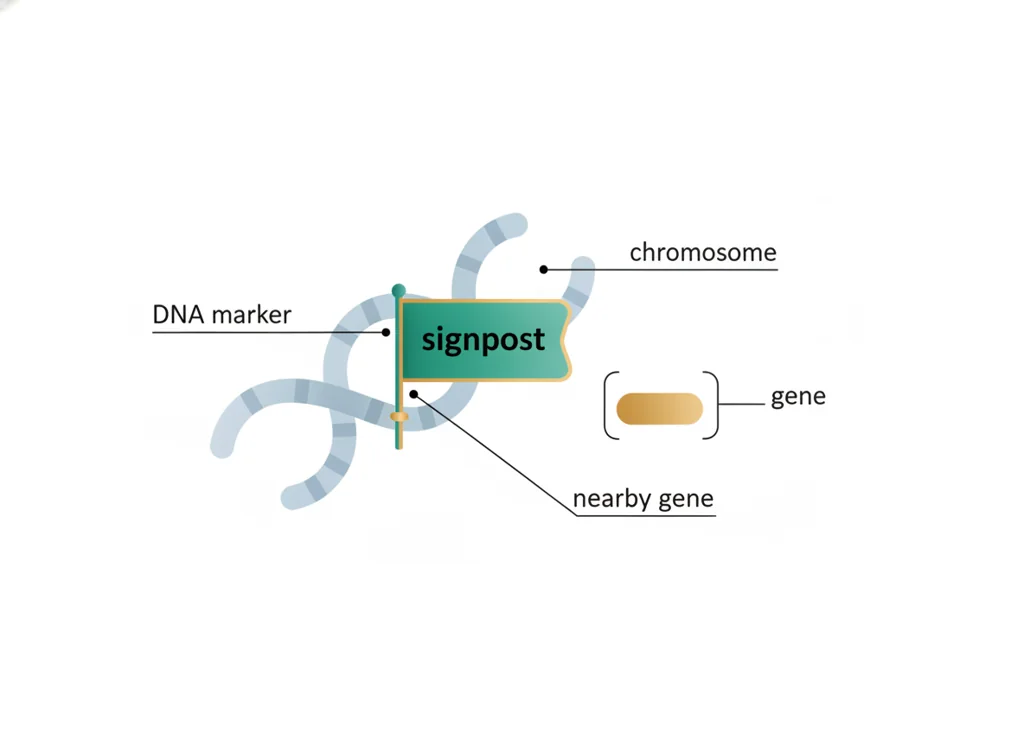
A known, variable spot in the genome used as a trackable signpost near a gene, even though the marker itself is not the disease gene.
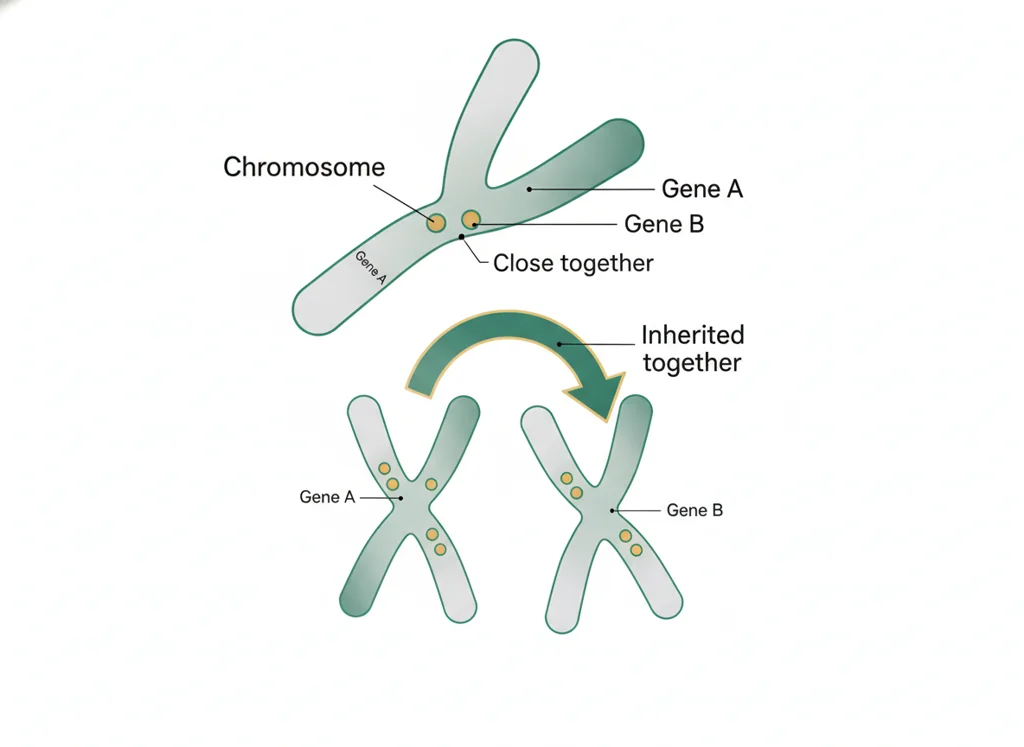
The tendency of two spots close together on a chromosome to be inherited together.
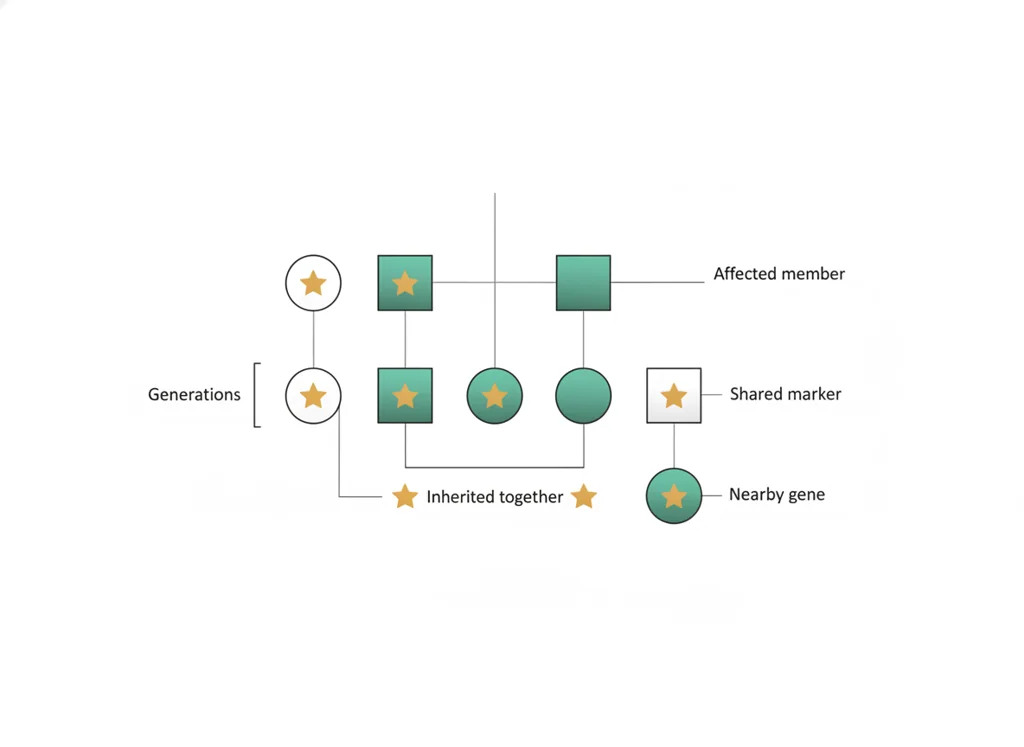
When a marker version and a disease are inherited together in every affected family member, evidence that the responsible gene sits nearby.
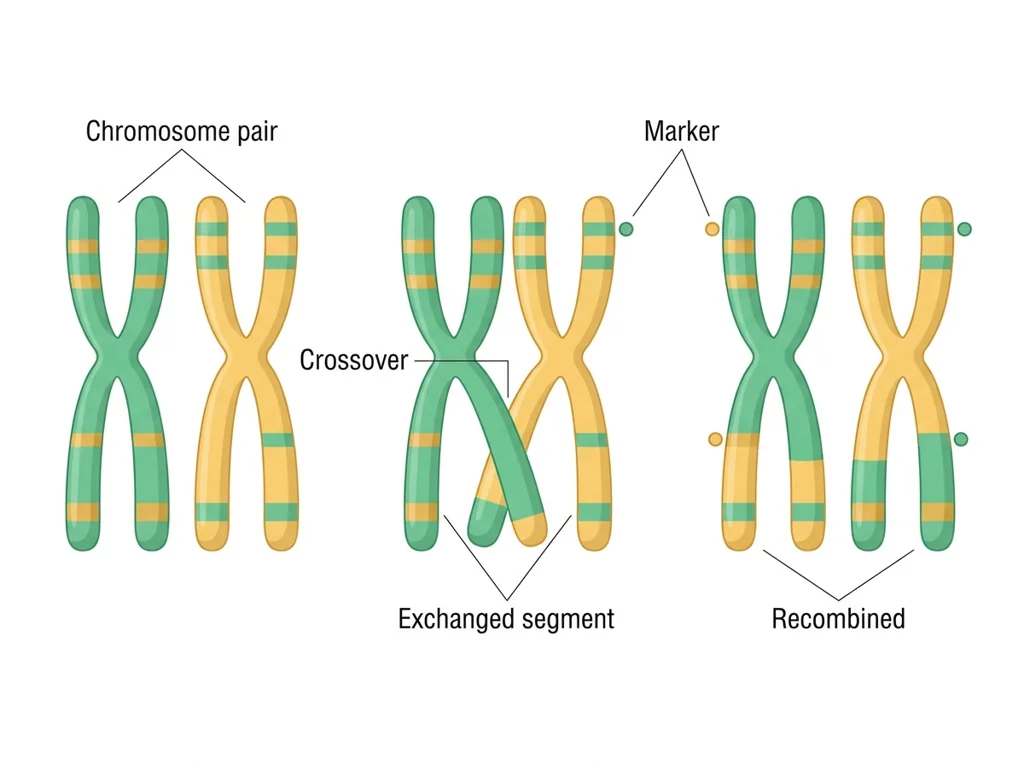
The shuffling of chromosome pieces during egg and sperm formation, which can occasionally separate a marker from a nearby gene.
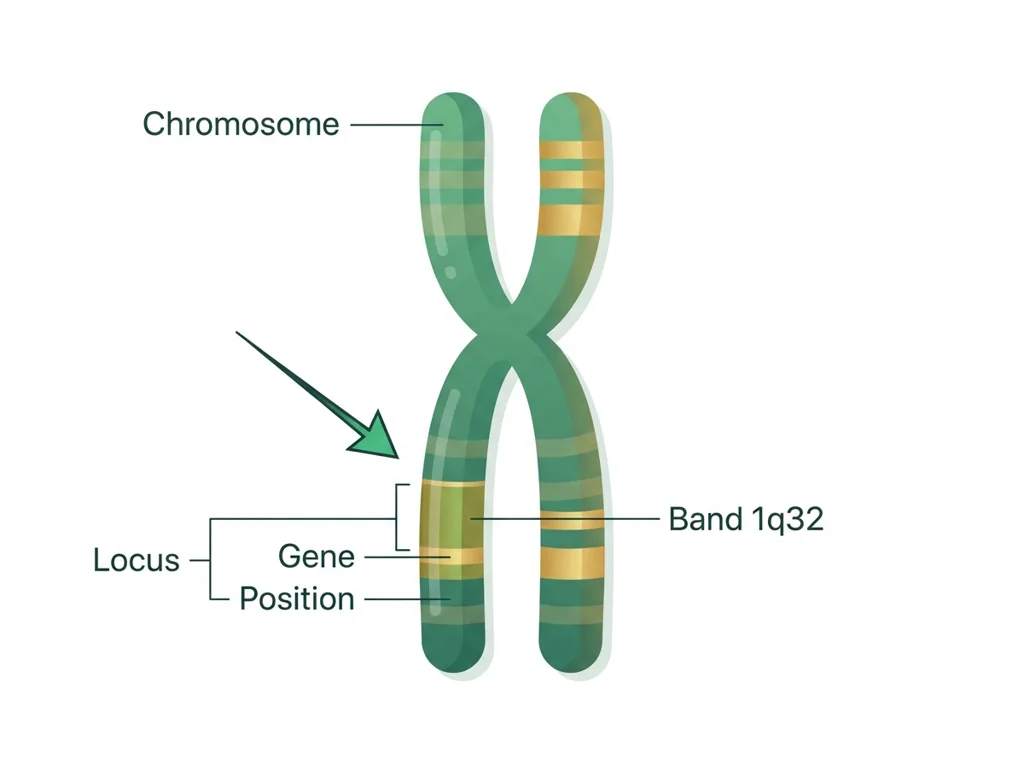
The specific address of a gene or marker on a chromosome, such as the band 1q32.
Research citation trail (advanced)
You do not need these papers or database records to finish the lesson. They document where the plain-language explainer's claims come from and are intended for teachers or advanced readers.