
Screening for a Hidden Syndrome
This reading contains every idea and every piece of evidence needed for today's decision. The research links at the end are optional.
Why this matters
Students must separate an exemplar gene from a diagnosis in one patient.
The question you are trying to answer
What turns one sound into a repeated theme?
Begin with the idea you already earned
A pedigree shows how a trait travels through a family; it does not prove that an isolated case is non-genetic.
Study the analogy before the biology
- What turns one sound into a repeated theme?
- Which repeated features would make a pattern recognizable?
- Why is one shared note not enough?
Turn the analogy into three rules
Limit: Clinical syndromes are biological patterns, not music.
Map those rules onto the biology
A syndrome is a repeatable group of findings. Van der Woude syndrome often includes clefting, lower-lip pits, and a family pattern.
Mateo's composite file has no lip pits or broader anomaly pattern.
IRF6 is still useful to study because it reveals cleft biology, but studying IRF6 does not diagnose Mateo.
Read Mateo's labeled case evidence
Mateo has no lower-lip pits on repeated examination.
A classic Van der Woude clue is absent.
No additional anomaly pattern or affected relative is documented.
The current phenotype screen supports an isolated presentation.
IRF6-related disorders are established by suggestive findings plus a pathogenic IRF6 variant.
Phenotype and molecular evidence work together.
Make the concrete decision
You are presenting the genetics screen.
A teammate wants to label Van der Woude syndrome because IRF6 will be studied later.
- Keep the case isolated-appearing pending molecular evidence.
- Assign Van der Woude syndrome from the cleft alone.
- Ignore lip pits and family history.
Choose the chart language and cite the absent pattern evidence.
Claim ceiling: You may say the current screen is isolated-appearing. You may not establish or exclude every syndrome without appropriate testing.
Write the 10-year takeaway
A syndrome claim requires a repeatable pattern of features, not a cleft plus a familiar gene name.
- What pattern raises Van der Woude suspicion?
- Why does studying IRF6 not diagnose Mateo?
Glossary in plain English
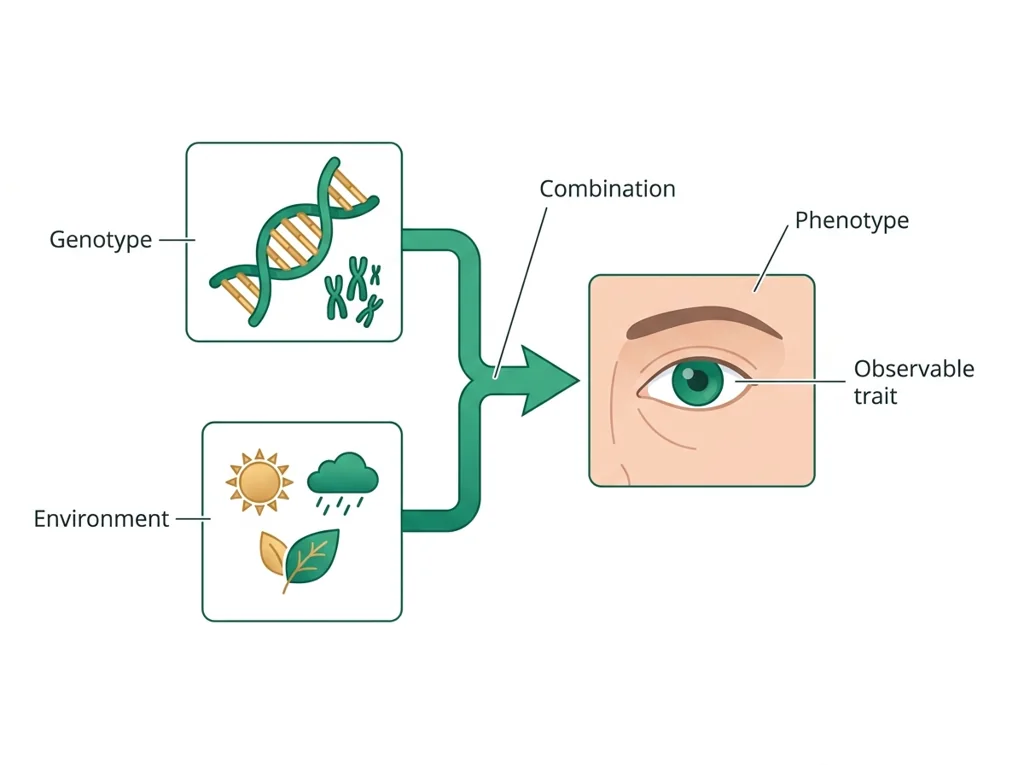
The observable traits of an organism, such as appearance or function, that result from its genotype combined with environmental influences.
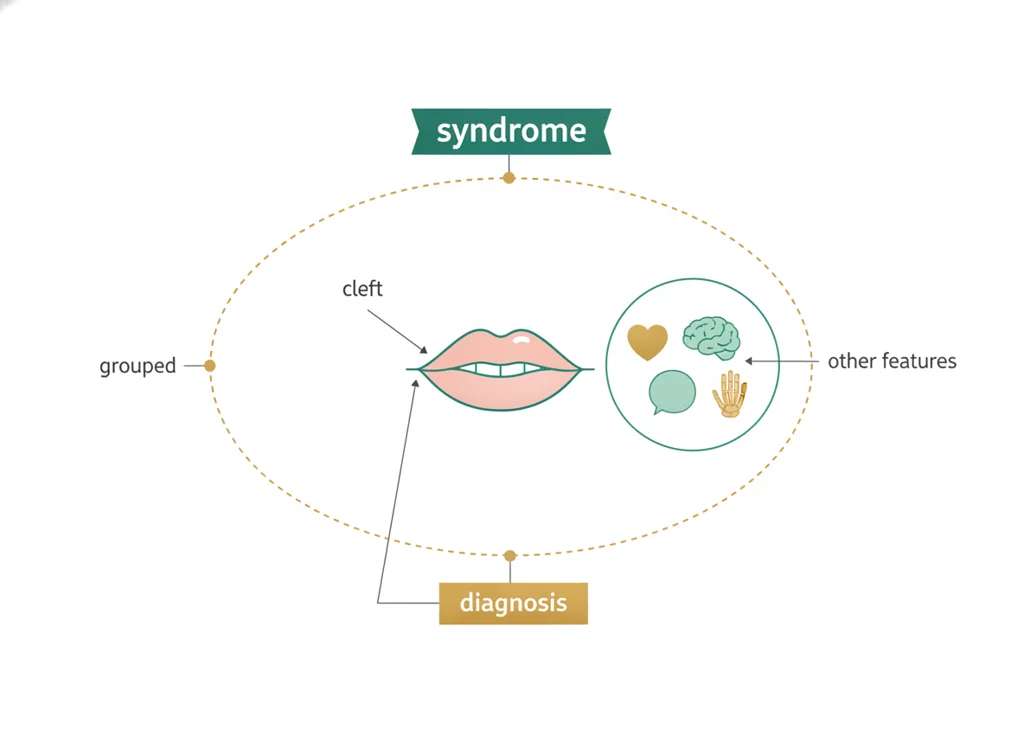
A cleft that comes packaged with other features as part of a named syndrome, accounting for roughly 30 percent of clefts.
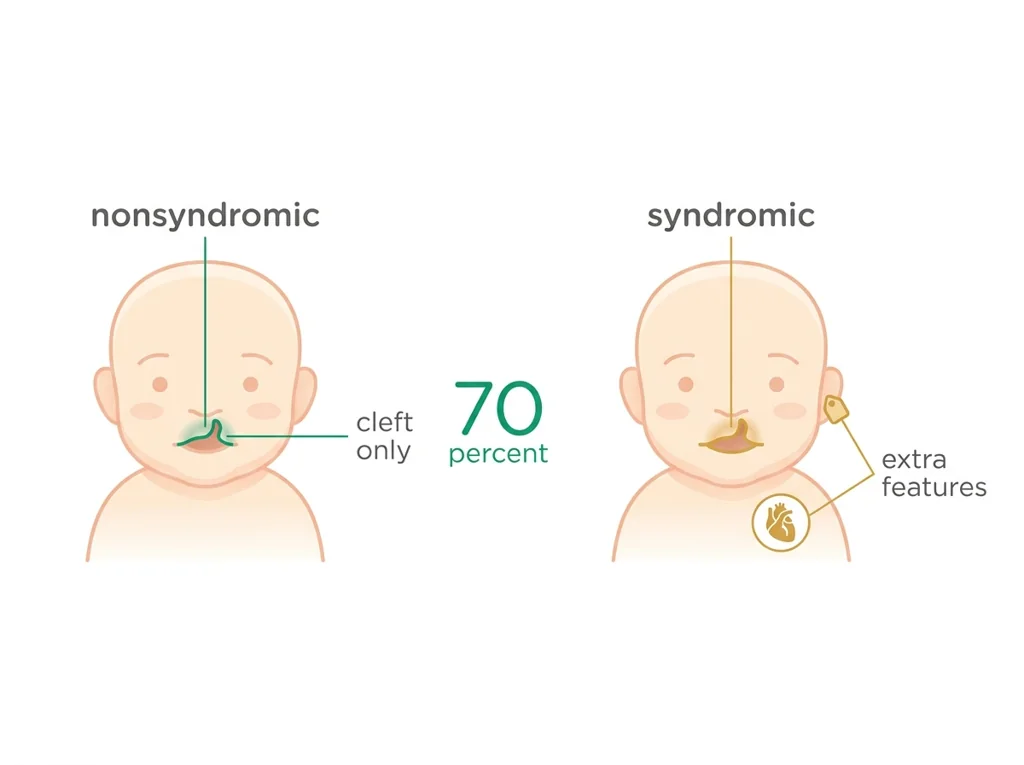
A cleft that occurs on its own without other birth differences, making up roughly 70 percent of all clefts.
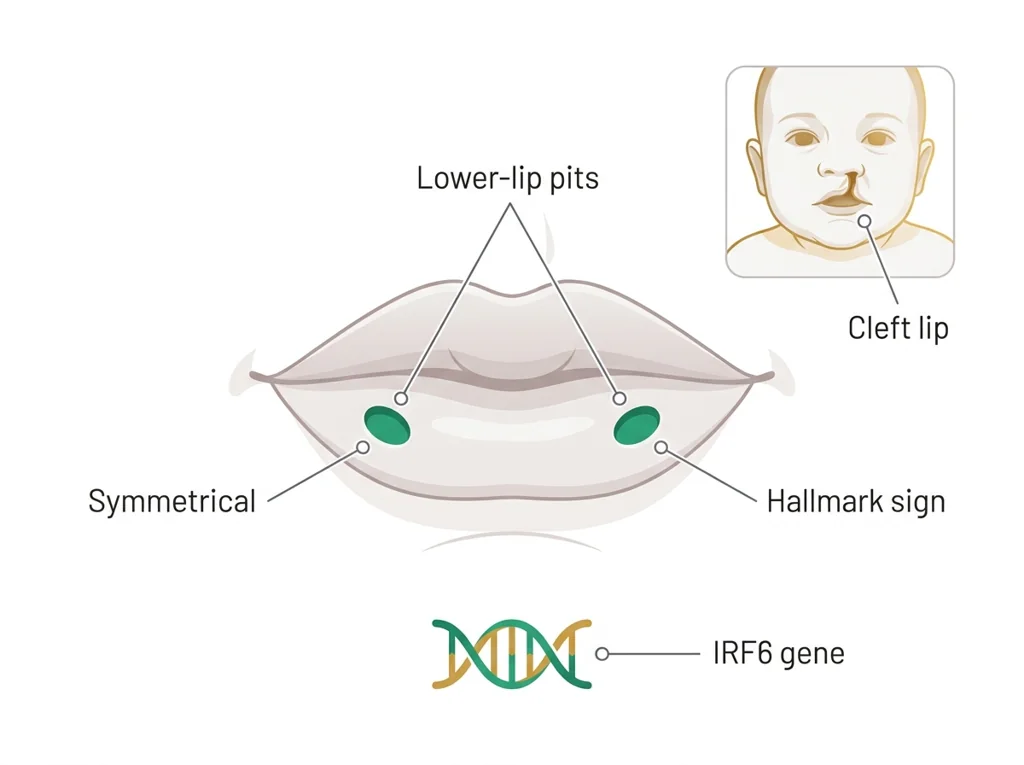
The most common single-gene cause of cleft lip and palate, usually from an IRF6 change, whose hallmark is small lower-lip pits.
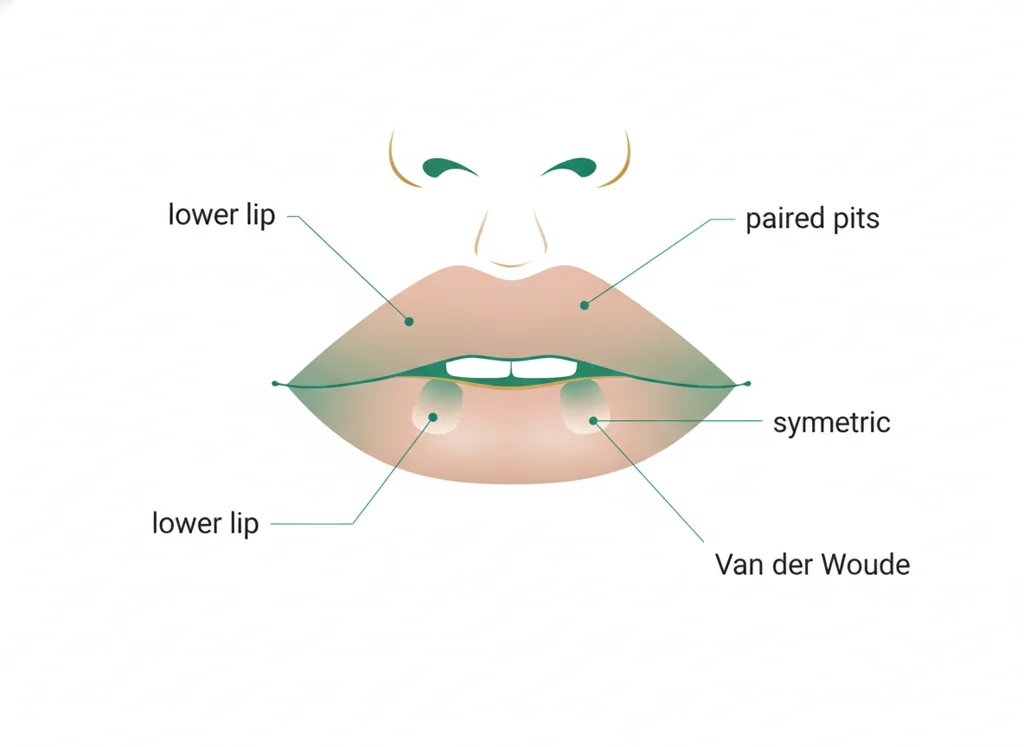
Small paired depressions on the lower lip that serve as the hallmark sign flagging Van der Woude syndrome, a cleft-related disorder.
Research citation trail (advanced)
You do not need these papers or database records to finish the lesson. They document where the plain-language explainer's claims come from and are intended for teachers or advanced readers.