
Measuring Inheritance Over Time and in Twins
This reading contains every idea and every piece of evidence needed for today's decision. The research links at the end are optional.
Why this matters
These designs answer different parts of the risk question and expose different sources of uncertainty.
The question you are trying to answer
Which panel shows the exposure before the outcome?
Begin with the idea you already earned
Case-control studies efficiently study rare outcomes, but their odds ratios remain vulnerable to selection, recall, and confounding.
Study the analogy before the biology
- Which panel shows the exposure before the outcome?
- What is more similar within one pair?
- Which shared condition could make a pair look alike from birth?
Turn the analogy into three rules
Limit: People do not follow scripted film paths, and twins can share environments in unequal ways.
Map those rules onto the biology
A cohort starts before the outcome and follows people over time. It can establish that an exposure came first, but confounding can still remain.
Twin studies compare how often both twins share a trait. Greater similarity in identical twins can support genetic contribution, but genes and environments are not perfectly separated.
Heritability describes variation in a particular population under particular conditions. It does not explain a fixed percentage of one person's condition.
Read Mateo's labeled case evidence
A cohort records an exposure before birth outcomes are known.
This supports time order and reduces some recall problems.
Monozygotic twins share more DNA than dizygotic twins on average.
Higher concordance can support a genetic contribution at the population level.
Twin estimates rely on assumptions, and heritability changes across populations and settings.
The estimate does not assign a percentage cause to Mateo.
Make the concrete decision
You are selecting a design for a grant proposal on cleft risk.
The proposal claims a twin study can cleanly separate genes from environment for one infant.
- Use cohort and twin evidence with explicit assumptions and population-level wording.
- Treat twin concordance as a personal genetic diagnosis.
- Ignore shared environment because identical twins share DNA.
Choose the defensible claim and name one strength plus one assumption for each design.
Claim ceiling: You may discuss time order and population variance. You may not assign Mateo's cleft a heritability percentage or single cause.
Write the 10-year takeaway
Cohorts establish time order, while twin comparisons estimate population patterns under assumptions rather than one person's cause.
- What time-order strength does a cohort add?
- Why is heritability not a personal cause score?
Glossary in plain English
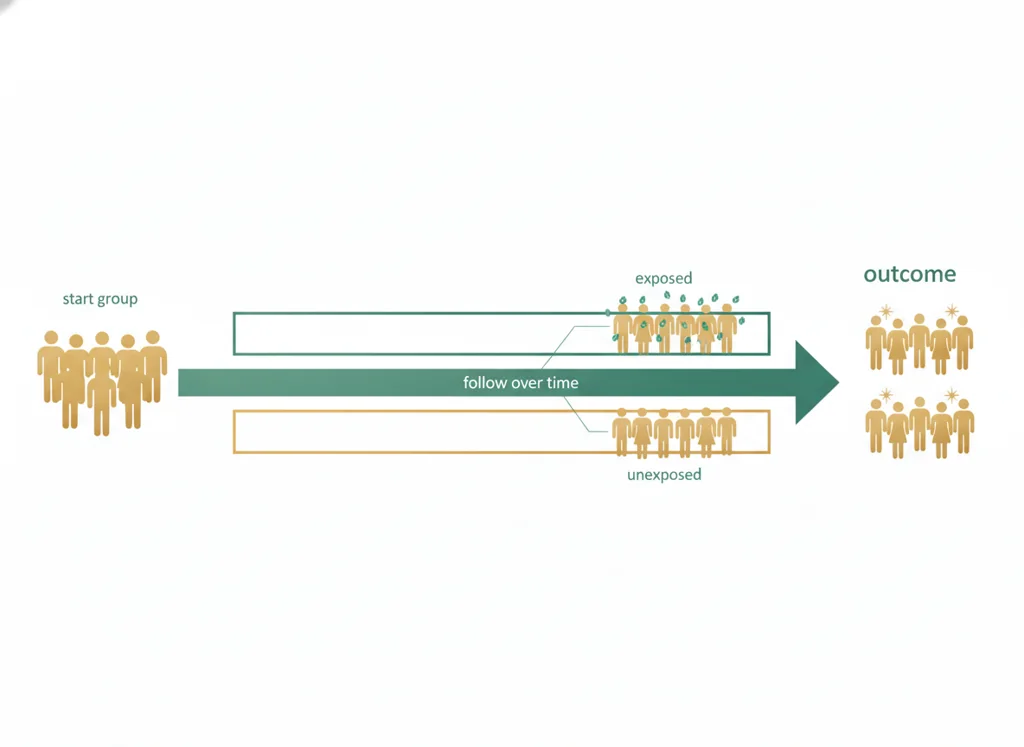
A study that follows a group of people over time, comparing those with and without an exposure to see who develops an outcome.
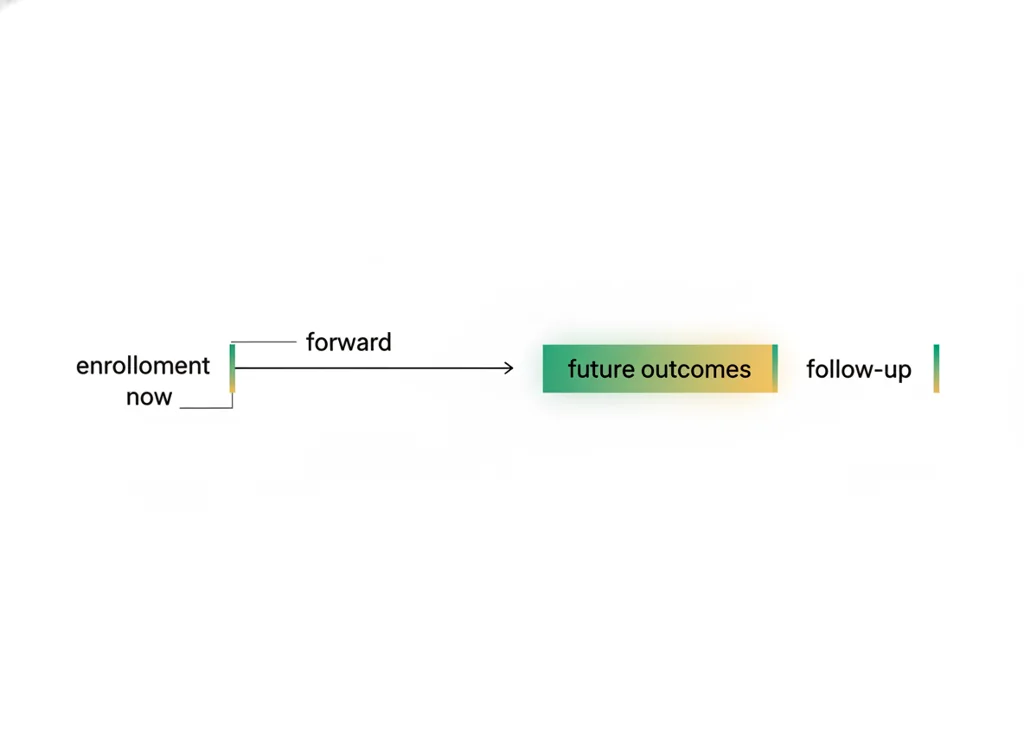
Describing a study that follows participants forward in time from the start, recording events as they happen rather than looking back.
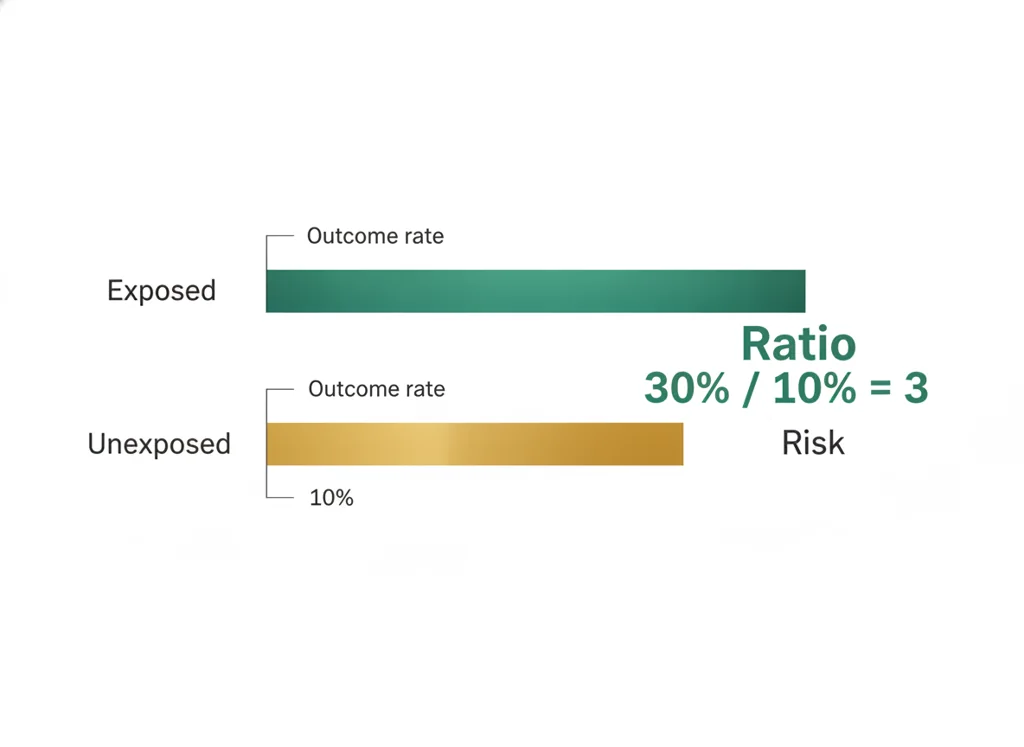
A number comparing how likely an outcome is in an exposed group versus an unexposed group, where one means no difference.
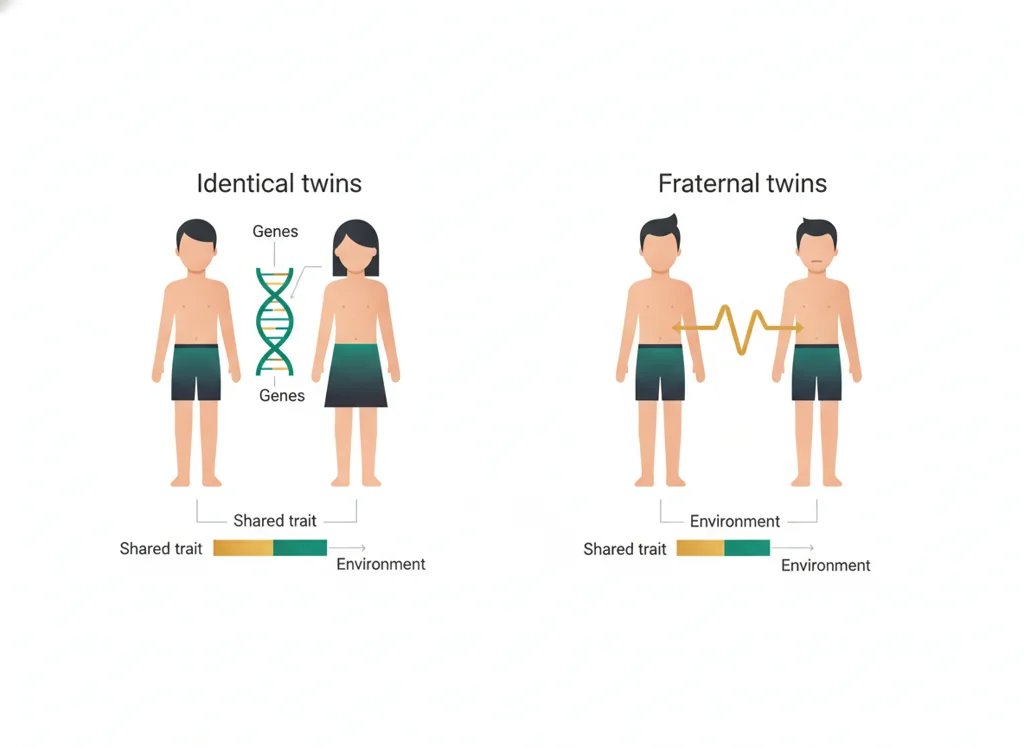
Research that compares identical and fraternal twins to estimate how much of a trait is due to genes versus environment.
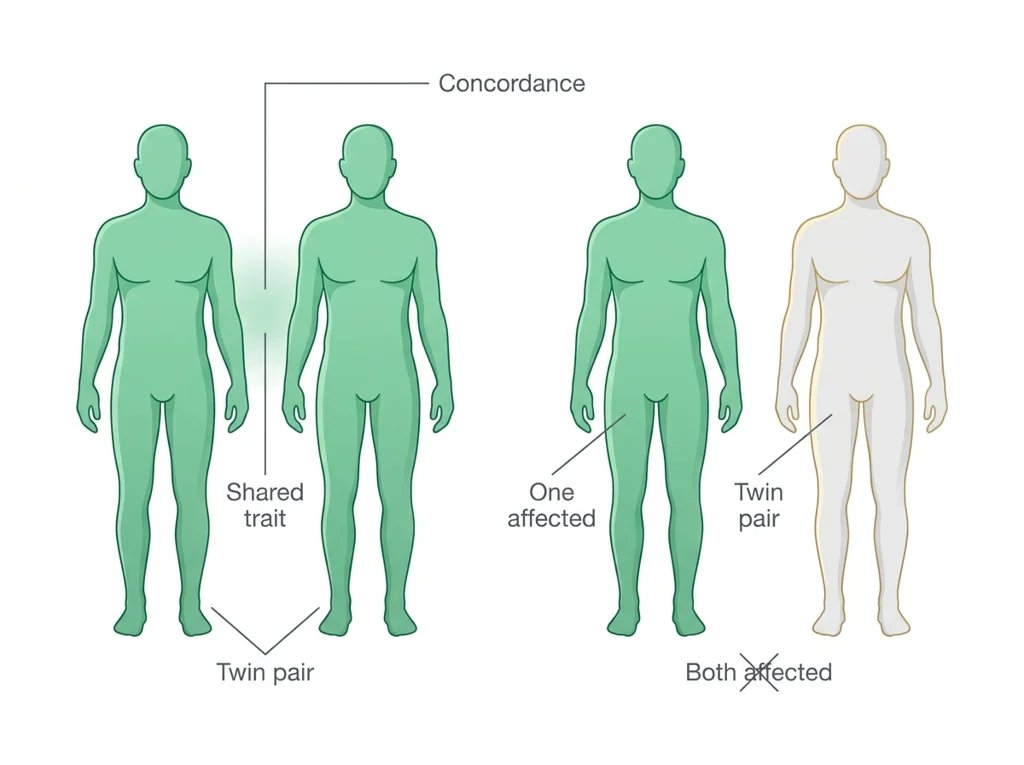
How often both members of a pair, such as twins, share the same trait or condition.
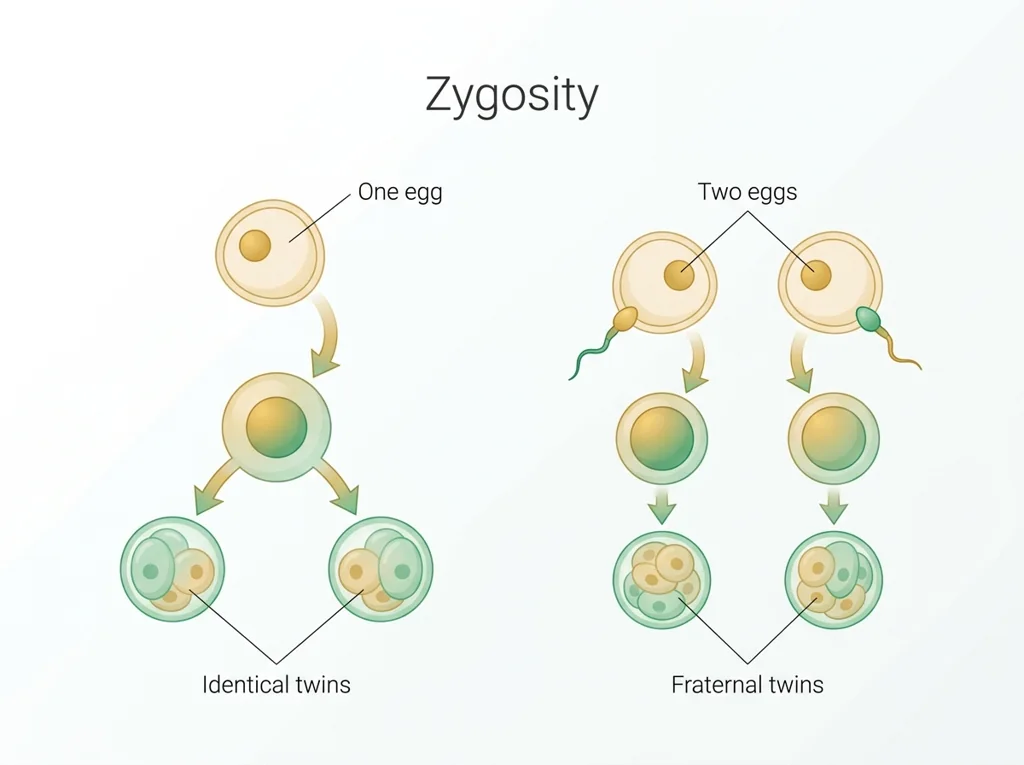
Whether twins came from one fertilized egg that split (identical) or from two separate fertilized eggs (fraternal).
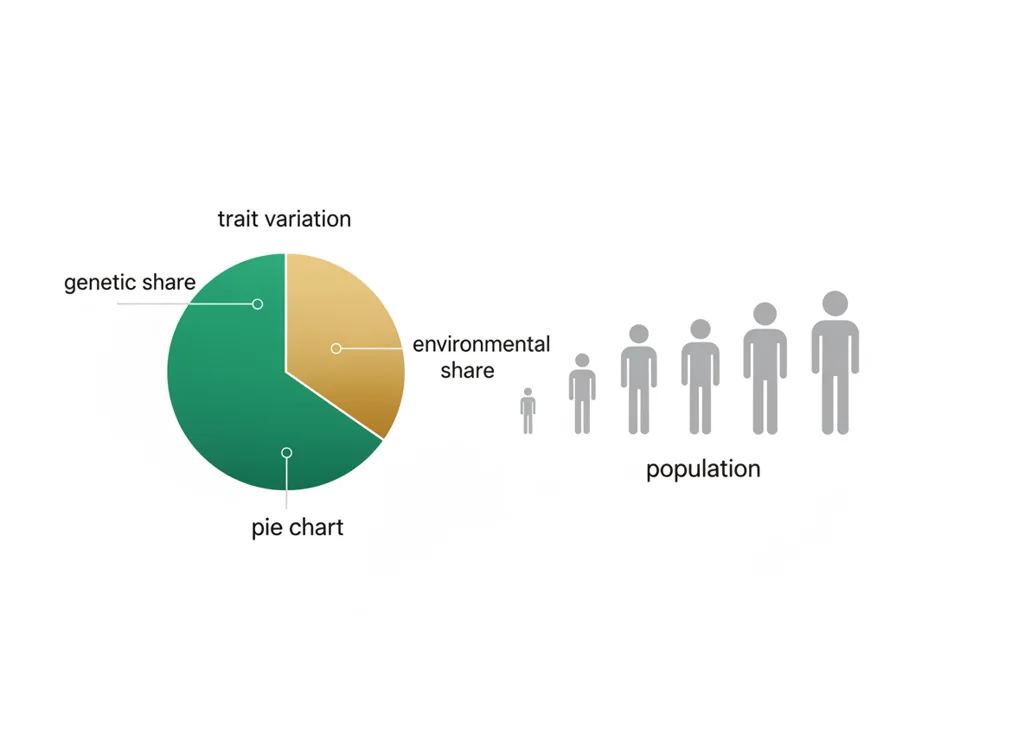
A measure of how much of the variation in a trait across a population is due to genetic differences rather than environment.
Research citation trail (advanced)
You do not need these papers or database records to finish the lesson. They document where the plain-language explainer's claims come from and are intended for teachers or advanced readers.
- STROBE. Reporting guidance for observational studies.
- Grosen D, et al. 2011. Risk of Oral Clefts in Twins. Epidemiology. [PMID:21423016]
- Sun B, et al. 2023. Ezh2-dependent methylation in oral epithelia promotes secondary palatogenesis (cleft prevalence about 1 in 700). Birth Defects Res. [PMID:37435868]