
When Is a Mouse a Good Stand-In for Mateo?
This reading contains every idea and every piece of evidence needed for today's decision. The research links at the end are optional.
Why this matters
A model can protect people from untested ideas only when it matches the process and its limits are honest.
The question you are trying to answer
When can a mouse answer a question about a human face, and where does the comparison stop?
Begin with the idea you already earned
CRISPR is a controlled perturbation only when the edit, mosaicism, phenotype, and off-target controls are verified.
Study the analogy before the biology
- Which model can test load?
- Which model only matches appearance?
- What question could be answered without a whole animal?
Turn the analogy into three rules
Limit: Living models can share pathways without copying every feature of human development or care.
Map those rules onto the biology
A useful model matches the biological process and outcome needed for a question. No model copies every part of a human condition.
Replace means use a non-animal method when it can answer the question. Reduce means use no more animals than needed. Refine means reduce pain and improve care.
Researchers should plan sample size, controls, humane endpoints, randomization, and blinded scoring before a study begins.
Read Mateo's labeled case evidence
The question asks whether a pathway changes mammalian palatal shelf elevation and fusion.
A model must represent the relevant tissue movement and timing.
A cell culture can test signaling but cannot reproduce whole-palate elevation.
It can replace animals for some early questions, not the full outcome.
A mouse study uses prior data for sample size, shared controls, analgesia, humane endpoints, and blinded scoring.
The design applies Reduce and Refine while protecting validity.
Make the concrete decision
You are the model-selection and animal-welfare reviewer.
The team wants to use the largest animal available because it seems more human-like.
- Choose the least burdensome model that can measure the required mechanism and outcome.
- Choose by body size alone.
- Reject all nonhuman and cell models as useless.
Choose the model sequence and justify it with mechanism fit plus the 3Rs.
Claim ceiling: You may judge fitness for the stated question. You may not call any model a complete stand-in for Mateo.
Write the 10-year takeaway
A model earns relevance by matching the mechanism and outcome needed for the question while following Replace, Reduce, and Refine.
- What should determine model choice?
- What do the three Rs mean?
Glossary in plain English
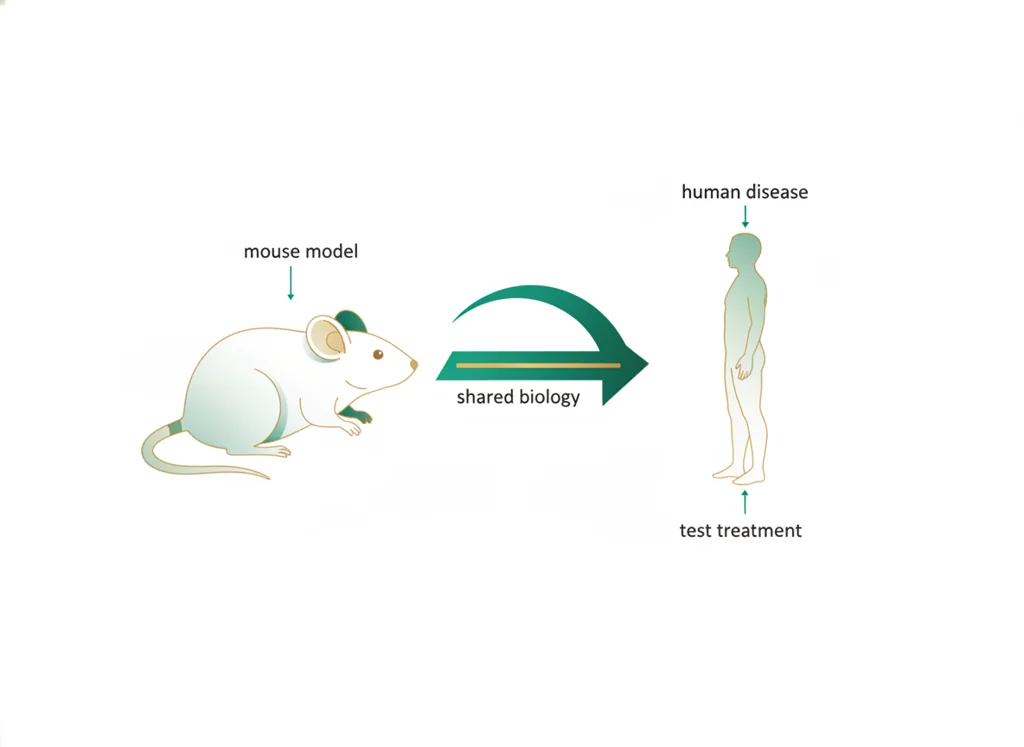
A lab animal, such as a mouse, used to study a human disease because its biology is similar enough to test causes and treatments safely.
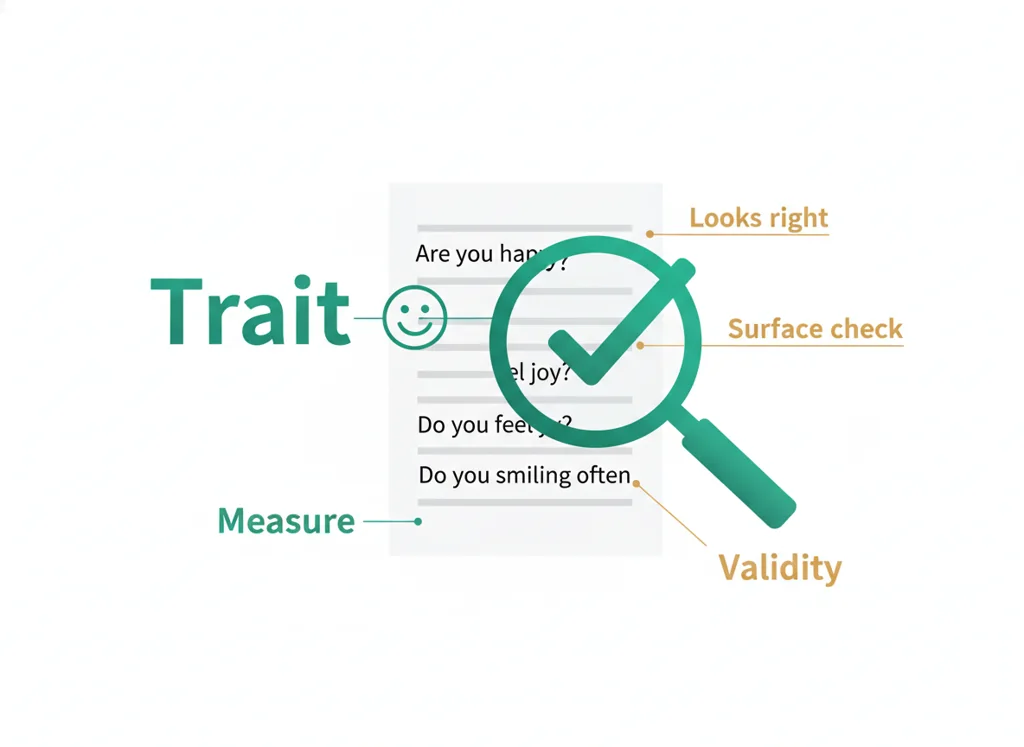
Whether a test or measure looks, on the surface, like it really assesses what it claims to assess.
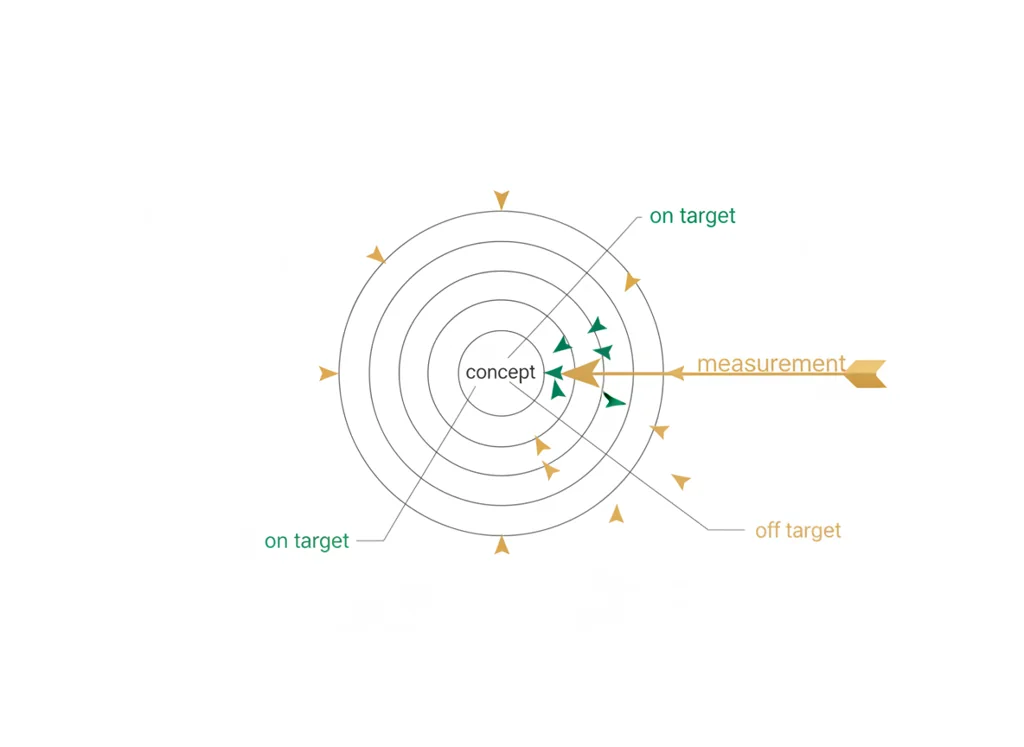
How well a test or measurement actually captures the abstract idea it claims to measure, rather than something else.
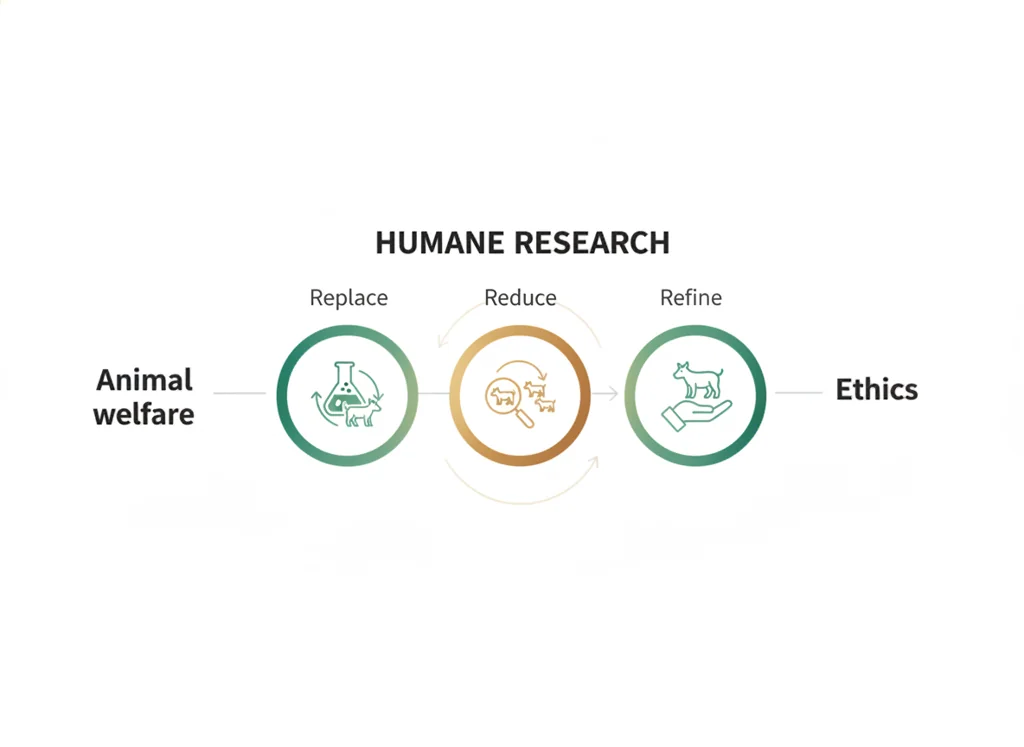
An ethics framework for animal research, replace, reduce, and refine, that minimizes animal use and suffering while keeping good science.
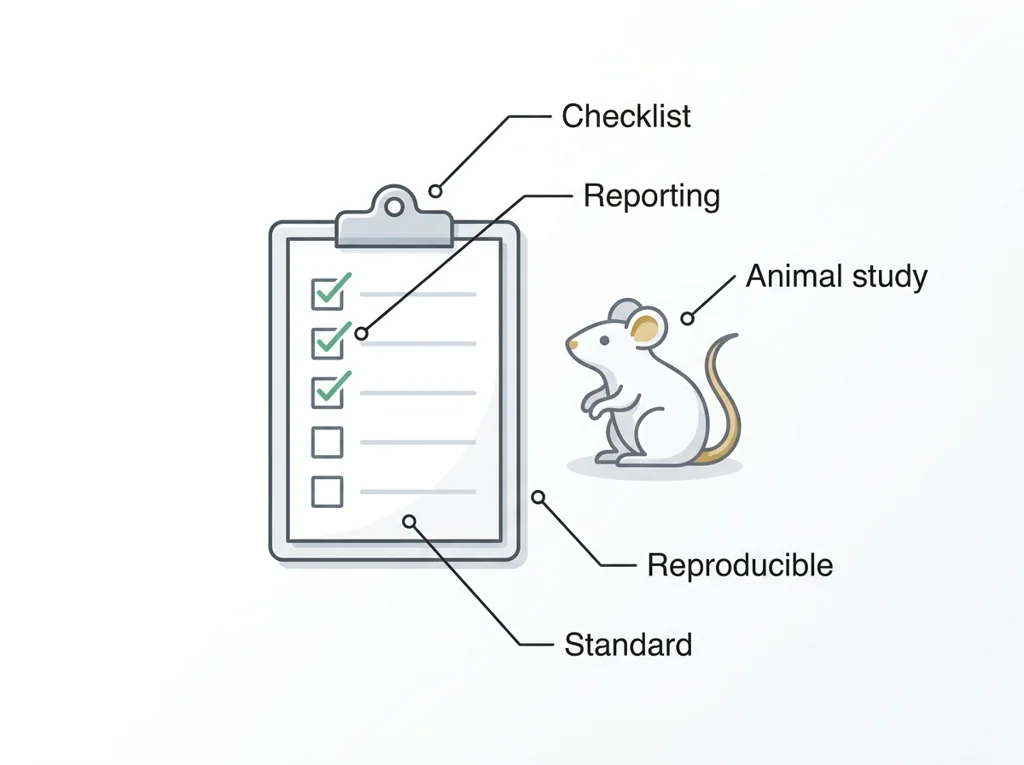
A standard checklist for reporting animal research clearly and completely, so other scientists can judge the study and repeat it.
Research citation trail (advanced)
You do not need these papers or database records to finish the lesson. They document where the plain-language explainer's claims come from and are intended for teachers or advanced readers.