
CRISPR as an Experimental Tool
This reading contains every idea and every piece of evidence needed for today's decision. The research links at the end are optional.
Why this matters
A wrong cut can create a confident but false story, so every planned change needs a direct check.
The question you are trying to answer
How do scientists make one planned change without trusting a cut in the wrong place?
Begin with the idea you already earned
Orthogonal assays answer different mechanism questions: where RNA or protein is and what changes after perturbation.
Study the analogy before the biology
- How is the intended change confirmed?
- Where could an unintended edit hide?
- What if only some copies were changed?
Turn the analogy into three rules
Limit: Genomes are three-dimensional biological systems, not pages with fully predictable text edits.
Map those rules onto the biology
CRISPR uses a guide RNA to bring a cutting enzyme near a chosen DNA sequence. Repair can create a small change or install a planned edit.
Researchers sequence the target to confirm what changed. In early embryos, mosaicism means different cells may carry different edits.
Non-targeting controls, a second guide, off-target checks, blinded scoring, and rescue can help separate a gene effect from artifacts.
Read Mateo's labeled case evidence
Sequencing confirms a frameshift in 78 percent of reads from the target tissue.
The edit occurred, but the sample is mosaic.
A second guide produces a similar phenotype while a non-targeting guide does not.
Independent perturbation and a negative control strengthen specificity.
The top predicted off-target sites show no detectable edits in the supplied assay.
The tested concern is reduced, not eliminated everywhere in the genome.
Make the concrete decision
You are the genome-editing quality reviewer.
One embryo has a palate defect after injection, but the target was not sequenced and no control guide was used.
- Withhold the gene-function claim and require edit plus specificity checks.
- Call the gene causal because CRISPR was injected.
- Ignore mosaicism because some cells were edited.
Choose the claim status and cite the minimum verification steps needed next.
Claim ceiling: You may interpret the supplied edit and control checks. You may not claim all off-target effects are absent or a human treatment is ready.
Write the 10-year takeaway
CRISPR is a controlled perturbation only when the edit, mosaicism, phenotype, and off-target controls are verified.
- What does mosaicism mean?
- Why use a second guide?
Glossary in plain English
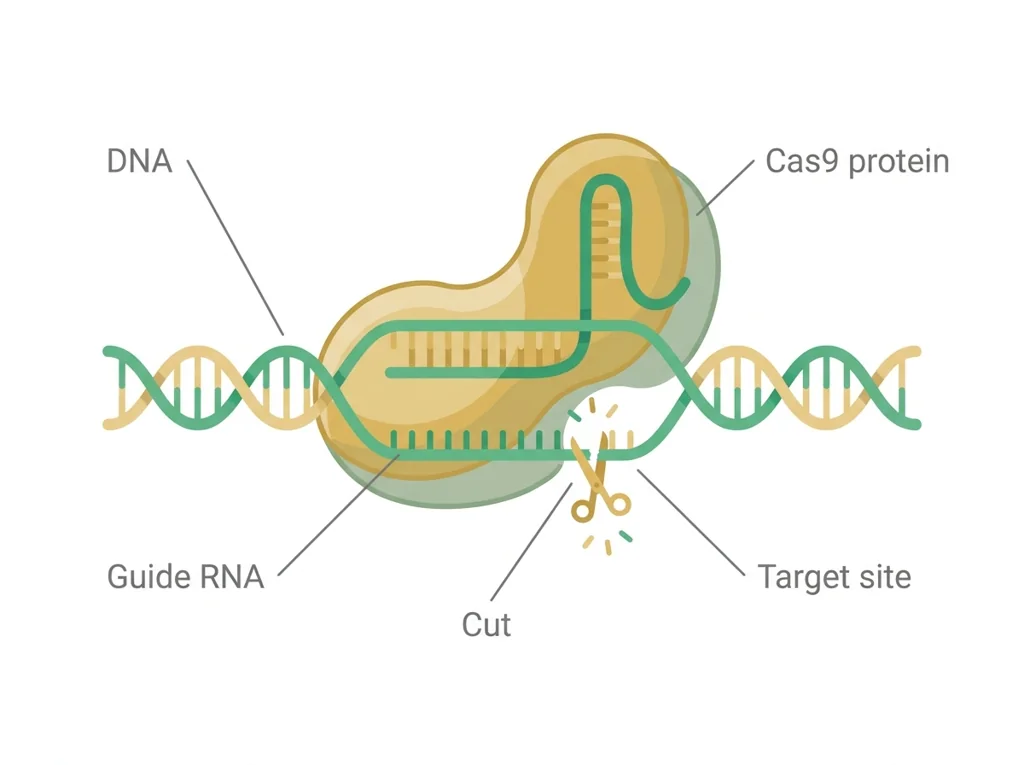
A gene-editing tool that uses a guide RNA to steer the Cas9 protein to a chosen DNA site and cut it, so a sequence can be changed.
A lesson term defined by the surrounding model and case evidence.
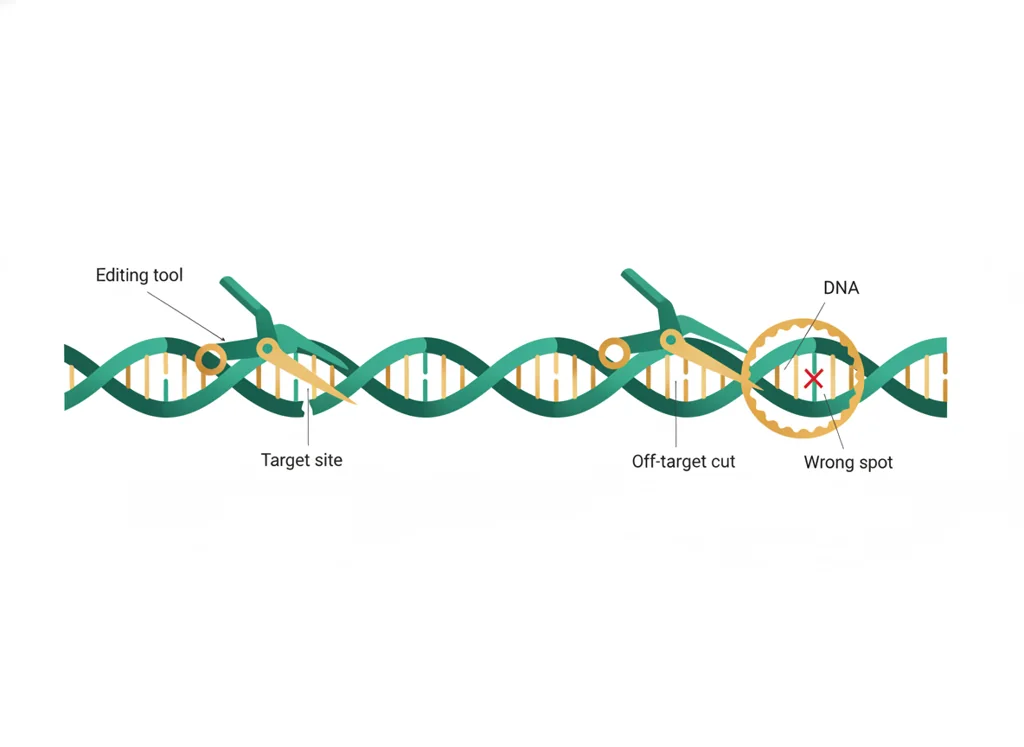
An unwanted DNA change made by a gene-editing tool at the wrong spot in the genome, away from its intended target.
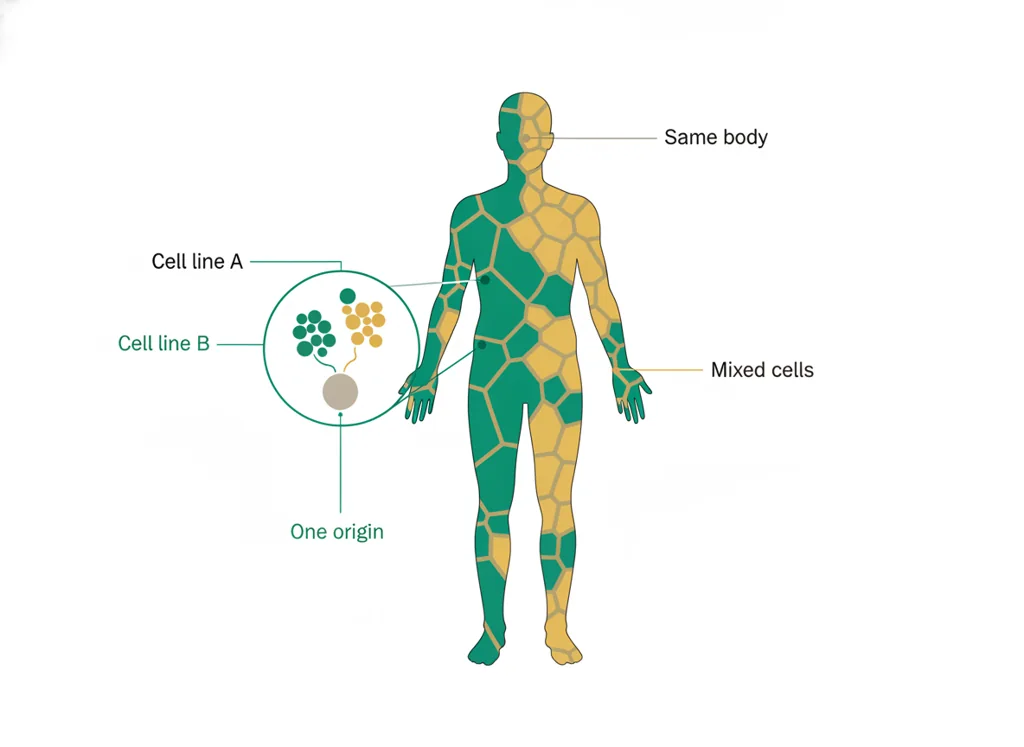
When a person's body contains two or more genetically different sets of cells that arose from a single fertilized egg.
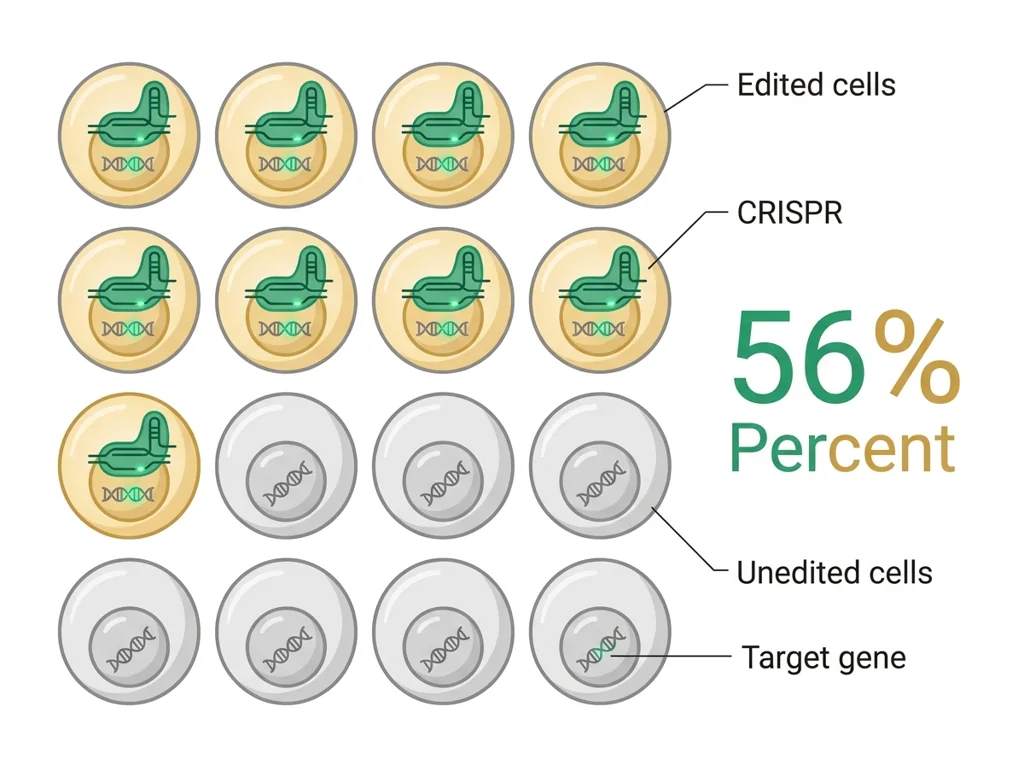
The percentage of treated cells in which a gene-editing tool such as CRISPR actually made the intended change to the DNA.
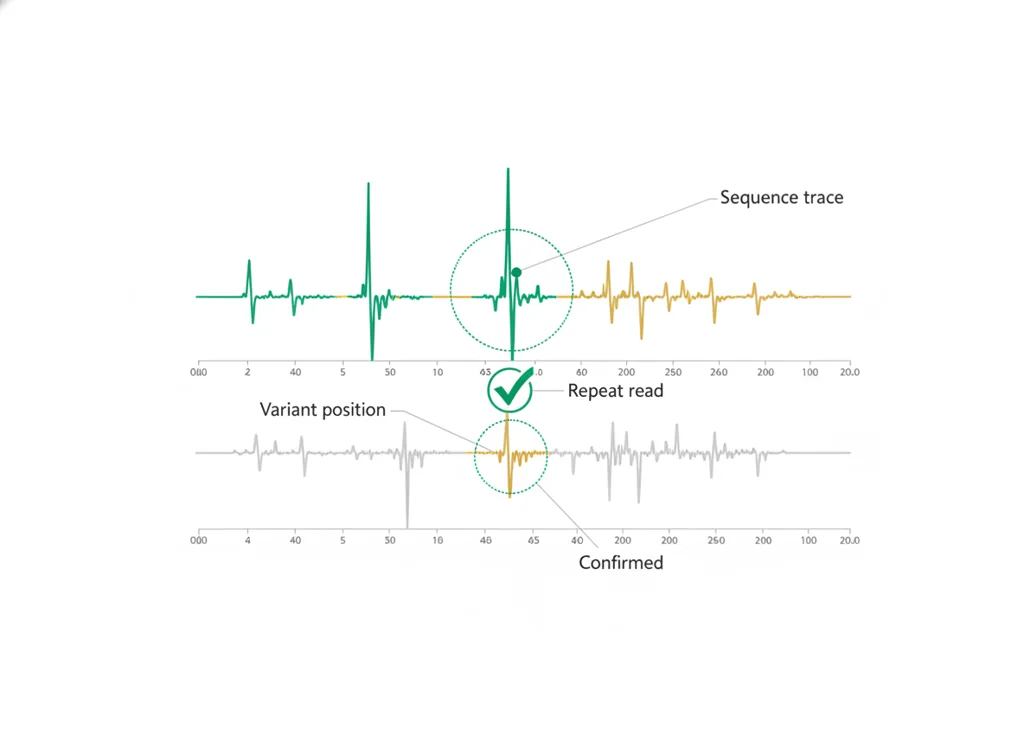
Reading a stretch of DNA again to confirm that a detected variant is real and not an error from the test.
Research citation trail (advanced)
You do not need these papers or database records to finish the lesson. They document where the plain-language explainer's claims come from and are intended for teachers or advanced readers.