
From an Observation to a Researchable Question
This reading contains every idea and every piece of evidence needed for today's decision. The research links at the end are optional.
Why this matters
A focused question keeps a study from collecting many facts without answering a decision.
The question you are trying to answer
What is outside the frame?
Begin with the idea you already earned
A complete anatomical story can define structures, functions, repairs, and uncertainties while leaving treatment comparisons open to experiment.
Study the analogy before the biology
- What is outside the frame?
- Which action and comparison remain inside it?
- How will the camera know when the moment has happened?
Turn the analogy into three rules
Limit: A study question guides evidence collection, but it cannot remove every uncertainty the way a camera crops a scene.
Map those rules onto the biology
A clinical observation is a starting point, not yet a study question. Researchers must decide exactly who, what choice, and what outcome they will study.
PICO stands for population, intervention, comparison, and outcome. A time point is often added so the outcome has a clear deadline.
A useful question does not promise an answer. It tells the team which evidence could support or challenge each option.
Read Mateo's labeled case evidence
The open anatomical question is whether repair timing changes later speech function.
The question concerns a treatment choice, not the cause of Mateo's cleft.
A supplied candidate population is medically fit infants with isolated cleft palate.
The population is specific enough to set eligibility rules.
VPI can be scored at age 5 by trained assessors.
The outcome and time point can be defined before the study begins.
Make the concrete decision
You are the junior investigator writing the first protocol line.
The team must choose one question before enrolling any participants.
- Among eligible infants, does repair at 6 rather than 12 months reduce VPI at age 5?
- What is the best cleft surgery?
- Did Mateo's family cause his cleft?
Choose the researchable question and label its population, intervention, comparison, outcome, and time.
Claim ceiling: You may define the study question. You may not predict which timing is better before data are collected.
Write the 10-year takeaway
A researchable question names a population, a factor or intervention, a comparison, and a measurable outcome.
- What does the C in PICO name?
- Why does the age 5 time point matter?
Glossary in plain English
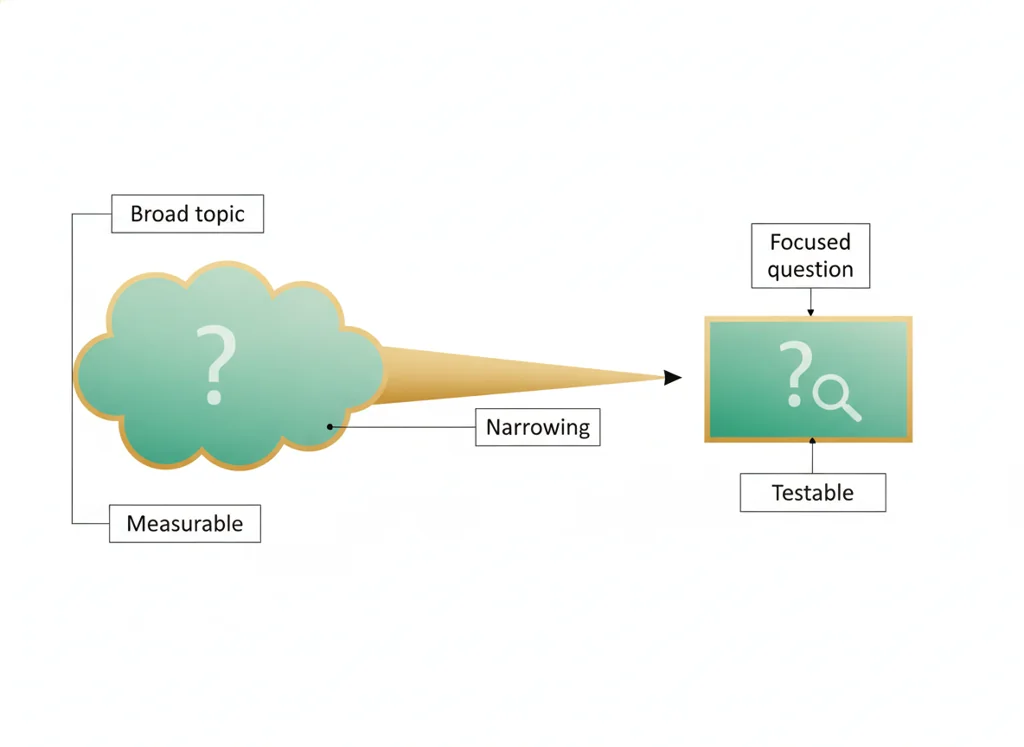
A question that is specific and measurable enough to answer with data through a feasible study.
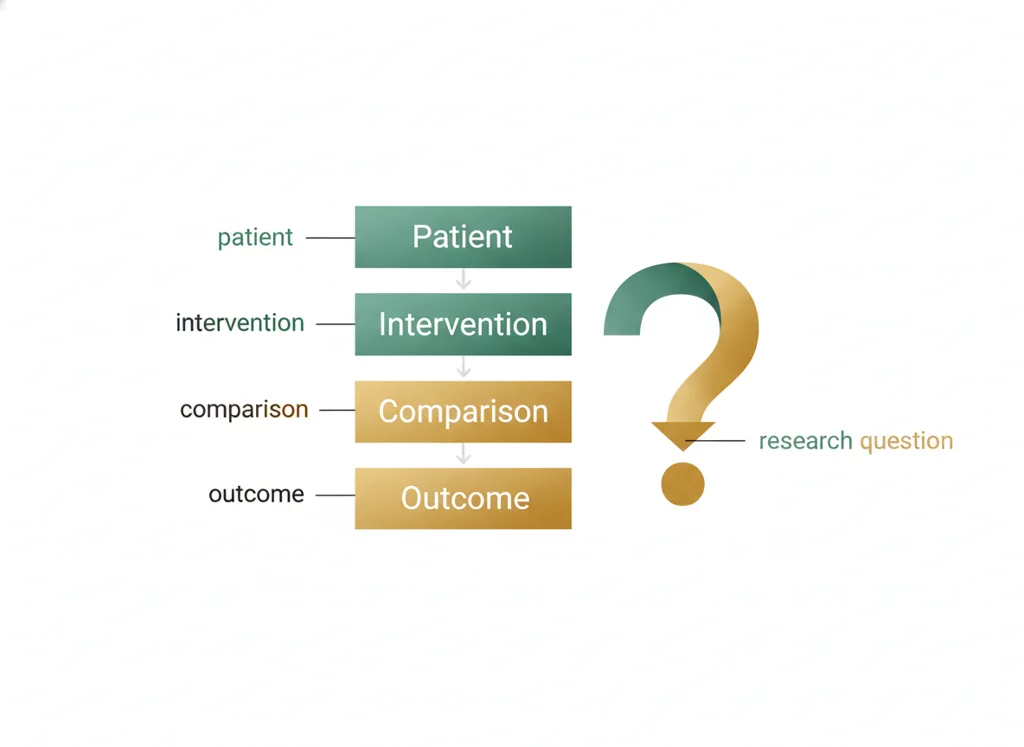
A framework for building a clear research question by naming the Patient, Intervention, Comparison, and Outcome.
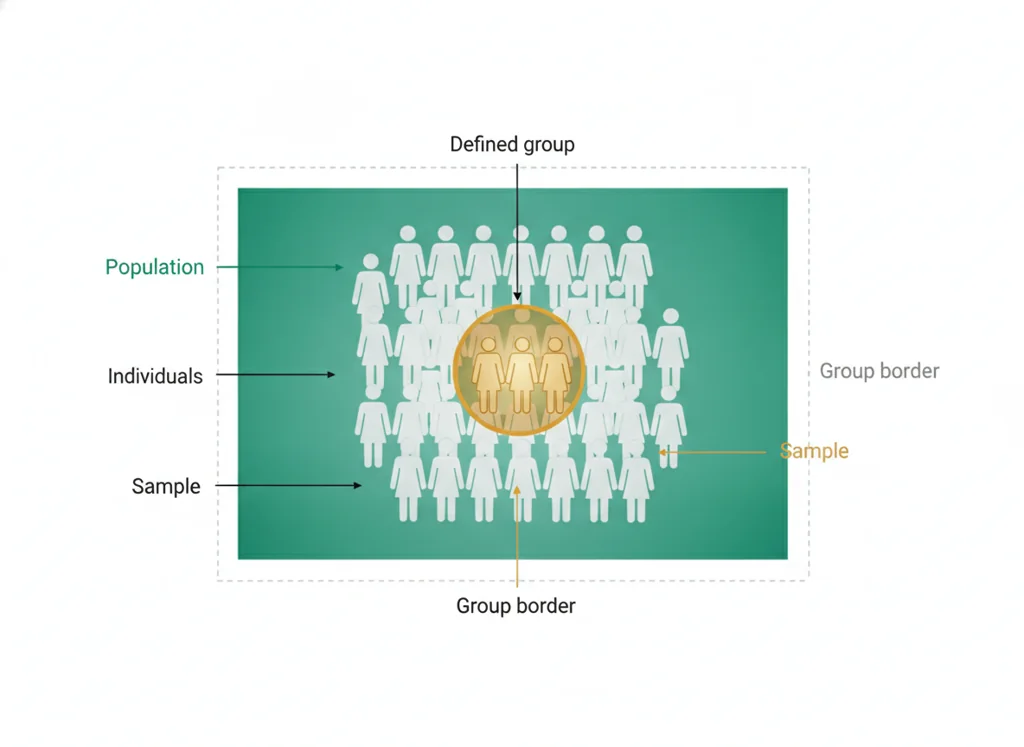
A defined group of individuals being studied or counted, such as all newborns in a region during one year.
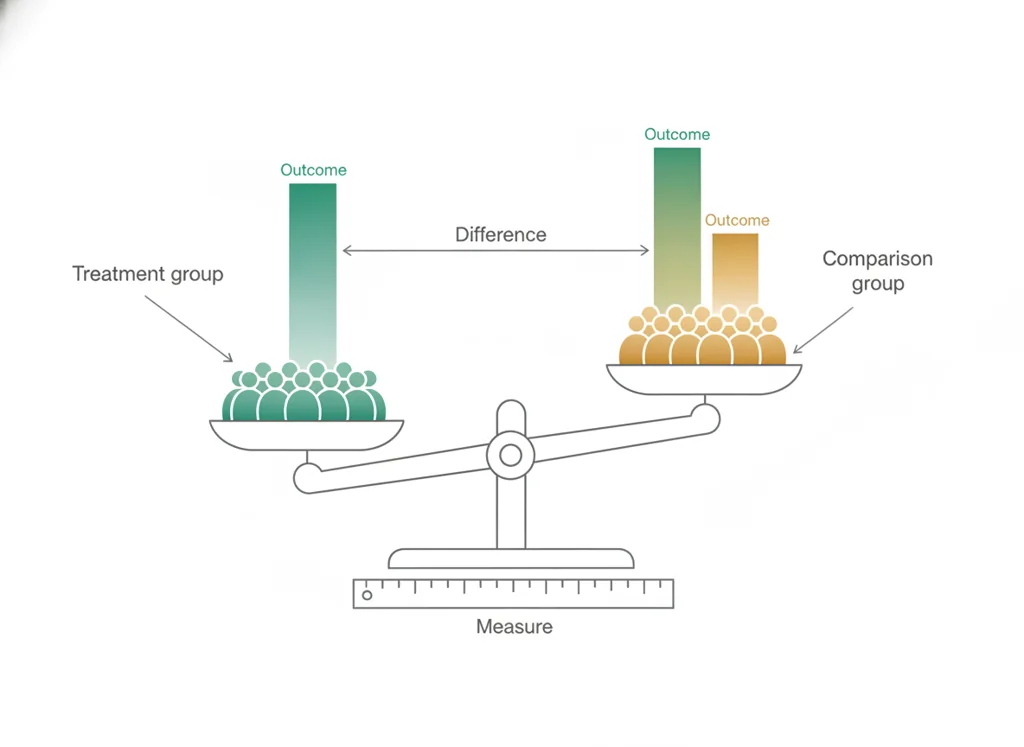
The other group or condition you measure your treatment against, so you can judge whether the treatment made a real difference.
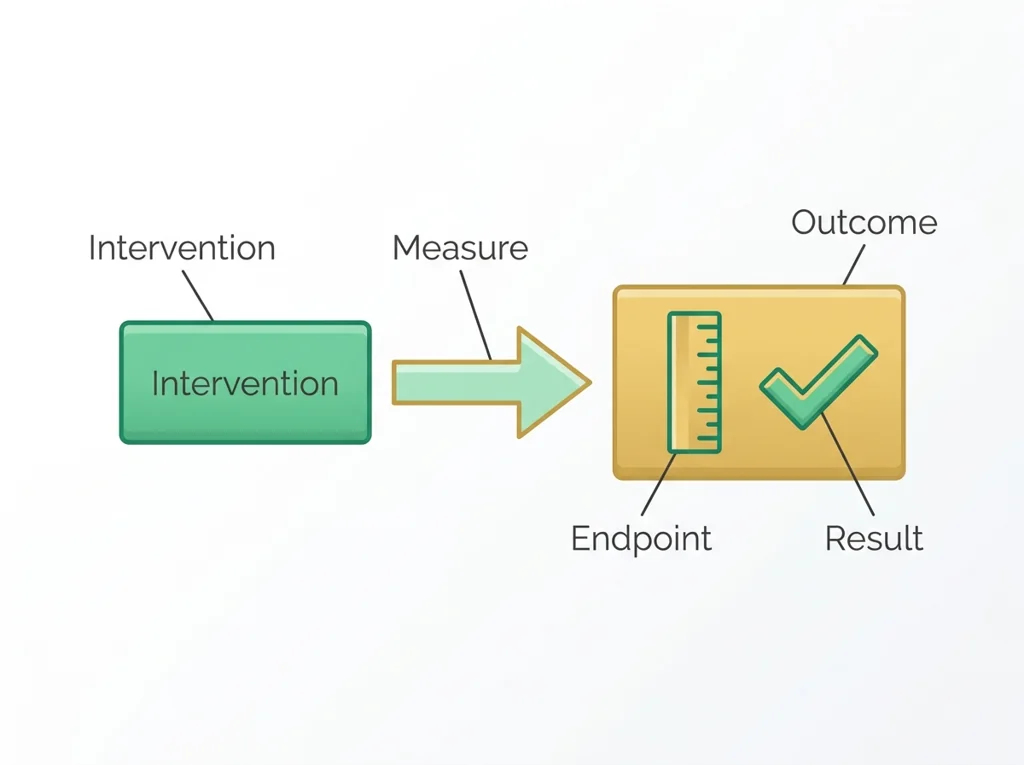
The measured result a study tracks to judge whether a treatment or condition makes a difference.
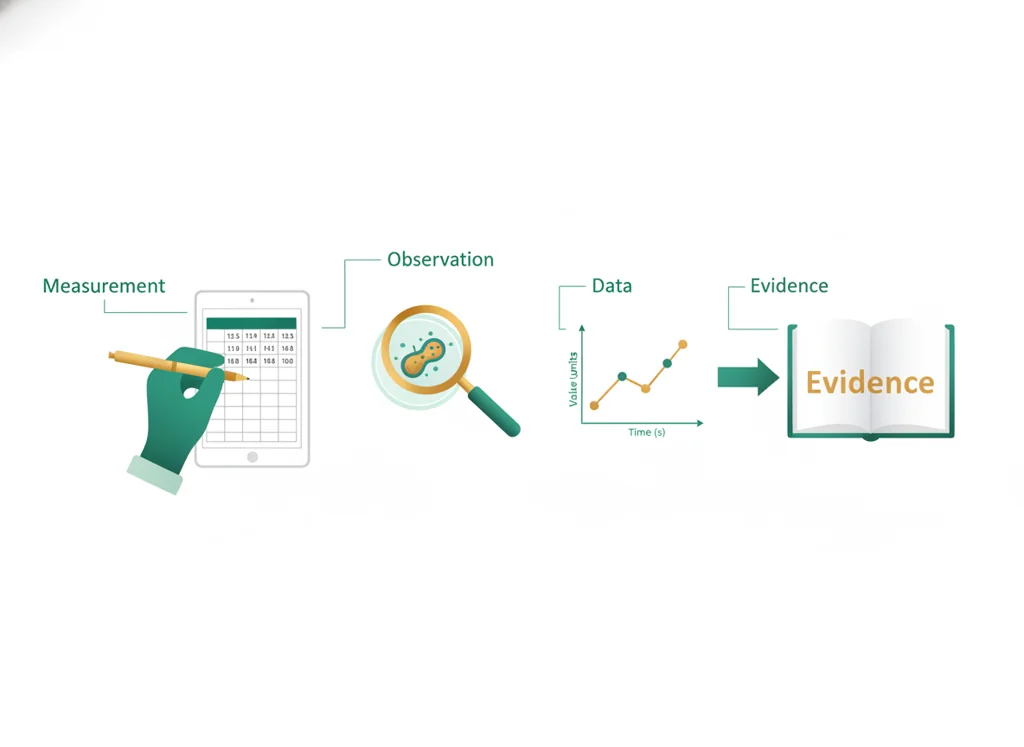
Based on direct observation, measurement, or experiment rather than on theory or opinion alone.
Research citation trail (advanced)
You do not need these papers or database records to finish the lesson. They document where the plain-language explainer's claims come from and are intended for teachers or advanced readers.
- NEJM. Timing of Primary Surgery for Cleft Palate (TOPS), 2023.
- Gamble C, et al. 2023. Timing of Primary Surgery for Cleft Palate (TOPS trial). N Engl J Med. [PMID:37646677]
- Sabbagh HJ, et al. 2023. COVID-19 risk factors and orofacial clefts, five Arab countries: case-control study. BMC Oral Health. [PMID:37118740]
- Grosen D, et al. 2011. Risk of Oral Clefts in Twins. Epidemiology. [PMID:21423016]