
When a Cleft Is an Airway Emergency
This reading contains every idea and every piece of evidence needed for today's decision. The research links at the end are optional.
Why this matters
Recognizing the mechanism separates a feeding challenge from an airway emergency.
The question you are trying to answer
What makes the doorway easy to block?
Begin with the idea you already earned
An open palate limits suction, so feeding support replaces suction with flow control and positioning.
Study the analogy before the biology
- What makes the doorway easy to block?
- Which object moves into the opening?
- Would cutting a hole in the wall explain the blockage?
Turn the analogy into three rules
Limit: The tongue is living tissue and breathing is dynamic. The analogy only models space and position.
Map those rules onto the biology
Robin sequence begins with a small lower jaw. The tongue then sits farther back and can narrow the throat.
The cleft palate often occurs in the same sequence, but the palate opening is not what blocks airflow.
Noisy breathing, pulling in at the ribs, poor color, or oxygen drops require immediate assessment.
Read Mateo's labeled case evidence
Mateo has normal jaw size and no tongue-back position on examination.
The key Robin sequence mechanism is absent.
Breathing is quiet, oxygen level is normal, and there are no retractions.
There is no current sign of airway distress.
A comparison infant has micrognathia, glossoptosis, noisy breathing, and oxygen drops when lying flat.
This pattern requires urgent airway action.
Make the concrete decision
You are triaging two newborns with cleft palate.
Only one bassinet needs immediate airway escalation.
- Escalate the comparison infant with small jaw, tongue-back position, and oxygen drops
- Escalate Mateo because every palate cleft blocks the airway
- Wait for feeding failure before checking breathing
Choose the infant who needs escalation and trace the mechanism in order.
Claim ceiling: You may rule on the current airway signs. You may not claim that Mateo can never develop a breathing problem later.
Write the 10-year takeaway
In Robin sequence, the small jaw lets the tongue fall back and block the airway; the palate gap itself is not the blockage.
- Put the Robin sequence events in order.
- Which findings make the comparison infant urgent?
Glossary in plain English
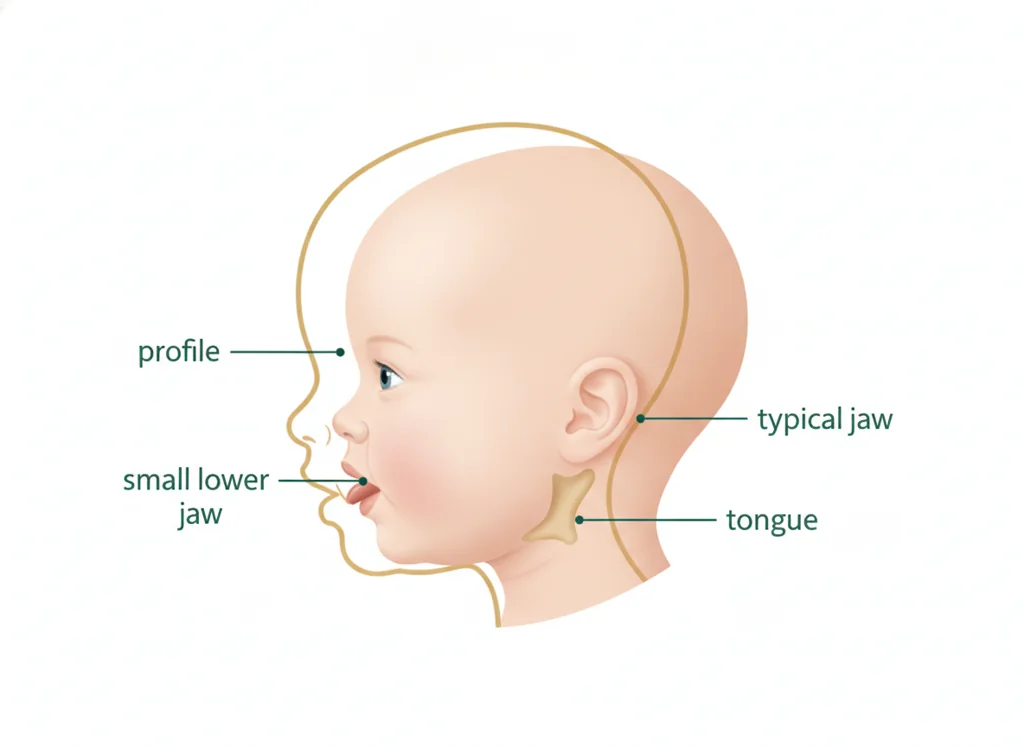
An unusually small lower jaw that can crowd the tongue backward and is sometimes linked with cleft palate and breathing trouble.
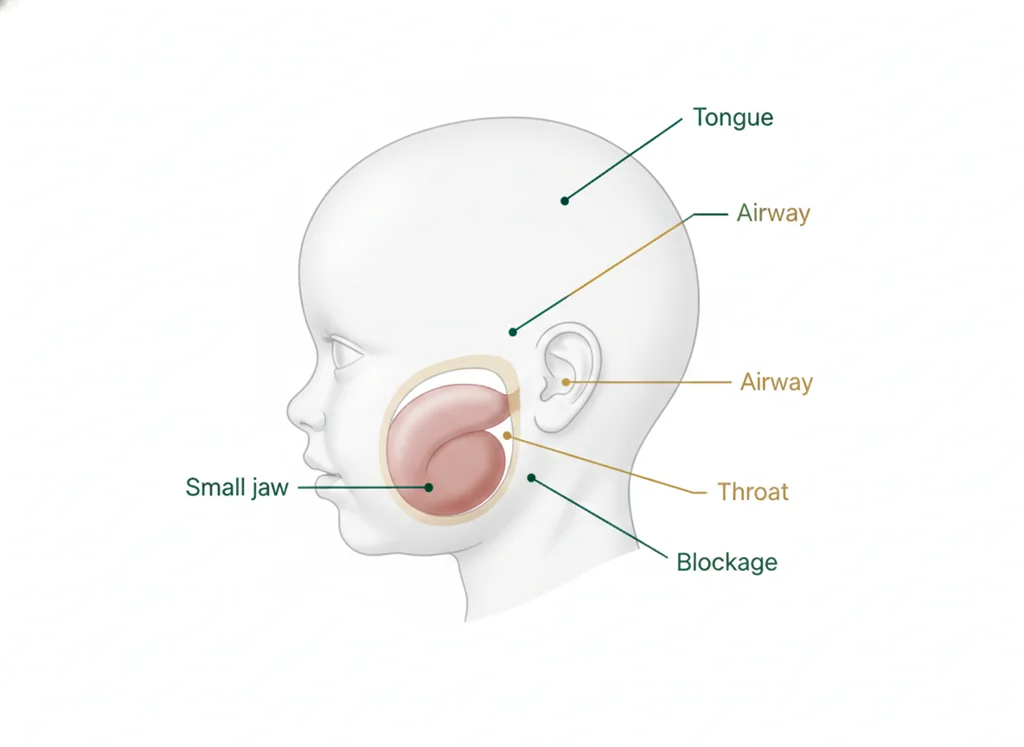
Backward and downward displacement of the tongue, which can block the airway and is a key feature of Pierre Robin sequence.
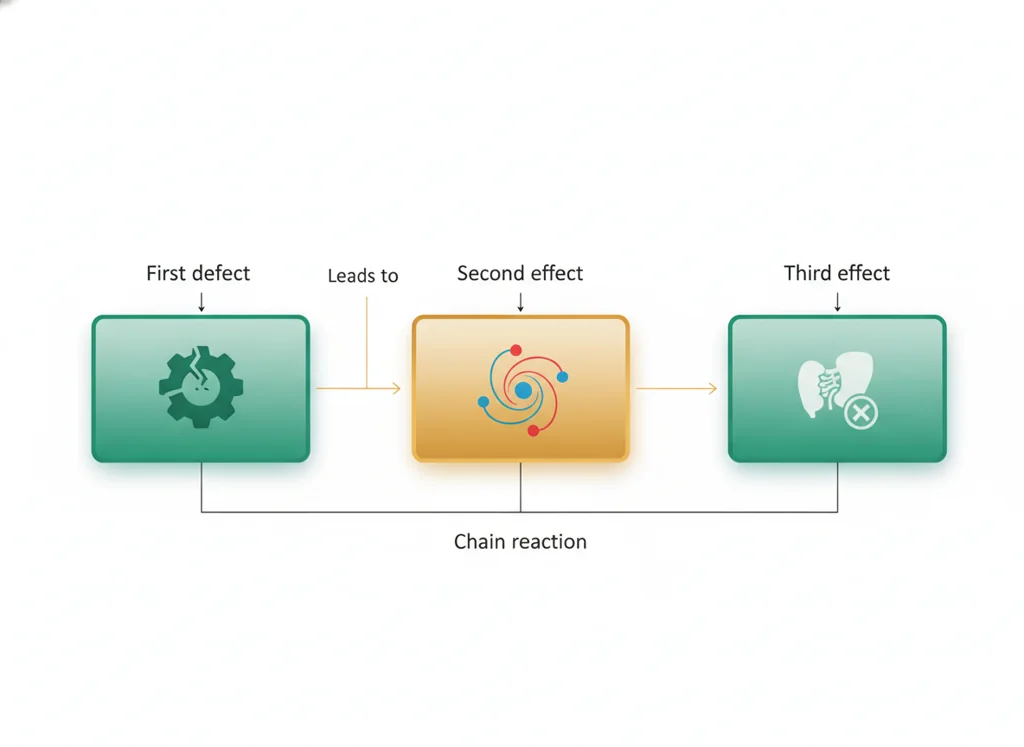
A pattern of birth defects in which one early problem sets off the others, as small jaw leads to tongue and palate problems in Pierre Robin.
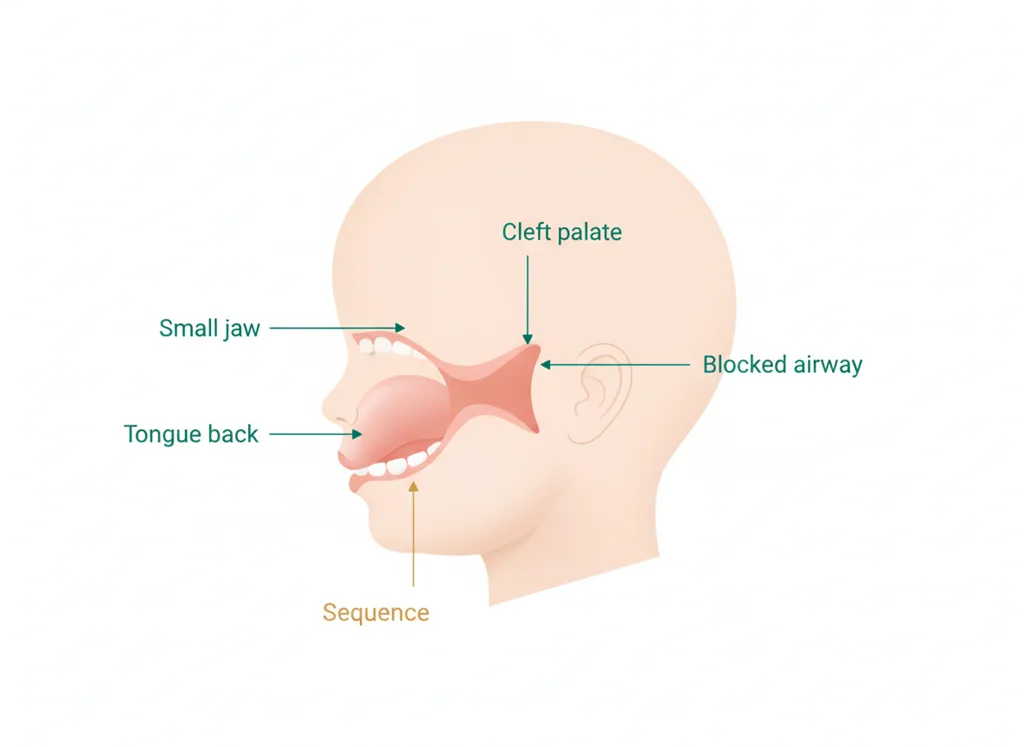
A chain of features starting with a small lower jaw, which pushes the tongue back and blocks the airway and often comes with a cleft palate.
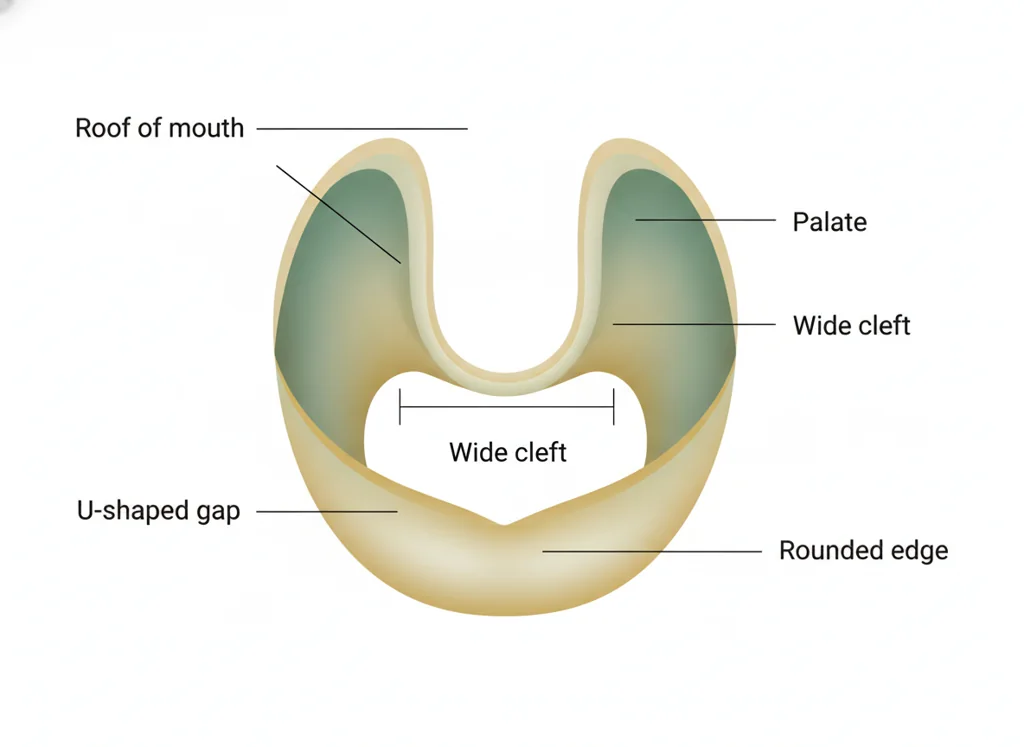
A wide, rounded cleft of the palate shaped like the letter U, characteristic of Pierre Robin sequence.
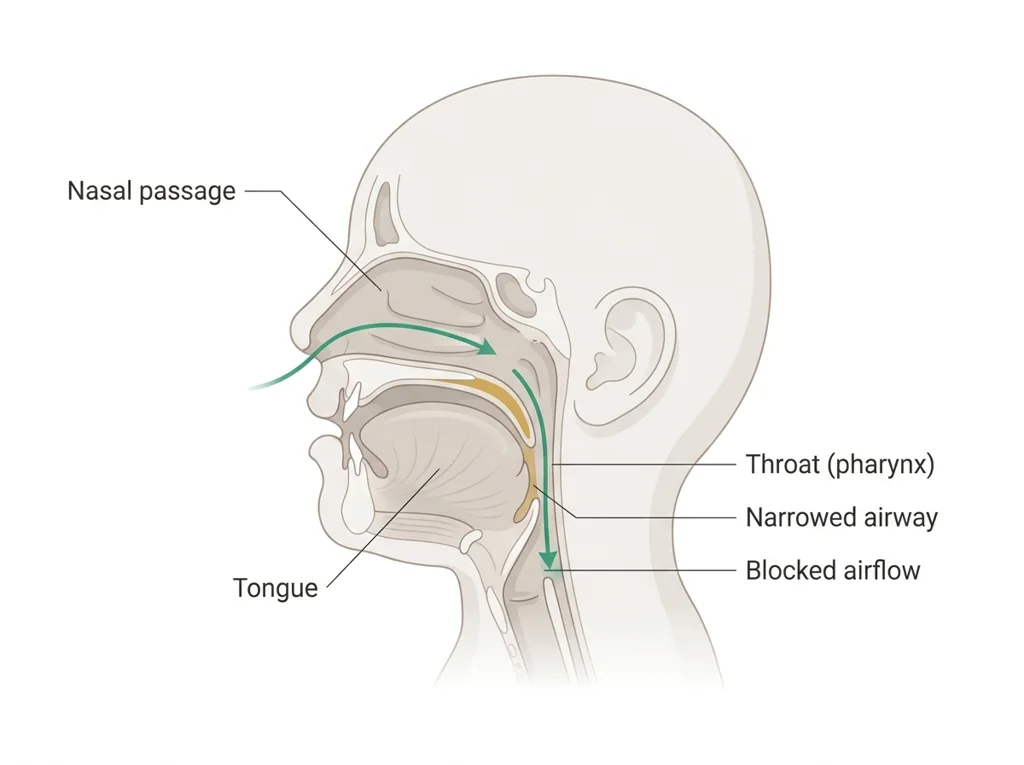
A partial or complete blockage of the passages that carry air to the lungs, making breathing difficult.
Research citation trail (advanced)
You do not need these papers or database records to finish the lesson. They document where the plain-language explainer's claims come from and are intended for teachers or advanced readers.
- American Cleft Palate Craniofacial Association. 2024 Parameters of Care.
- Hsieh ST, Woo AS. 2019. Pierre Robin Sequence. Clin Plast Surg. [PMID:30851756]
- Van Heest T, et al. 2024. Robin Sequence: Neonatal Management. Neoreviews. [PMID:39616138]
- Vyas T, et al. 2020. Cleft of lip and palate: A review. J Family Med Prim Care. [PMID:32984097]