
Keeping Mateo Fed and Growing
This reading contains every idea and every piece of evidence needed for today's decision. The research links at the end are optional.
Why this matters
Newborn growth depends on getting enough nutrition without exhausting the baby or disrupting breathing.
The question you are trying to answer
Where does air enter the damaged straw?
Begin with the idea you already earned
Testing is most useful when the history and exam create a question the test can answer.
Study the analogy before the biology
- Where does air enter the damaged straw?
- What happens to pressure inside it?
- How could you move liquid without relying on suction?
Turn the analogy into three rules
Limit: Infant feeding uses coordinated sucking, swallowing, and breathing. The straw models only the pressure problem.
Map those rules onto the biology
A baby normally seals the mouth to create suction. An open palate lets air enter, so the seal is incomplete.
A soft assisted-delivery bottle lets the caregiver add gentle flow while the baby controls swallowing and breathing.
Upright positioning, pauses, and weight checks help the team know whether the plan is safe and effective.
Read Mateo's labeled case evidence
Mateo tires during feeding and cannot maintain suction on a standard bottle.
The open palate is interfering with pressure generation.
Breathing is calm and oxygen level remains normal during the observed feed.
The immediate problem is feeding mechanics rather than respiratory failure.
With an assisted-delivery bottle, upright position, and pauses, intake improves.
The modified plan addresses the mechanism.
Make the concrete decision
You are the feeding specialist before discharge.
Mateo must show a safe plan that his family can repeat at home.
- Use an assisted-delivery bottle, upright position, paced squeezes, and weight follow-up
- Use a standard bottle and feed faster
- Stop oral feeding without first assessing safety
Choose the discharge plan and connect each part to the evidence and pressure model.
Claim ceiling: You may recommend the observed safe strategy. You may not assume every infant with a cleft has the same feeding ability.
Write the 10-year takeaway
An open palate limits suction, so feeding support replaces suction with flow control and positioning.
- What pressure problem does an open palate create?
- How does each part of the feeding plan solve that problem?
Glossary in plain English
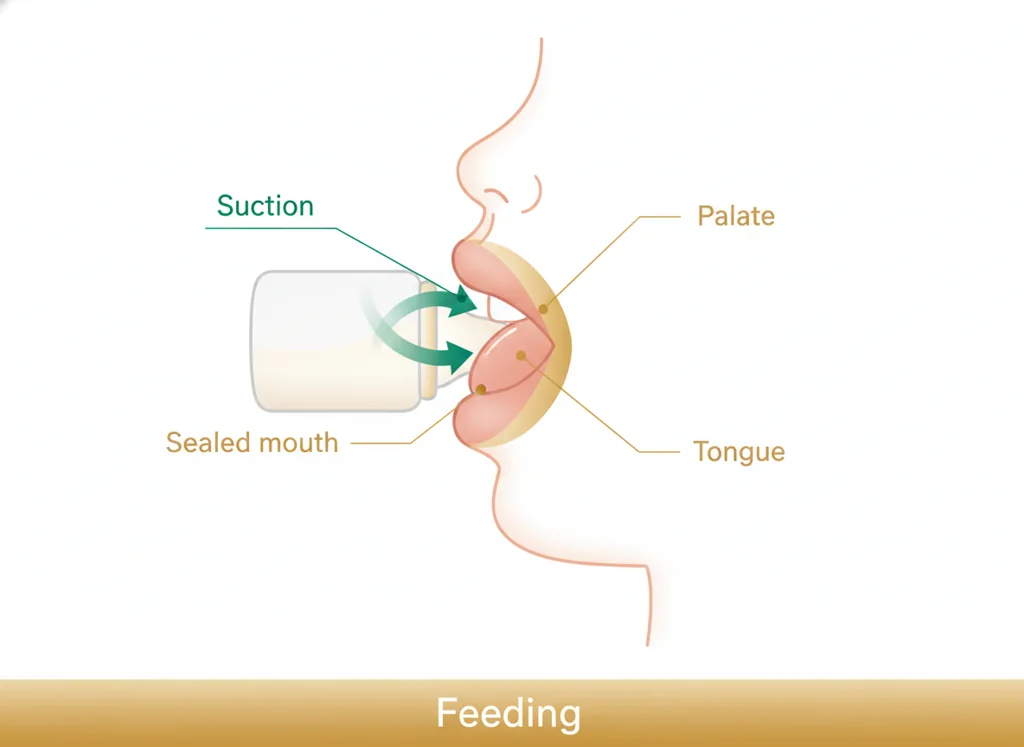
The suction created inside the mouth that lets a baby latch and draw milk; a cleft palate can prevent this seal from forming.
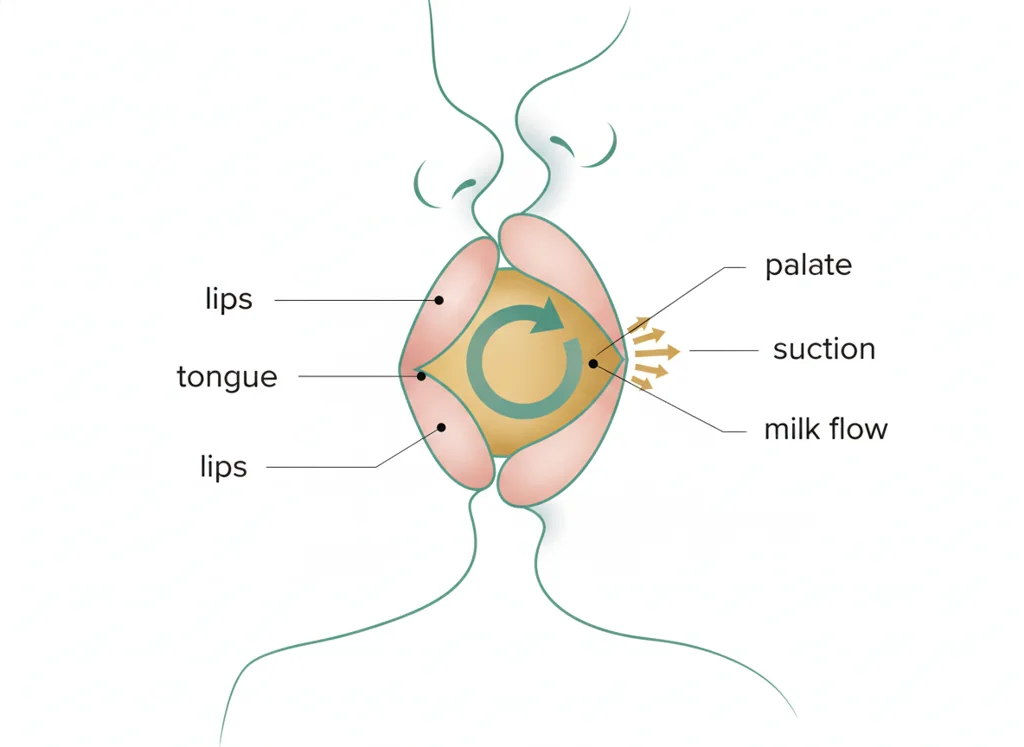
An infant's ability to create suction with the lips and palate to draw milk, which a cleft can disrupt.
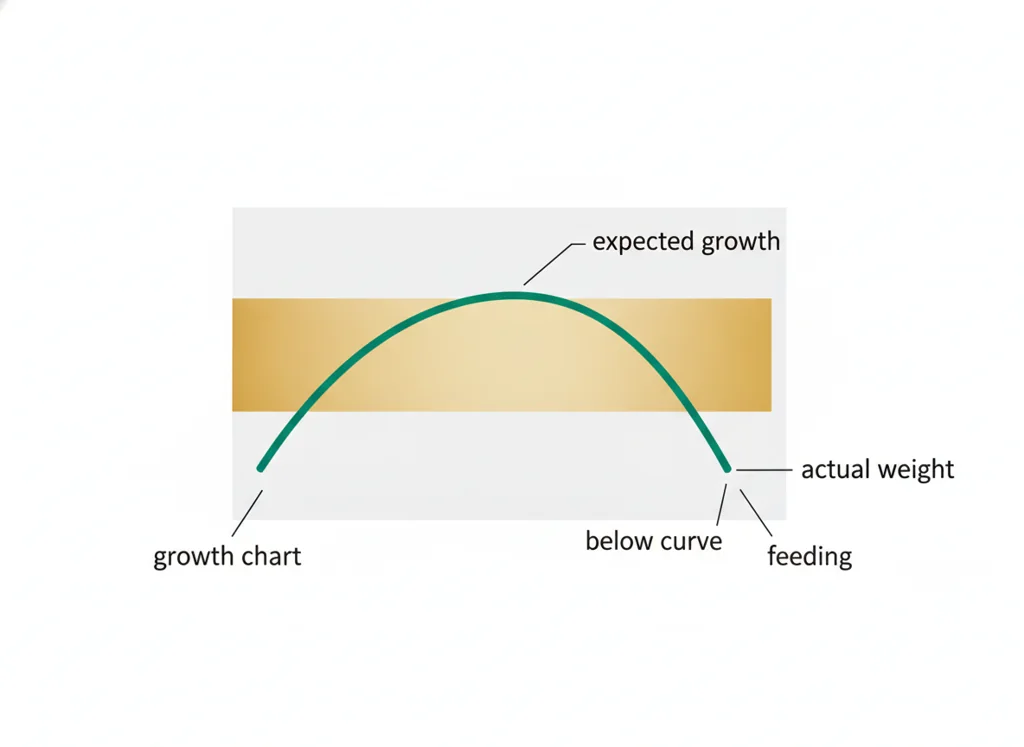
Poor weight gain and growth in an infant or child, often because feeding is difficult or nutrition is not absorbed well.
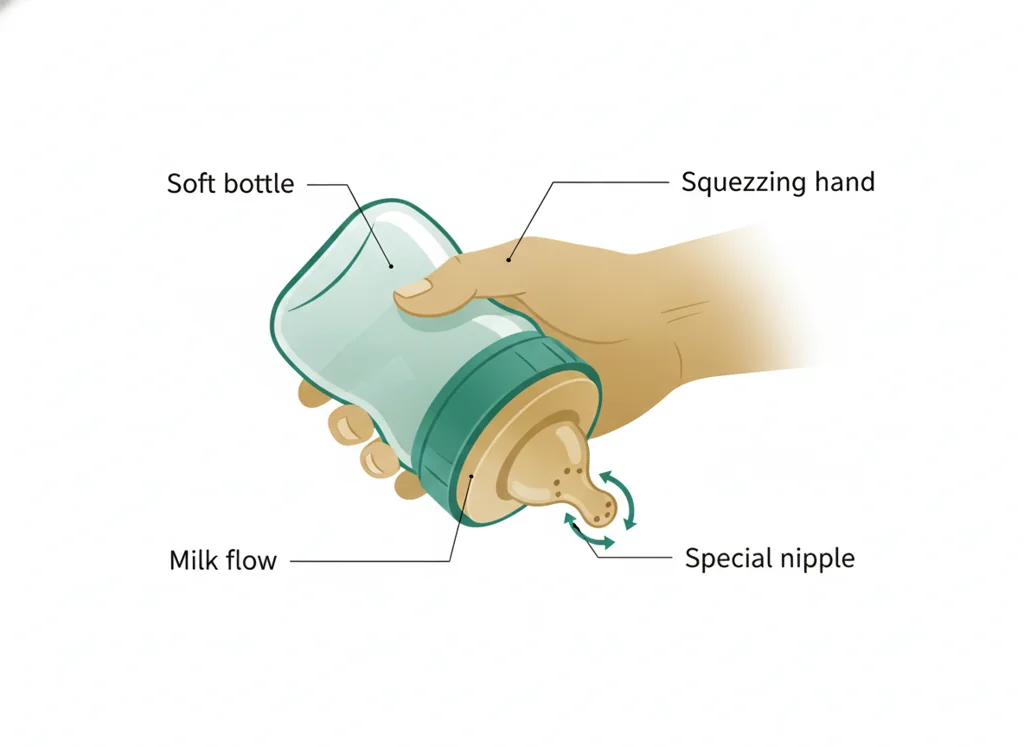
A soft squeezable feeding bottle that lets a caregiver push milk into the mouth of a baby who cannot create strong suction, such as one with a cleft.
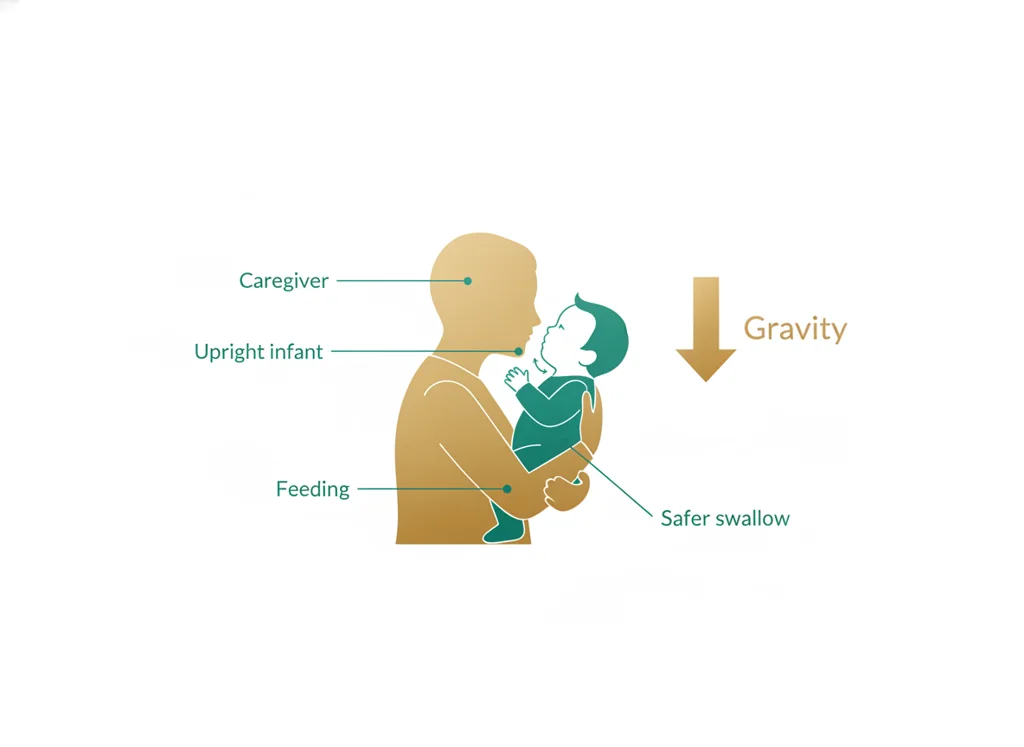
Holding a baby in a more vertical posture during feeding so gravity helps keep milk out of the nose and airway.
Research citation trail (advanced)
You do not need these papers or database records to finish the lesson. They document where the plain-language explainer's claims come from and are intended for teachers or advanced readers.