
The Short List: Ruling Out the Big Cleft Syndromes
This reading contains every idea and every piece of evidence needed for today's decision. The research links at the end are optional.
Why this matters
Specific checks make a clinical impression reproducible from one clinician to the next.
The question you are trying to answer
Why are the checkpoints named?
Begin with the idea you already earned
A cleft is syndromic only when a pattern of additional findings supports that claim.
Study the analogy before the biology
- Why are the checkpoints named?
- Which checks are visual and which need a tool?
- What would happen if the screener relied on a general feeling?
Turn the analogy into three rules
Limit: Patients are not security threats. The analogy only represents systematic screening.
Map those rules onto the biology
Different syndromes have different clue patterns. Examples include lip pits, a very small jaw, heart findings, eye findings, or a characteristic family history.
A checklist forces the team to look for each clue instead of trusting a quick impression.
Mateo's screen is reassuring, but the next step is to complete the family history and genetics examination.
Read Mateo's labeled case evidence
No lower-lip pits are seen.
A classic Van der Woude clue is absent.
Jaw size and breathing are normal.
The small-jaw and tongue-back pattern of Robin sequence is not present.
Heart exam, eye exam, and limb exam are unremarkable.
Several common syndromic red flags are not present on screening.
Make the concrete decision
You are the cleft team coordinator reviewing the red-flag matrix.
The team has time for one next step before the family leaves.
- Complete the structured family history and genetics examination
- Assign a named syndrome from the cleft alone
- Stop all evaluation because the first exam is normal
Choose the next step and show how the red-flag evidence narrows, but does not close, the question.
Claim ceiling: You may say named red flags are absent on today's screen. You may not say every possible syndrome has been ruled out.
Write the 10-year takeaway
A red-flag checklist turns a broad syndrome question into specific findings that can be checked.
- What is one red flag and the condition it may suggest?
- Why does a normal screen narrow rather than end the evaluation?
Glossary in plain English
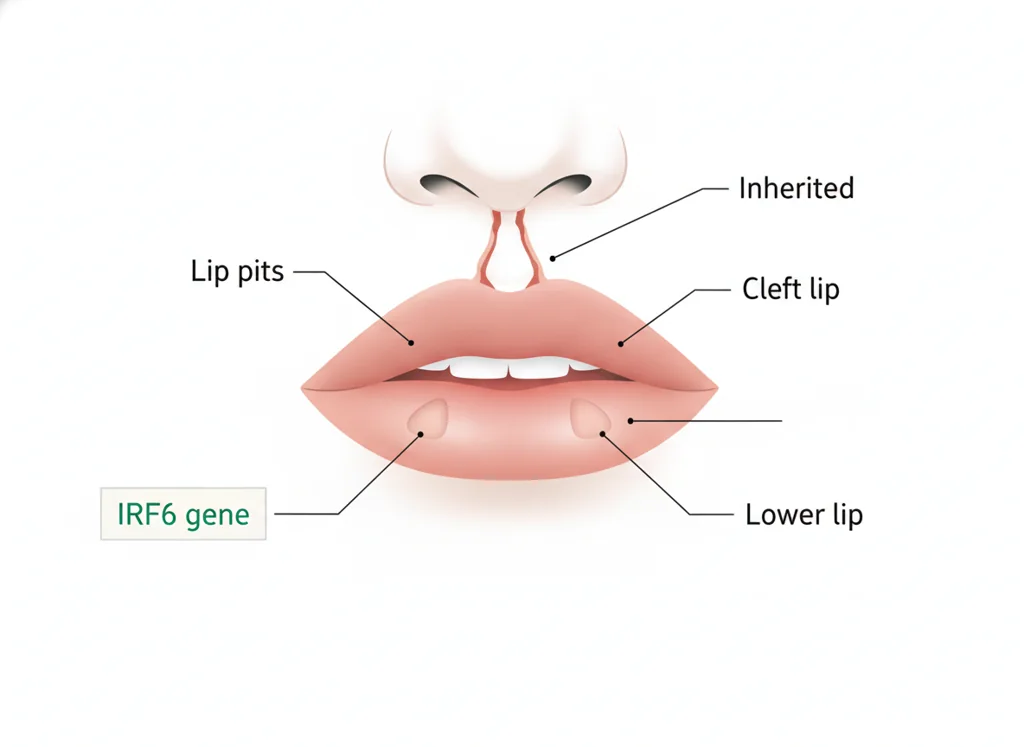
The most common syndromic, single-gene form of cleft lip and palate, usually caused by an IRF6 mutation and often marked by small lower-lip pits.
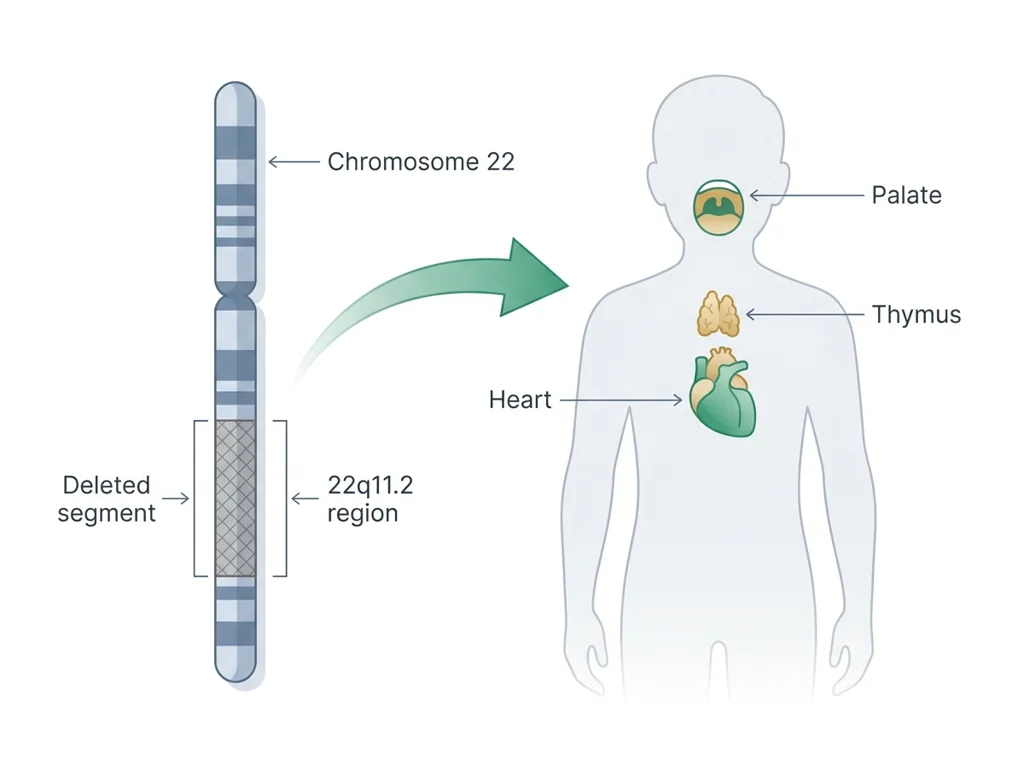
A condition caused by missing a small piece of chromosome 22, leading to heart defects, immune problems, and often cleft palate.
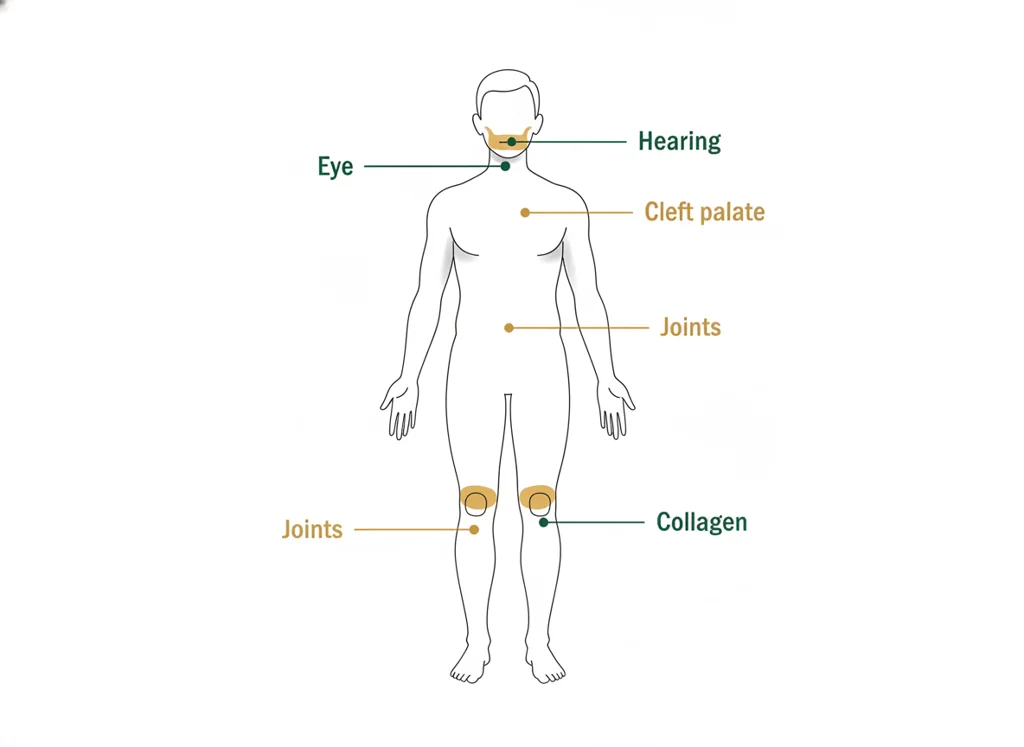
An inherited collagen disorder that often pairs cleft palate with severe nearsightedness, joint problems, and hearing loss.
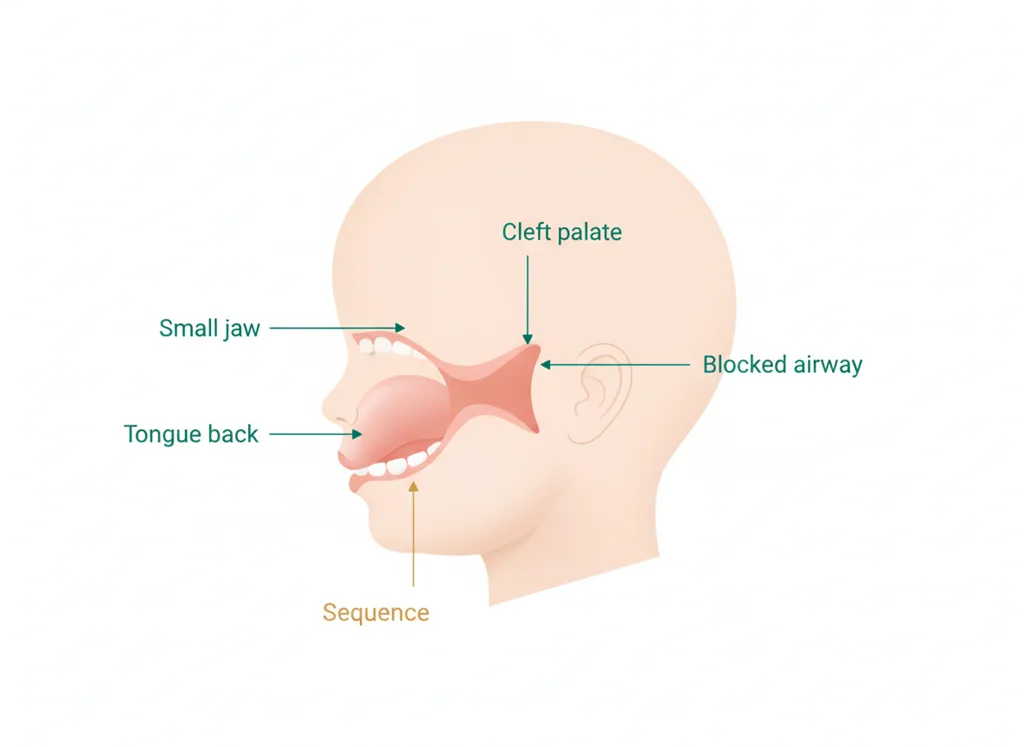
A chain of features starting with a small lower jaw, which pushes the tongue back and blocks the airway and often comes with a cleft palate.
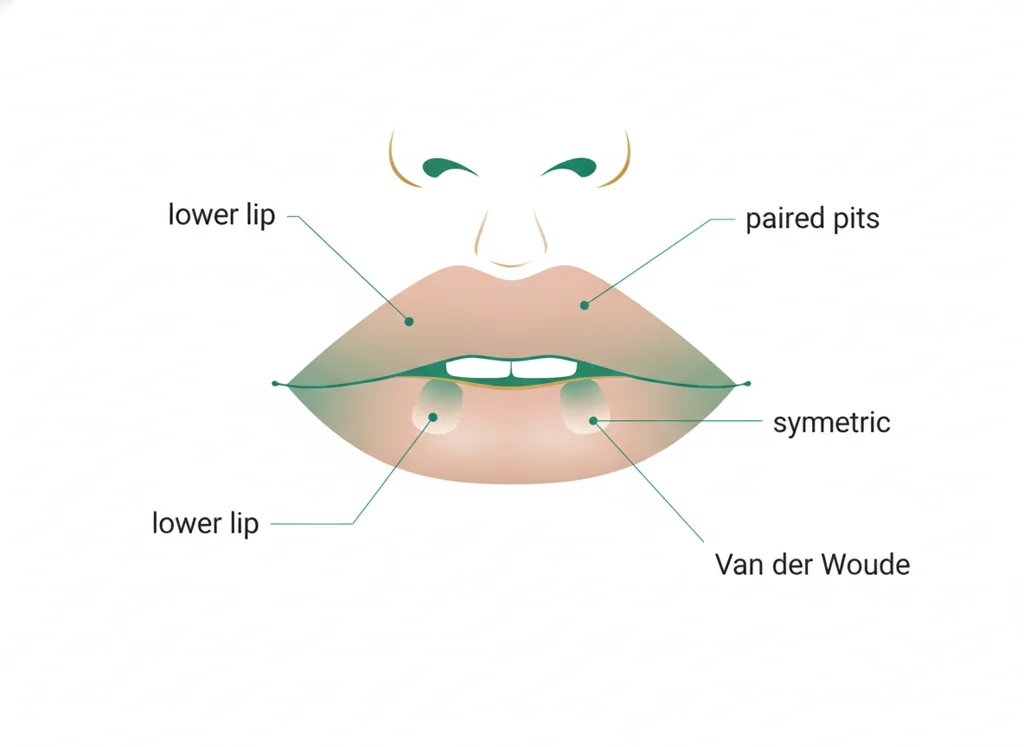
Small paired depressions on the lower lip that serve as the hallmark sign flagging Van der Woude syndrome, a cleft-related disorder.
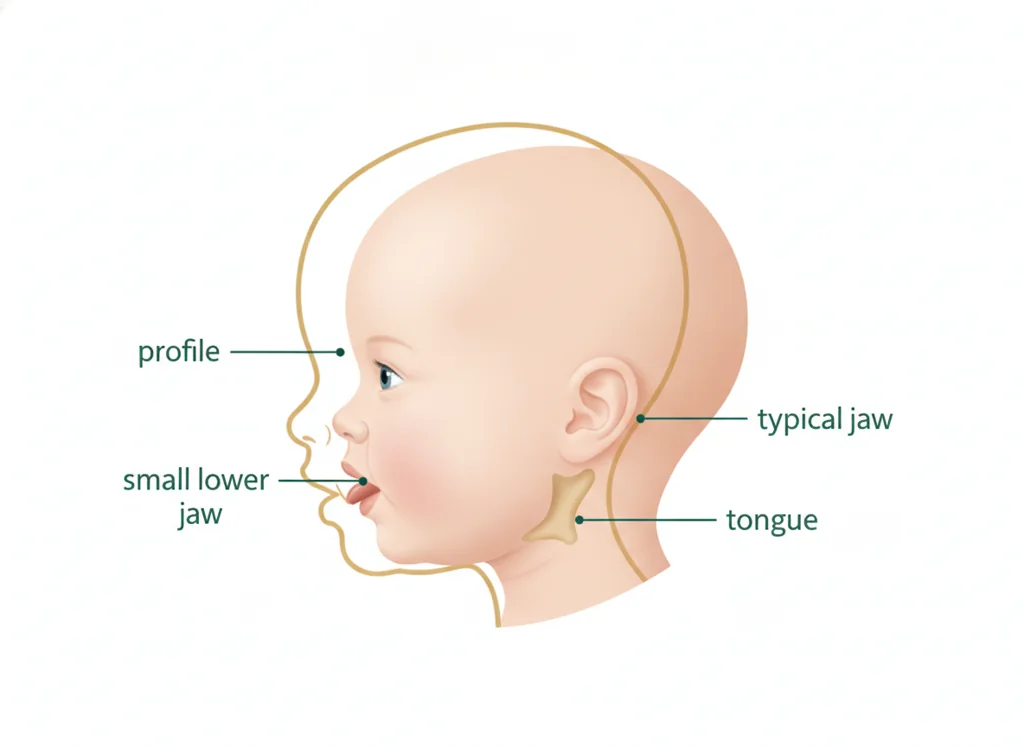
An unusually small lower jaw that can crowd the tongue backward and is sometimes linked with cleft palate and breathing trouble.
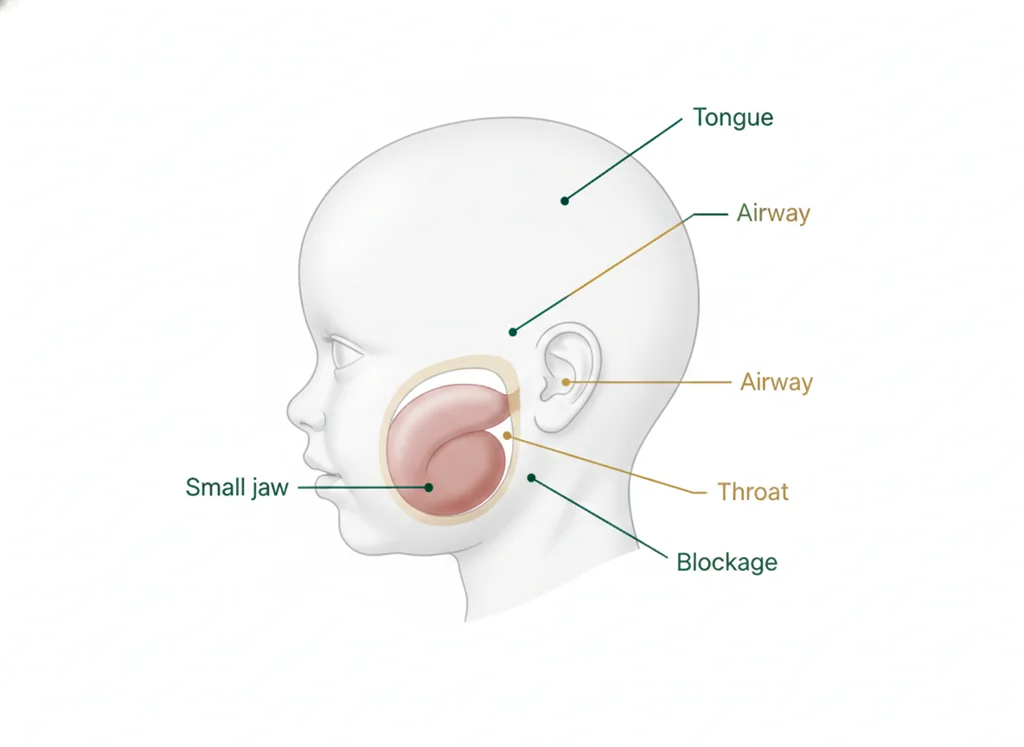
Backward and downward displacement of the tongue, which can block the airway and is a key feature of Pierre Robin sequence.
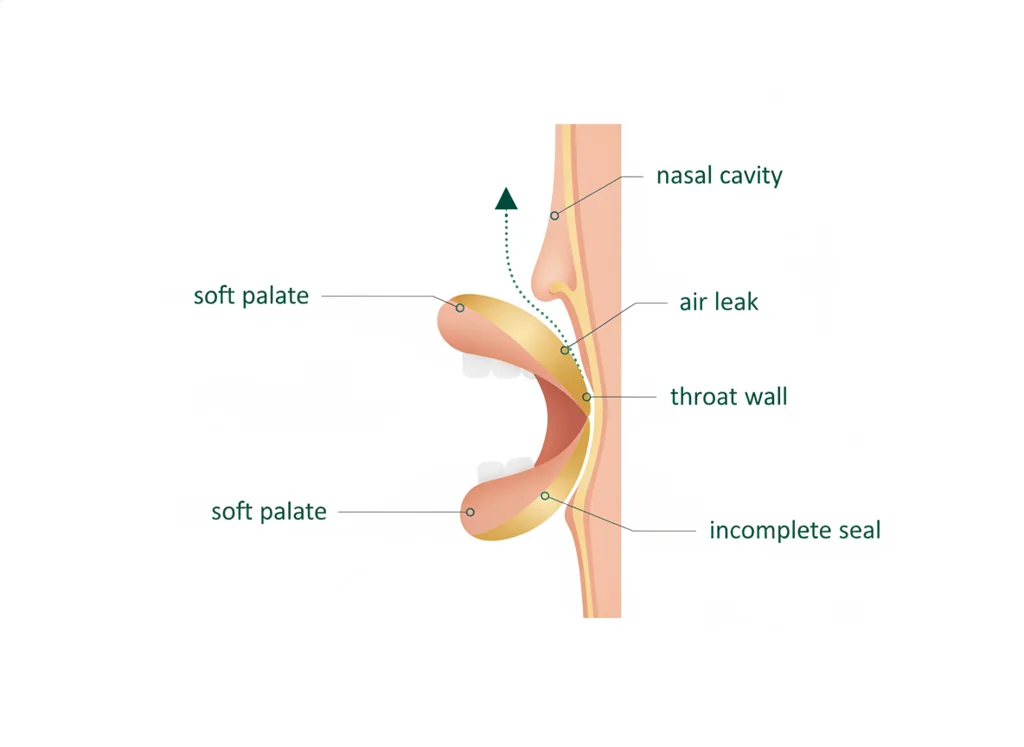
When the soft palate cannot fully seal off the nose during speech, letting air escape and making speech sound nasal.
Research citation trail (advanced)
You do not need these papers or database records to finish the lesson. They document where the plain-language explainer's claims come from and are intended for teachers or advanced readers.
- American Cleft Palate Craniofacial Association. 2024 Parameters of Care.
- Askarian S, et al. 2022. Genetic factors in cleft lip-cleft palate and clinical utility. Oral Maxillofac Surg. [PMID:35426585]
- Dean KM, Leeper LK. 2020. Management of submucous cleft palate. Curr Opin Otolaryngol Head Neck Surg. [PMID:33105231]
- Hsieh ST, Woo AS. 2019. Pierre Robin Sequence. Clin Plast Surg. [PMID:30851756]