
Is the Cleft a Clue? The Syndromic Question
This reading contains every idea and every piece of evidence needed for today's decision. The research links at the end are optional.
Why this matters
The difference between isolated and syndromic changes testing, counseling, and follow-up.
The question you are trying to answer
How does one warning differ from several linked warnings?
Begin with the idea you already earned
A useful cleft description names the structures, the side, and the completeness as three separate choices.
Study the analogy before the biology
- How does one warning differ from several linked warnings?
- Which situation suggests a broader system problem?
- What information would you check before deciding?
Turn the analogy into three rules
Limit: Human development is more complex than a dashboard. The analogy models pattern recognition only.
Map those rules onto the biology
An isolated cleft appears without a larger pattern of health findings. A syndromic cleft is one feature in a repeatable condition that affects more than one part of the body.
Clinicians look for associated findings in the jaw, heart, eyes, ears, limbs, growth, development, and family history.
Mateo has no extra findings on the first exam, but the team still needs a structured check before closing the question.
Read Mateo's labeled case evidence
Mateo has a complete unilateral left cleft lip and palate.
This confirms the structural finding but does not classify the cause.
No jaw, heart, limb, eye, ear, or tone abnormality was found on the newborn exam.
The first exam does not show a broader pattern.
Family history and targeted syndrome checks are not yet complete.
The classification must remain provisional.
Make the concrete decision
You are presenting Mateo at the first genetics huddle.
The team must choose how to describe the case today without overstating what is known.
- Cleft under evaluation, with no additional anomalies found so far
- Confirmed nonsyndromic cleft
- Confirmed named syndrome
Choose the most defensible chart phrase and explain why the other two go beyond the evidence.
Claim ceiling: You may state that no red flags have been found so far. You may not call the cleft isolated or nonsyndromic until the evaluation is complete.
Write the 10-year takeaway
A cleft is syndromic only when a pattern of additional findings supports that claim.
- What turns one finding into a syndrome pattern?
- Why is 'so far' an important phrase in today's chart?
Glossary in plain English
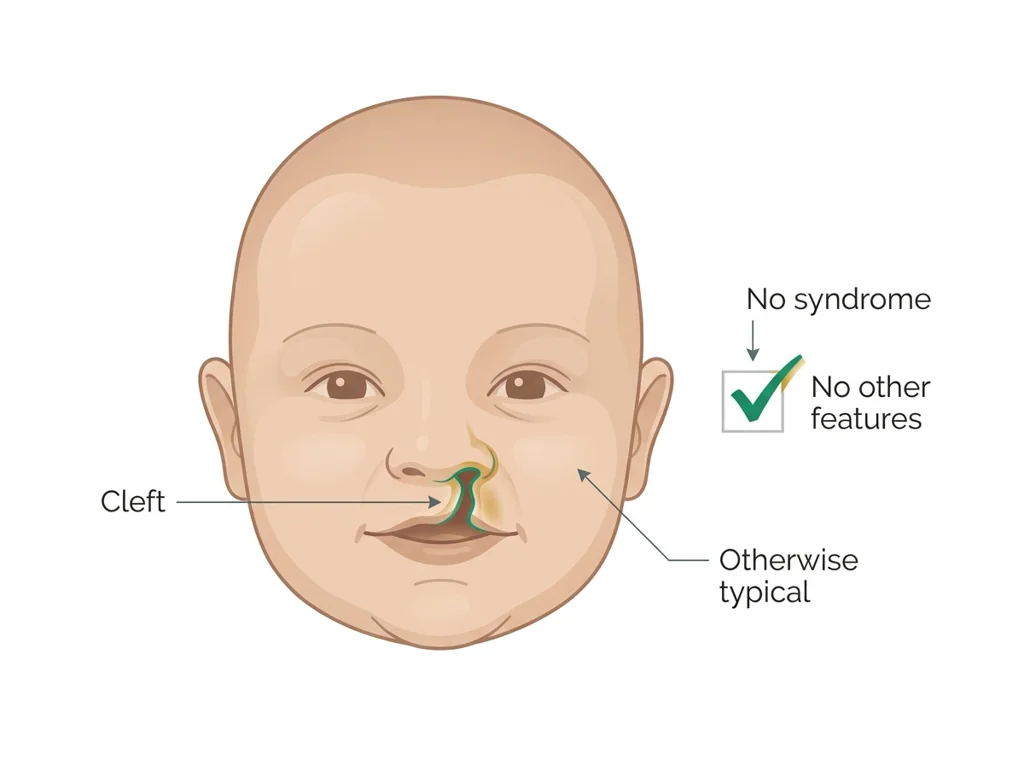
A cleft of the lip or palate that occurs on its own, without other birth differences or a recognized syndrome.
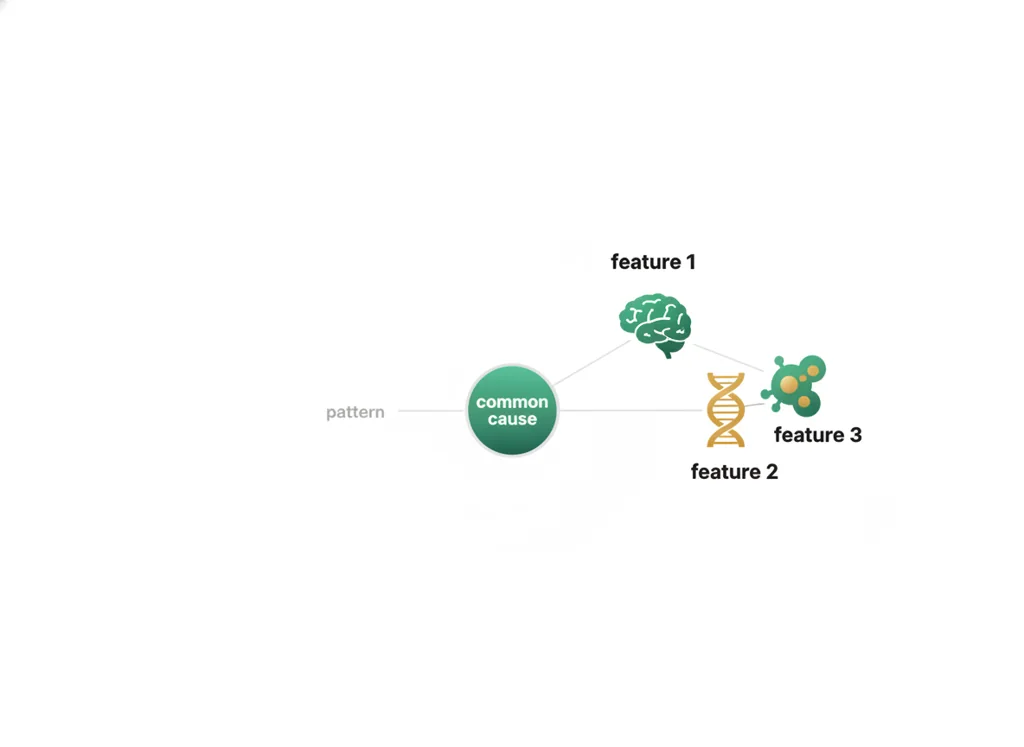
A set of features that consistently occur together and share a common underlying cause.
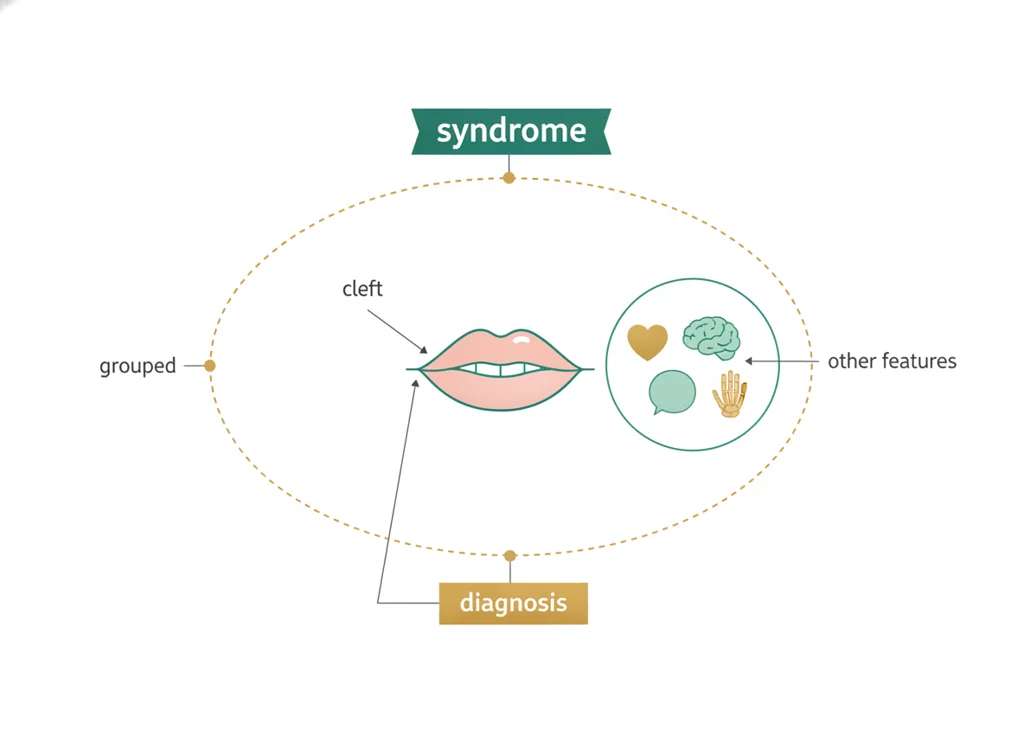
A cleft that comes packaged with other features as part of a named syndrome, accounting for roughly 30 percent of clefts.
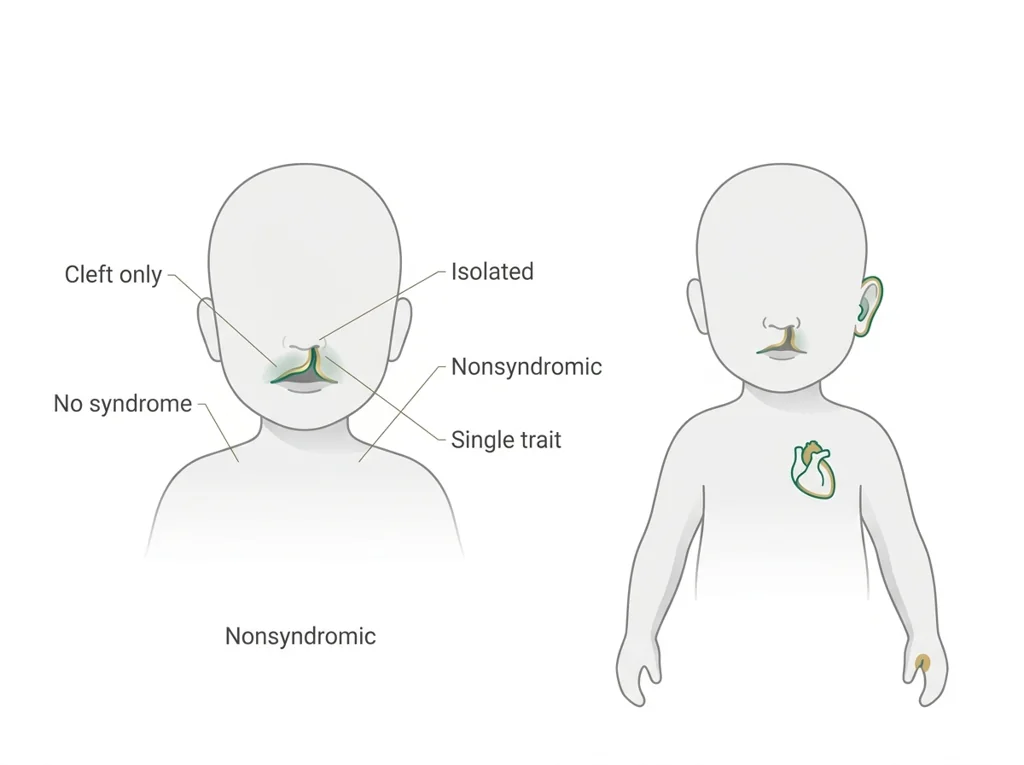
A cleft that occurs on its own, without other birth differences or a recognized syndrome accompanying it.
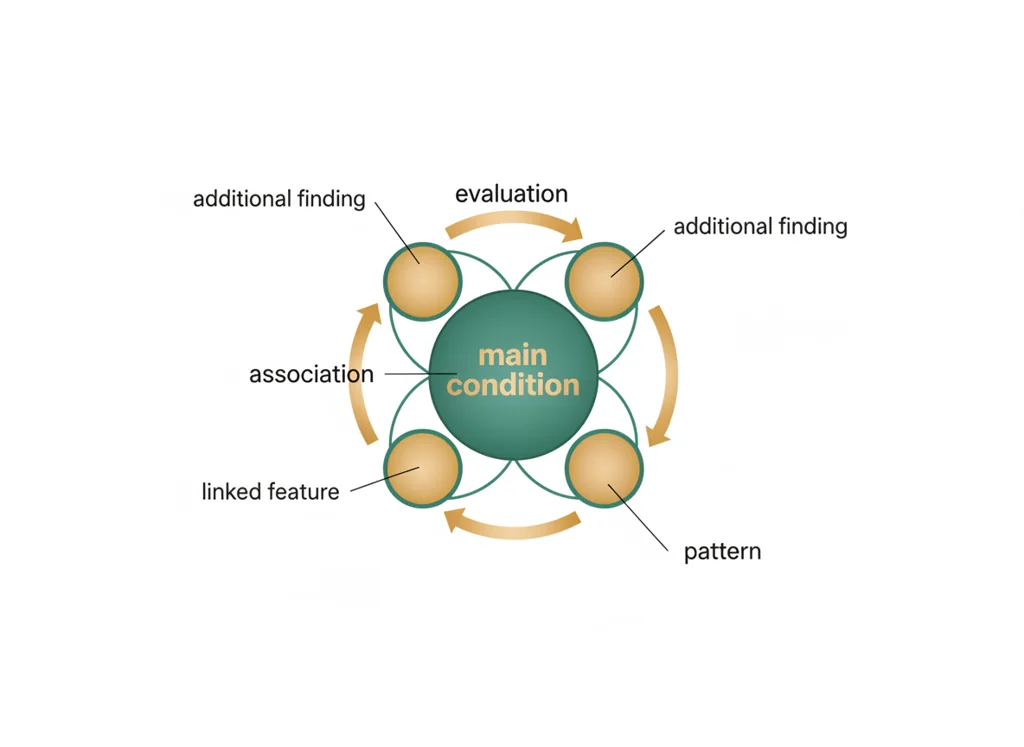
An additional birth difference found alongside the main condition, signaling that a broader syndrome or developmental problem may be present.
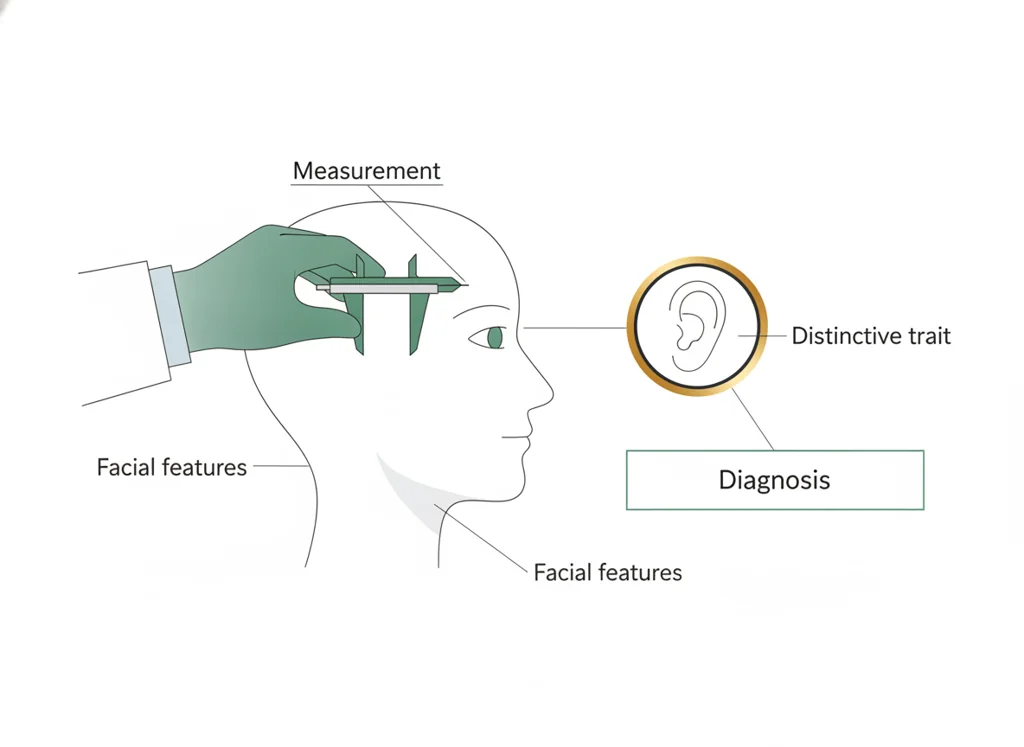
The medical study of unusual body and facial features present from birth, used to recognize and diagnose genetic syndromes.
Research citation trail (advanced)
You do not need these papers or database records to finish the lesson. They document where the plain-language explainer's claims come from and are intended for teachers or advanced readers.
- American Cleft Palate Craniofacial Association. 2024 Parameters of Care.
- Dixon MJ, et al. 2011. Cleft lip and palate: genetic and environmental influences. Nat Rev Genet. [PMID:21331089]
- Vyas T, et al. 2020. Cleft of lip and palate: A review. J Family Med Prim Care. [PMID:32984097]
- Yan S, et al. 2024. Prenatal CL/P ultrasound abnormalities and copy number variants. Ital J Pediatr. [PMID:39169438]