
Describing the Cleft: Type, Side, and How Complete
This reading contains every idea and every piece of evidence needed for today's decision. The research links at the end are optional.
Why this matters
Precise words let clinicians compare patients and plan care without guessing.
The question you are trying to answer
Which address details are independent?
Begin with the idea you already earned
Day-one cleft care begins with a complete exam and clear, respectful communication.
Study the analogy before the biology
- Which address details are independent?
- What happens if one line is missing?
- Could two packages share one detail but still go to different places?
Turn the analogy into three rules
Limit: A diagnosis is not literally an address. The analogy only shows why independent descriptors matter.
Map those rules onto the biology
Clefts are described on three separate axes: what structures are open, which side is involved, and how far the gap extends.
A unilateral cleft affects one side. A bilateral cleft affects both sides. A complete cleft reaches the nasal floor or runs the full length of the palate.
Mateo's evidence fits all three parts of the phrase complete unilateral left cleft lip and palate.
Read Mateo's labeled case evidence
The gap involves both the lip and the palate.
Structure category: cleft lip and palate.
Only the left side of the lip is involved.
Laterality: unilateral, left.
The lip gap reaches the nostril and the palate is open along its length.
Completeness: complete.
Make the concrete decision
You are entering Mateo into the cleft team registry.
The surgeon will use your entry to plan the first visit. The registry rejects vague labels.
- Complete unilateral left cleft lip and palate
- A cleft
- Bilateral incomplete cleft lip only
Choose the registry description and cite one evidence ID for each word that narrows the description.
Claim ceiling: You may classify anatomy. You may not infer a syndrome from the cleft pattern alone.
Write the 10-year takeaway
A useful cleft description names the structures, the side, and the completeness as three separate choices.
- Which evidence supports each part of Mateo's description?
- Why is the phrase 'a cleft' not enough for planning?
Glossary in plain English
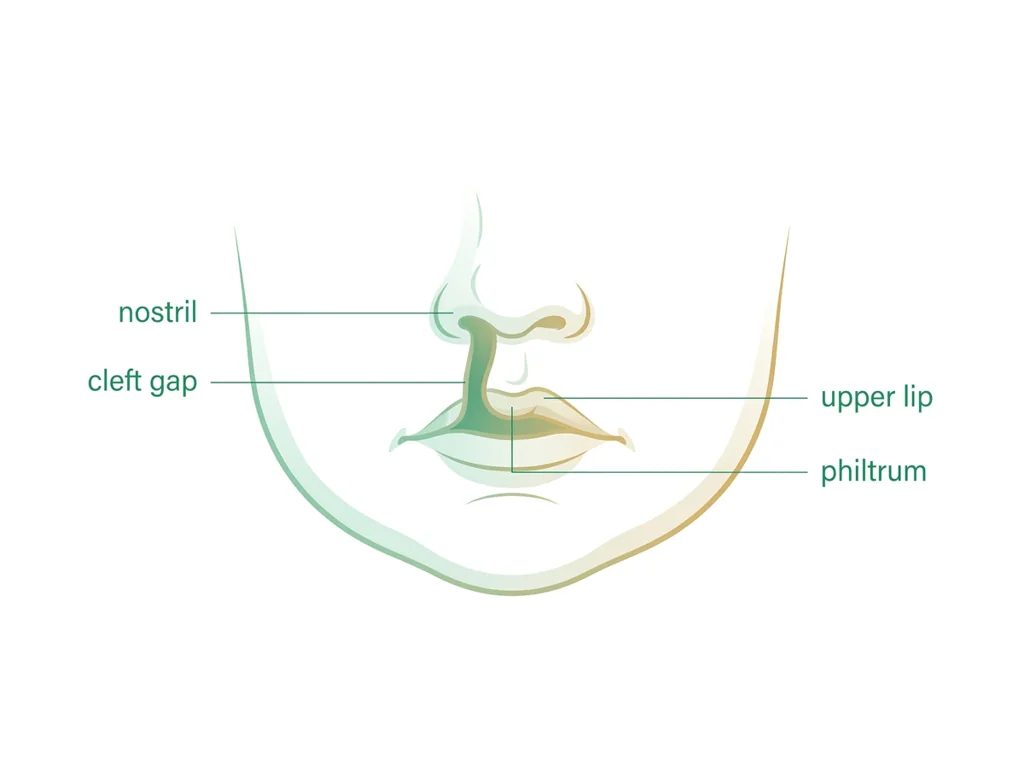
A birth difference where the upper lip does not fully fuse before birth, leaving a gap or split that can reach toward the nose.
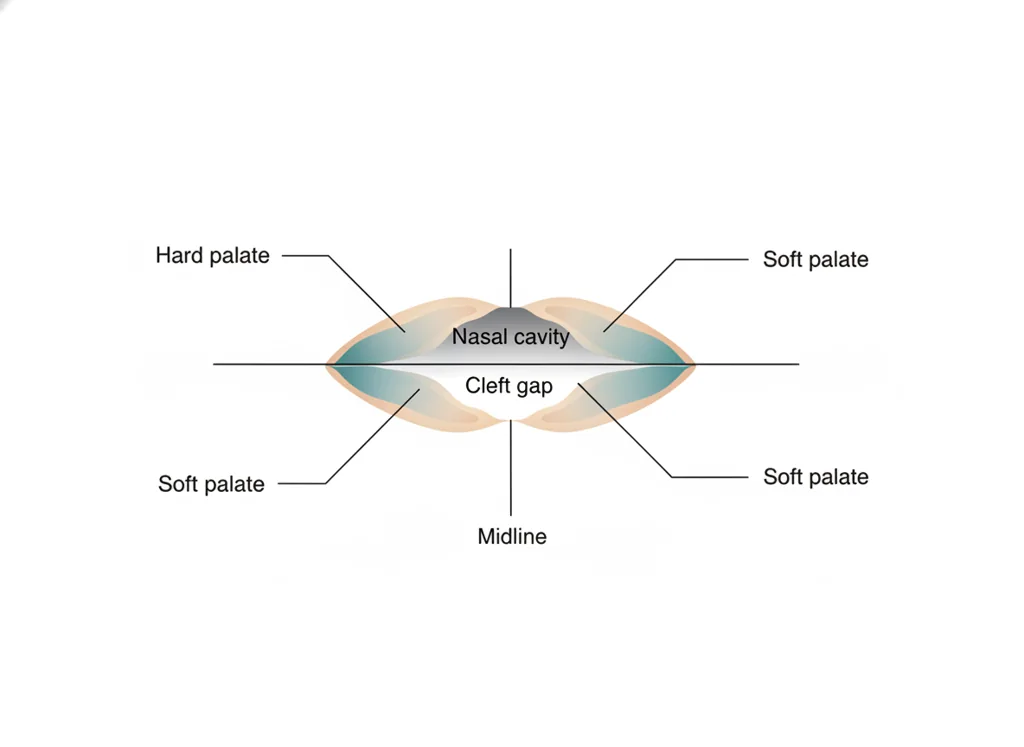
A birth difference in which the roof of the mouth does not fully join before birth, leaving an opening between the mouth and nasal cavity.
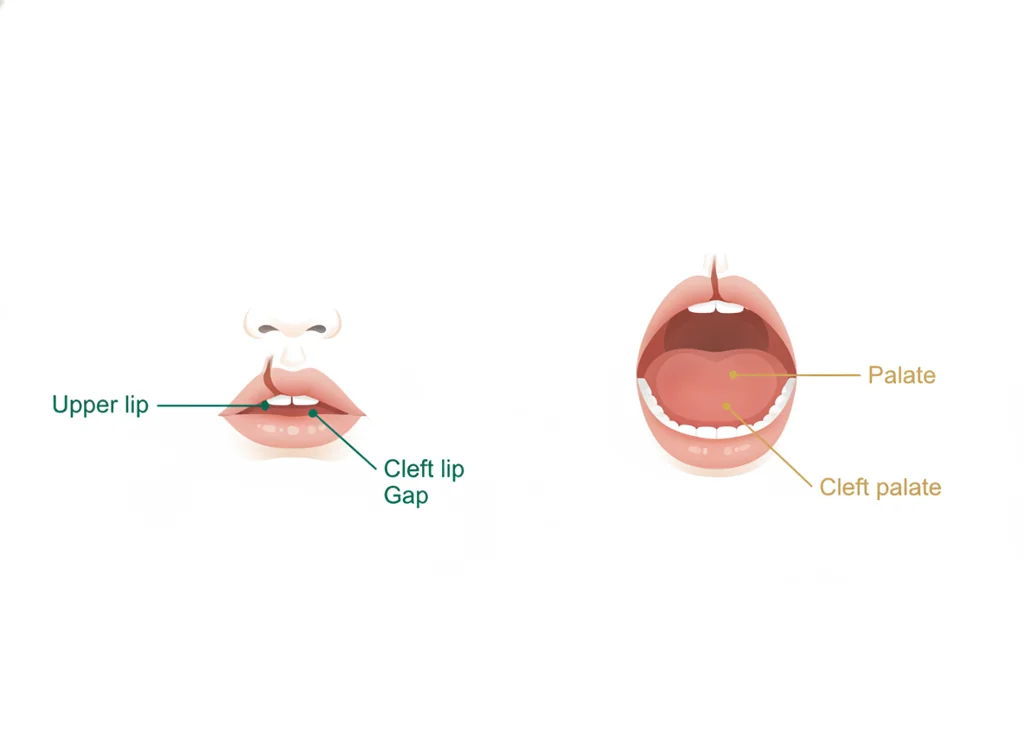
A birth difference in which the lip, the roof of the mouth, or both fail to fully join before birth, leaving a gap.
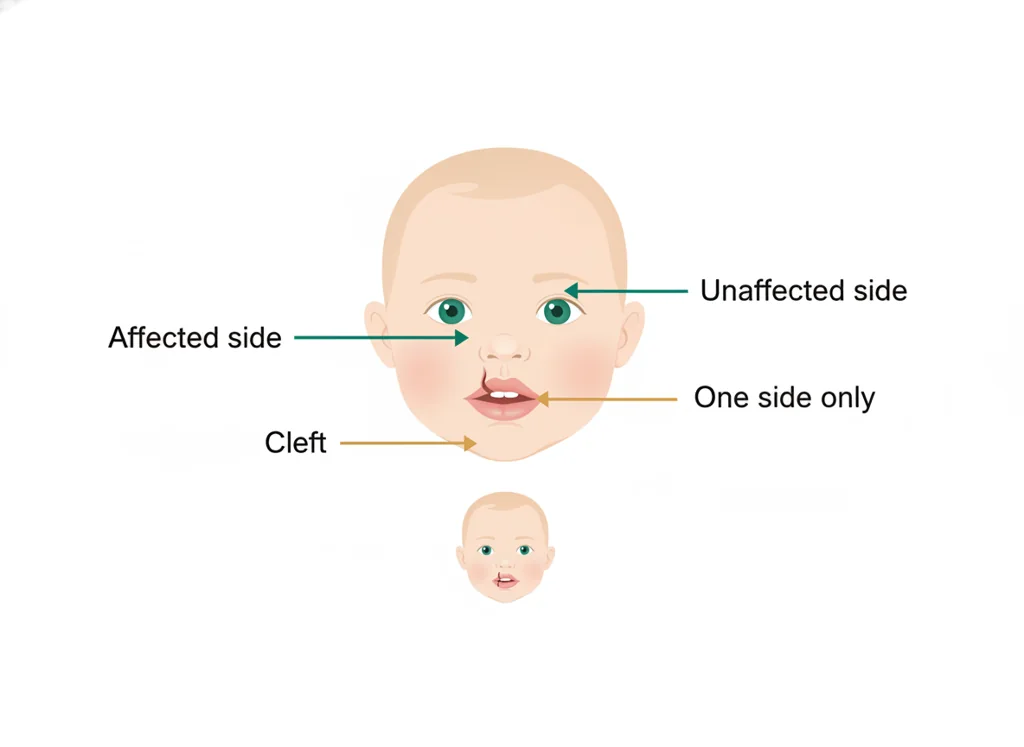
Affecting only one side of the body or face, as opposed to both sides.
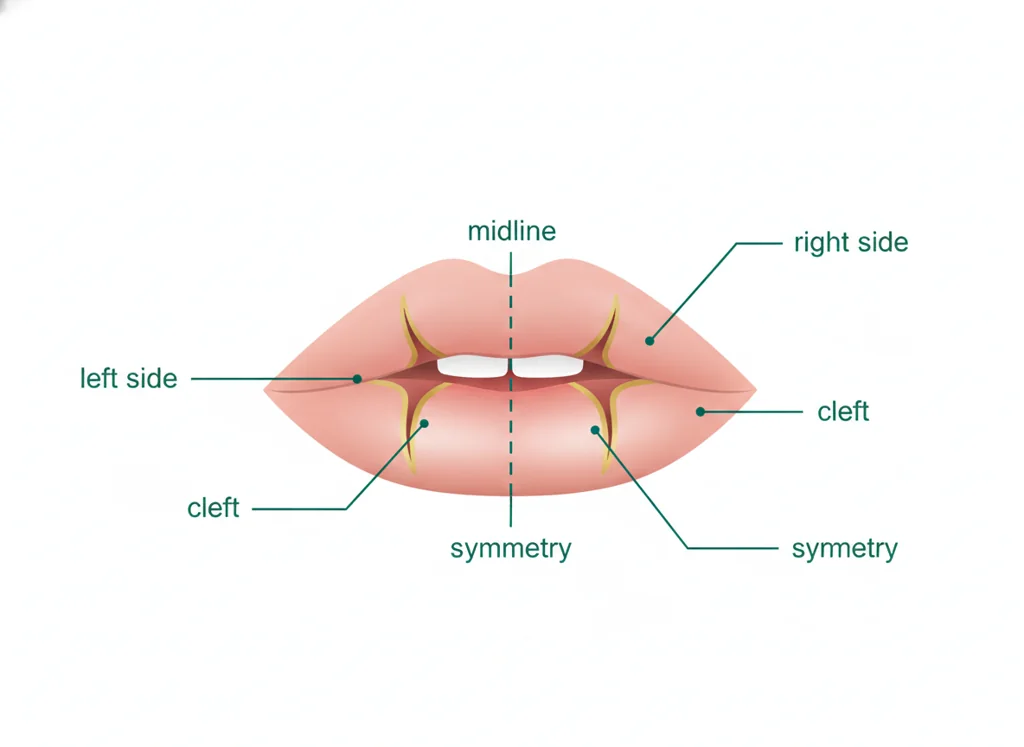
Affecting both the left and right sides of the body, such as a cleft that appears on both sides of the lip.
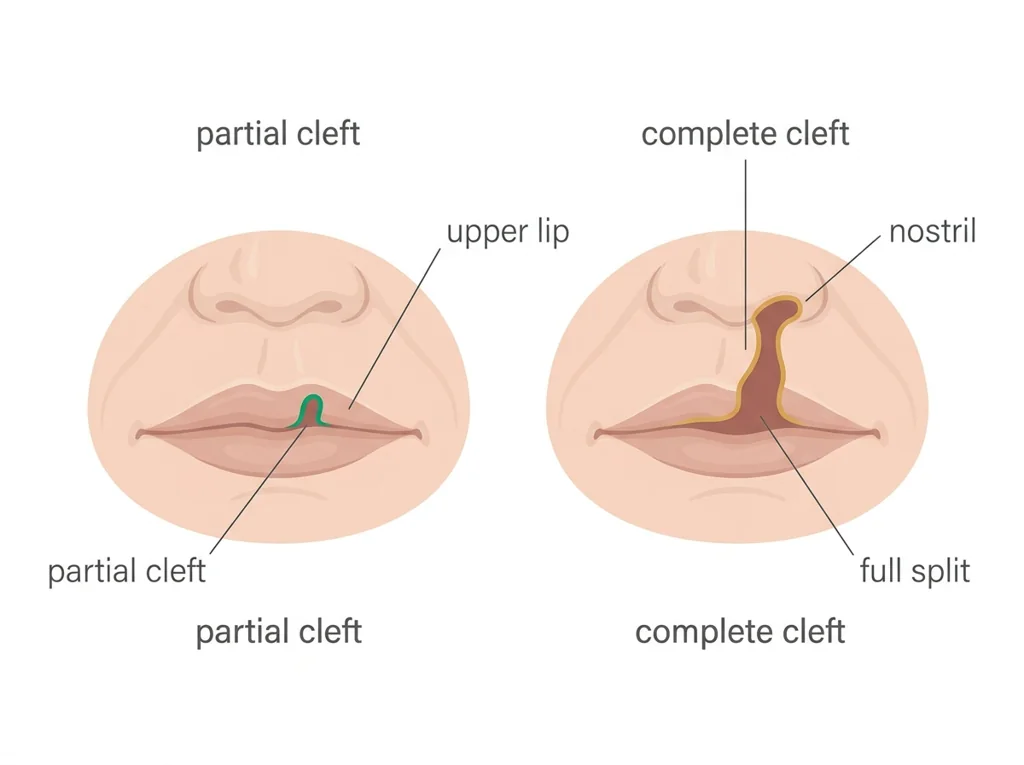
Describing a cleft that extends through the entire structure, such as a lip cleft reaching all the way up into the nostril.
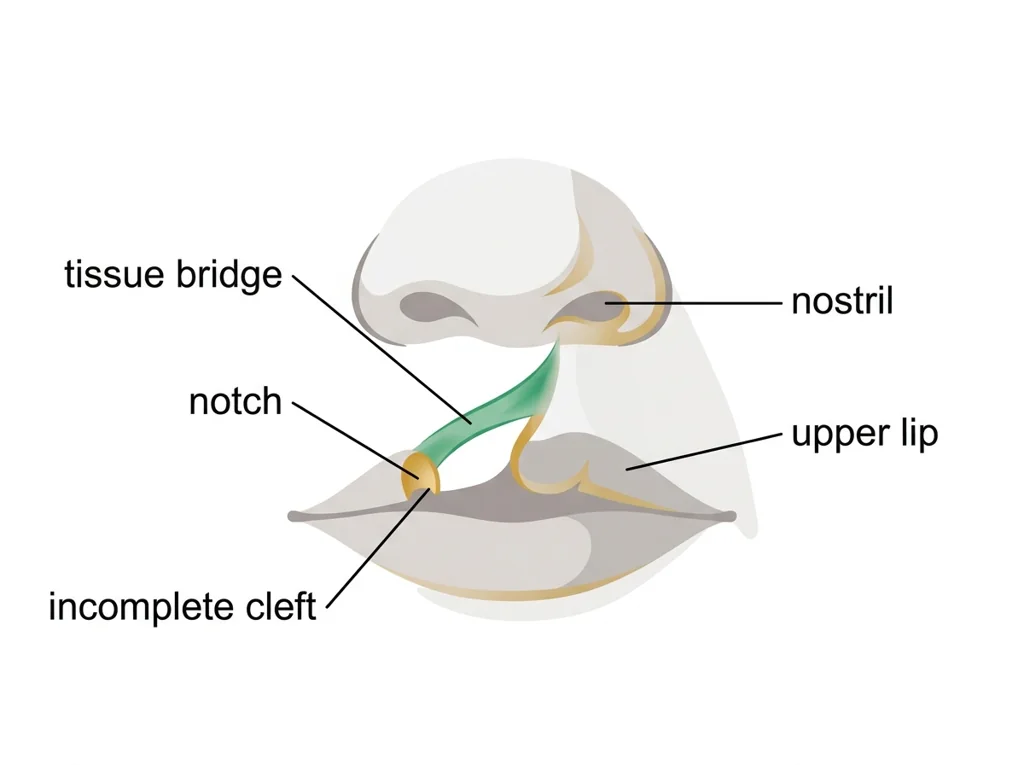
Describing a cleft that does not extend through the full structure, so a bridge of tissue still connects the two sides.
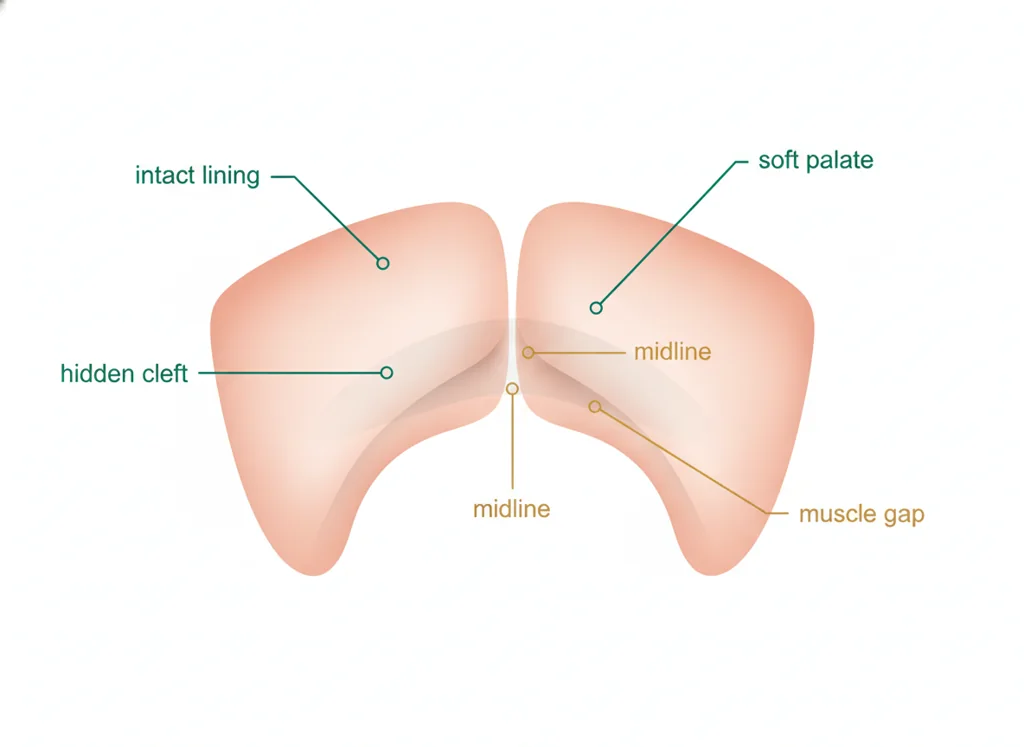
A hidden cleft where the palate muscles fail to join in the midline even though the overlying lining looks intact.
Research citation trail (advanced)
You do not need these papers or database records to finish the lesson. They document where the plain-language explainer's claims come from and are intended for teachers or advanced readers.
- American Cleft Palate Craniofacial Association. 2024 Parameters of Care.
- Vyas T, et al. 2020. Cleft of lip and palate: A review. J Family Med Prim Care. [PMID:32984097]
- Dixon MJ, et al. 2011. Cleft lip and palate: genetic and environmental influences. Nat Rev Genet. [PMID:21331089]
- Dean KM, Leeper LK. 2020. Management of submucous cleft palate. Curr Opin Otolaryngol Head Neck Surg. [PMID:33105231]