
Day One: Recognizing and Communicating a Cleft at Birth
This reading contains every idea and every piece of evidence needed for today's decision. The research links at the end are optional.
Why this matters
The first conversation can shape how a family understands the condition and trusts the care team.
The question you are trying to answer
What does the inspector check in more than one way?
Begin with the idea you already earned
Start with what you can observe before you explain why it happened.
Study the analogy before the biology
- What does the inspector check in more than one way?
- What does the inspector record even when nothing is wrong?
- Which observations would be facts, and which would be guesses?
Turn the analogy into three rules
Limit: A newborn exam is not a house inspection. The analogy only models careful observation and documentation.
Map those rules onto the biology
A cleft is a gap that is present at birth because parts of the face did not fully join during development.
The exam includes looking at the lip and palate and gently feeling the roof of the mouth. Some palate gaps are easier to feel than to see.
The clinician records what is present, what is absent, and what the family was told. Cause comes later, after more evidence.
Read Mateo's labeled case evidence
The upper lip has a visible gap on the left side.
The lip finding is left-sided and unilateral.
The palate gap is seen with a light and confirmed by palpation.
The palate finding is real and should not be missed by inspection alone.
Breathing, tone, heart sounds, eyes, ears, hands, feet, and jaw size are otherwise unremarkable.
The chart must include important normal findings while the team keeps the cause open.
Make the concrete decision
You are the pediatrician in the delivery room.
Mateo is breathing well. His parents ask what you found and what happens next.
- Name the observed cleft, explain that a team and plan are available, and document the complete exam.
- Name a genetic cause before the full examination is finished.
- Use an obsolete label and focus only on appearance.
Which response will you give, and which two evidence IDs make it the safest choice?
Claim ceiling: You may describe the structural finding. You may not claim a genetic cause or final isolated-versus-syndromic classification yet.
Write the 10-year takeaway
Day-one cleft care begins with a complete exam and clear, respectful communication.
- Why are both inspection and palpation needed?
- What can the team say now, and what must remain unknown?
Glossary in plain English
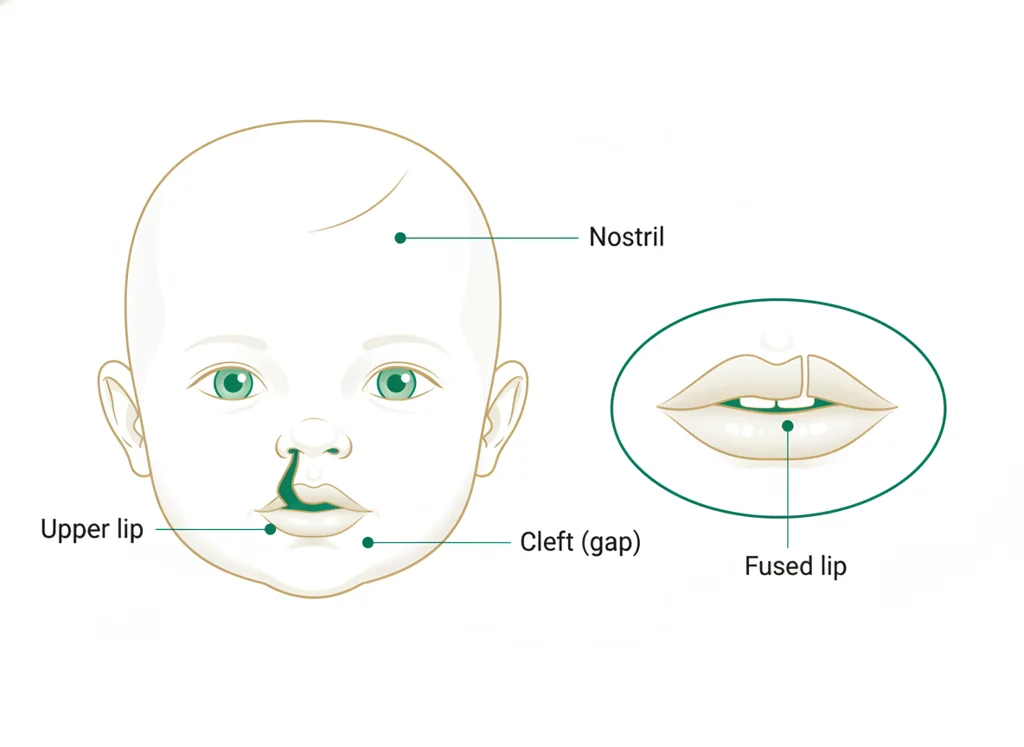
A split or gap left when two parts of the face grow toward each other but do not fully join before birth.
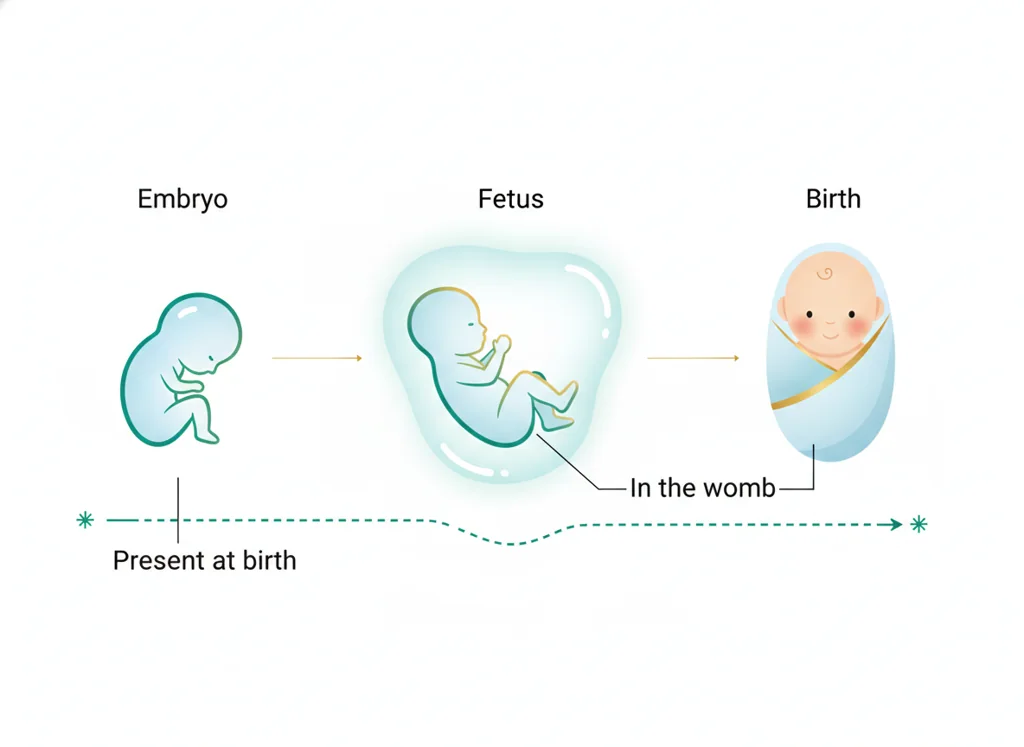
Present at birth, describing a condition that forms during development in the womb rather than appearing later in life.
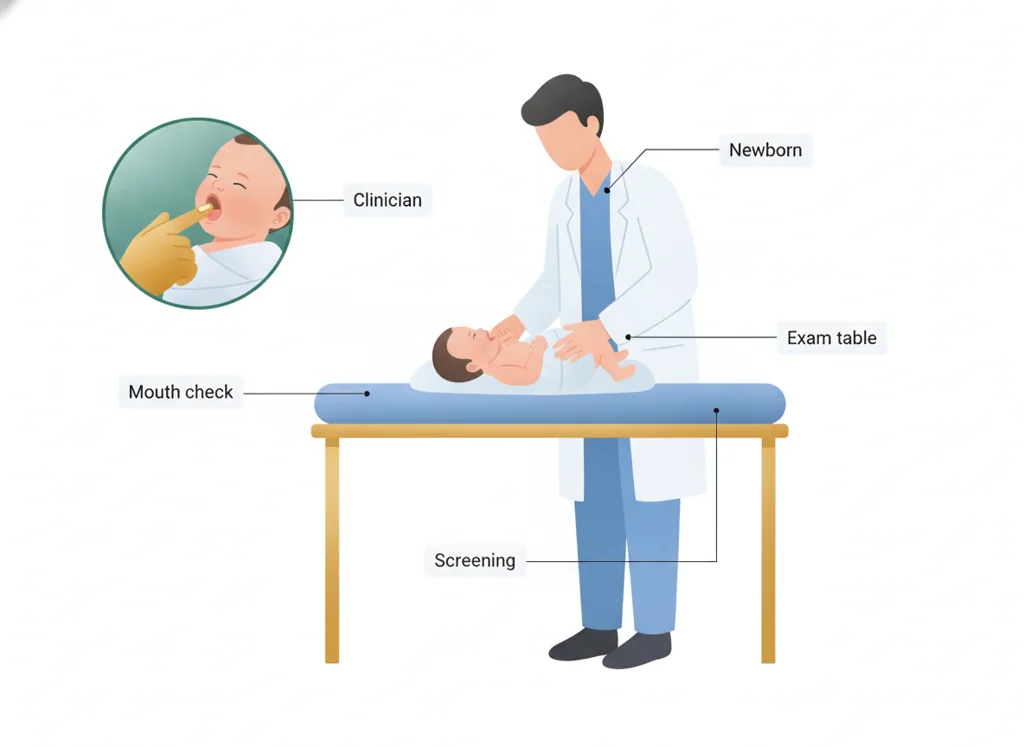
A head-to-toe check a doctor does on a baby soon after birth to spot problems, including looking and feeling inside the mouth for a cleft.
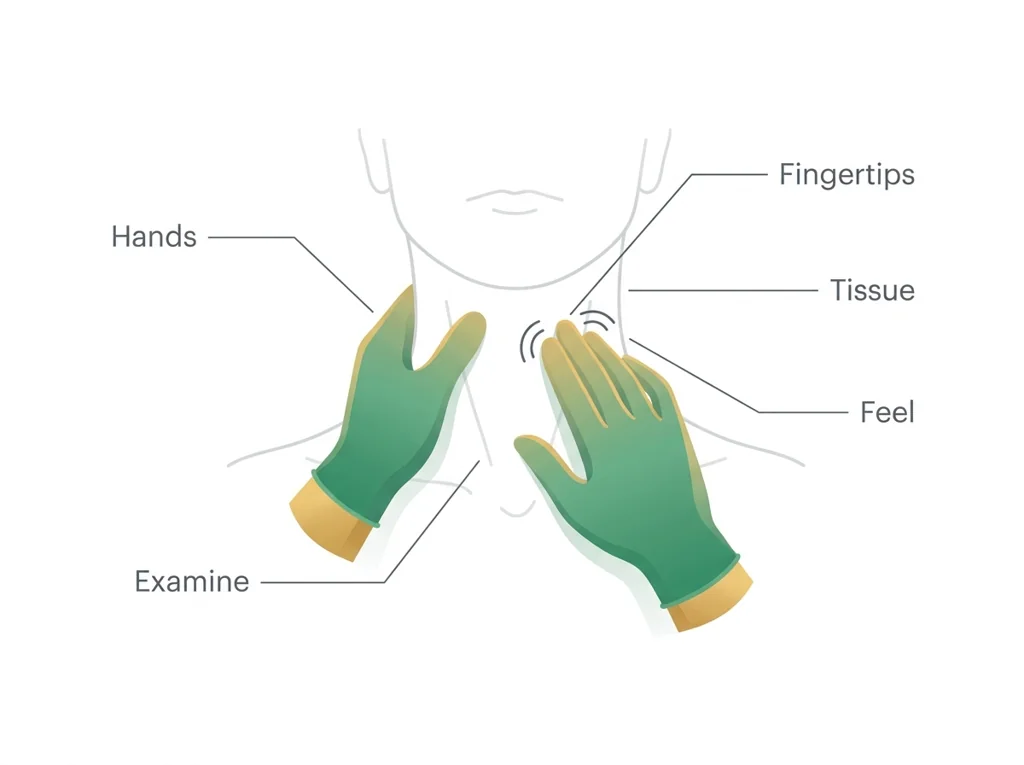
Examining the body by feeling it with the hands to check the size, firmness, or shape of structures under the surface.
A lesson term defined by the surrounding model and case evidence.
Research citation trail (advanced)
You do not need these papers or database records to finish the lesson. They document where the plain-language explainer's claims come from and are intended for teachers or advanced readers.