
Getting Above the Tongue: Palatal Shelf Elevation
This reading contains every idea and every piece of evidence needed for today's decision. The research links at the end are optional.
Why this matters
Development depends on moving structures, not only on making the correct parts.
The question you are trying to answer
What blocks the bridge before the boat clears?
Begin with the idea you already earned
The secondary palate begins as paired shelves whose cell growth must create enough tissue to reach the midline.
Study the analogy before the biology
- What blocks the bridge before the boat clears?
- Which movement changes the bridge from vertical to horizontal?
- Could intact bridge parts still fail to meet?
Turn the analogy into three rules
Limit: Palatal elevation is driven by tissue forces and growth, not hinges.
Map those rules onto the biology
At first, palatal shelves point downward beside the tongue. They must change to a horizontal position above it.
Jaw growth and tongue descent help create room. The shelves also generate forces within their own tissue.
If the tongue remains high because the jaw is very small, the shelves may be blocked even though they formed.
Read Mateo's labeled case evidence
Palatal shelves first grow vertically beside the tongue.
Their early position is not the final roof position.
The shelves elevate to a horizontal position above the tongue.
Movement is required before midline contact.
A small jaw can keep the tongue high and mechanically block elevation.
Geometry can cause cleft palate even when shelves exist.
Make the concrete decision
You are reviewing two fetal MRI teaching diagrams.
Diagram A shows shelves present but vertical beside a high tongue. Diagram B shows shelves horizontal above the tongue.
- Identify elevation failure in A and completed elevation in B.
- Call both diagrams identical because shelves are present.
- Diagnose a named syndrome from shelf position alone.
Choose the comparison and cite the evidence that separates presence from position.
Claim ceiling: You may identify a mechanical elevation problem. You may not assign a syndrome without the full clinical pattern.
Write the 10-year takeaway
Palatal shelves must rapidly elevate above the tongue, and jaw-tongue geometry can block that movement.
- What changes between the vertical and horizontal shelf stages?
- How can jaw size affect the palate without removing shelf tissue?
Glossary in plain English
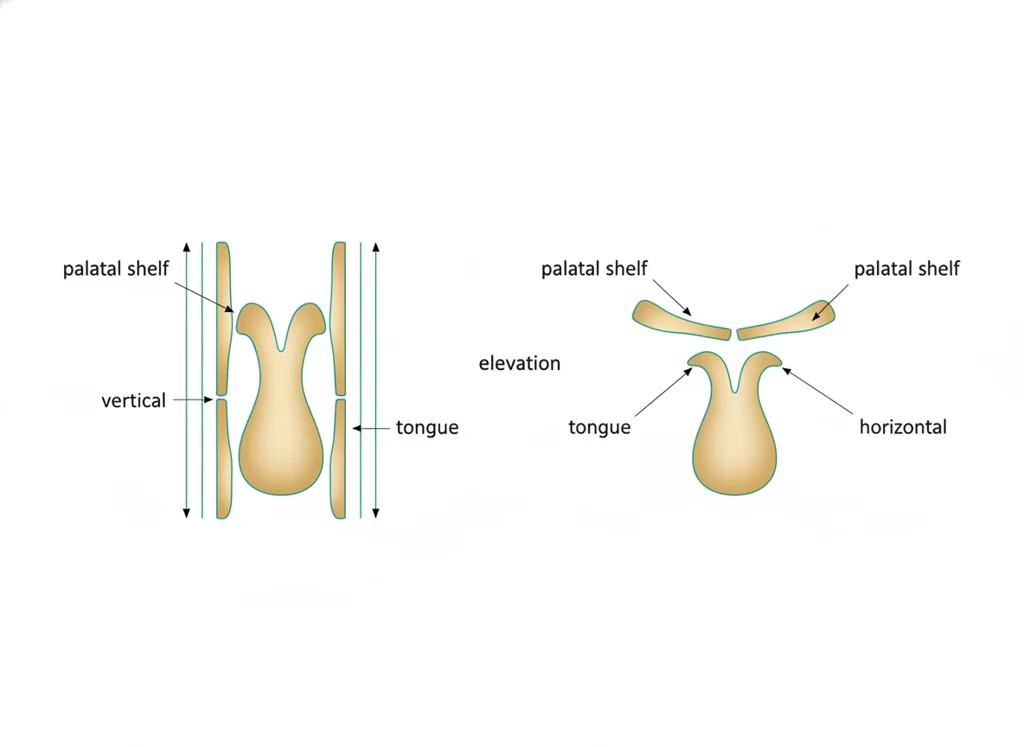
The developmental step where the palatal shelves lift from a downward position up to horizontal so they can meet above the tongue.
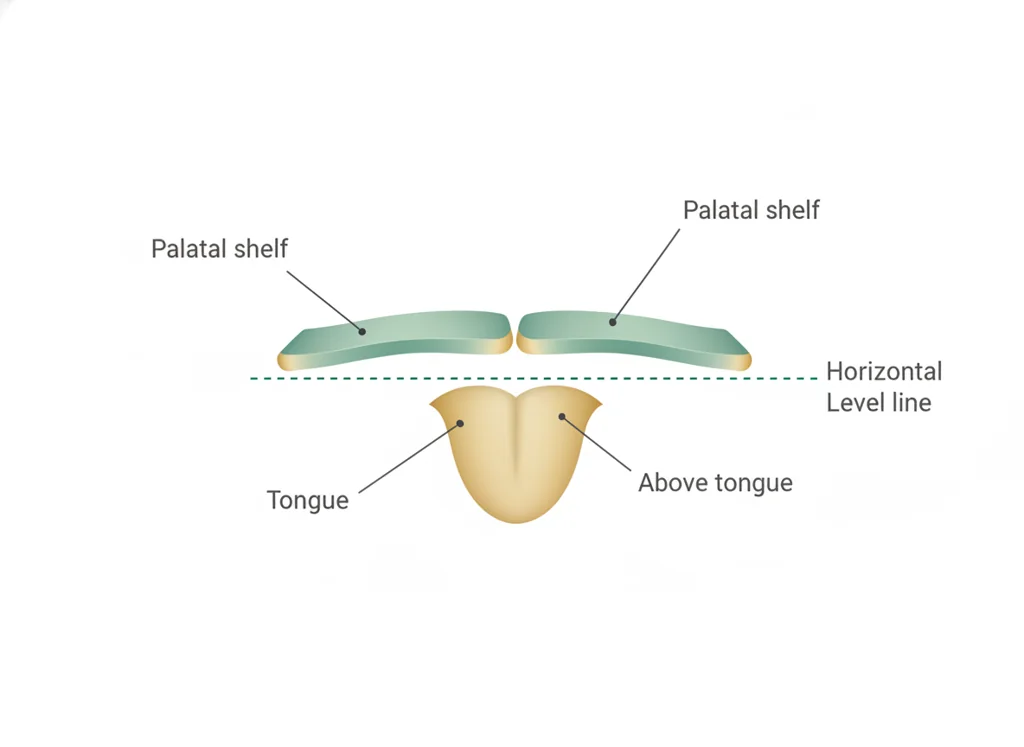
Lying flat and level, side to side; the palatal shelves must swing into a horizontal position above the tongue before they can fuse.
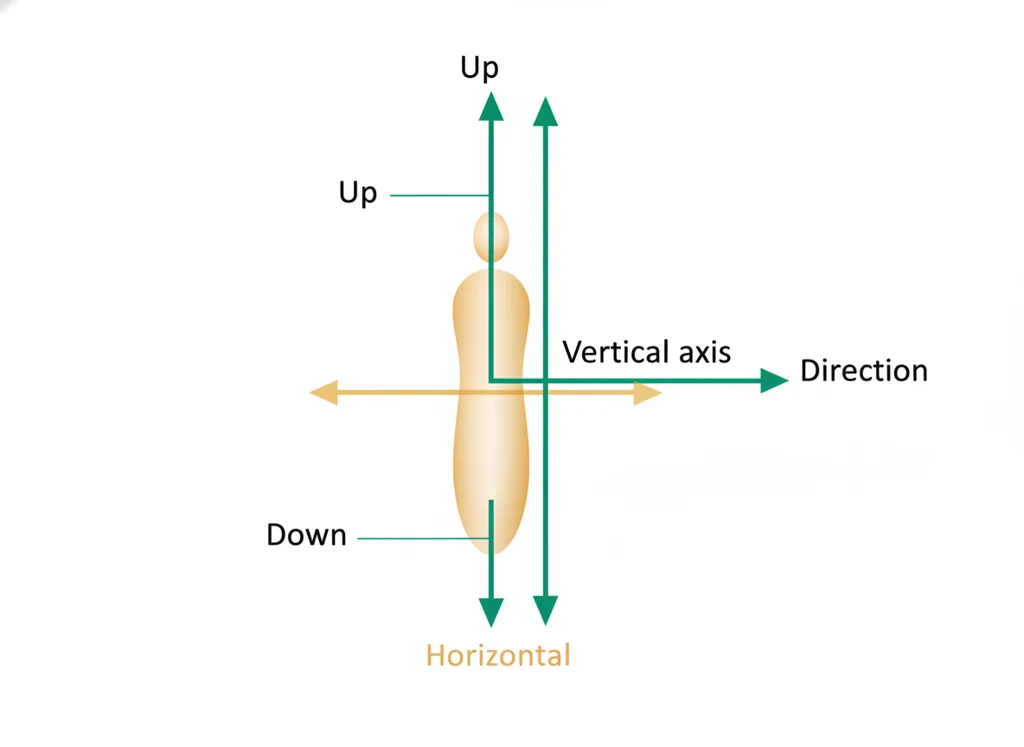
Running up and down, along the head-to-foot direction, as opposed to side to side or front to back.
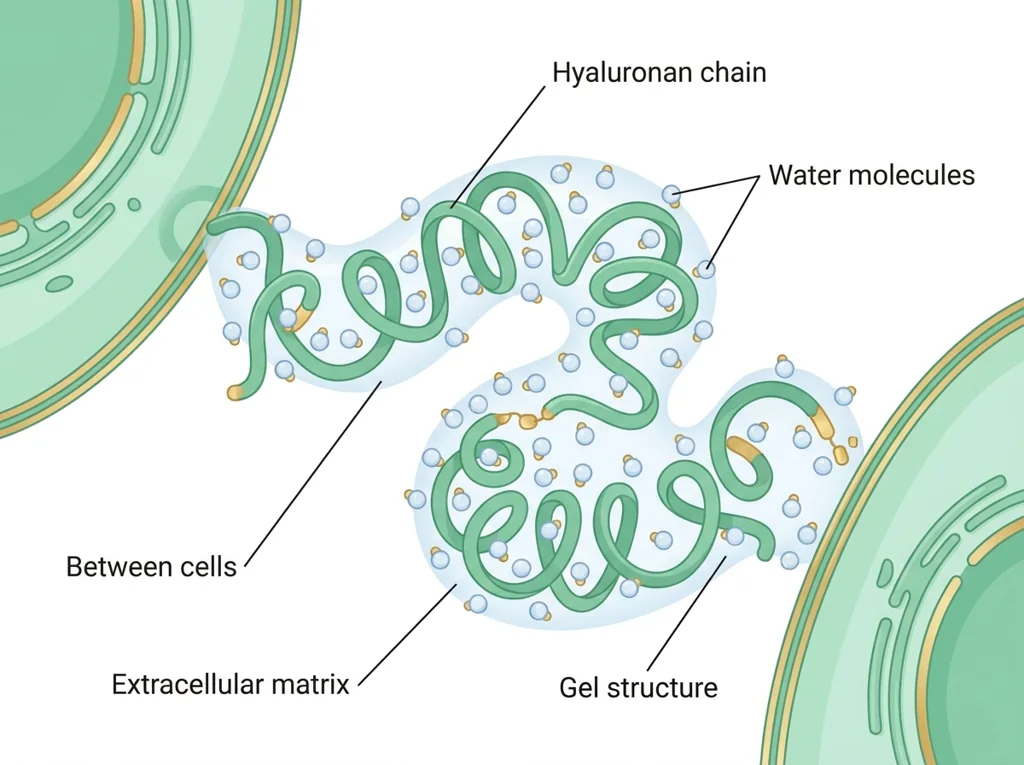
A large sugar molecule of the extracellular matrix that holds water and gives tissues like the developing palate their springy, hydrated structure.
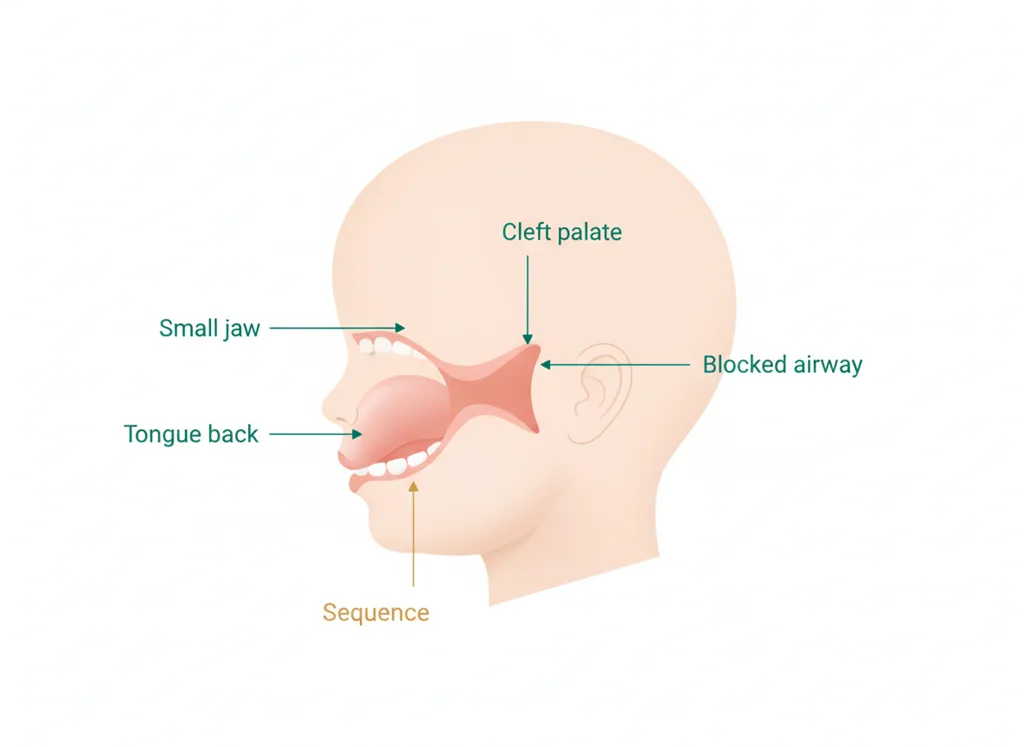
A chain of features starting with a small lower jaw, which pushes the tongue back and blocks the airway and often comes with a cleft palate.
Research citation trail (advanced)
You do not need these papers or database records to finish the lesson. They document where the plain-language explainer's claims come from and are intended for teachers or advanced readers.