
How the Palate Begins: Secondary Palatal Shelf Outgrowth
This reading contains every idea and every piece of evidence needed for today's decision. The research links at the end are optional.
Why this matters
A shelf cannot fuse if it never grows enough tissue to reach its partner.
The question you are trying to answer
What determines whether the platforms can meet?
Begin with the idea you already earned
Upper-lip closure requires growth, contact, and stable fusion at the maxillary-medial nasal boundary.
Study the analogy before the biology
- What determines whether the platforms can meet?
- What would a short platform leave at the center?
- Why must both sides be measured?
Turn the analogy into three rules
Limit: Palatal shelves are living tissues with patterned growth, not mechanical platforms.
Map those rules onto the biology
The secondary palate starts as two shelves growing inward from the maxillary regions.
Cells in the shelf mesenchyme divide and add tissue. Too little growth can leave the shelves short.
Mouse rescue experiments can test a mechanism. They do not by themselves prove that the same intervention is safe or effective in humans.
Read Mateo's labeled case evidence
Secondary palatal shelves grow from the inner sides of the maxillary regions.
The palate begins as paired outgrowths.
Reduced mesenchymal proliferation can leave shelves too small to meet.
Cell number and shelf size are connected.
Directed Bmp4 expression rescued palatal growth and fusion in an Msx1-deficient mouse model.
The experiment supports a growth mechanism in that model.
Make the concrete decision
You are choosing the readout for a palatal-growth experiment.
Control and mutant embryos are collected before shelf elevation. You can measure only one primary outcome.
- Measure shelf size and mesenchymal proliferation on both sides.
- Measure newborn speech before fusion occurs.
- Claim human prevention from the mouse embryos.
Choose the primary outcome and cite the evidence linking cell growth to shelf size.
Claim ceiling: You may test a growth mechanism in the model. You may not claim a proven human treatment.
Write the 10-year takeaway
The secondary palate begins as paired shelves whose cell growth must create enough tissue to reach the midline.
- How can lower proliferation change shelf contact?
- What does the Bmp4 rescue support, and what does it not prove?
Glossary in plain English
A lesson term defined by the surrounding model and case evidence.
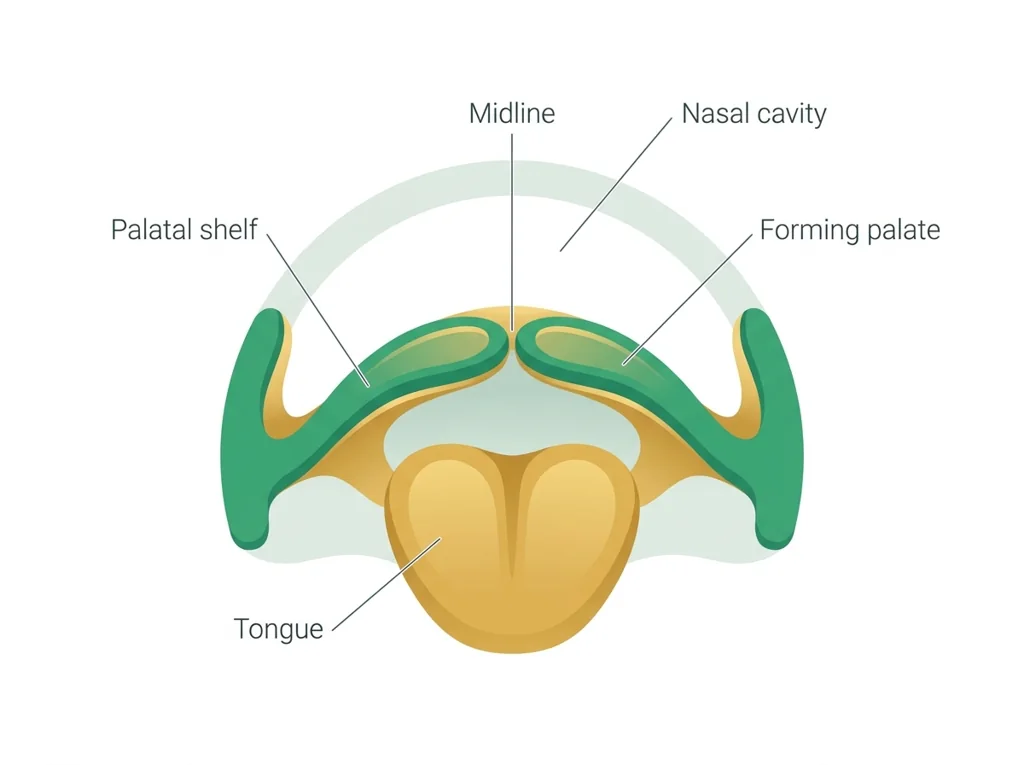
One of two tissue ledges in the embryo that swing up from beside the tongue to horizontal and meet at the midline to form the roof of the mouth.
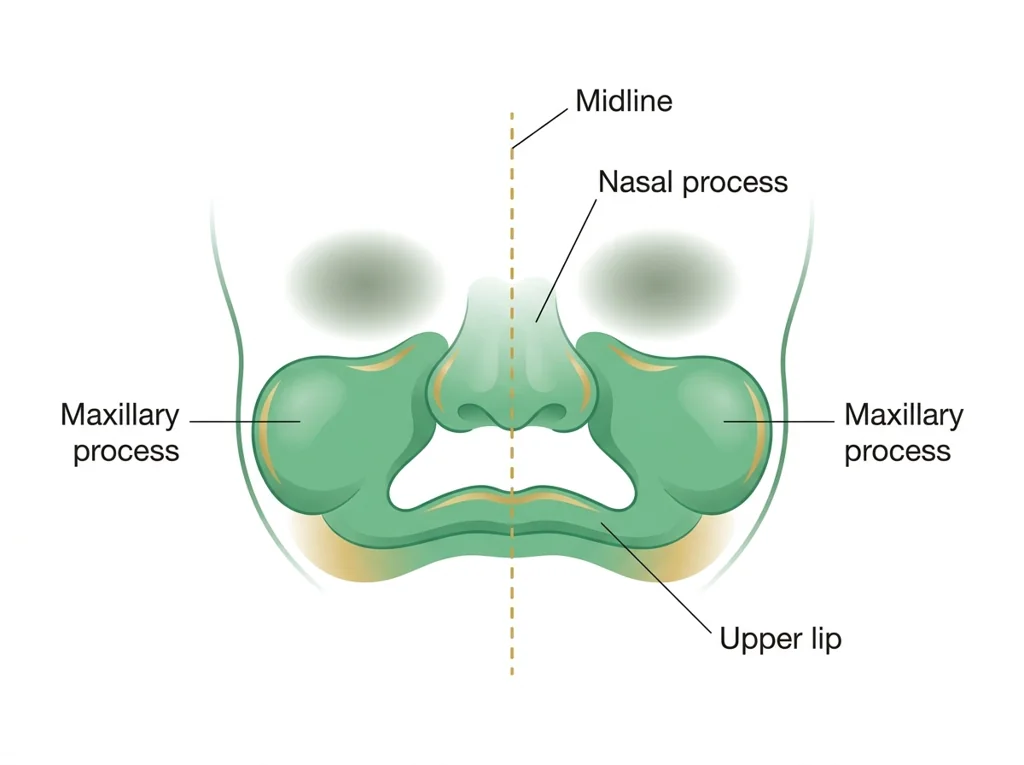
A paired bulge of embryo tissue that grows toward the midline to form the upper jaw, cheeks, and sides of the upper lip.
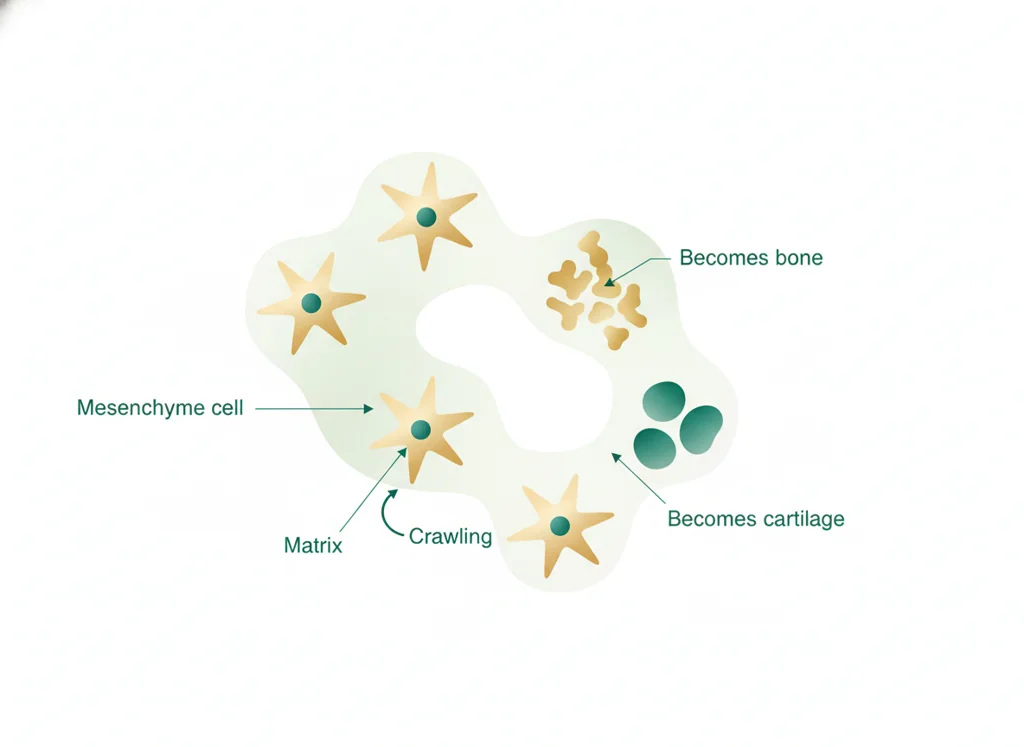
Loose, unsettled cells in a watery matrix that can crawl and later become bone, cartilage, or connective tissue.
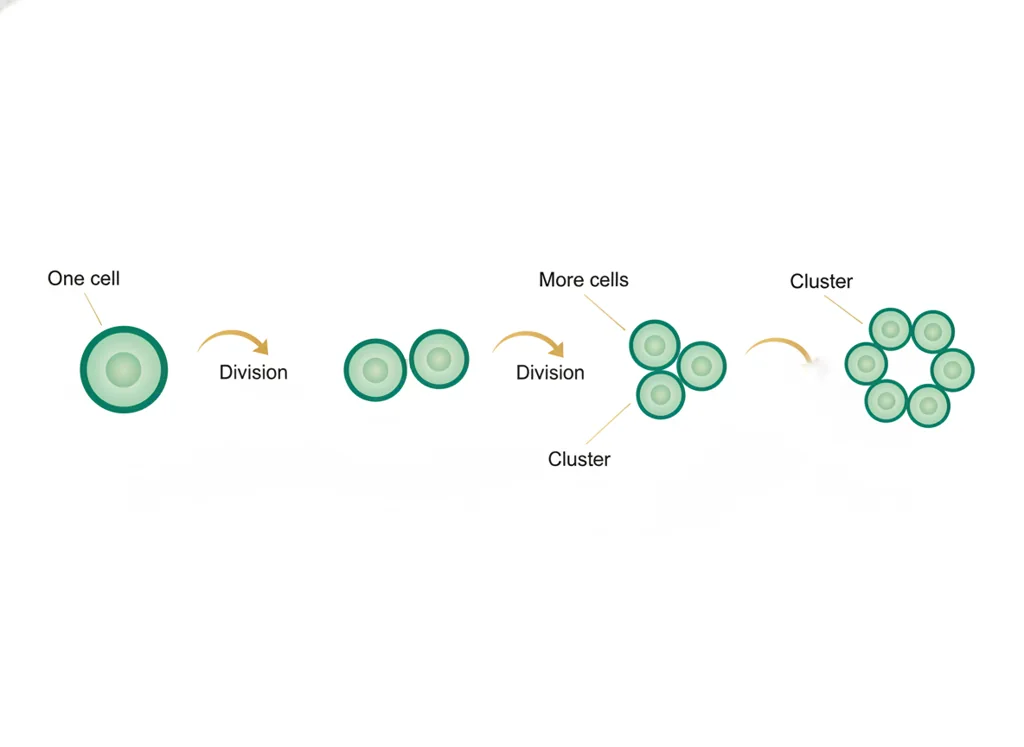
The rapid increase in cell number as cells repeatedly grow and divide, building or repairing tissue.
Research citation trail (advanced)
You do not need these papers or database records to finish the lesson. They document where the plain-language explainer's claims come from and are intended for teachers or advanced readers.
- Lan & Jiang 2015, Cellular and Molecular Mechanisms of Palatogenesis (Curr Top Dev Biol)
- Bush & Jiang 2011, Palatogenesis: morphogenetic and molecular mechanisms of secondary palate development (Development)
- Zhang et al. 2002, Rescue of cleft palate in Msx1-deficient mice by transgenic Bmp4 (Development)