
Where Do the Cells That Build the Face Come From?
This reading contains every idea and every piece of evidence needed for today's decision. The research links at the end are optional.
Why this matters
Cell origin and cell fate are different questions, and development connects them over time.
The question you are trying to answer
What do the travelers share before they choose a workshop?
Begin with the idea you already earned
The face forms when named tissue prominences grow into position and join specific neighbors.
Study the analogy before the biology
- What do the travelers share before they choose a workshop?
- What changes when they leave the starting building?
- Why must their options remain open during the journey?
Turn the analogy into three rules
Limit: Cells do not choose careers. The analogy models shared origin and later specialization.
Map those rules onto the biology
Cranial neural crest cells begin near the neural folds. They are not mature bone or cartilage cells at that stage.
Before moving, they change from a tightly attached epithelial state to a more mobile mesenchymal state. This is called EMT.
After migration, local signals help their descendants become specialized craniofacial tissues.
Read Mateo's labeled case evidence
Cranial neural crest cells arise near the closing neural folds.
They share an early origin before entering the face.
They undergo EMT and delamination before migration.
They must loosen epithelial attachments and become mobile.
Their descendants form much craniofacial bone, cartilage, and connective tissue.
Their early state supports several later fates.
Make the concrete decision
You are explaining lineage tracing to a new lab intern.
The intern claims every facial bone cell began as a mature bone cell at the neural fold.
- Correct the claim: mobile multipotent neural crest cells specialize later.
- Agree that mature bone cells migrate from the neural fold.
- Claim all facial tissues come from one mature cell type.
Choose the correction and cite evidence for both mobility and later specialization.
Claim ceiling: You may describe lineage potential. You may not claim that every craniofacial tissue comes only from neural crest.
Write the 10-year takeaway
Cranial neural crest cells leave the neural folds as flexible builders that can become several craniofacial tissues.
- What changes during EMT?
- Why is multipotent more accurate than mature bone cell for an early neural crest cell?
Glossary in plain English
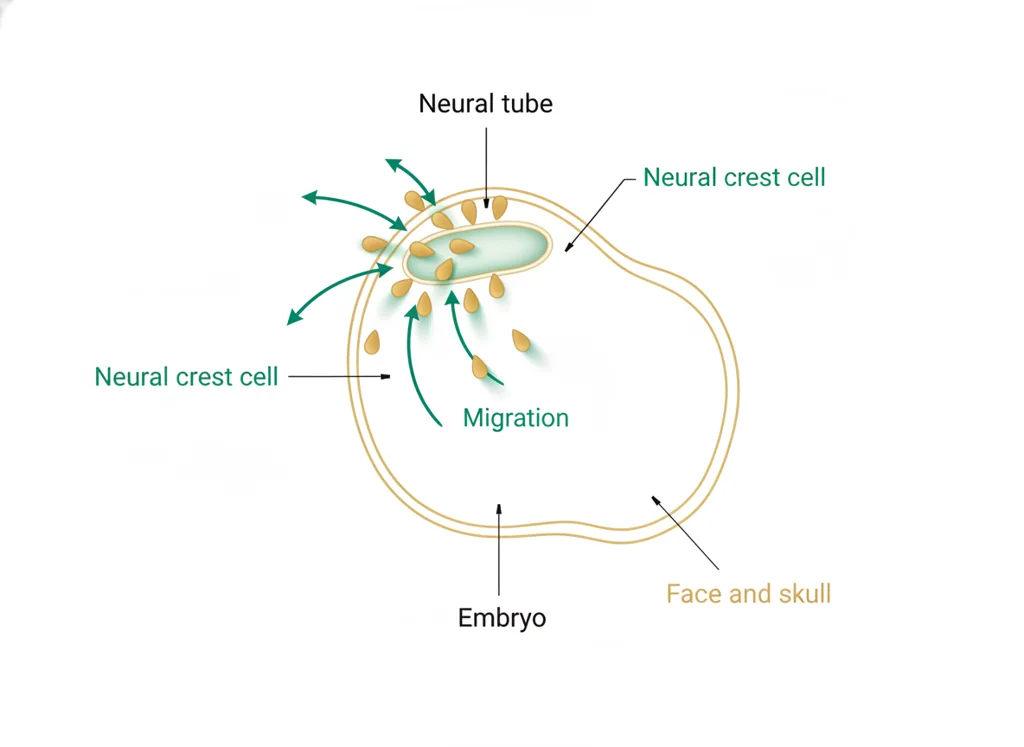
A migrating embryonic cell type that leaves the forming spinal cord and builds much of the face, skull, and many other tissues.
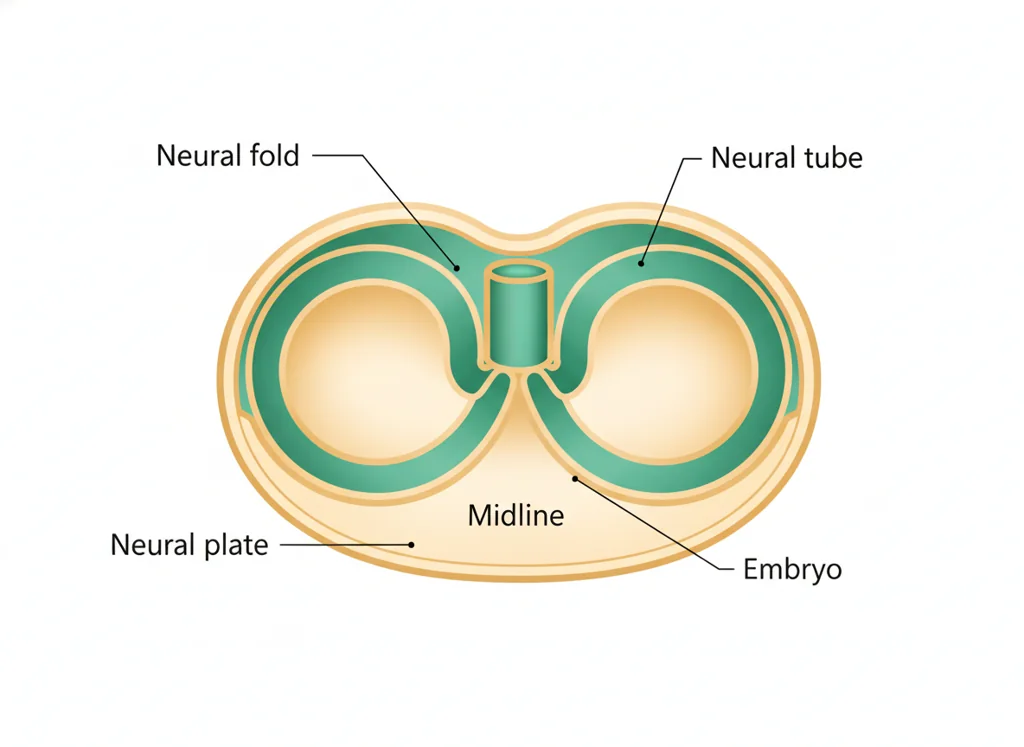
The two raised ridges of the early embryo that rise up and fuse along the midline to form the neural tube, source of the brain and spinal cord.
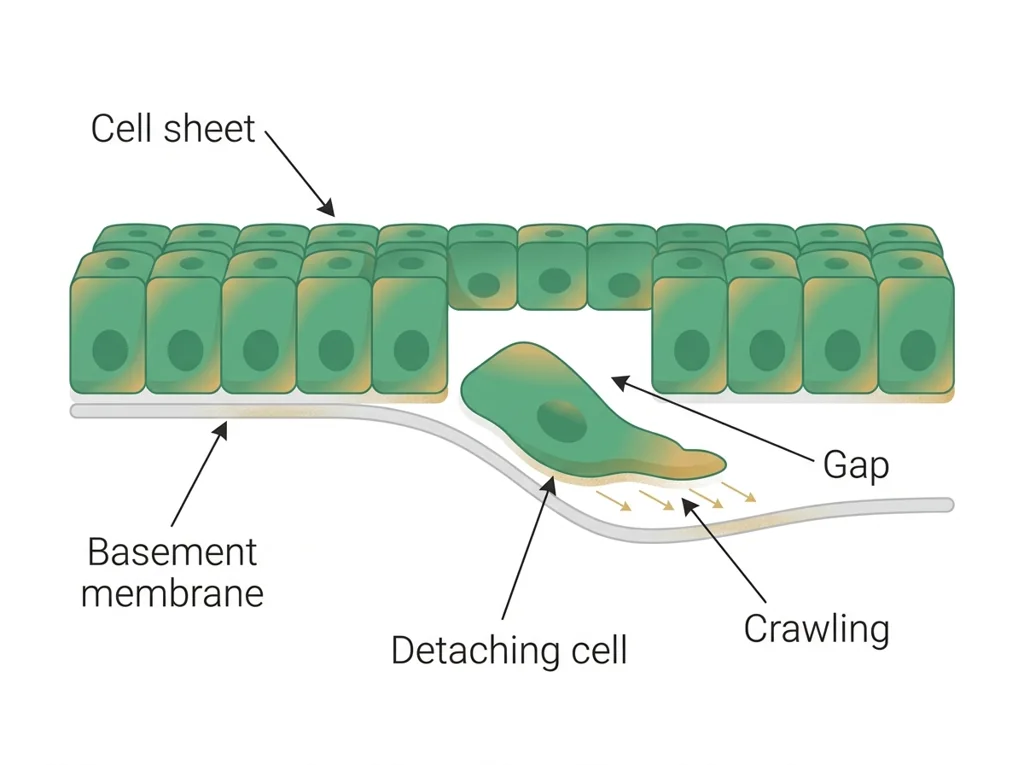
When a cell loosens from a sheet of connected cells and leaves to crawl on its own.
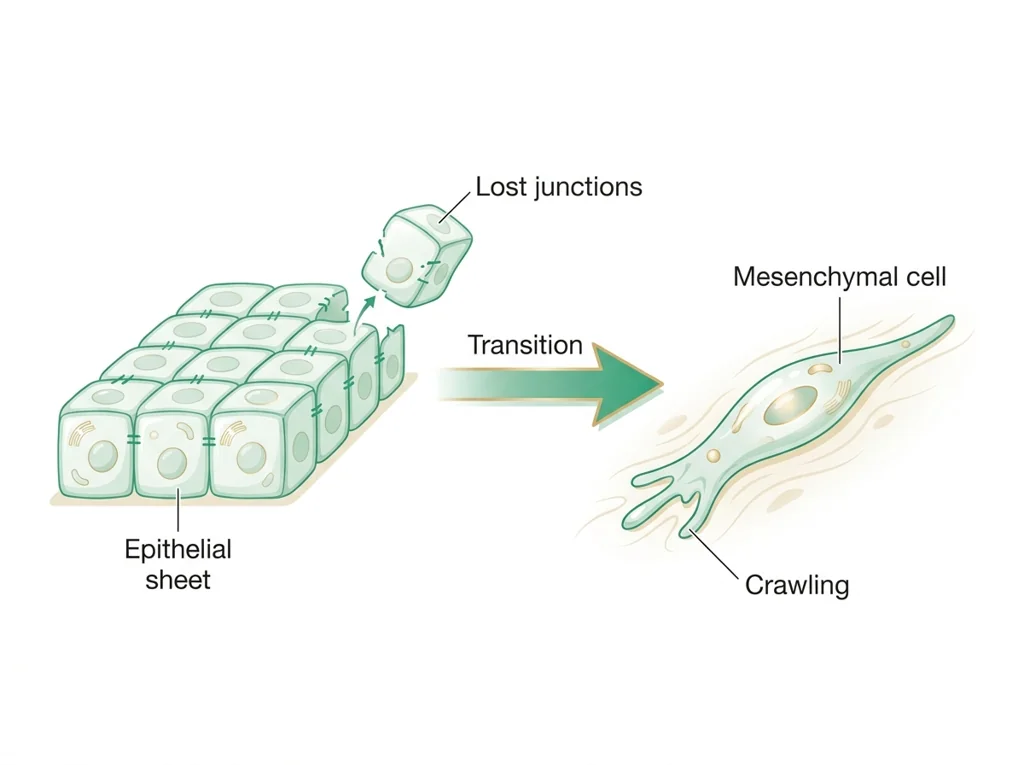
A change where a settled, sheet-bound epithelial cell loosens its bonds and becomes a mobile, crawling mesenchymal cell.
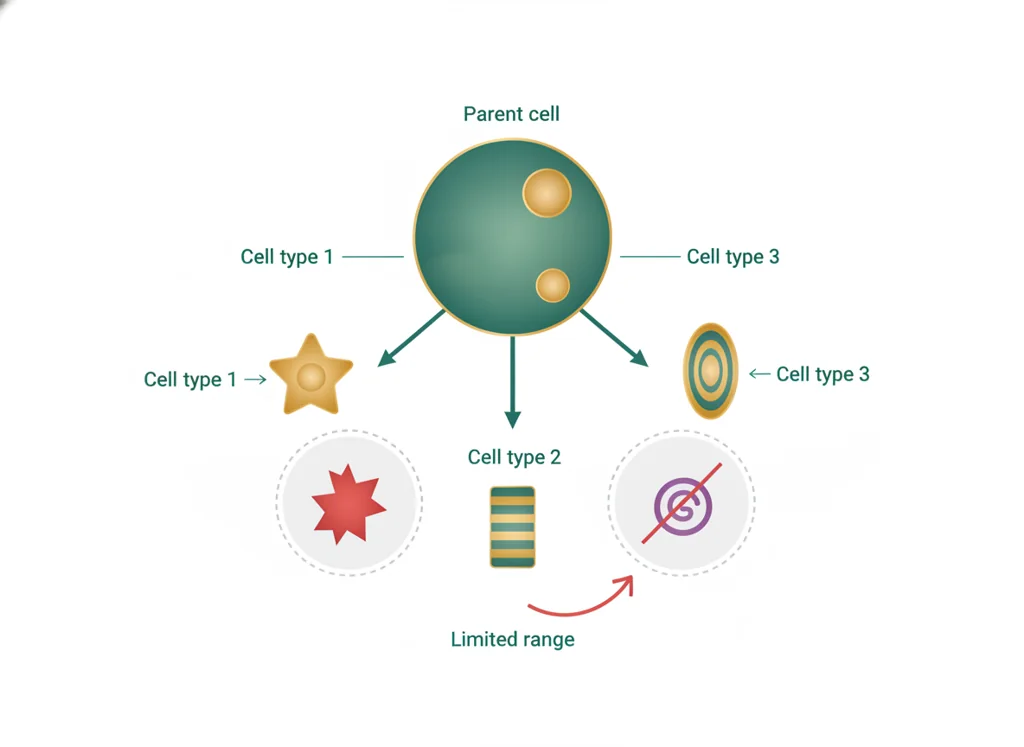
Able to become several different cell types, but not every type in the body.
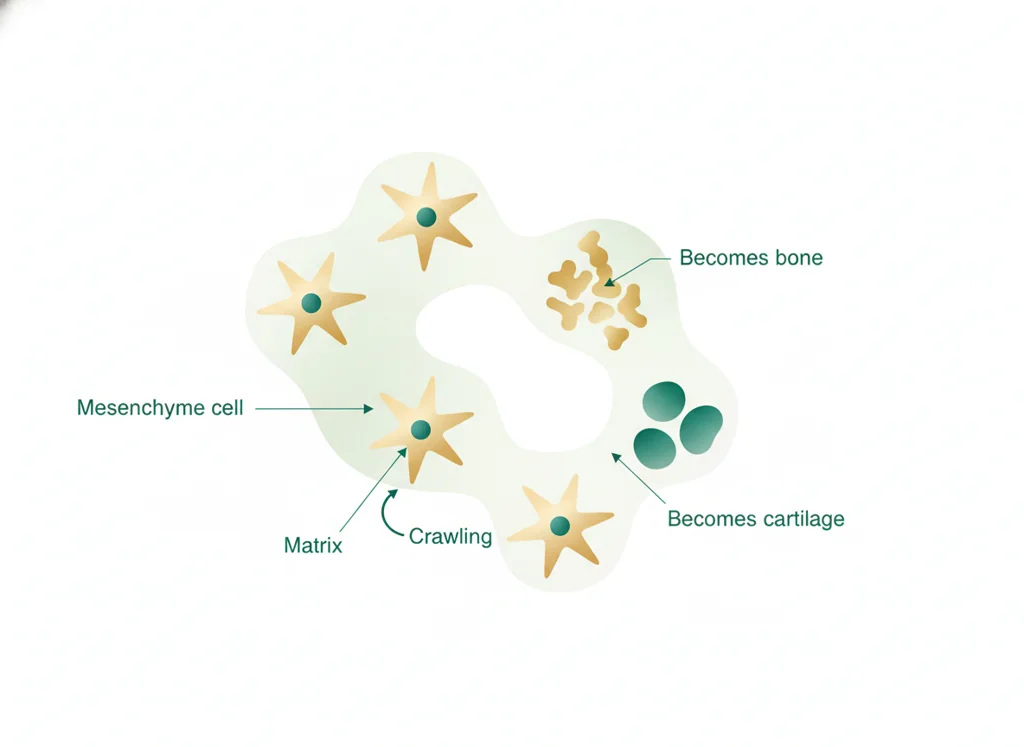
Loose, unsettled cells in a watery matrix that can crawl and later become bone, cartilage, or connective tissue.
Research citation trail (advanced)
You do not need these papers or database records to finish the lesson. They document where the plain-language explainer's claims come from and are intended for teachers or advanced readers.
- Lan & Jiang 2015, Cellular and Molecular Mechanisms of Palatogenesis (Curr Top Dev Biol)
- Mishina & Snider 2014, Neural crest cell signaling pathways critical to cranial bone development (Exp Cell Res)
- Liao et al. 2022, Gene regulatory network from cranial neural crest cells to osteoblast differentiation (Cell Mol Life Sci)