
Mapping the Failure, Which Step Breaks for a Cleft Lip Versus a Cleft Palate
This reading contains every idea and every piece of evidence needed for today's decision. The research links at the end are optional.
Why this matters
About 1 in 700 babies is born with a cleft, and one visible opening can begin through more than one failed step.
The question you are trying to answer
Why can the same kind of opening come from several different failed steps?
Begin with the idea you already earned
IRF6-dependent periderm acts as a temporary non-stick surface that prevents the wrong oral tissues from adhering.
Study the analogy before the biology
- Which station is the first place unfinished work appears?
- Can several failures stop the line at the same station?
- What extra evidence is needed to identify the cause?
Turn the analogy into three rules
Limit: Development is a branching network, not a single conveyor belt.
Map those rules onto the biology
A phenotype is an observable outcome. Researchers can use it to reason backward toward a failed developmental step.
Cleft lip most directly points to an upper-lip boundary. Cleft palate has several possible checkpoints because shelves must grow, move, adhere, and remove a seam.
The pattern narrows the investigation but usually does not name one gene or exposure.
Read Mateo's labeled case evidence
Cleft lip points to an early upper-lip growth and fusion boundary.
The phenotype localizes an early facial checkpoint.
Cleft palate can result from failed shelf growth, elevation, adhesion, or seam removal.
Several mechanisms share the palate endpoint.
Mateo has both cleft lip and palate.
His pattern spans connected but distinguishable developmental events.
Make the concrete decision
You are triaging three cases for a developmental review board.
Case A has cleft lip only. Case B has cleft palate only. Mateo has both.
- Assign each pattern to the narrowest supported checkpoint list.
- Assign one gene to each pattern from anatomy alone.
- Treat all three patterns as the same developmental event.
Choose the triage method and explain why the palate list remains broader.
Claim ceiling: You may narrow checkpoints from anatomy. You may not assign one unique molecular cause from phenotype alone.
Write the 10-year takeaway
A cleft pattern narrows the failed developmental checkpoint, but it rarely identifies one unique cause.
- Why does cleft palate have several possible checkpoints?
- What can phenotype support more strongly than it supports a specific gene?
Glossary in plain English
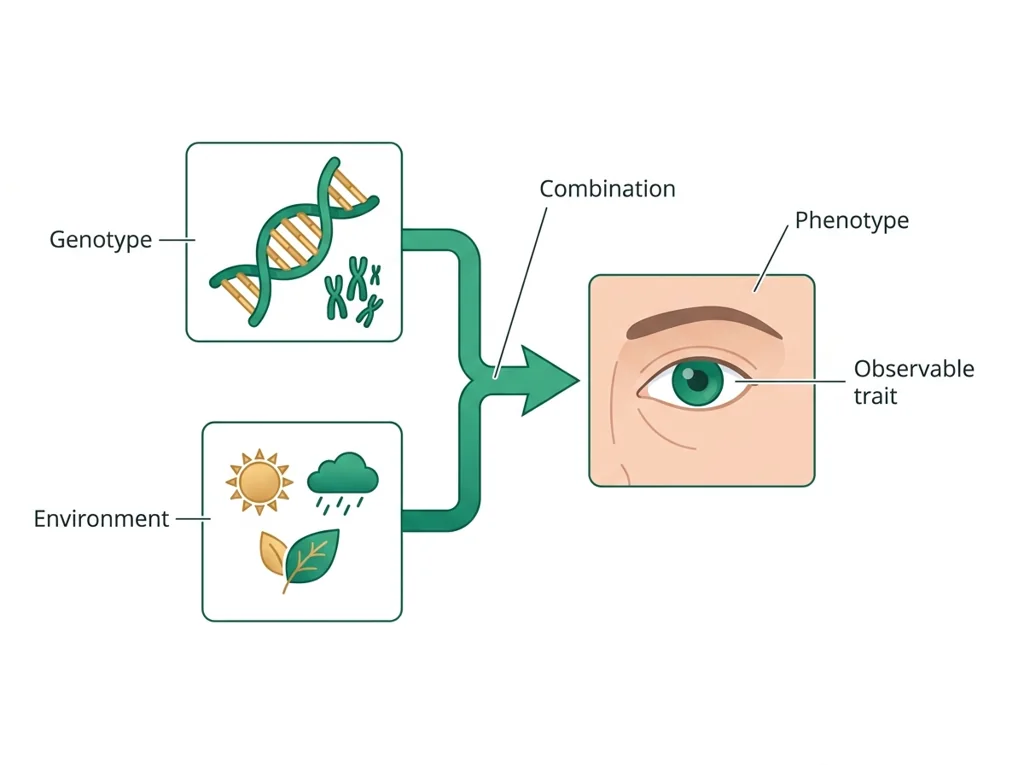
The observable traits of an organism, such as appearance or function, that result from its genotype combined with environmental influences.
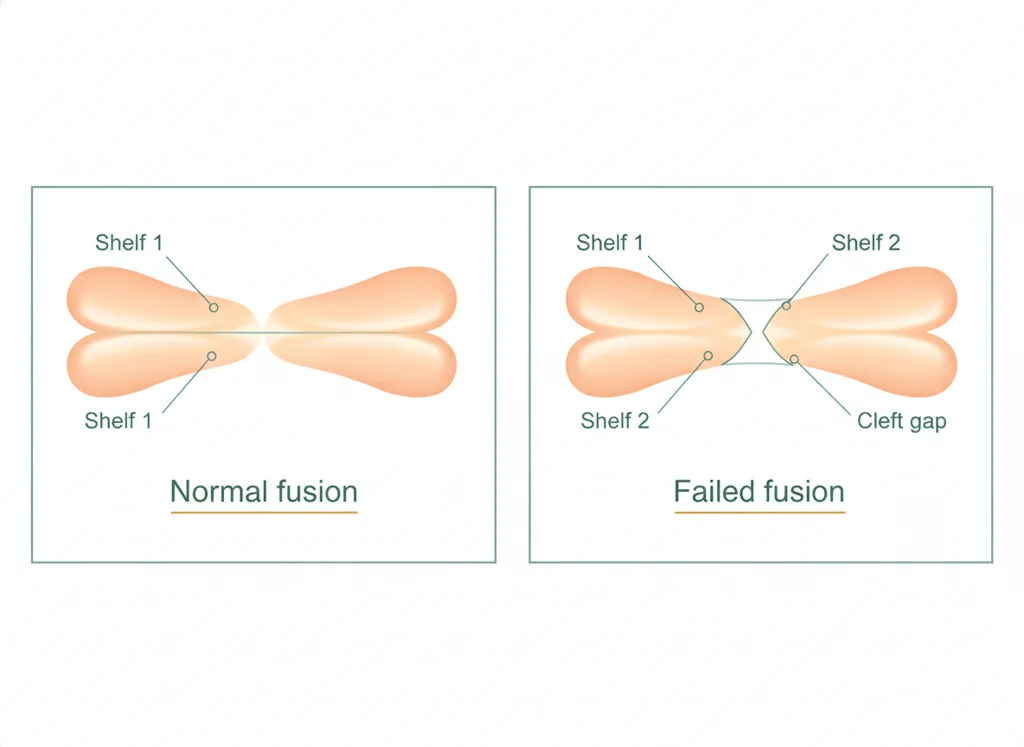
When tissue layers that should join during development do not merge, leaving a gap such as a cleft lip or palate.
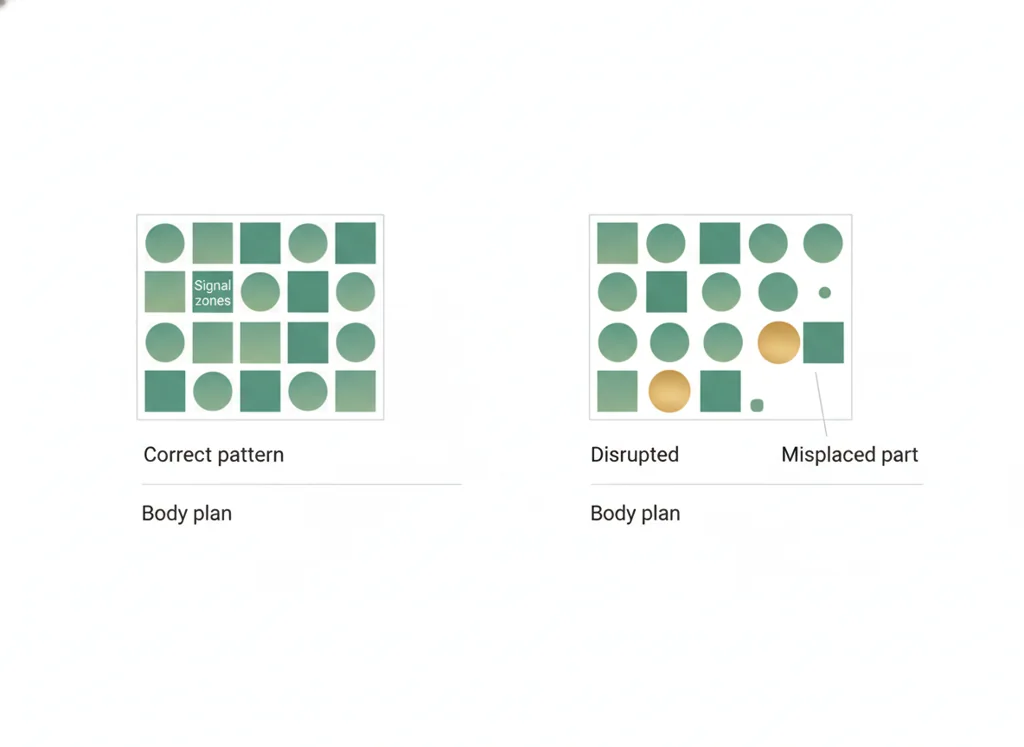
A mistake in the body plan set early in development, where signals place or shape parts wrongly so a structure forms in the wrong arrangement.
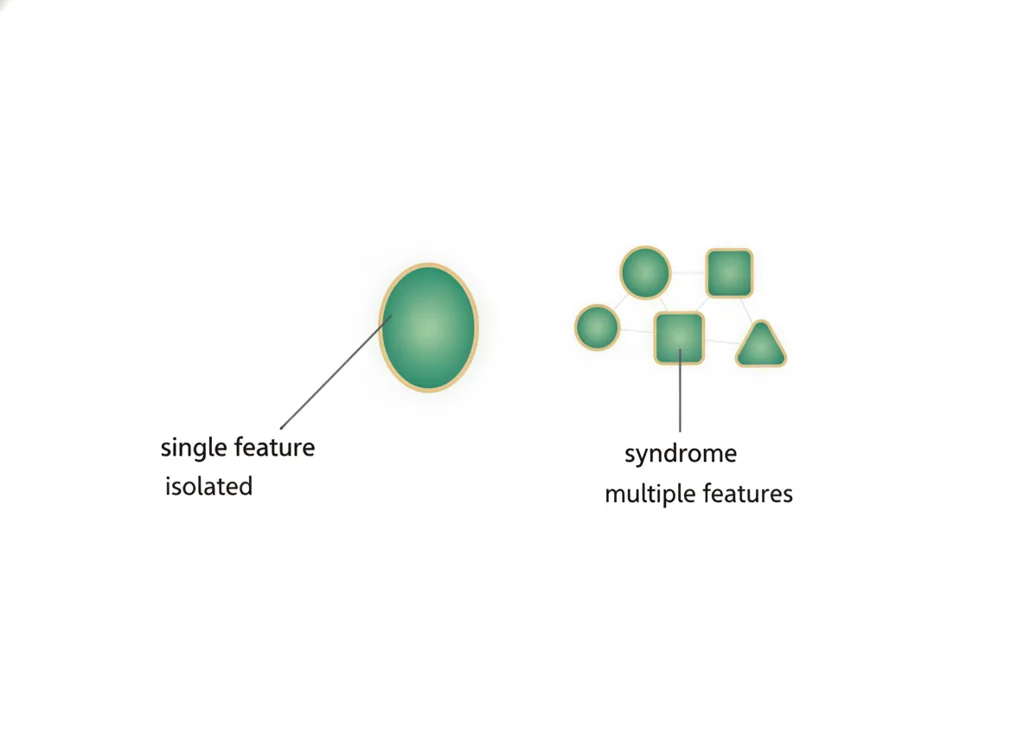
A birth difference that occurs on its own, without other linked malformations or a broader syndrome accompanying it.
Research citation trail (advanced)
You do not need these papers or database records to finish the lesson. They document where the plain-language explainer's claims come from and are intended for teachers or advanced readers.