
Periderm and IRF6, the Non-Stick Coating on the Embryo
This reading contains every idea and every piece of evidence needed for today's decision. The research links at the end are optional.
Why this matters
A cleft can affect feeding and speech, so preventing the wrong tissues from sticking is part of protecting how the mouth will work.
The question you are trying to answer
What keeps the inside of a forming mouth from sticking to the wrong surface?
Begin with the idea you already earned
Wnt switches on Twist1, and Twist1 holds down Sox9 so cranial progenitors move away from cartilage and toward dermal and bone fates.
Study the analogy before the biology
- Why is the protective layer temporary?
- What happens if the sticky surfaces meet too early?
- When should the protection be removed?
Turn the analogy into three rules
Limit: Periderm is a living epithelial layer with regulated genes, not plastic film.
Map those rules onto the biology
Periderm is a temporary outer cell layer on embryonic epithelial surfaces. It helps prevent tissues inside the mouth from sticking to the wrong neighbor.
IRF6 helps oral epithelial cells complete this protective differentiation program.
In Irf6-deficient mouse embryos, abnormal adhesions can tie the tongue and palate together and block later shelf elevation.
Read Mateo's labeled case evidence
Periderm covers embryonic oral epithelial surfaces during key stages.
It provides a temporary specialized surface.
Irf6-deficient mouse embryos have abnormal periderm differentiation.
IRF6 is required for normal protection in the model.
Abnormal oral adhesions can block palatal shelf elevation.
A surface defect can create a later movement defect.
Make the concrete decision
You are explaining an Irf6 mutant image to a clinical genetics group.
The shelves formed, but one shelf is attached to the tongue before elevation.
- Trace the failure from periderm loss to abnormal adhesion to blocked elevation.
- Say the shelf failed because it never existed.
- Call every IRF6 variant a complete gene knockout.
Choose the causal sequence and cite the surface and movement evidence.
Claim ceiling: You may explain the knockout mechanism. You may not treat all human IRF6 variants as identical to a complete mouse knockout.
Write the 10-year takeaway
IRF6-dependent periderm acts as a temporary non-stick surface that prevents the wrong oral tissues from adhering.
- What specialized job does periderm perform?
- How can a surface defect become a movement defect?
Glossary in plain English
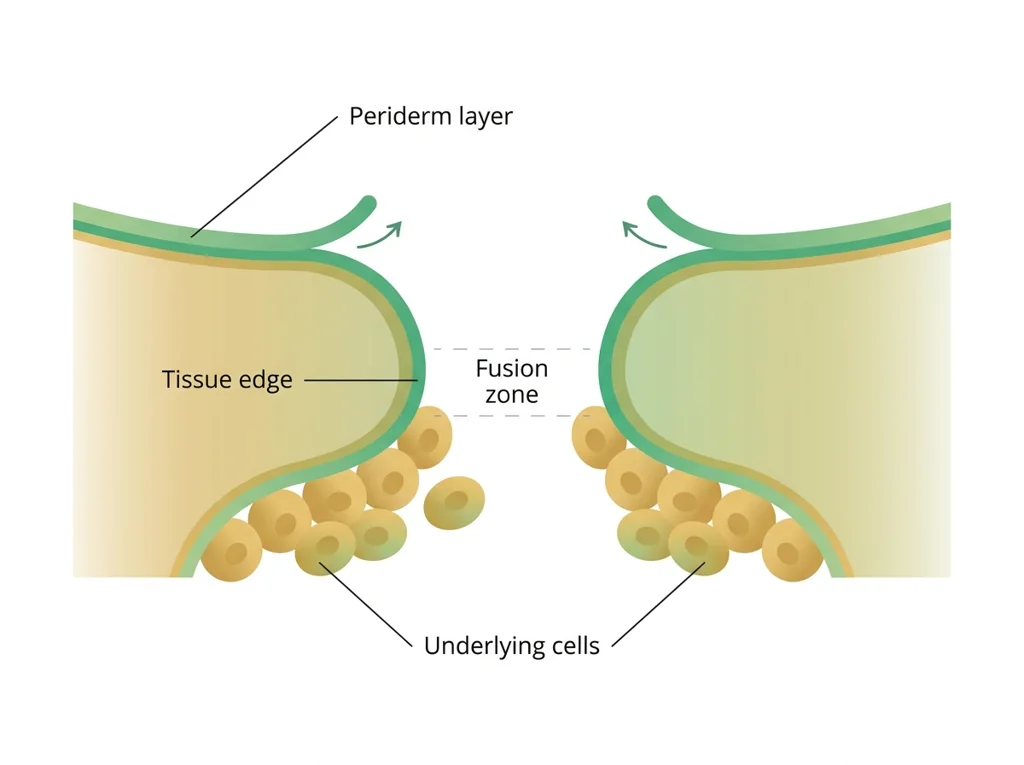
A thin temporary outer cell layer of the embryo; if it sticks where it should not, the growing edges cannot fuse.
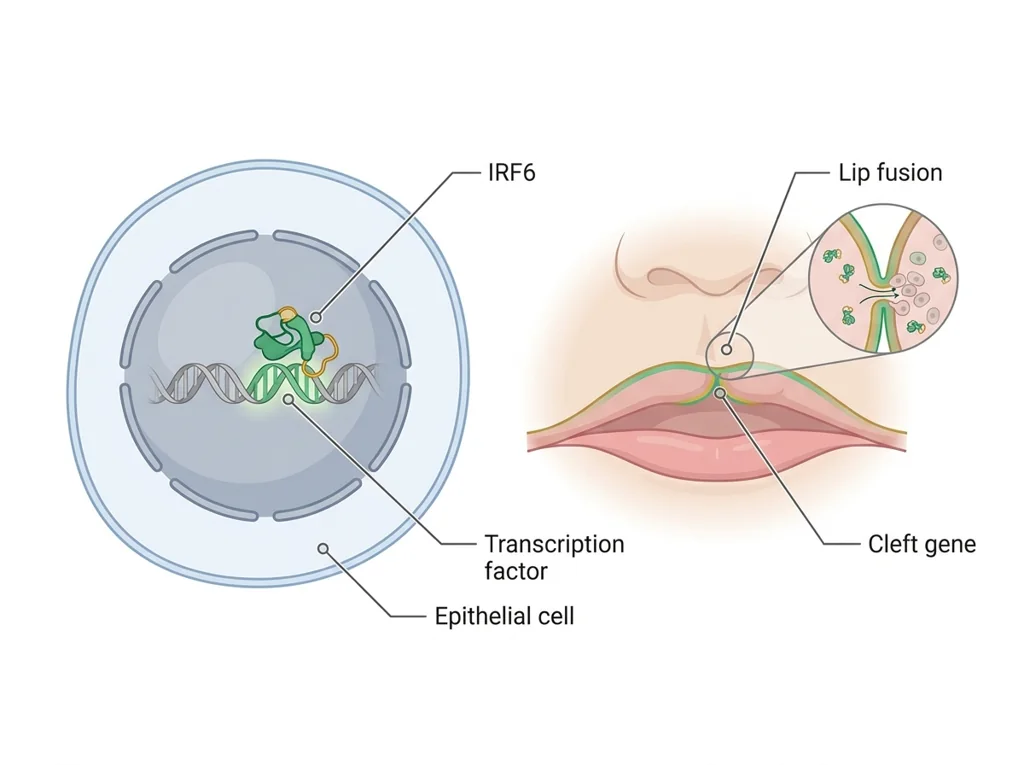
Interferon Regulatory Factor 6, a transcription factor needed by the skin-like cells that let the lip and palate fuse; a leading cleft gene.
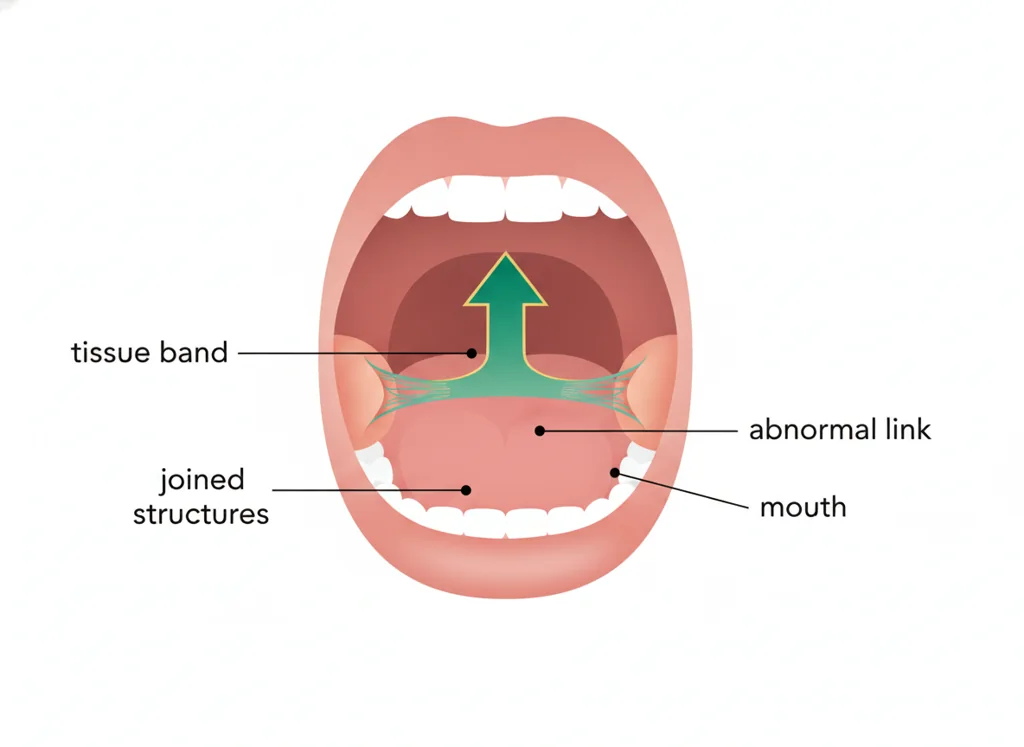
An abnormal band of tissue that connects structures inside the mouth that should be separate, sometimes seen with cleft conditions.
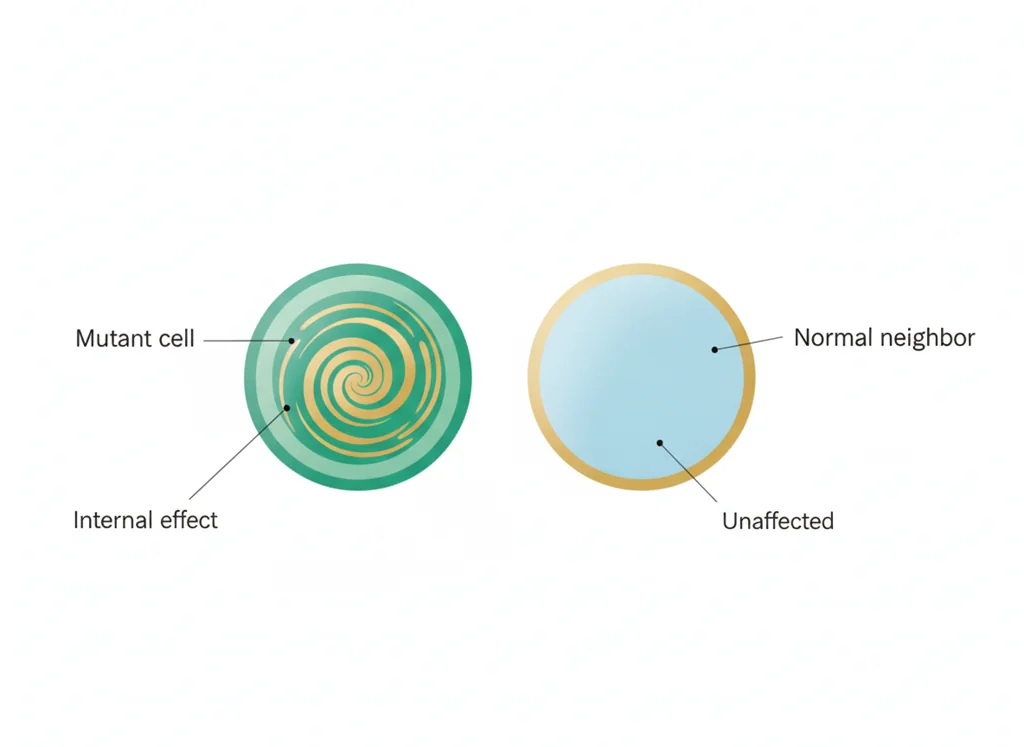
Describing an effect that plays out inside the very cell carrying the change, rather than in its neighbors.
Research citation trail (advanced)
You do not need these papers or database records to finish the lesson. They document where the plain-language explainer's claims come from and are intended for teachers or advanced readers.
- Lan & Jiang 2015, Cellular and Molecular Mechanisms of Palatogenesis (Curr Top Dev Biol)
- Liu et al. 2016, Irf6 directly regulates Klf17 in zebrafish periderm and Klf4 in murine oral epithelium (journal link; use class excerpt if blocked)
- Thompson et al. 2019, A Cleft Lip and Palate Gene, Irf6, in Osteoblast Differentiation of Craniofacial Bone (journal link; use class excerpt if blocked)