
The Wnt to Twist1 to Sox9 Brake, How a Face Cell Avoids Cartilage
This reading contains every idea and every piece of evidence needed for today's decision. The research links at the end are optional.
Why this matters
About 1 in 700 babies is born with a cleft, and the final shape alone cannot tell a family which cell decision changed.
The question you are trying to answer
Why did springy support tissue appear where hard bone should have formed when one message was removed?
Begin with the idea you already earned
TGF-beta3 makes the palatal medial edge competent to complete adhesion and seam removal.
Study the analogy before the biology
- How does opening one route affect the other route?
- What outcome would show that the switch decides the result?
- Why must the starting cells be comparable?
Turn the analogy into three rules
Limit: Cell fate is controlled by interacting genes and signals, not one steel lever.
Map those rules onto the biology
Wnt signaling stabilizes beta-catenin, which switches on Twist1. Twist1 holds down the cartilage gene Sox9.
Atit Lab lineage experiments tested cranial progenitors during a short fate-selection window.
Without beta-catenin, labeled cells formed cartilage where dermis and bone should have formed. That result supports a fate switch, not only cell death.
Read Mateo's labeled case evidence
Control cranial progenitors process Wnt-beta-catenin signaling during fate selection.
The pathway is active during the decision window.
Conditional beta-catenin loss removes cranial dermis and bone in the tested region.
The pathway is required for those fates in that model.
Lineage-labeled mutant cells form cartilage in their place.
The same progenitor population changed fate rather than simply disappearing.
Make the concrete decision
You are the student lead for an Atit Lab figure discussion.
A classmate says the mutant has less dermis only because all labeled cells died.
- Use labeled cartilage descendants to support a fate switch.
- Agree that lineage labels cannot show descendants.
- Claim Wnt controls every cell fate in the embryo.
Choose the strongest response and cite the evidence that rules against simple cell loss.
Claim ceiling: You may support an instructive Wnt role in the tested cranial lineage. You may not generalize to every tissue or developmental stage.
Write the 10-year takeaway
Wnt switches on Twist1, and Twist1 holds down Sox9 so cranial progenitors move away from cartilage and toward dermal and bone fates.
- Which observation supports a fate switch?
- Why must the conclusion stay limited to the lineage and region tested?
Glossary in plain English
A lesson term defined by the surrounding model and case evidence.
A lesson term defined by the surrounding model and case evidence.
A lesson term defined by the surrounding model and case evidence.
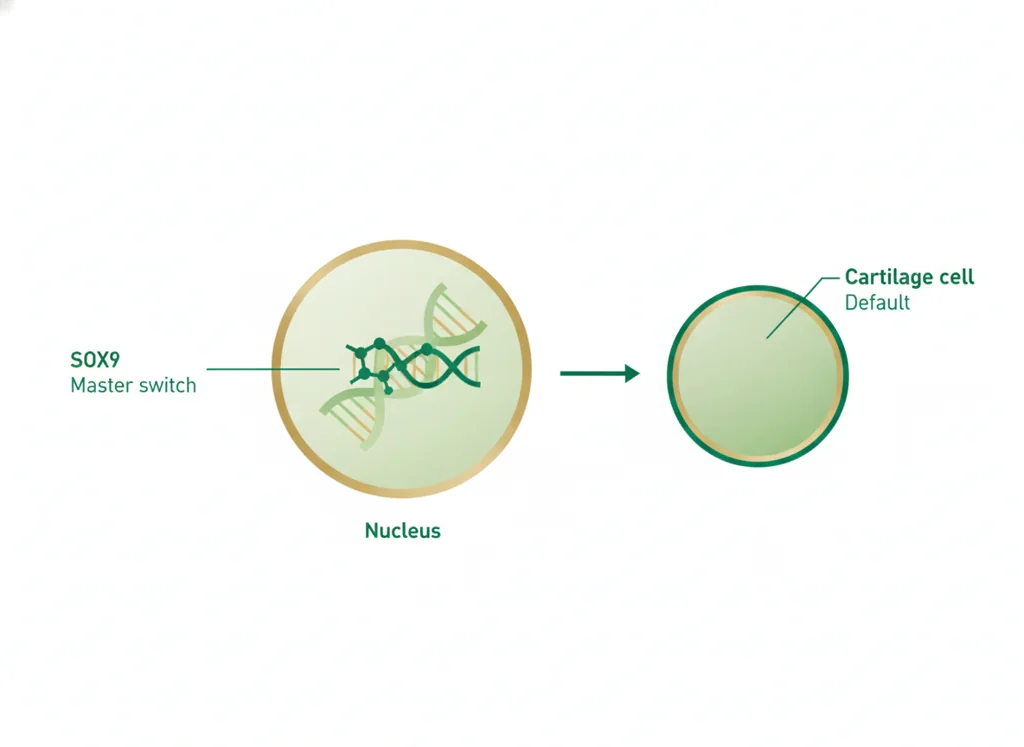
A master gene switch that drives cells to become cartilage, the default setting a cell falls back to without other signals.
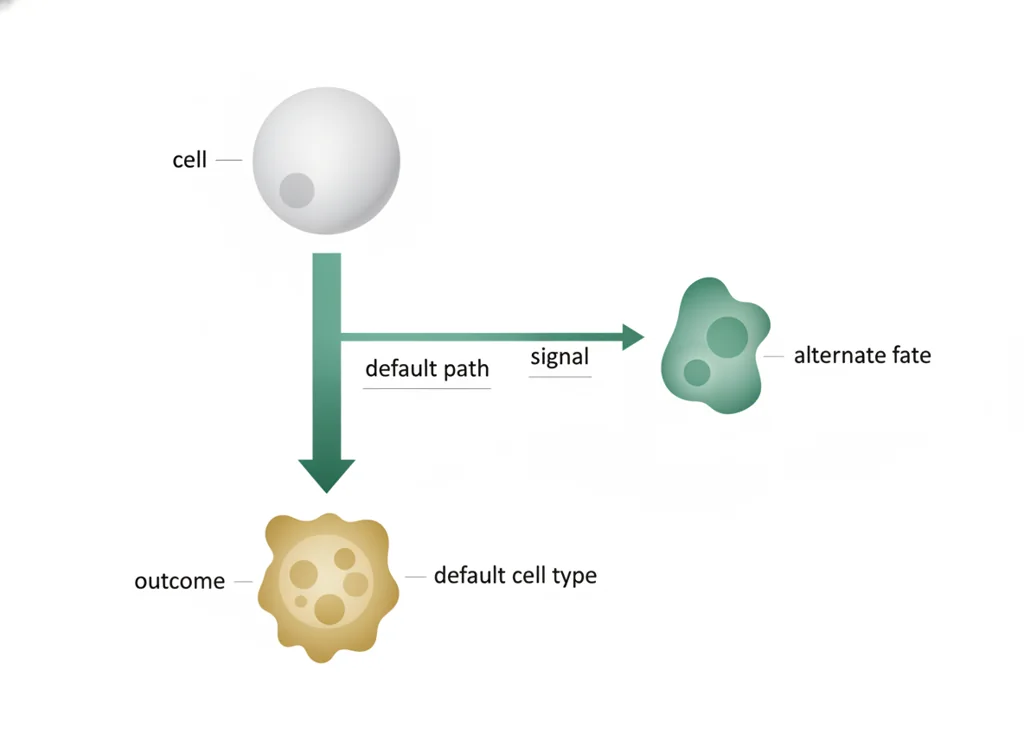
The cell type or outcome a cell becomes automatically unless a specific signal redirects it onto a different path.
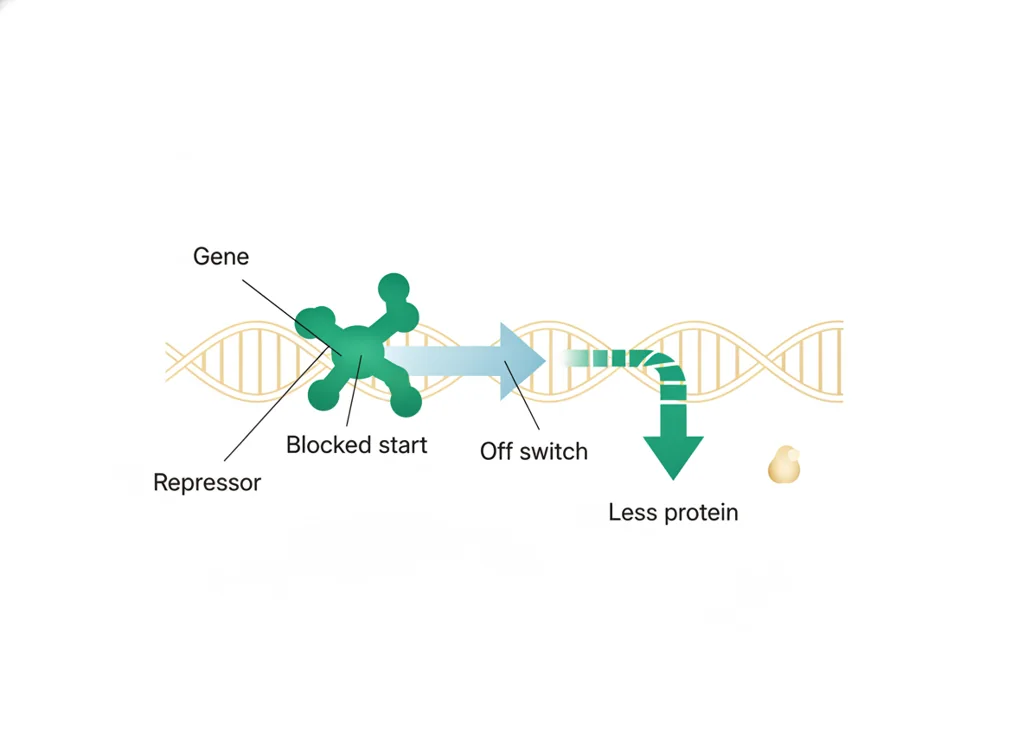
The turning down or shutting off of a gene's activity so that less of its protein is made.
Research citation trail (advanced)
You do not need these papers or database records to finish the lesson. They document where the plain-language explainer's claims come from and are intended for teachers or advanced readers.
- Goodnough et al. 2012 (Atit Lab), Twist1 Mediates Repression of Chondrogenesis by Beta-Catenin (Development)
- Goodnough et al. 2014 (Atit Lab), Distinct Requirements for Cranial Ectoderm and Mesenchyme-Derived Wnts (PLoS Genet)
- Tran et al. 2010 (Atit Lab), Role of canonical Wnt signaling/beta-catenin via Dermo1 (journal link; use class excerpt if blocked)
- Ibarra, Machen, and Atit 2021, A Wnt-Dependent ERK Pathway Represses Sox9 in Cranial Mesenchyme (Journal of Developmental Biology)
- Ferguson et al. 2018 (Atit Lab), PRC2 Is Dispensable for beta-Catenin-Mediated Repression of Chondrogenesis (journal link; use class excerpt if blocked)