
TGF-beta3, the Fusion Switch in the Medial Edge Epithelium
This reading contains every idea and every piece of evidence needed for today's decision. The research links at the end are optional.
Why this matters
Palate repair usually happens at 9 to 15 months, and families deserve to know why touching tissue is not the same as a working seal.
The question you are trying to answer
What lets two shelves that already touched finish joining?
Begin with the idea you already earned
Signals such as SHH, BMP, and FGF carry local instructions that coordinate growth, position, and cell fate.
Study the analogy before the biology
- Why must the code work only at the handoff point?
- What happens if both teams arrive but the code fails?
- What result would show that arrival and fusion are separate steps?
Turn the analogy into three rules
Limit: TGF-beta3 is part of a molecular network, not a digital password.
Map those rules onto the biology
TGF-beta3 is strongly involved at the medial edge of the palatal shelves during fusion.
Mouse embryos without Tgfb3 can bring shelves to the midline, but the epithelial seam is not removed normally.
This separates shelf arrival from final fusion. It does not make TGFB3 the cause of every human cleft.
Read Mateo's labeled case evidence
In Tgfb3-null mouse embryos, palatal shelves can reach the midline.
Earlier growth and elevation can still occur.
The shelves fail to complete normal adhesion and seam removal.
The defect is concentrated at the fusion transition.
The result is cleft secondary palate in the model.
Failure of a late step can preserve a gap despite shelf contact.
Make the concrete decision
You are presenting a knockout figure at lab meeting.
Both control and mutant shelves reach the midline, but only controls form continuous mesenchyme.
- Place TGF-beta3 at the fusion and seam-removal step.
- Place TGF-beta3 only at neural crest birth.
- Claim the mutant shelves never formed.
Choose the step assignment and cite the matched contact evidence.
Claim ceiling: You may assign a required role in mouse palatal fusion. You may not claim every human cleft palate is caused by TGFB3.
Write the 10-year takeaway
TGF-beta3 makes the palatal medial edge competent to complete adhesion and seam removal.
- Which earlier step still occurs in the knockout?
- What claim about human clefts would go beyond this mouse result?
Glossary in plain English
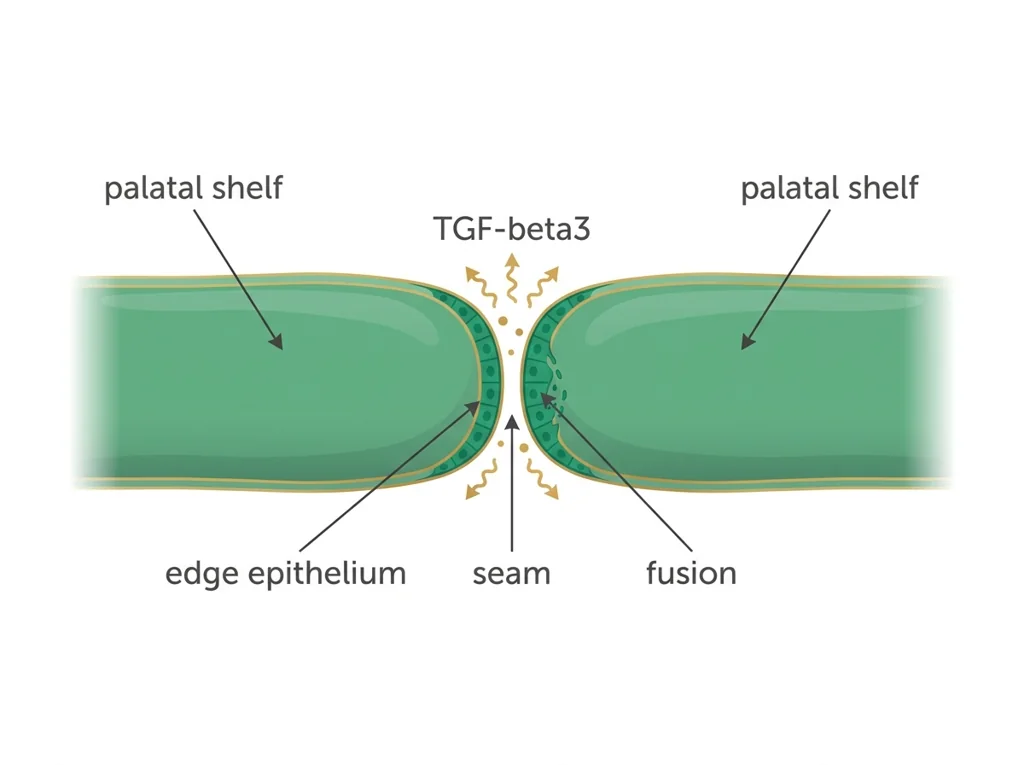
A signaling protein essential for palate fusion; it drives the edge cells between the two palatal shelves to disappear so they can join.
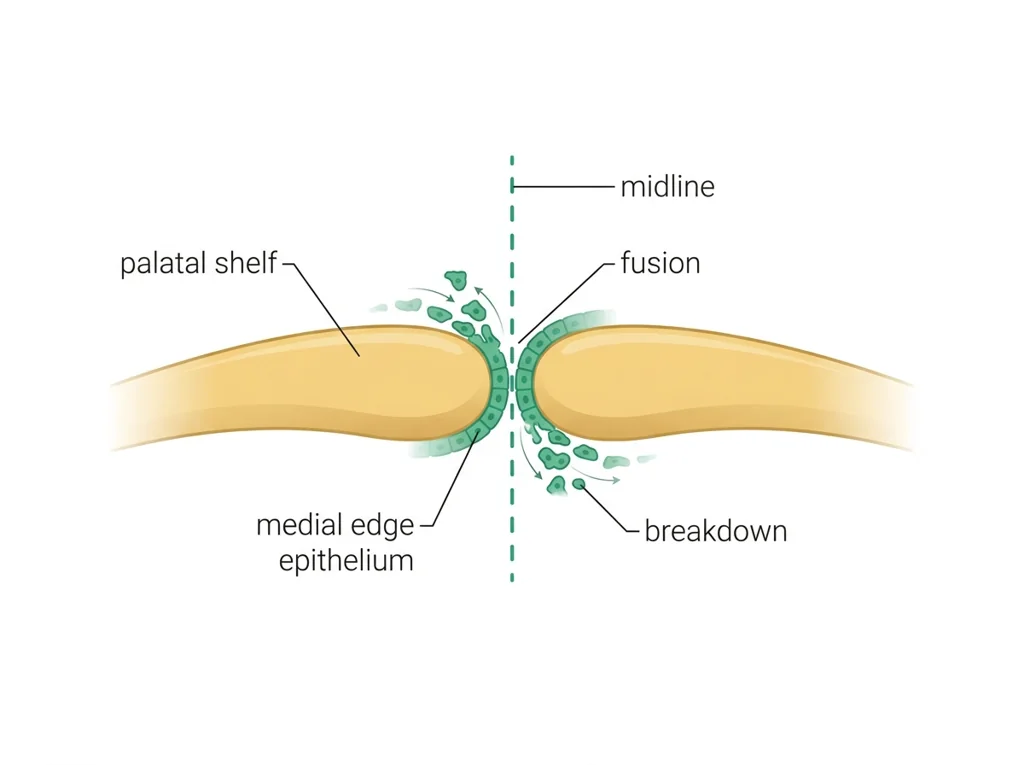
The cell layer on the inner edge of each palatal shelf, which must be removed for the shelves to fuse into a single palate.
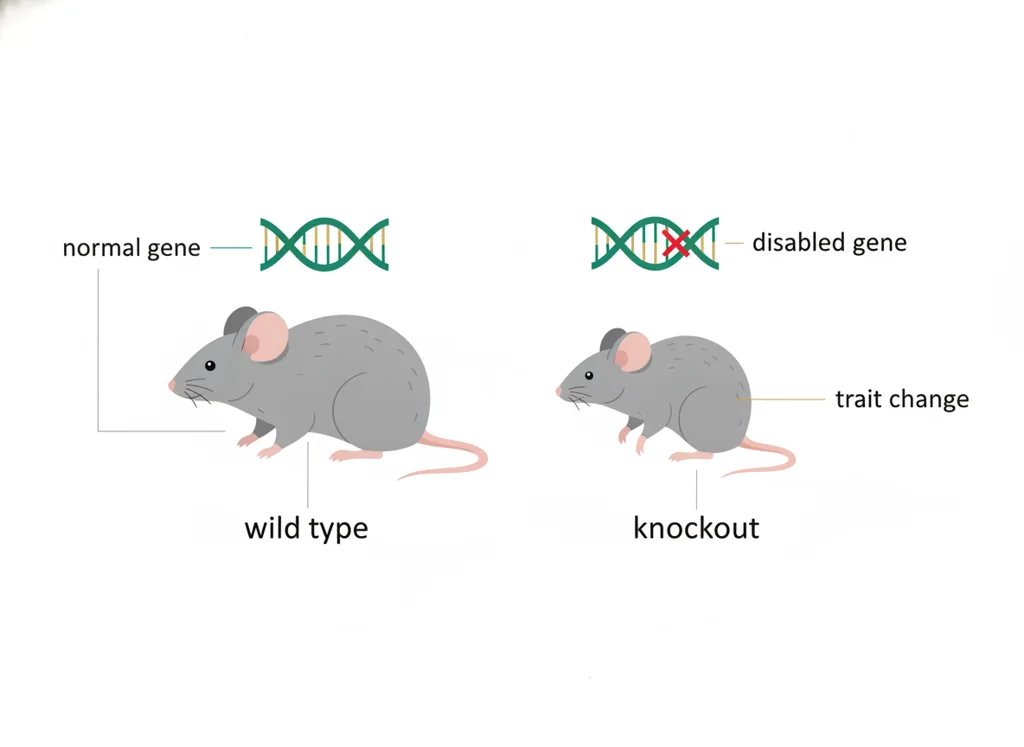
An organism or cell engineered to have a specific gene switched off, used to reveal what that gene normally does.
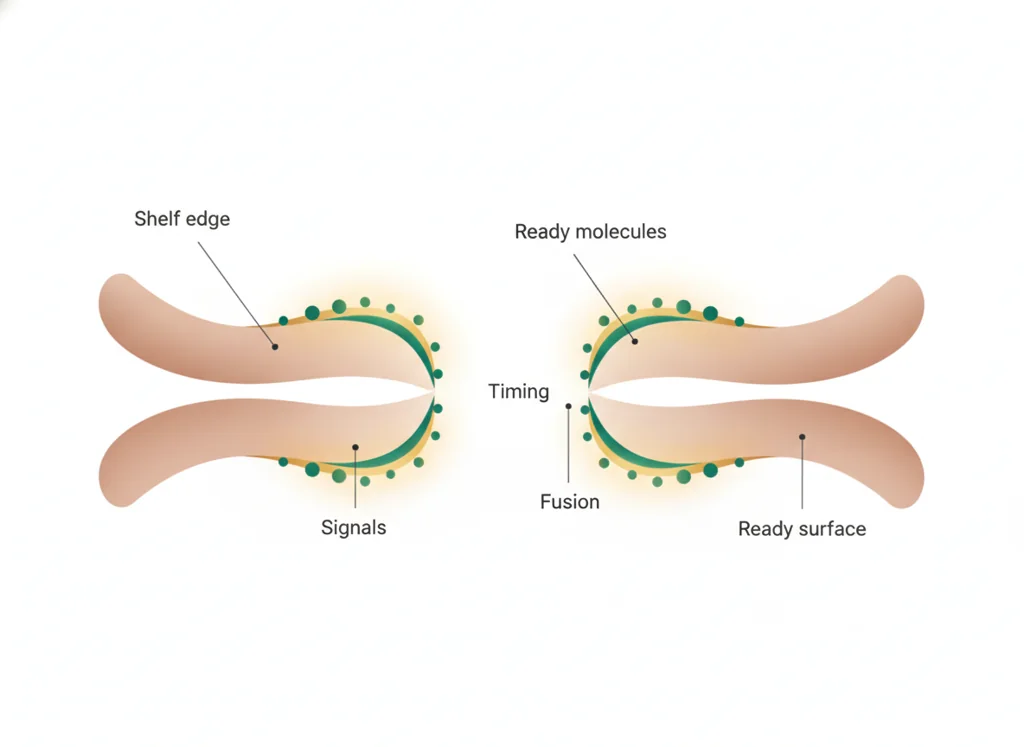
The readiness of two developing facial parts to join properly, including the right timing, signals, and surface cells, so they can merge into one.
Research citation trail (advanced)
You do not need these papers or database records to finish the lesson. They document where the plain-language explainer's claims come from and are intended for teachers or advanced readers.