
Why Feeding Fails, and What Helps Right Now
This reading contains every idea and every piece of evidence needed for today's decision. The research links at the end are optional.
Why this matters
A mechanism-first feeding decision replaces blame with an anatomical explanation and a concrete support plan.
The question you are trying to answer
Where does air enter when the side port is open?
Begin with the idea you already earned
Clefts vary along several independent axes, so one familiar example cannot stand for the whole spectrum.
Study the analogy before the biology
- Where does air enter when the side port is open?
- Why does stronger sucking not fix the leak?
- Which change could move fluid without requiring a sealed tube?
Turn the analogy into three rules
Limit: Infant feeding also depends on swallowing, airway coordination, endurance, and caregiver technique.
Map those rules onto the biology
Suction requires a sealed mouth. A cleft palate leaves an opening to the nose, so pressure leaks even when an infant works hard.
Assisted-flow bottles can move milk with less suction. Upright positioning and pacing help coordinate swallowing and breathing.
The team should monitor feed time, amount, breathing signs, hydration, and growth. Different systems vary, and caregiver teaching matters.
Read Mateo's labeled case evidence
Mateo has a complete cleft palate connecting the oral and nasal spaces.
He cannot form a typical sealed suction chamber.
He coordinates swallowing and breathing but tires during long feeds.
The primary supplied problem is inefficient transfer, not absent effort.
The team can provide an assisted-flow bottle, upright positioning, pacing, and weight monitoring.
Support works around the pressure leak while protecting growth and breathing.
Make the concrete decision
You are the cleft-team feeding specialist.
Mateo takes 42 minutes per feed, has nasal milk escape, and is falling off his weight curve without cough or color change.
- Start assisted-flow feeding education and close growth follow-up.
- Tell the family to make him suck harder with a standard rigid bottle.
- Schedule emergency lip surgery as the feeding treatment.
Choose today's feeding plan and cite the mechanism plus monitoring evidence.
Claim ceiling: You may recommend the supplied educational support plan. You may not rule out swallowing or airway disease if new safety signs appear.
Write the 10-year takeaway
A cleft palate limits suction because the mouth cannot seal from the nose, so feeding support changes flow rather than blaming effort.
- Why does stronger sucking not close the pressure leak?
- Which four outcomes should the team monitor?
Glossary in plain English
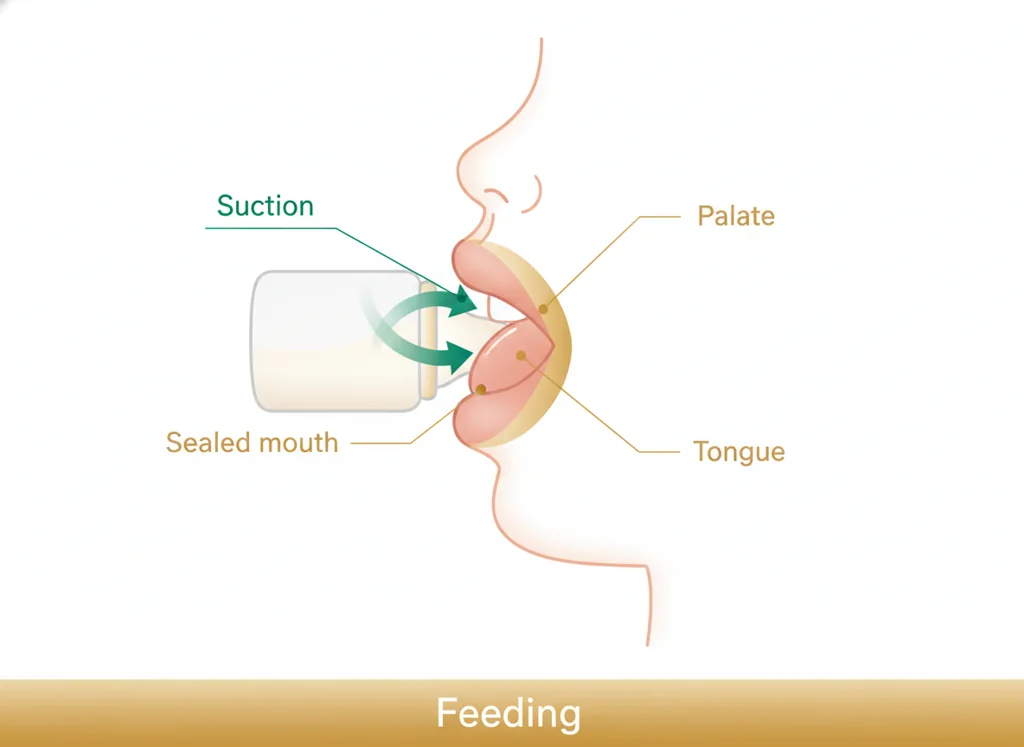
The suction created inside the mouth that lets a baby latch and draw milk; a cleft palate can prevent this seal from forming.
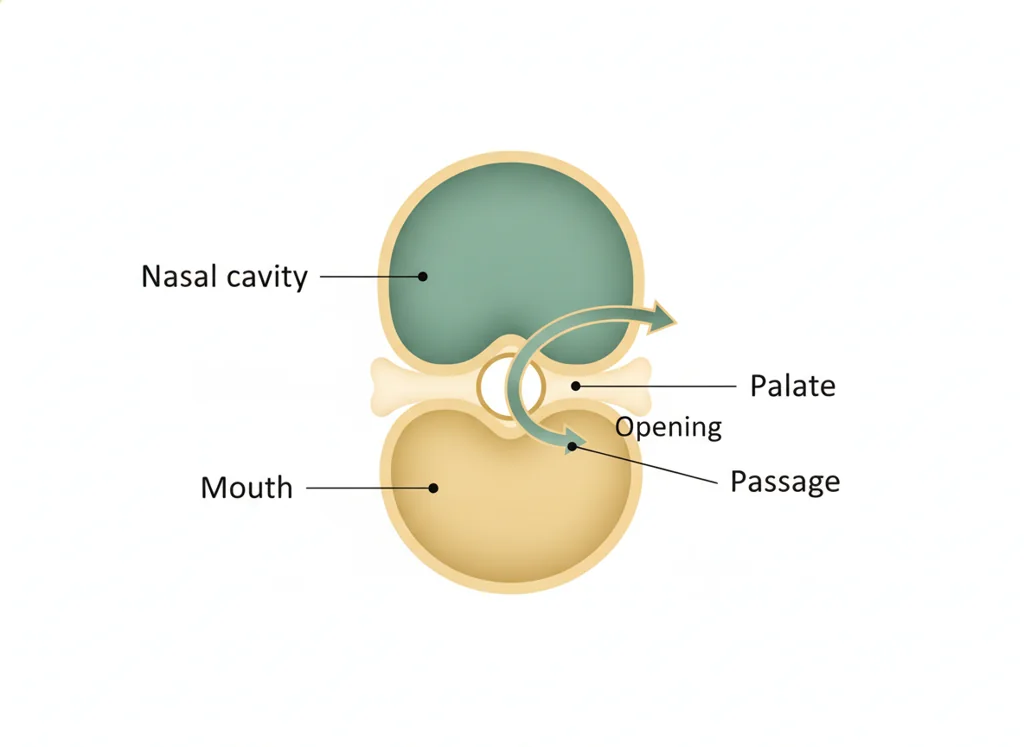
An abnormal opening that connects the mouth and nasal cavity, letting air, food, or liquid pass between them.
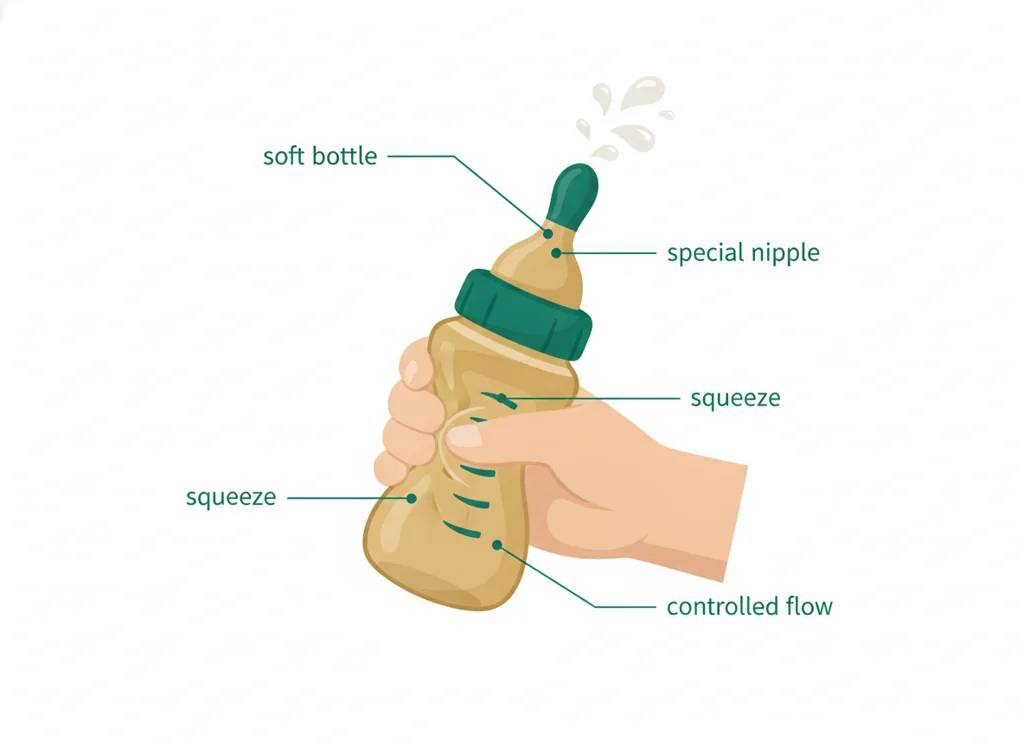
A soft squeeze bottle used to feed an infant with a cleft, letting a caregiver gently push milk so the baby does not have to create suction.
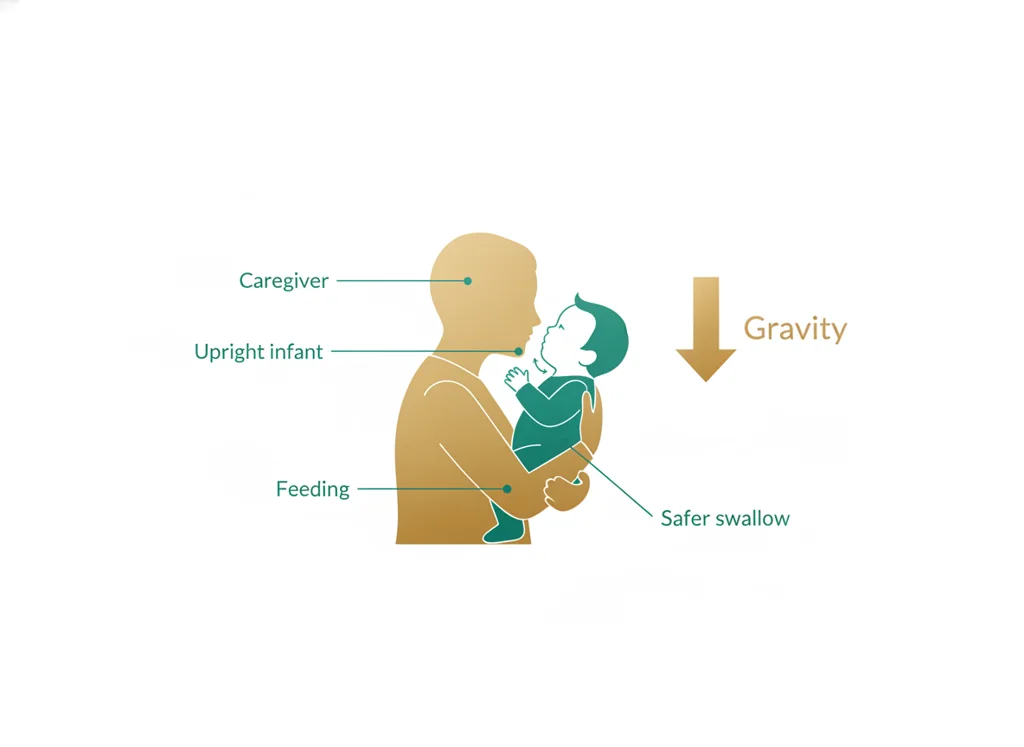
Holding a baby in a more vertical posture during feeding so gravity helps keep milk out of the nose and airway.
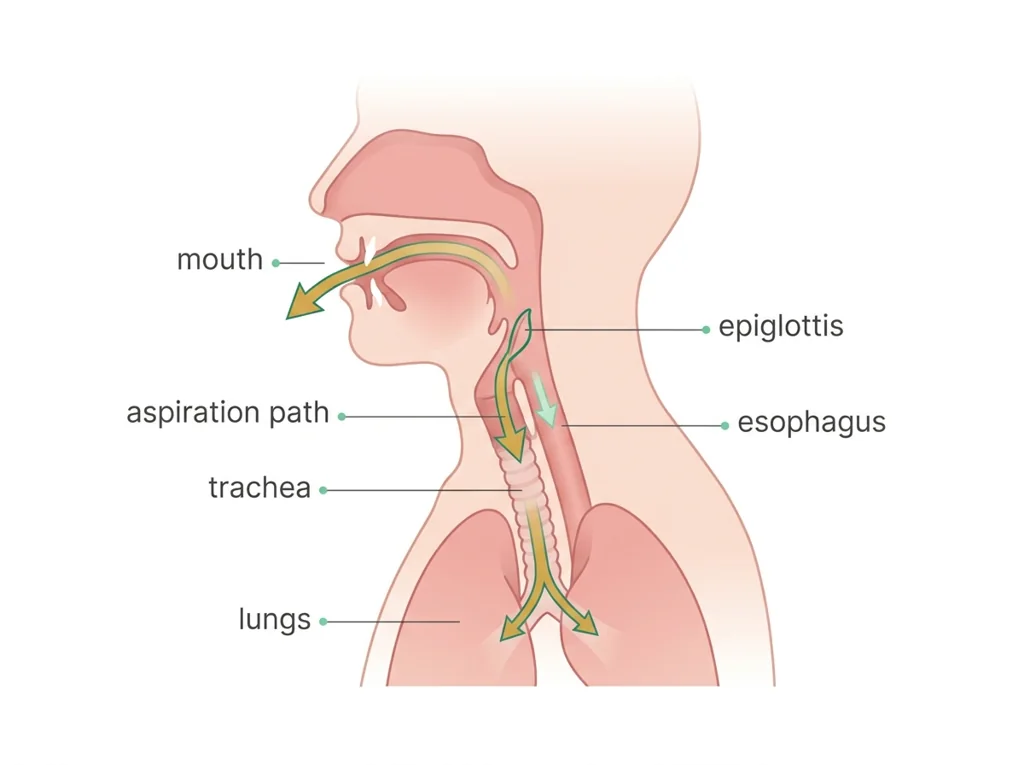
When food, liquid, or saliva slips into the airway and lungs instead of the stomach, a risk for infants who have trouble feeding or swallowing.
Research citation trail (advanced)
You do not need these papers or database records to finish the lesson. They document where the plain-language explainer's claims come from and are intended for teachers or advanced readers.