
One Cleft, Many Shapes, The Cleft Spectrum
This reading contains every idea and every piece of evidence needed for today's decision. The research links at the end are optional.
Why this matters
Multiple axes prevent students from treating cleft lip and palate as one single shape.
The question you are trying to answer
Can two items share one feature but differ on another?
Begin with the idea you already earned
A useful cleft label records side, completeness, and anatomical extent without replacing the examination.
Study the analogy before the biology
- Can two items share one feature but differ on another?
- Which feature could be hidden from a quick look?
- Why would one shelf label be insufficient?
Turn the analogy into three rules
Limit: Cleft categories are clinical descriptors, not rigid boxes for a person's experience.
Map those rules onto the biology
A cleft can be unilateral or bilateral, complete or incomplete, and overt or submucous. These features do not always travel together.
A submucous cleft has mucosa over the opening, but the muscle or bone below may still be separated.
Mateo's pattern is unilateral, complete, and overt. Other patients need their own examination and label.
Read Mateo's labeled case evidence
One case card shows a cleft on both sides of the lip and alveolus.
It is bilateral regardless of whether the palate is complete.
Another stops before reaching the nostril floor.
It is an incomplete lip cleft.
A third has intact oral mucosa but a notched hard palate and separated soft-palate muscles.
A submucous cleft can be hidden under intact mucosa.
Make the concrete decision
You are triaging four newborn case cards.
A teammate wants to call every cleft that is less visible incomplete.
- Classify each card on separate side, extent, and surface axes.
- Use visible size as the only axis.
- Call all intact-mucosa palates normal.
Choose the classification method and demonstrate it on two cards.
Claim ceiling: You may describe the supplied anatomy. You may not infer function from appearance alone.
Write the 10-year takeaway
Clefts vary along several independent axes, so one familiar example cannot stand for the whole spectrum.
- What can be hidden in a submucous cleft?
- Why should laterality and completeness be scored separately?
Glossary in plain English
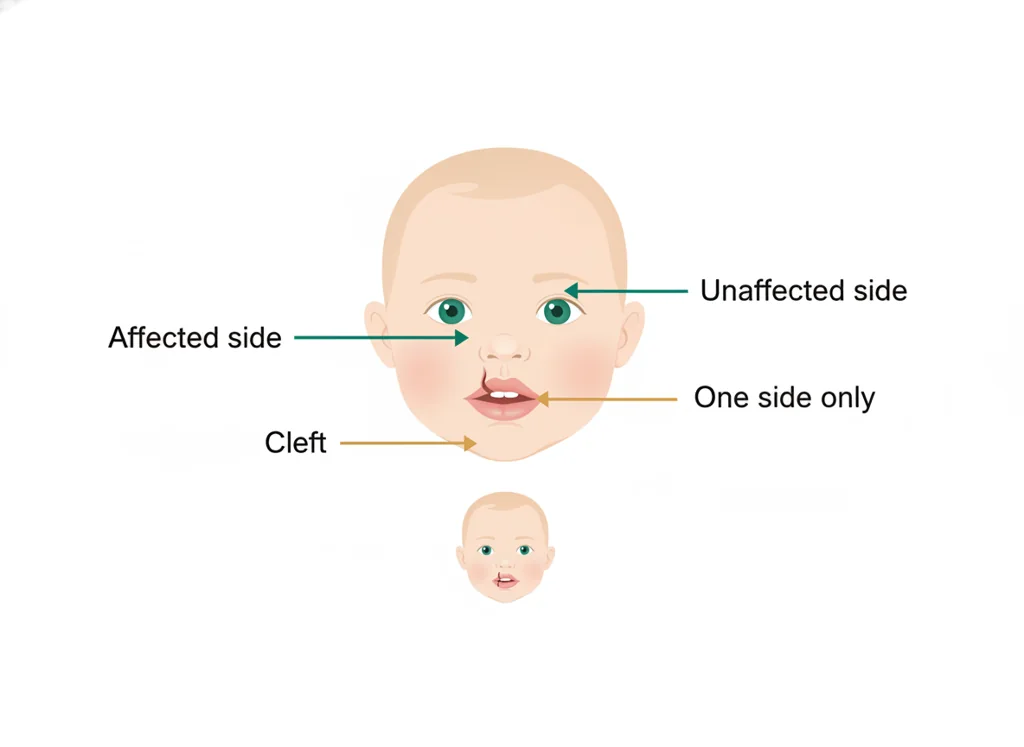
Affecting only one side of the body or face, as opposed to both sides.
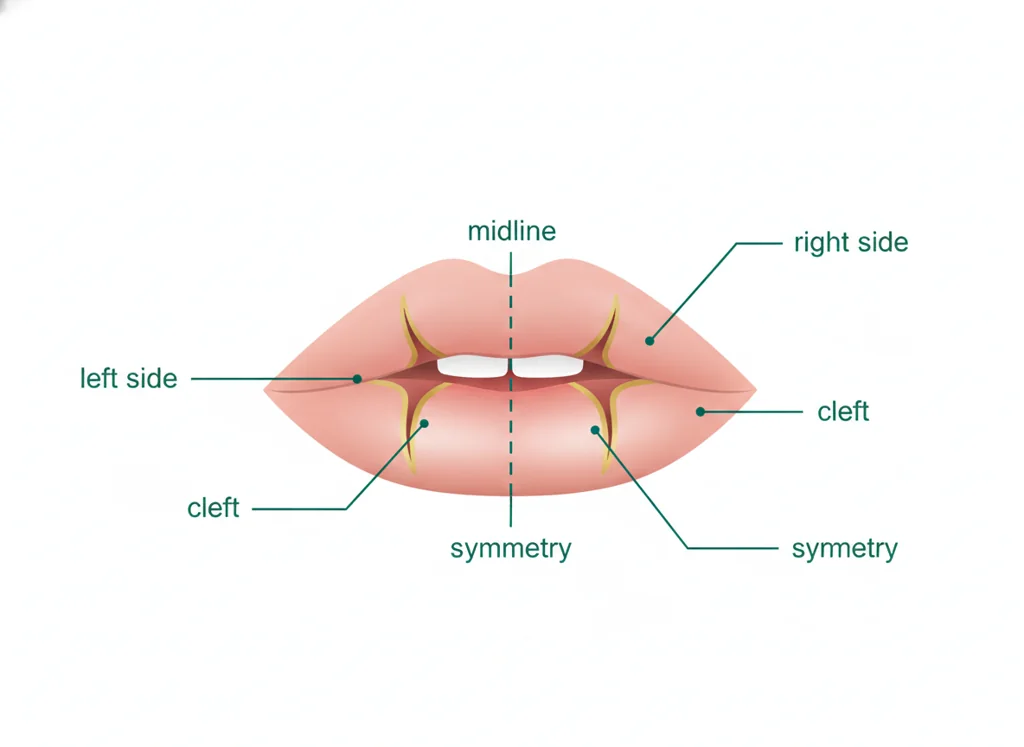
Affecting both the left and right sides of the body, such as a cleft that appears on both sides of the lip.
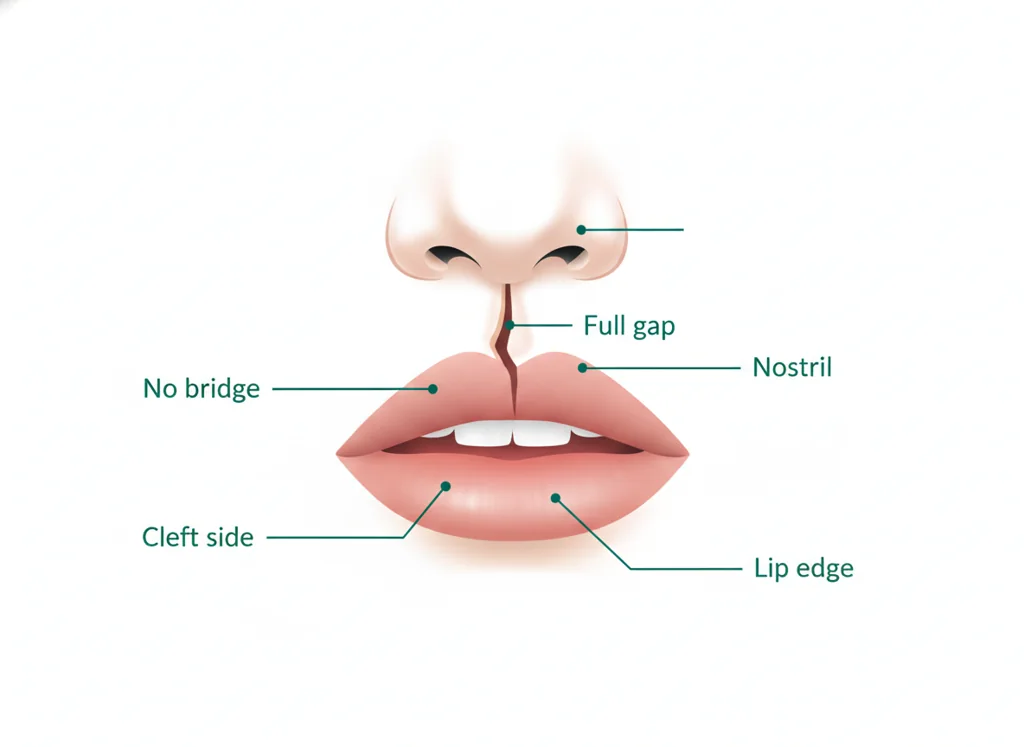
A cleft that extends fully through the structure, such as a lip cleft reaching all the way up into the nostril with no tissue bridge.
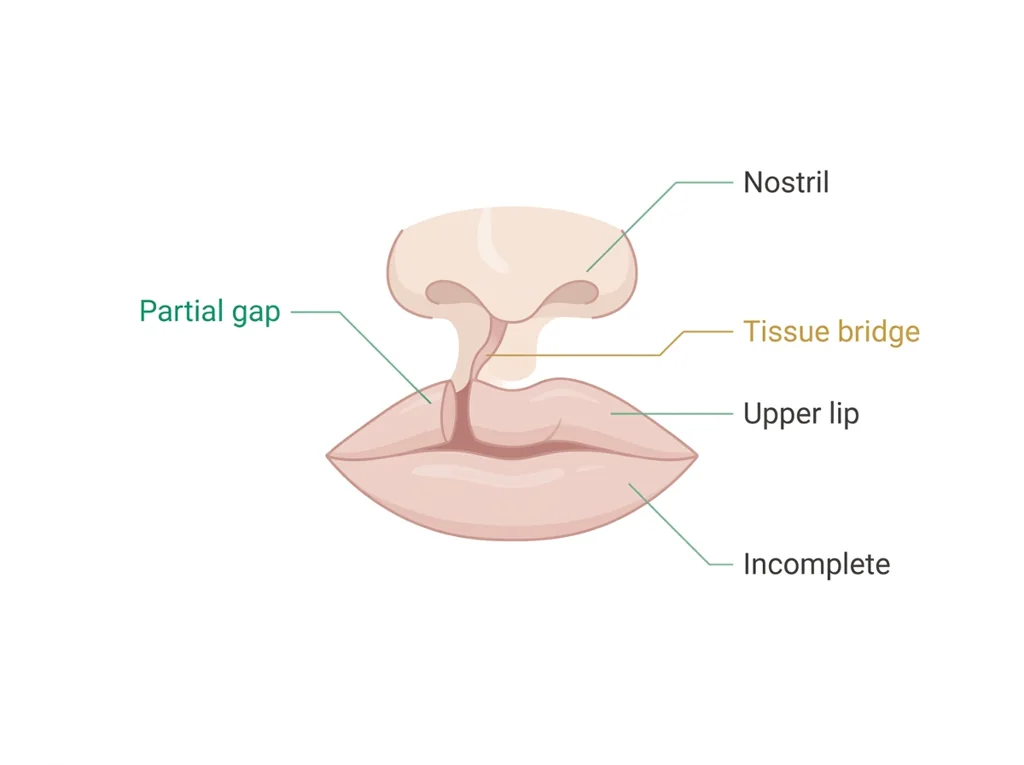
A cleft that does not extend through the full structure, leaving a band of intact tissue bridging part of the gap.
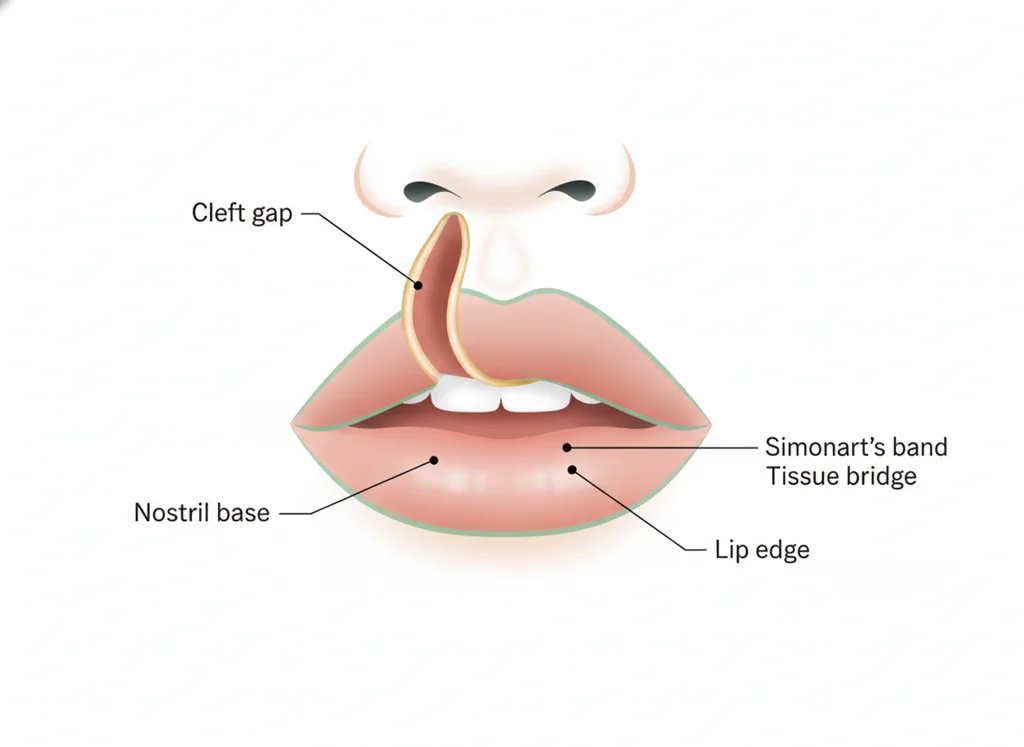
A thin bridge of soft tissue that spans across a cleft lip, partly connecting the two sides instead of leaving a complete gap.
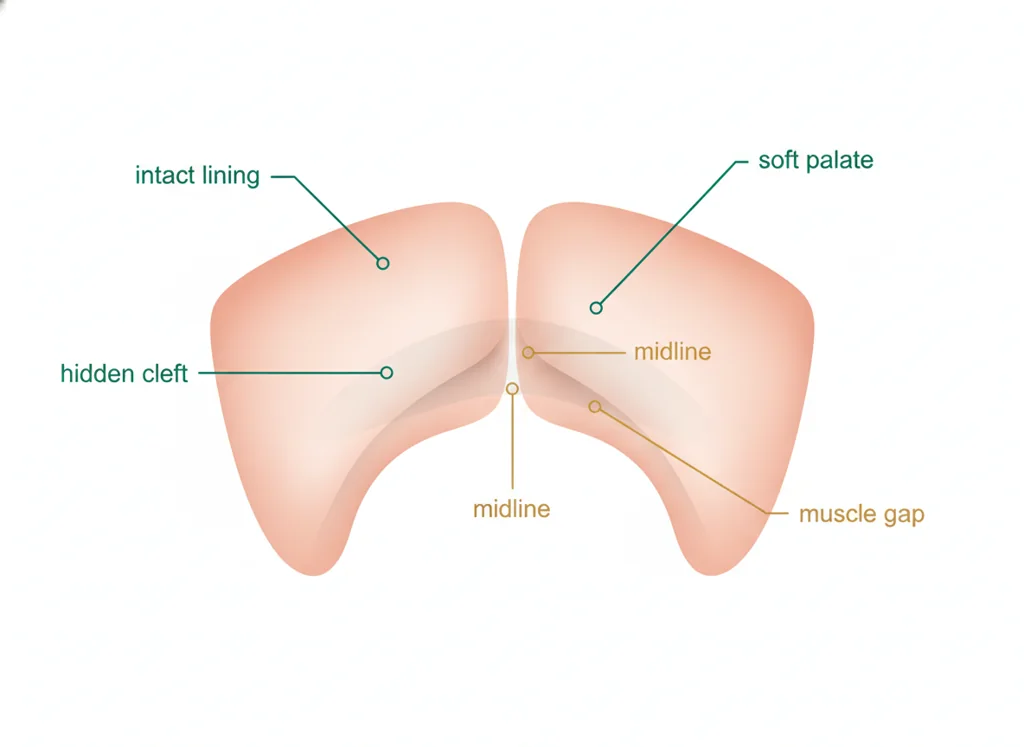
A hidden cleft where the palate muscles fail to join in the midline even though the overlying lining looks intact.
Research citation trail (advanced)
You do not need these papers or database records to finish the lesson. They document where the plain-language explainer's claims come from and are intended for teachers or advanced readers.