
Saying It Precisely, How Surgeons Classify a Cleft
This reading contains every idea and every piece of evidence needed for today's decision. The research links at the end are optional.
Why this matters
Classification lets a multidisciplinary team communicate clearly, but students must know which observations support the label.
The question you are trying to answer
Which details let two people find the same place?
Begin with the idea you already earned
A cleft is not only a visible gap; it also redirects muscles and changes the forces they produce.
Study the analogy before the biology
- Which details let two people find the same place?
- What would be lost by writing only city?
- Why must the map still be checked after reading the address?
Turn the analogy into three rules
Limit: A clinical classification summarizes anatomy but cannot capture every three-dimensional feature or family priority.
Map those rules onto the biology
Laterality tells whether a cleft is left, right, or bilateral. Completeness tells whether the opening reaches through the full expected tissue path.
A descriptive label should name the structures involved. Veau classification is commonly used for palate extent and has four groups.
Mateo's supplied examination supports a complete unilateral left cleft lip, alveolus, and palate. The palate component fits Veau III.
Read Mateo's labeled case evidence
The opening is on Mateo's left side.
The cleft is unilateral left.
The cleft extends through the lip and alveolus into both hard and soft palate.
The cleft is complete and involves lip, alveolus, and palate.
Veau III describes a unilateral complete cleft involving the soft and hard palate and continuing through the alveolus on one side.
The palate component fits Veau III.
Make the concrete decision
You are completing the operative problem list.
Three labels are offered for the same composite examination.
- Complete unilateral left cleft lip, alveolus, and palate; Veau III.
- Cleft palate, side and extent unknown.
- Bilateral incomplete cleft lip only.
Choose the most precise supported label and cite all three evidence cards.
Claim ceiling: You may classify the supplied anatomy. You may not use the label to claim a genetic cause or predict outcome.
Write the 10-year takeaway
A useful cleft label records side, completeness, and anatomical extent without replacing the examination.
- Which three details belong in a descriptive label?
- What does Veau classification not explain?
Glossary in plain English
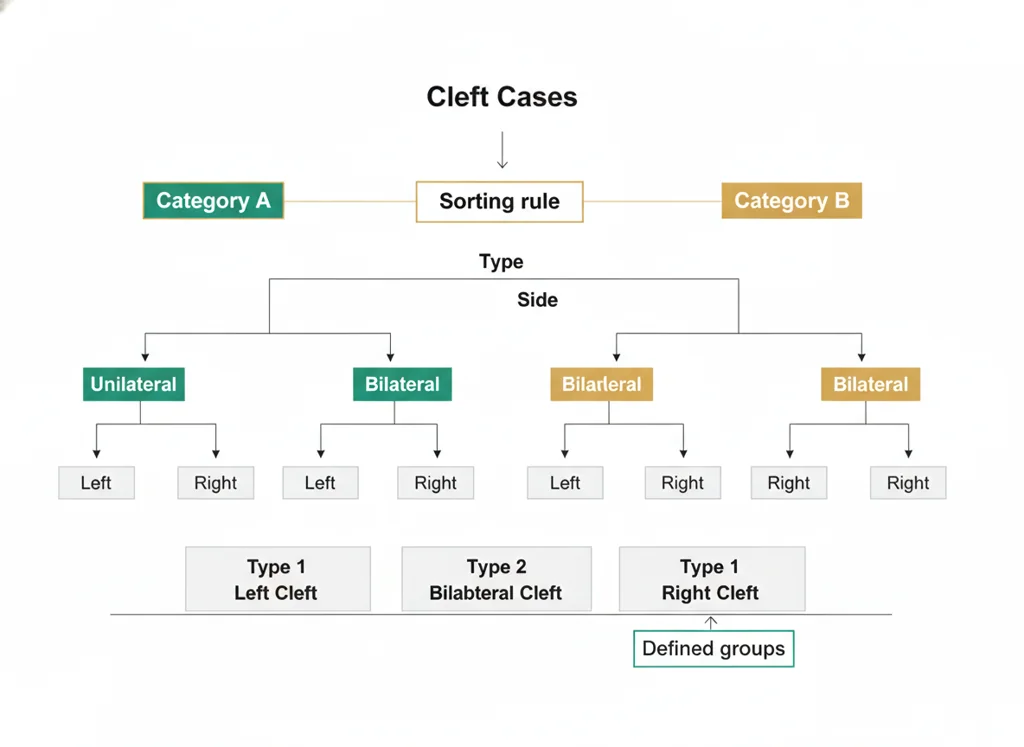
An organized scheme that sorts cases into defined categories, such as grouping clefts by type and location for consistent diagnosis.
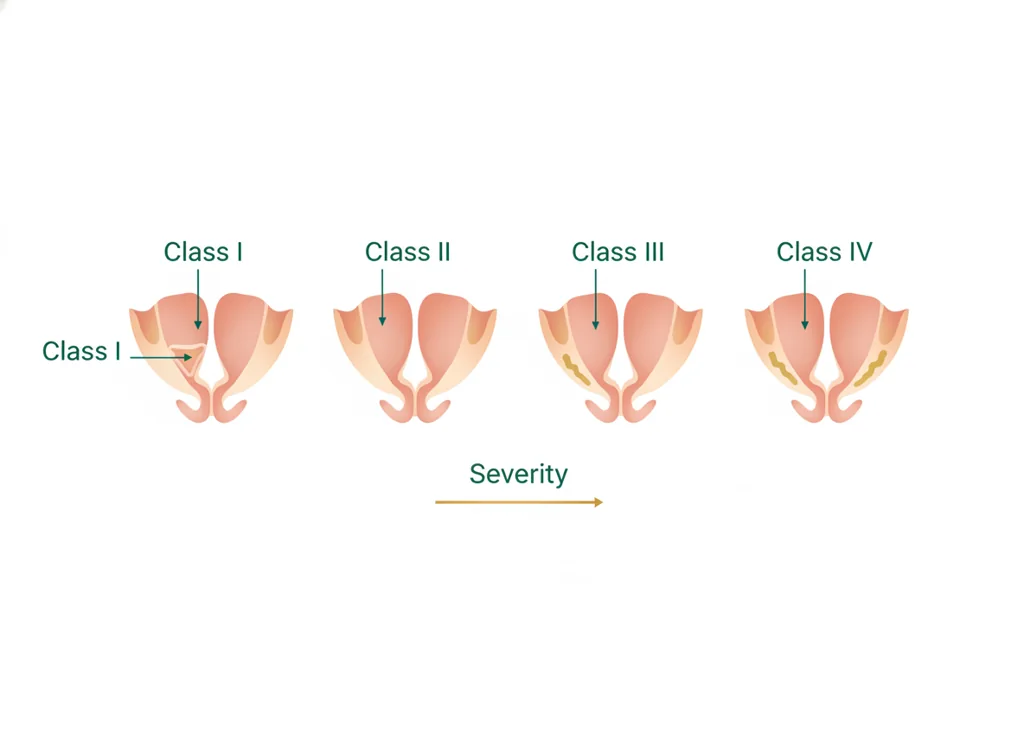
A four-category system that grades clefts from a soft-palate-only cleft up to a bilateral cleft of the lip and palate.
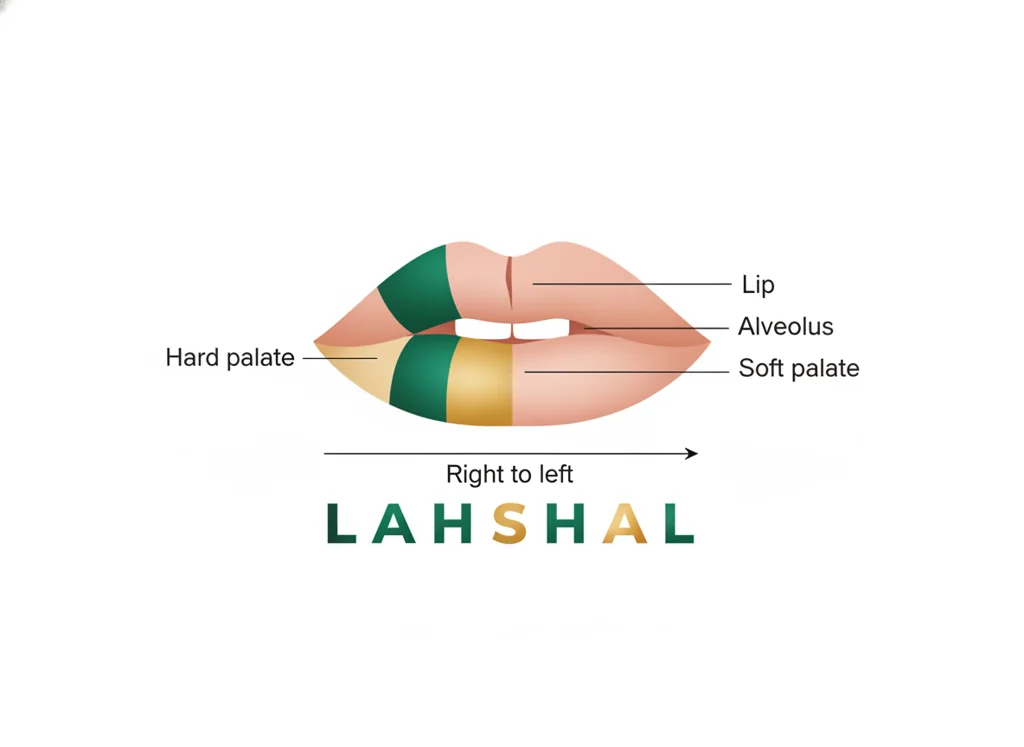
A shorthand code for recording clefts site by site (Lip, Alveolus, Hard palate, Soft palate) from the patient's right to left, capitals marking complete clefts.
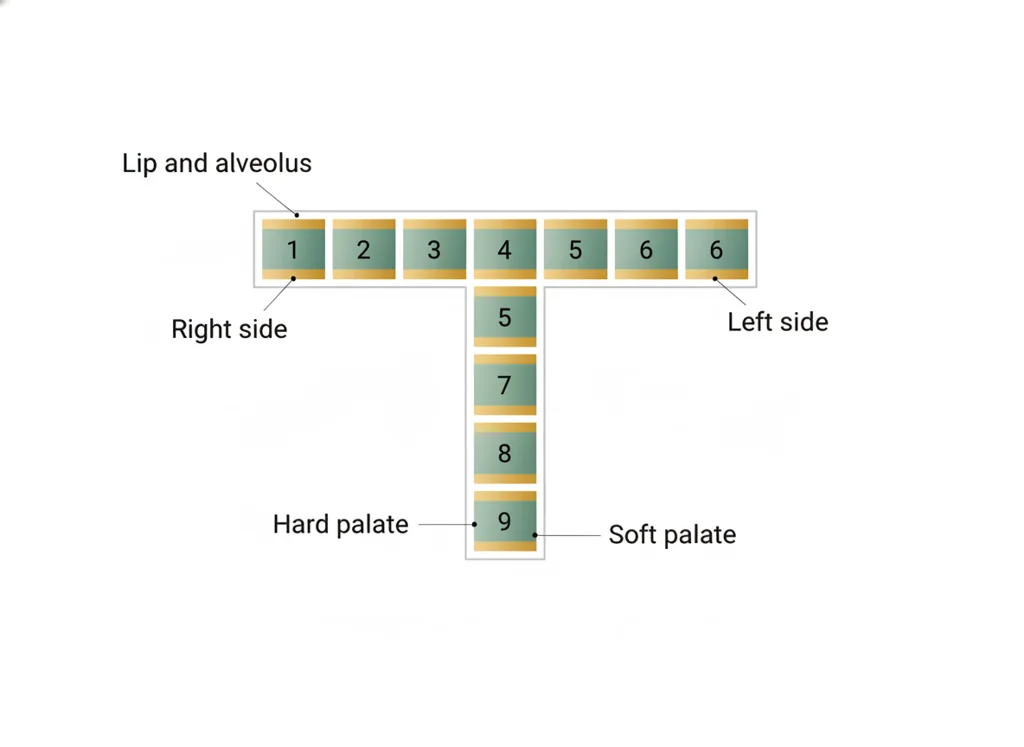
A Y-shaped diagram that maps cleft lip and palate by shading numbered boxes for each affected part of the lip and palate.
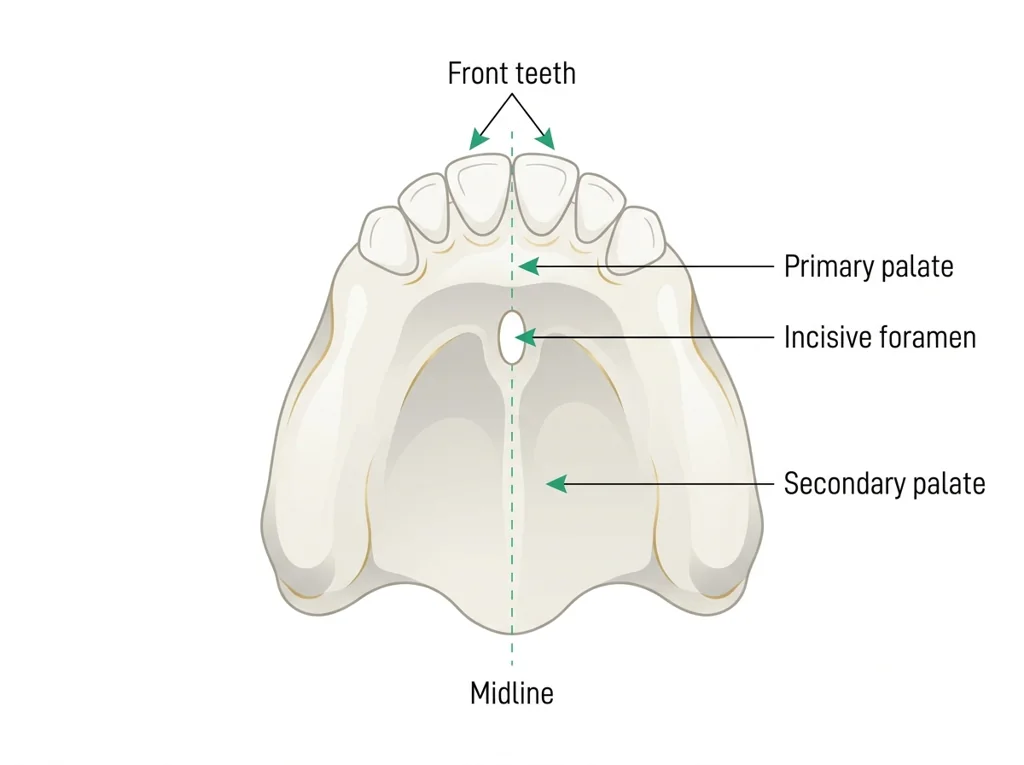
A small opening in the roof of the mouth just behind the front teeth that marks the boundary between the primary and secondary palate.
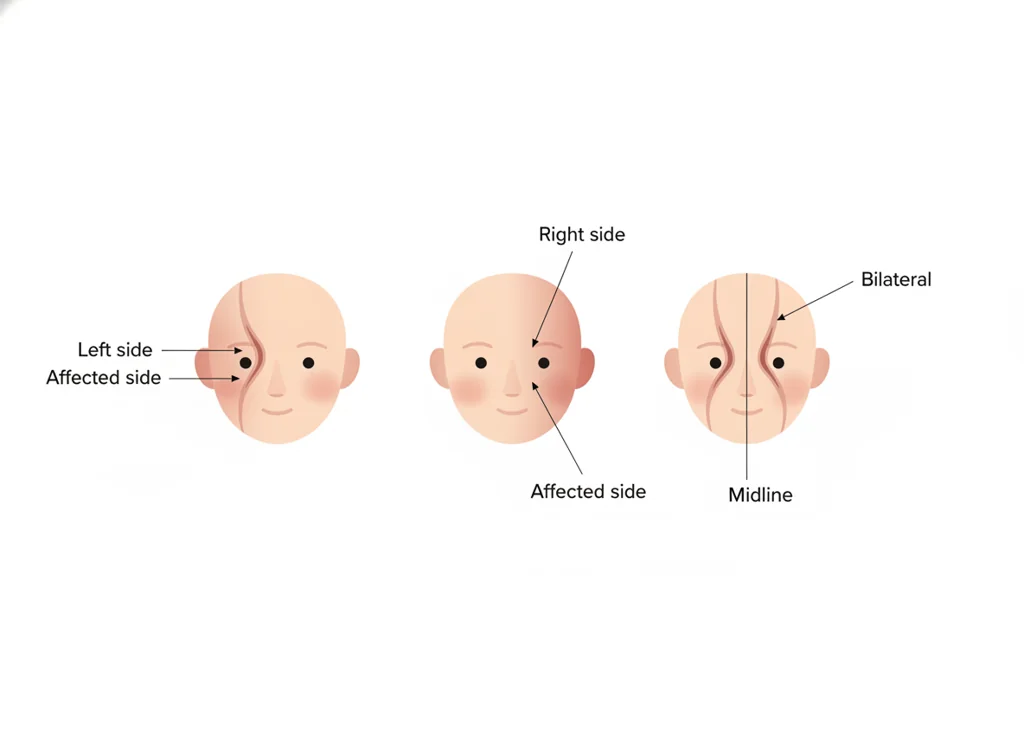
Which side of the body a feature affects, such as whether a cleft is on the left, the right, or both sides.
Research citation trail (advanced)
You do not need these papers or database records to finish the lesson. They document where the plain-language explainer's claims come from and are intended for teachers or advanced readers.