
The Muscles That Make a Lip and Palate Work
This reading contains every idea and every piece of evidence needed for today's decision. The research links at the end are optional.
Why this matters
Students need a force-and-motion model before they can understand why skin closure alone does not restore function.
The question you are trying to answer
How does the cord direction control the motion?
Begin with the idea you already earned
Anatomy becomes useful when each structure is tied to the job it performs.
Study the analogy before the biology
- How does the cord direction control the motion?
- What happens if the cord ends are not connected?
- Why would the same amount of cord fail when attached in the wrong place?
Turn the analogy into three rules
Limit: Muscles contract through cells and nerves, not by pulling passive cords.
Map those rules onto the biology
Orbicularis oris is a circular muscle around the mouth. When its fibers are continuous, it helps close and shape the lips.
Levator veli palatini runs from the skull base into the soft palate. Its fibers meet across the midline as a sling that lifts the velum.
A muscle name is not enough. Direction, attachment, and continuity determine what motion the muscle can produce.
Read Mateo's labeled case evidence
Orbicularis oris fibers normally form a continuous ring around the mouth.
The ring supports lip seal and coordinated movement.
Levator veli palatini fibers normally form a transverse sling across the soft palate.
The sling elevates the velum toward the pharyngeal wall.
Fiber direction predicts the line of pull.
A muscle can be present but function poorly when redirected or interrupted.
Make the concrete decision
You are the anatomy fellow preparing a function map.
A diagram shows both muscles but leaves out fiber direction and attachments.
- Add direction, attachment, and continuity before predicting function.
- Approve it because the muscle names are present.
- Replace the muscle map with skin landmarks only.
Choose the revision and use both muscle examples.
Claim ceiling: You may predict normal lines of pull. You may not infer Mateo's exact muscle displacement before viewing cleft anatomy.
Write the 10-year takeaway
Muscle function depends on fiber direction, attachment, and continuity, not merely on muscle presence.
- What shape does orbicularis oris normally form?
- Why does the levator need a sling across the midline?
Glossary in plain English
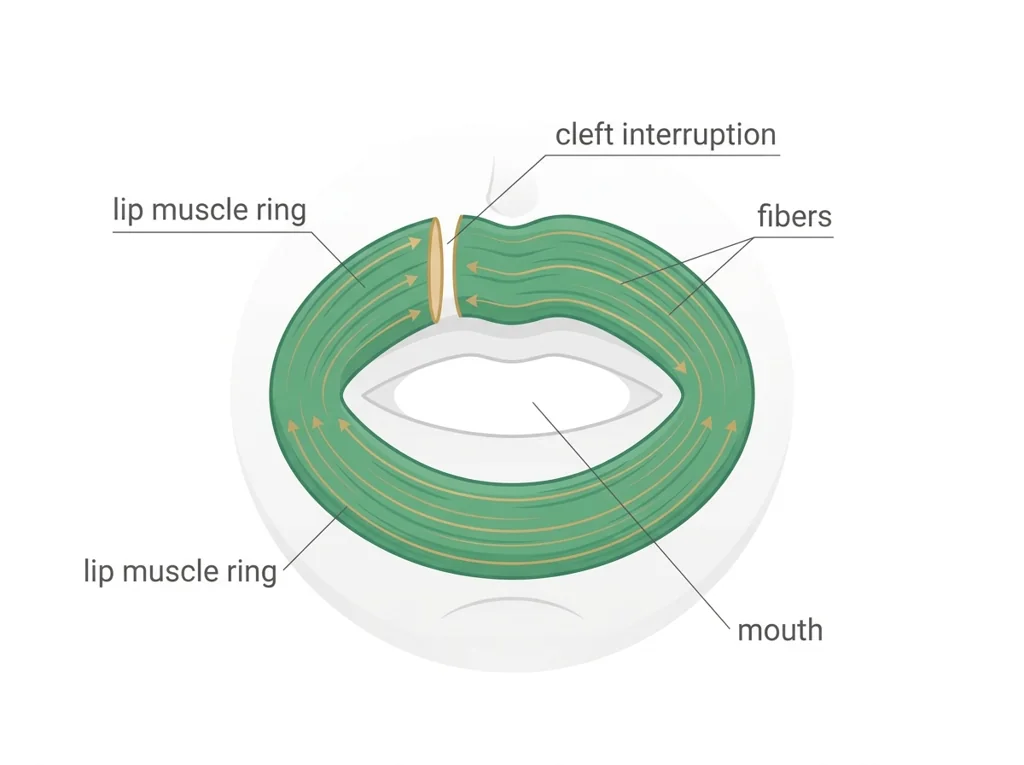
The ring of muscle encircling the mouth that closes and shapes the lips; its fibers are disrupted and repaired in cleft lip surgery.
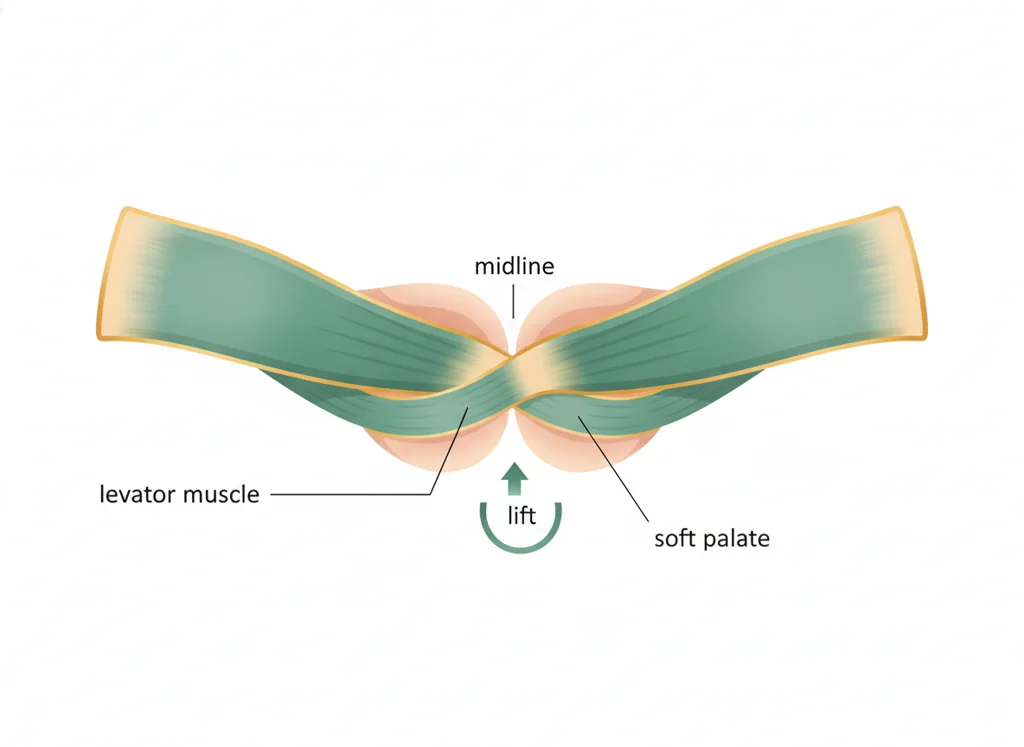
The main muscle that lifts the soft palate to close off the nose during speech and swallowing; it is often disrupted in cleft palate.
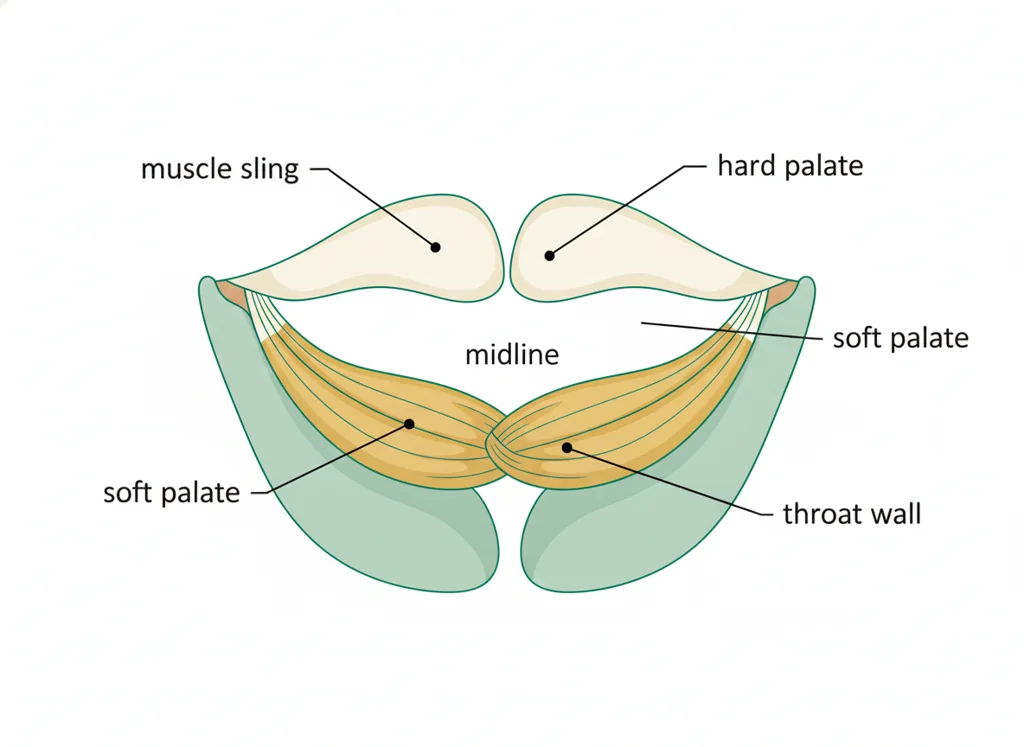
The hammock of soft palate muscles that meet in the midline so the palate can lift and seal the nose off during speech and swallowing.
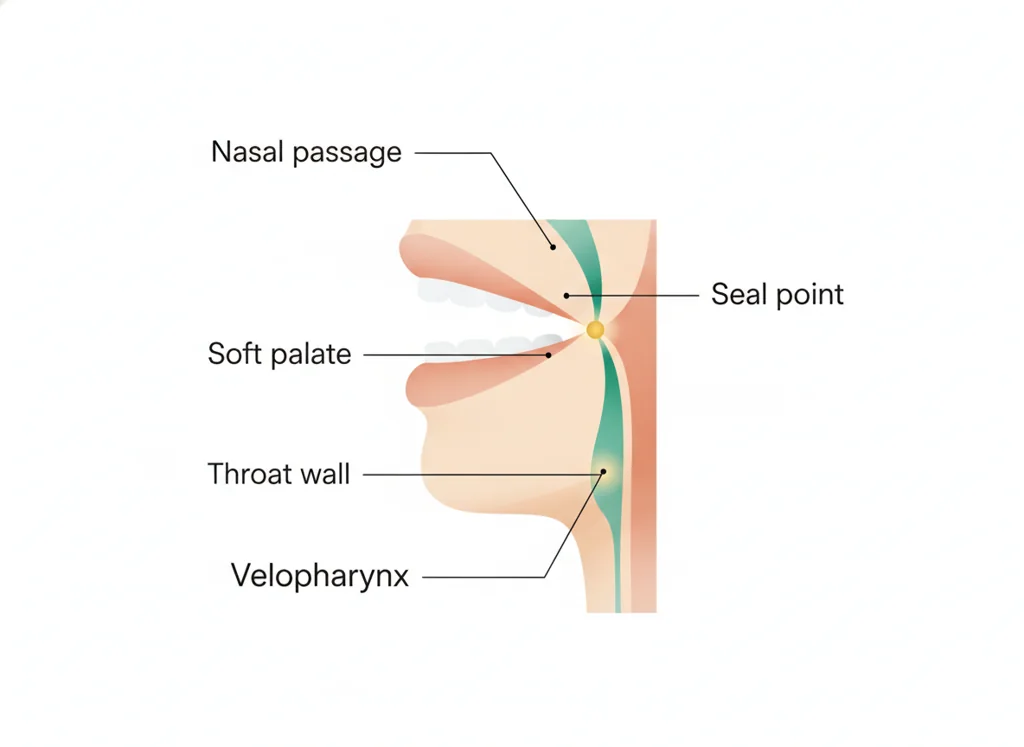
The space where the soft palate meets the back of the throat, which must seal off the nose during speech and swallowing.
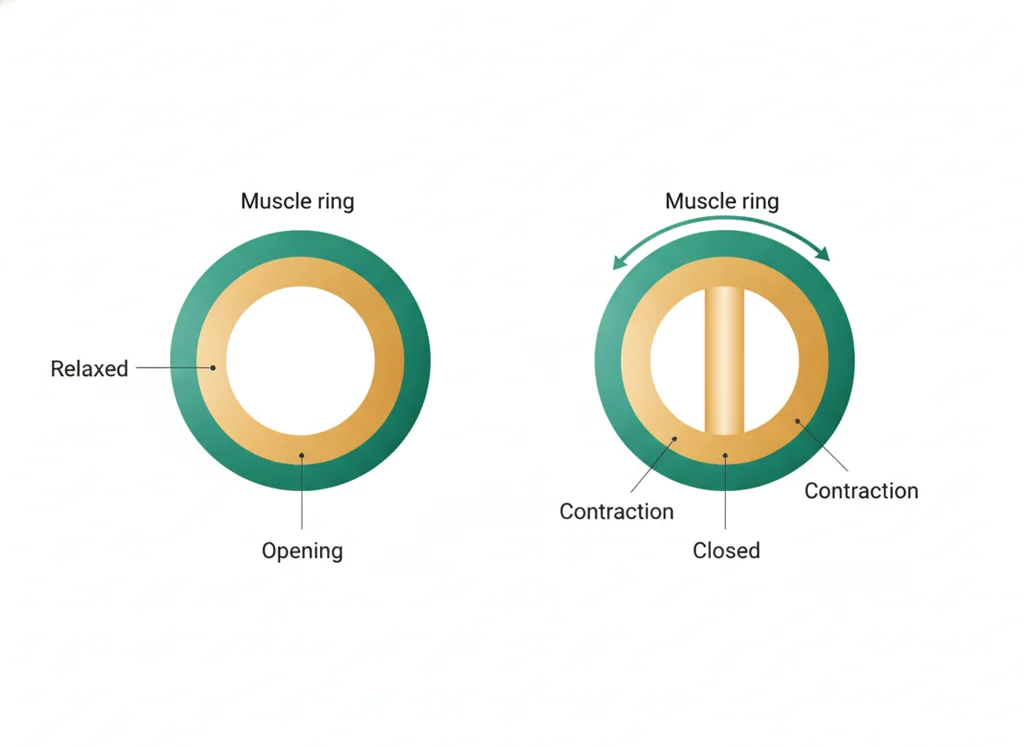
A ring of muscle that tightens to close an opening and relaxes to open it, such as the muscle ring that seals the throat during speech.
Research citation trail (advanced)
You do not need these papers or database records to finish the lesson. They document where the plain-language explainer's claims come from and are intended for teachers or advanced readers.