
When a Repair Falls Short: Fistula and VPI Revision
This reading contains every idea and every piece of evidence needed for today's decision. The research links at the end are optional.
Why this matters
The hole-versus-valve analogy gives students a reliable diagnostic split before technique names appear.
The question you are trying to answer
Which leak is visible when nothing moves?
Begin with the idea you already earned
A unilateral cleft can distort nasal cartilage, base, and septum, so nose care addresses breathing and symmetry across growth.
Study the analogy before the biology
- Which leak is visible when nothing moves?
- Which leak appears only during door action?
- Why would patching the wrong site fail?
Turn the analogy into three rules
Limit: Speech and swallowing involve coordinated living tissues, not a soundproof room.
Map those rules onto the biology
A palatal fistula is an opening that remains or reopens after palate repair. Symptoms can include food or liquid passing into the nose and speech effects.
Velopharyngeal insufficiency means the soft palate and throat walls do not close well enough during speech even when the palate surface is closed.
Teams use examination, speech assessment, and sometimes imaging or endoscopy. Revision choices balance speech, airway, scar, and patient burden.
Read Mateo's labeled case evidence
Case A has a visible opening in the repaired hard palate and liquid escape through the nose.
This supports a symptomatic fistula.
Case B has no palatal hole but consistent hypernasality and a gap during speech endoscopy.
This supports velopharyngeal insufficiency.
Secondary surgery can add scar and affect airway; speech surgery does not erase learned compensatory articulation.
Revision must be individualized and may still require speech therapy.
Make the concrete decision
You are triaging two postoperative referrals.
One student wants to give the same patch procedure to both case files.
- Separate fistula closure planning from VPI evaluation and airway-aware speech planning.
- Use the same repair because both involve nasal escape.
- Treat structural VPI with blowing exercises alone.
Choose the correct triage and cite one differentiating finding per case.
Claim ceiling: You may distinguish the supplied mechanisms and next evaluations. You may not select a real revision procedure.
Write the 10-year takeaway
A fistula is a tissue opening, while velopharyngeal insufficiency is a moving-valve problem; each needs different evidence and treatment planning.
- Which finding supports a fistula?
- Why can speech therapy not close a structural VPI gap?
Glossary in plain English
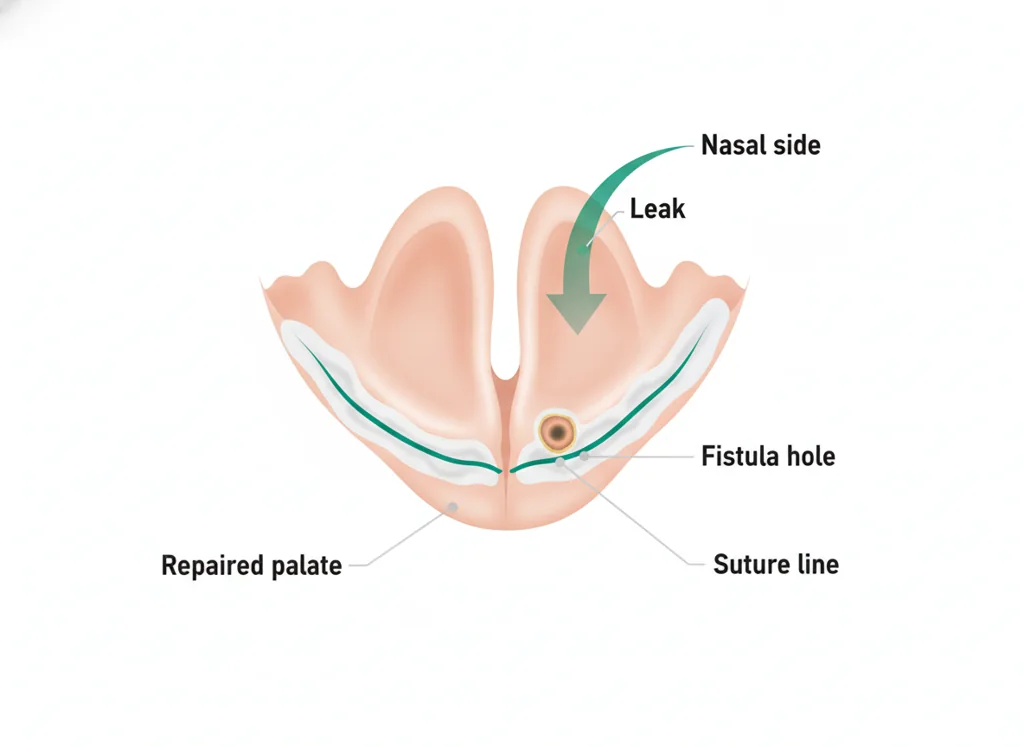
A small hole that reopens in the roof of the mouth after cleft palate repair, sometimes letting food or air leak into the nose.
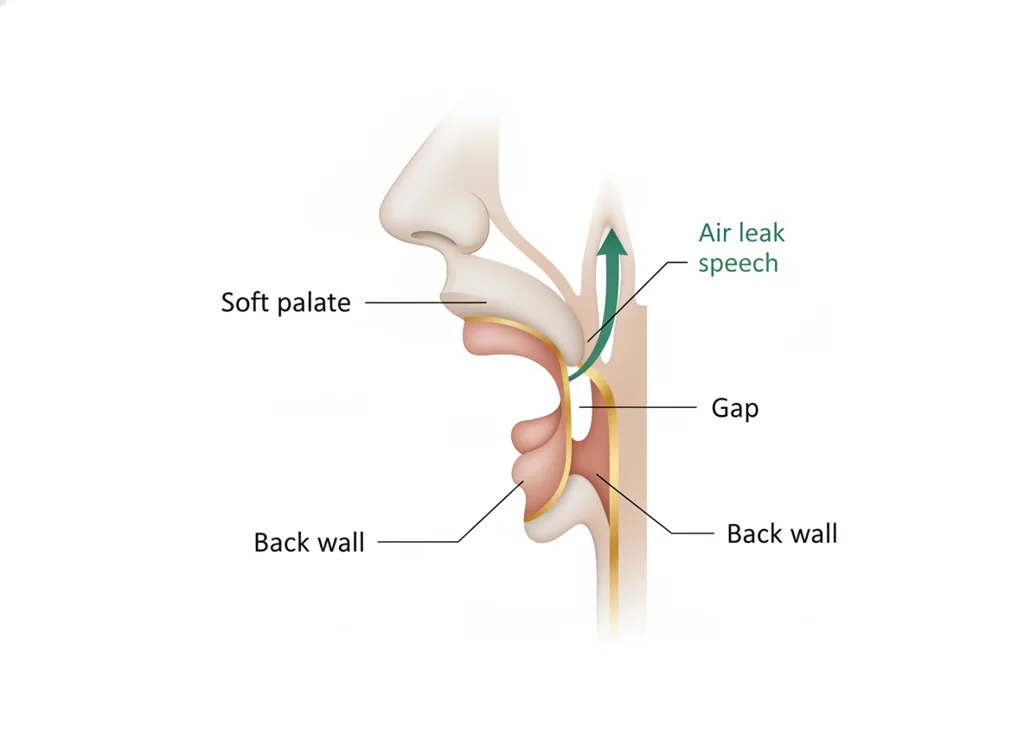
When the soft palate cannot fully close off the nose from the mouth during speech, letting air escape and making speech sound nasal.
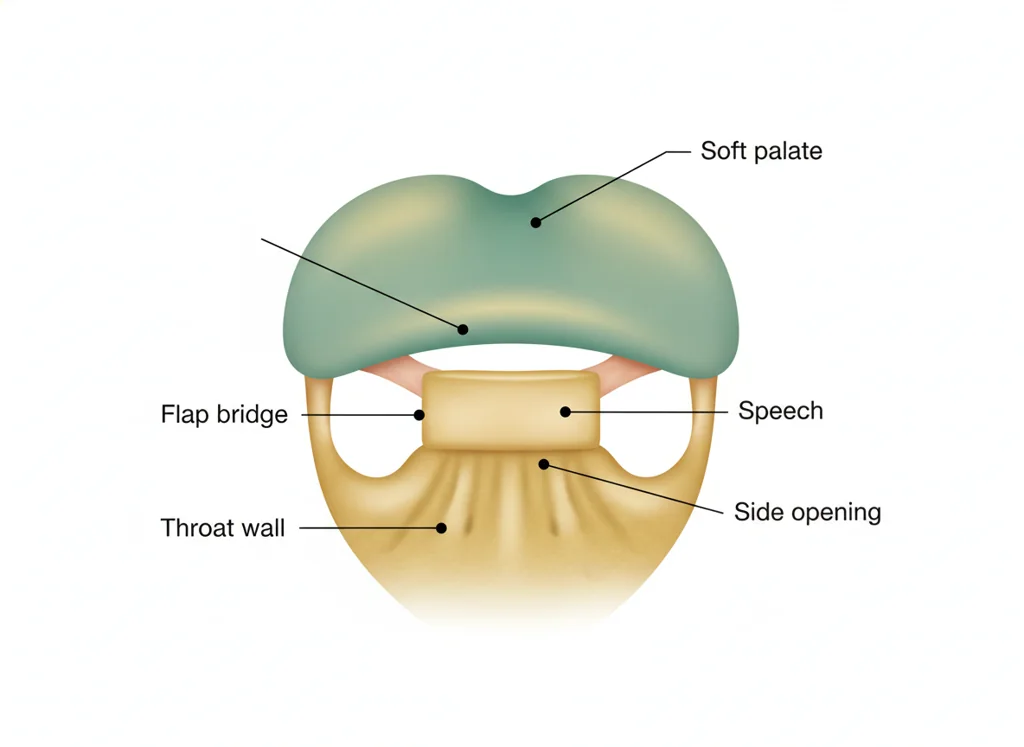
A surgery that builds a tissue bridge at the back of the throat to reduce air escaping through the nose during speech.
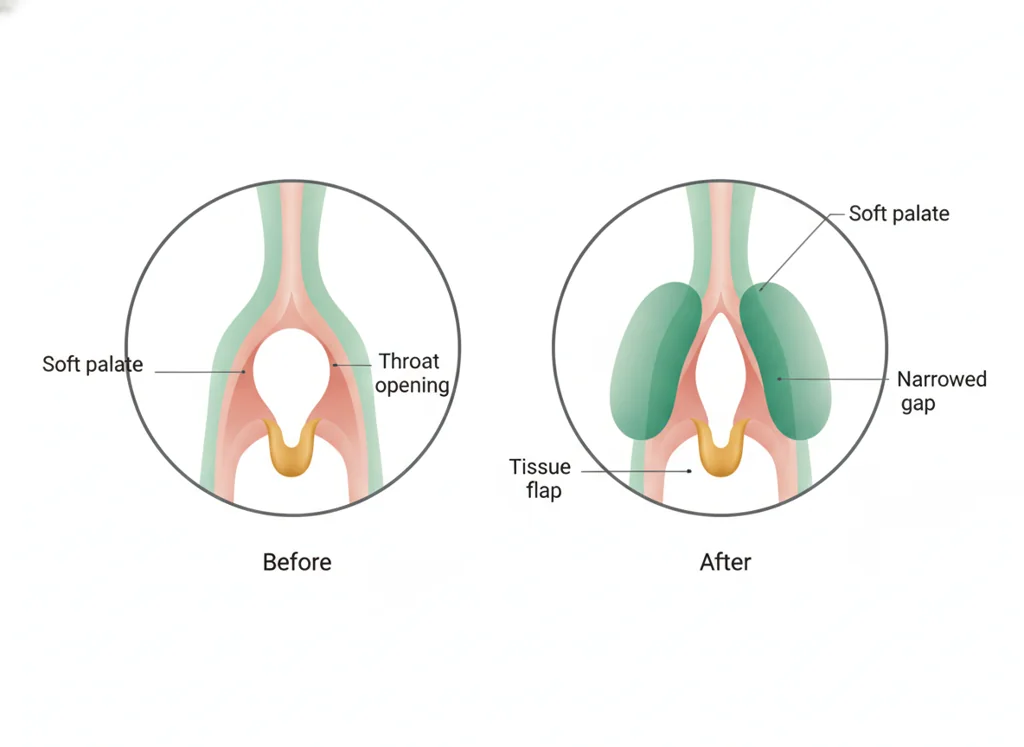
A surgery that narrows the opening between the throat and nose so the palate can close it during speech, reducing nasal air leak.
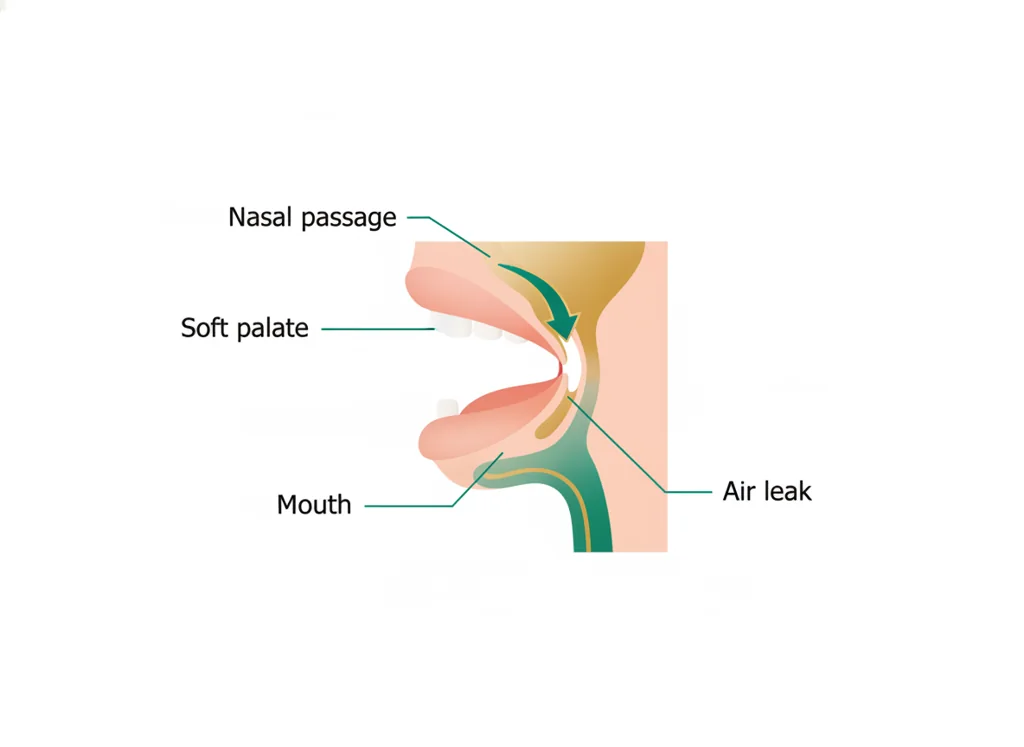
Speech that sounds overly nasal because air leaks into the nose when the soft palate cannot fully close off the mouth from the nasal passage.
Research citation trail (advanced)
You do not need these papers or database records to finish the lesson. They document where the plain-language explainer's claims come from and are intended for teachers or advanced readers.
- American Cleft Palate Craniofacial Association. 2024 Parameters of Care.
- Tache & Mommaerts 2019, Frequency of Oronasal Fistulation After Primary Cleft Palate Repair (Cleft Palate Craniofac J)
- Hofman et al. 2024, Long-Term Speech Outcomes After Sommerlad Palatoplasty (Clin Oral Investig)
- de Blacam et al. 2022, The Case for the Pharyngeal Flap in Velopharyngeal Dysfunction (J Plast Reconstr Aesthet Surg)