
Correcting the Bite and the Midface
This reading contains every idea and every piece of evidence needed for today's decision. The research links at the end are optional.
Why this matters
Students apply the analogy steps to a real choice where no single technique wins every outcome.
The question you are trying to answer
Which method completes movement at once?
Begin with the idea you already earned
Cleft-related midface undergrowth can reflect both underlying anatomy and treatment history, so scar alone should not be treated as a proven single cause.
Study the analogy before the biology
- Which method completes movement at once?
- Which method spreads change over time?
- What tradeoffs must be compared besides distance?
Turn the analogy into three rules
Limit: Jaw surgery changes living bone and soft tissue and requires individualized planning, not generic platform mechanics.
Map those rules onto the biology
Orthognathic surgery changes jaw position when orthodontics alone cannot correct a skeletal bite problem.
A Le Fort I procedure moves the maxilla in one operation. Distraction moves bone gradually after an osteotomy.
Severity, growth, stability, treatment burden, airway, speech, and family goals shape the choice. Advancing the maxilla can alter velopharyngeal function, so speech assessment matters.
Read Mateo's labeled case evidence
Mateo's adolescent records show a significant anterior crossbite and maxillary retrusion not corrected by orthodontics alone.
A skeletal correction is a reasonable team discussion.
He is near skeletal maturity in the composite scenario.
Definitive jaw positioning can be considered after growth assessment.
Advancing the maxilla can change velopharyngeal relationships and hypernasality risk; comparative evidence does not establish one best method for every cleft patient.
Speech, airway, stability, and burden belong in method selection.
Make the concrete decision
You are the craniofacial surgery conference chair.
Mateo needs a 7 mm maxillary advancement, has stable airway testing, and has a history of repaired VPI that is currently controlled.
- Compare conventional advancement and distraction with orthodontic, speech, and airway input.
- Choose a method from distance alone and skip speech assessment.
- Perform definitive surgery before checking growth status.
Choose the conference process and cite skeletal plus speech-risk evidence.
Claim ceiling: You may identify decision variables. You may not select a real operation without full imaging, examination, and shared decision-making.
Write the 10-year takeaway
Severe maxillary retrusion may require moving the upper jaw, but the choice between methods depends on severity, growth, stability, burden, airway, and speech.
- How does distraction differ from conventional advancement?
- Why should speech be checked before jaw surgery?
Glossary in plain English
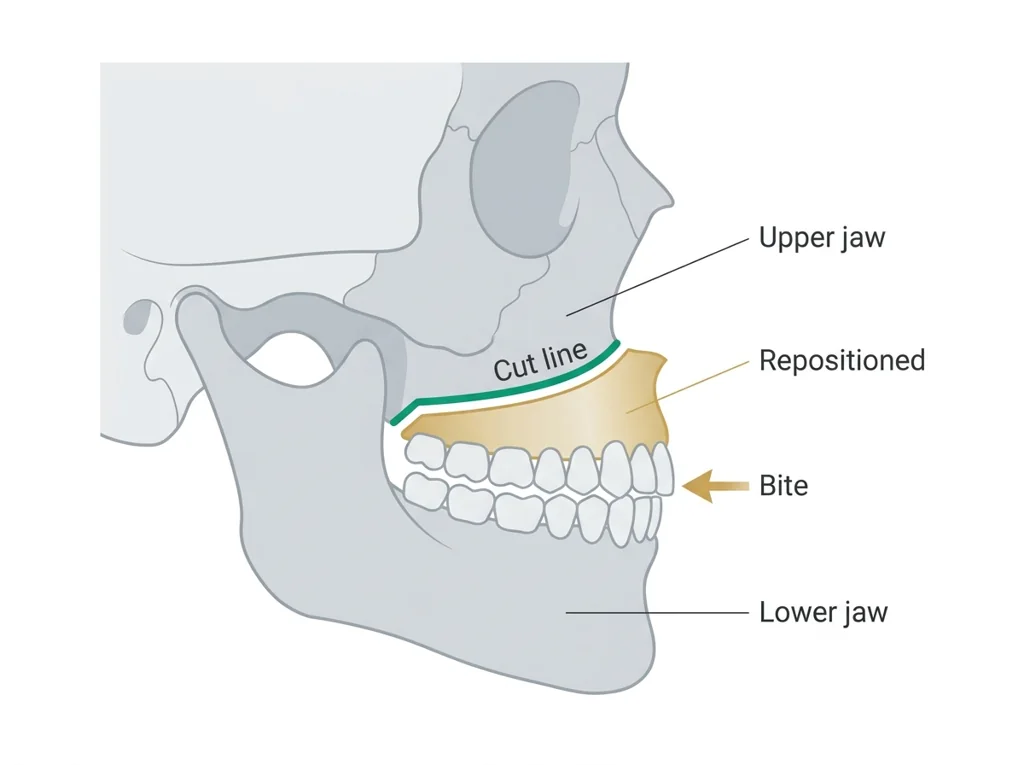
Surgery that repositions the upper or lower jaw bones to correct alignment of the bite and the face.
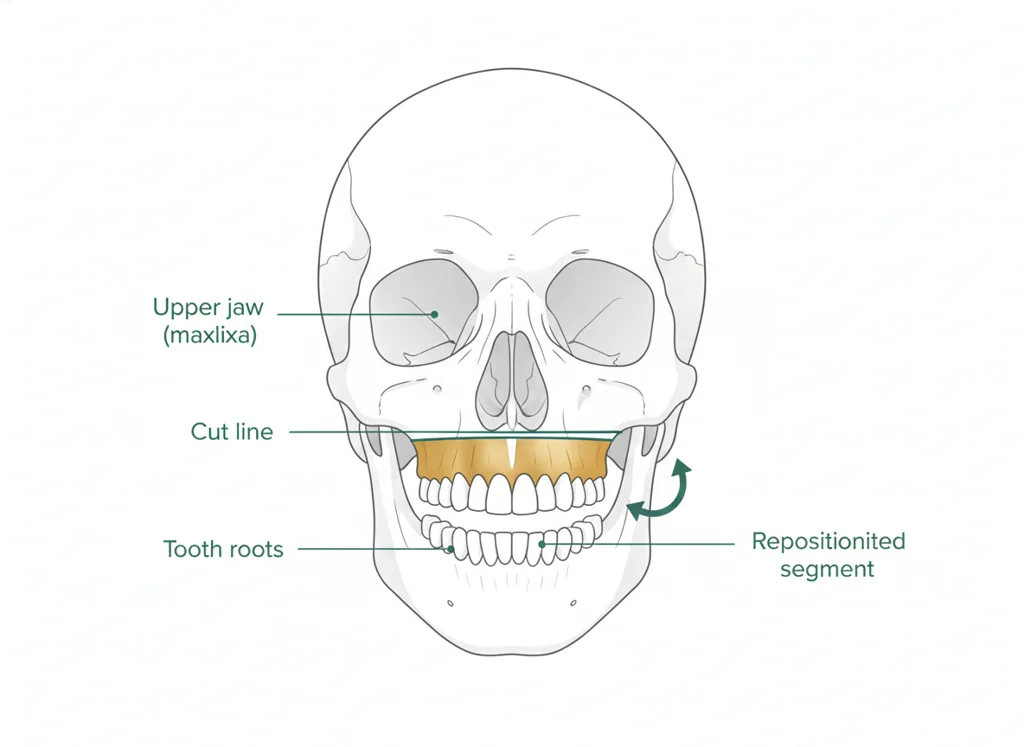
A surgery that cuts the upper jaw horizontally above the teeth so it can be moved into a better position and fixed in place.
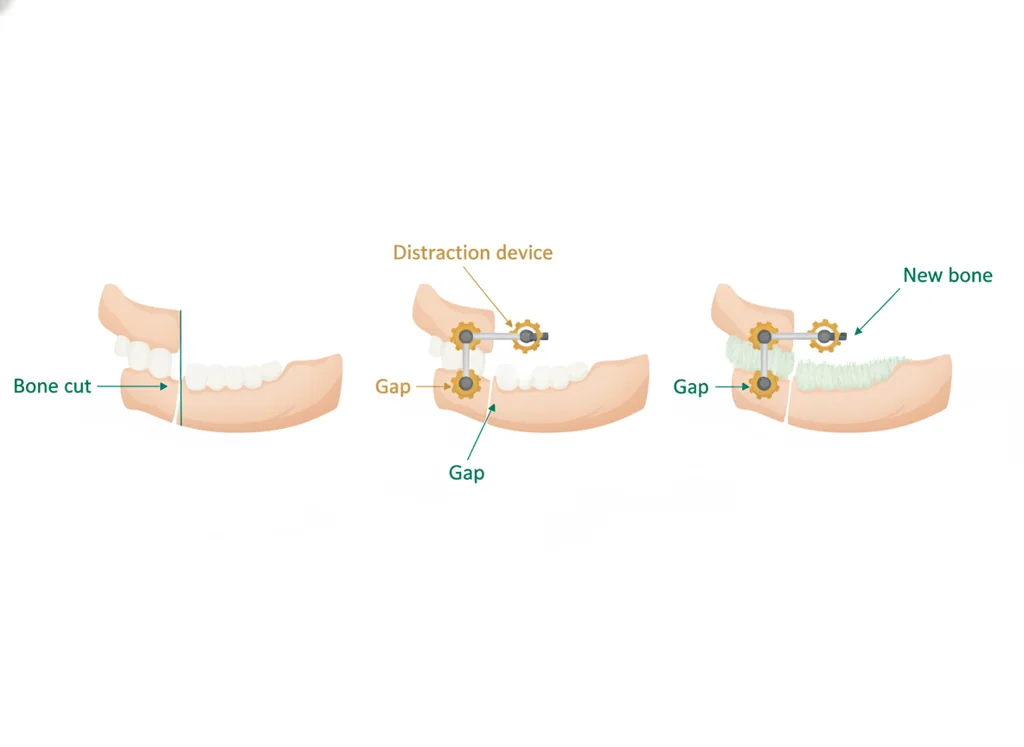
A surgical technique that slowly pulls two cut bone ends apart a little each day so new bone grows to fill the widening gap.
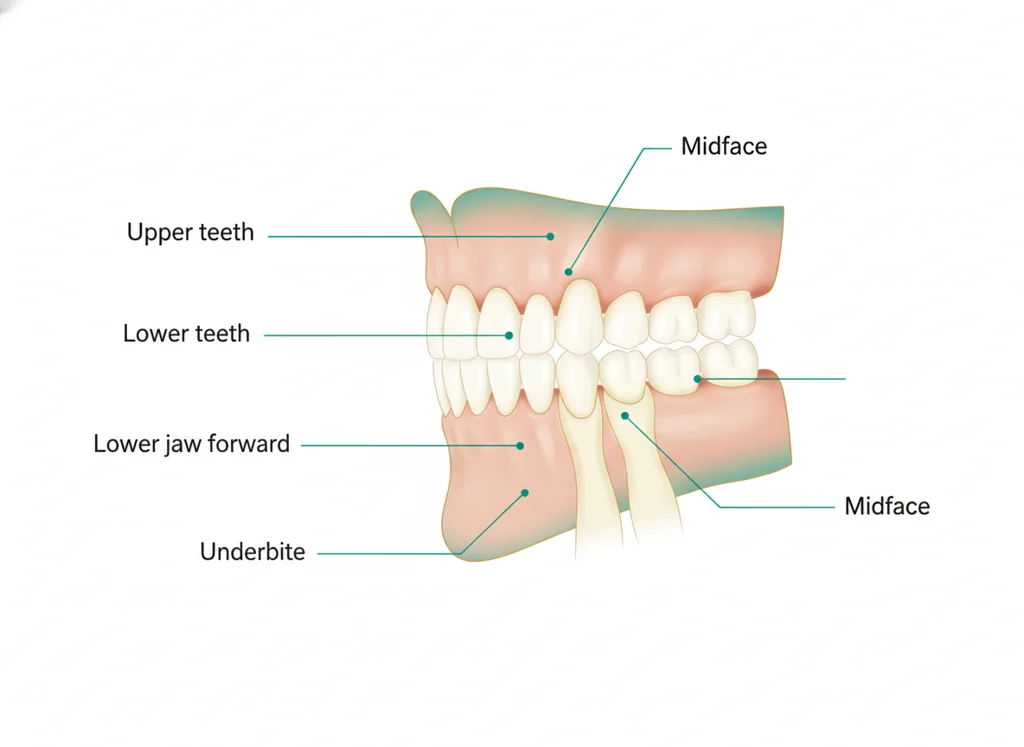
A bite where the lower teeth and jaw sit too far forward of the upper teeth, often seen when the midface is underdeveloped.
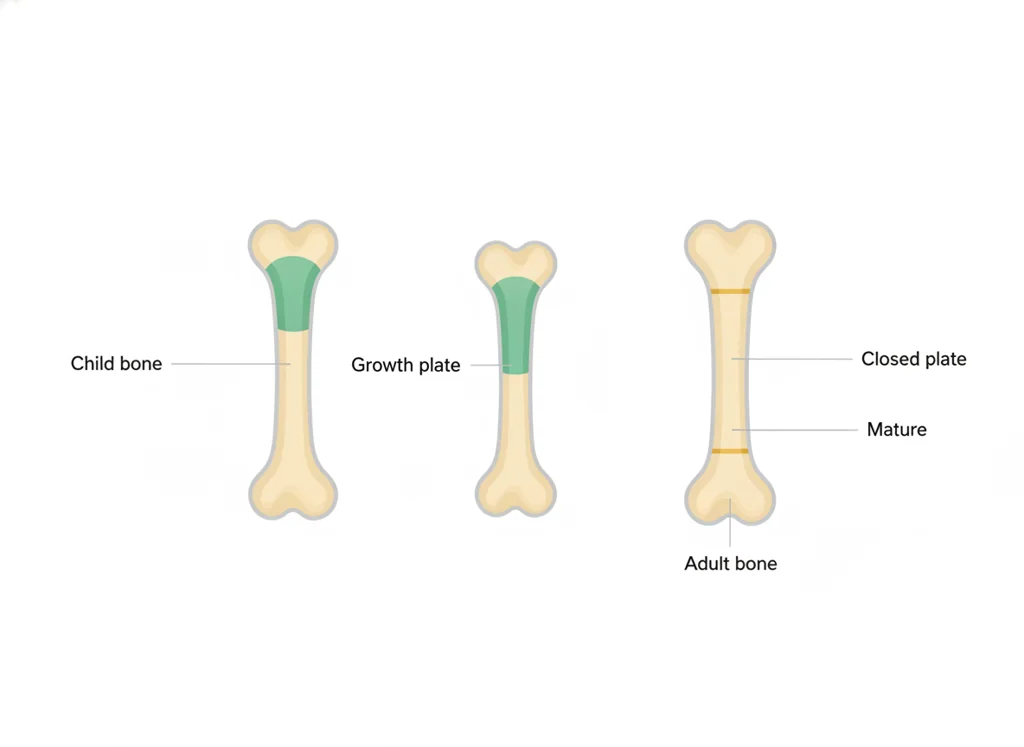
How fully the bones have grown and hardened, used to decide when jaw growth is finished enough for certain surgeries.
Research citation trail (advanced)
You do not need these papers or database records to finish the lesson. They document where the plain-language explainer's claims come from and are intended for teachers or advanced readers.
- American Cleft Palate Craniofacial Association. 2024 Parameters of Care.
- Powell et al. 2022, Does Early Secondary ABG Influence Need for Maxillary Advancement (Cleft Palate Craniofac J)
- Dissaux et al. 2016, Evaluation of 5-Year-Old Children With Complete CLP, Part 2 (J Craniomaxillofac Surg)
- Daskalogiannakis et al. 2009, Need for Orthognathic Surgery in Repaired Complete Unilateral CLP (Cleft Palate Craniofac J)