
When to Repair, and Why the Calendar Matters
This reading contains every idea and every piece of evidence needed for today's decision. The research links at the end are optional.
Why this matters
Lip repair often happens at 3 to 6 months and palate repair at 9 to 15 months, so timing changes what the team can safely protect.
The question you are trying to answer
Why are the lip and palate repaired at different times?
Begin with the idea you already earned
Palate repair must close the oral-nasal opening and rebuild the levator sling while protecting blood supply and growth.
Study the analogy before the biology
- Why not repair at the first possible minute?
- What is lost by waiting too long?
- Which conditions make the window individual?
Turn the analogy into three rules
Limit: Surgical timing depends on individual clinical factors and cannot be reduced to a maintenance calendar.
Map those rules onto the biology
Cleft care is staged. Healthy infants often have primary lip repair within the first six months, although centers vary.
Primary palate repair often occurs from 9 to 14 months and ideally by 18 months. Earlier closure in selected patients remains debated.
Timing balances safety, speech development, growth, family readiness, surgeon experience, and local protocol. It is a window, not a magic date.
Read Mateo's labeled case evidence
ACPA states that primary lip repair is often initiated within the first six months for healthy infants.
Three months can be a common center target but is not a universal rule.
ACPA states that primary palate repair often occurs at 9 to 14 months and ideally by 18 months.
Speech development and readiness shape the window.
Mateo is medically stable in the composite file, but care is shared with the family and center team.
A final date depends on individual assessment and protocol.
Make the concrete decision
You are the cleft-team coordinator.
A handout says every infant must have lip repair on the exact 90th day and palate repair on the exact first birthday.
- Replace exact dates with evidence-based windows and readiness gates.
- Keep the exact birthdays as universal rules.
- Avoid discussing timing with the family.
Choose the calendar language and cite both ACPA timing windows.
Claim ceiling: You may propose an educational sequence for the stable composite case. You may not schedule real surgery or override the treating team.
Write the 10-year takeaway
Cleft surgery timing balances present safety, early function, future growth, and family readiness rather than following one magic date.
- What is the ACPA palate-repair window?
- Why should the team use readiness gates?
Glossary in plain English
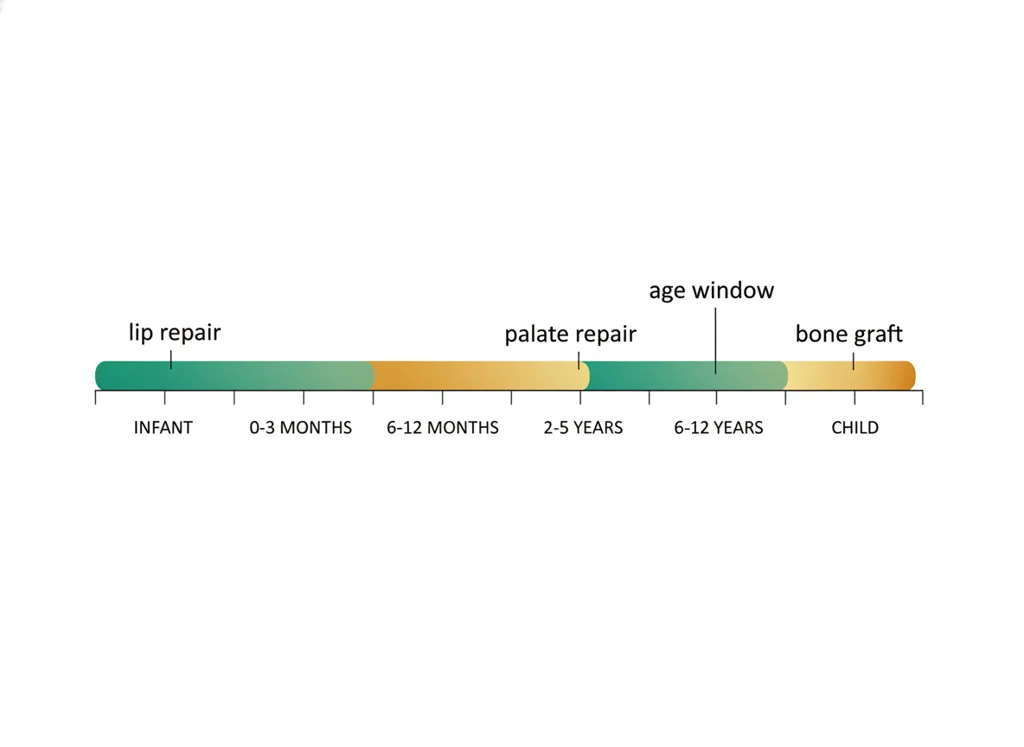
Choosing the best age to perform a repair, balancing growth, speech, and healing, such as lip repair in infancy and palate repair before speech.
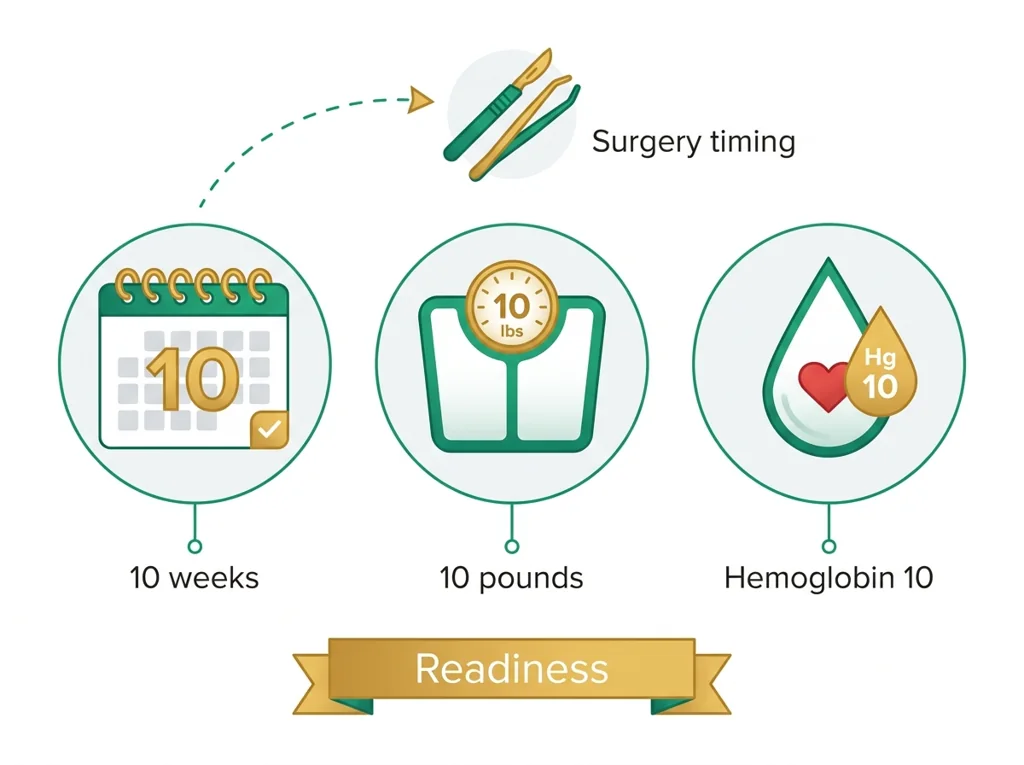
A classic guideline for timing cleft lip surgery: the infant should be about ten weeks old, ten pounds, and have hemoglobin near ten.
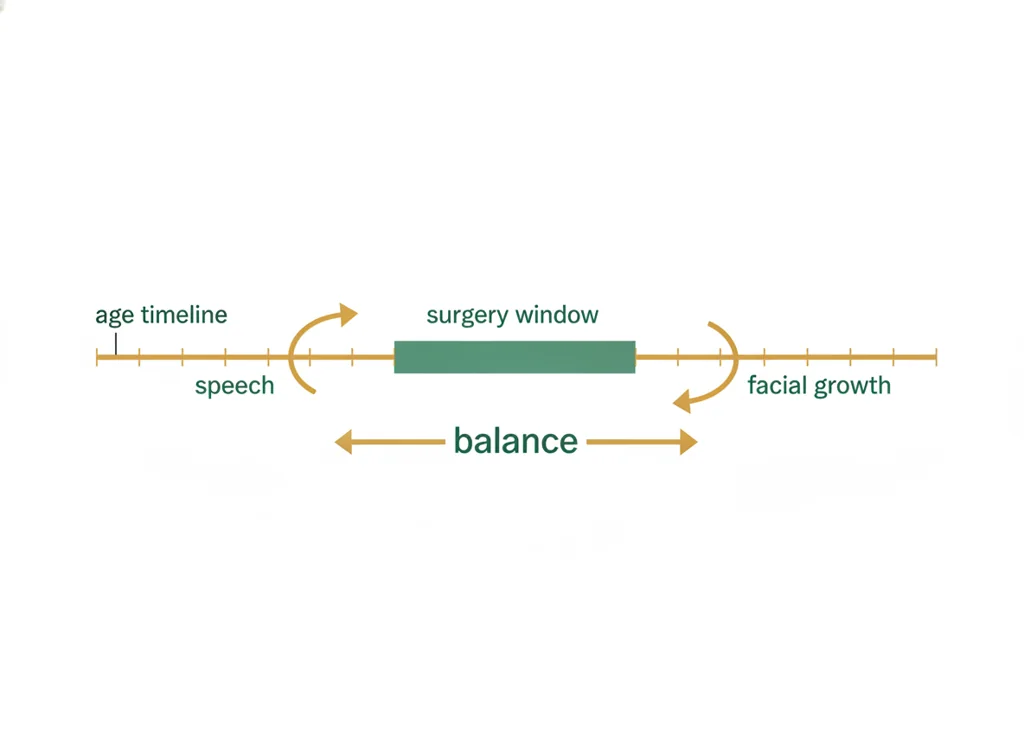
The choice of when to surgically repair a cleft palate, balancing better speech from earlier repair against possible effects on facial growth.
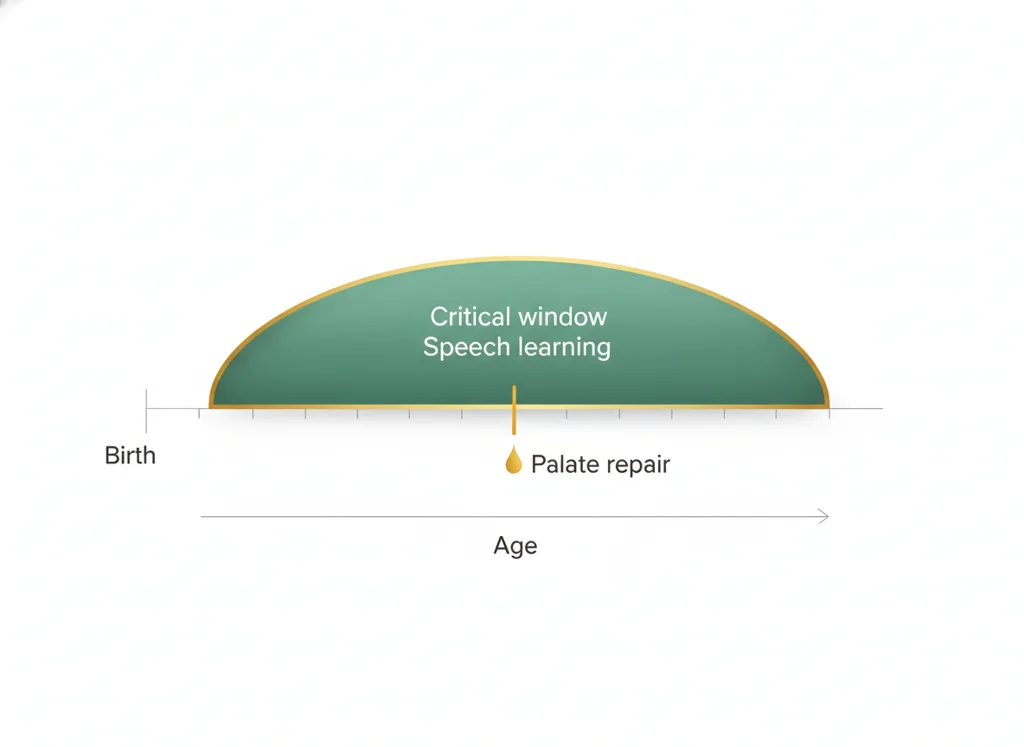
The early childhood period when the brain learns speech and language fastest, making timely cleft palate repair important for clear speech.
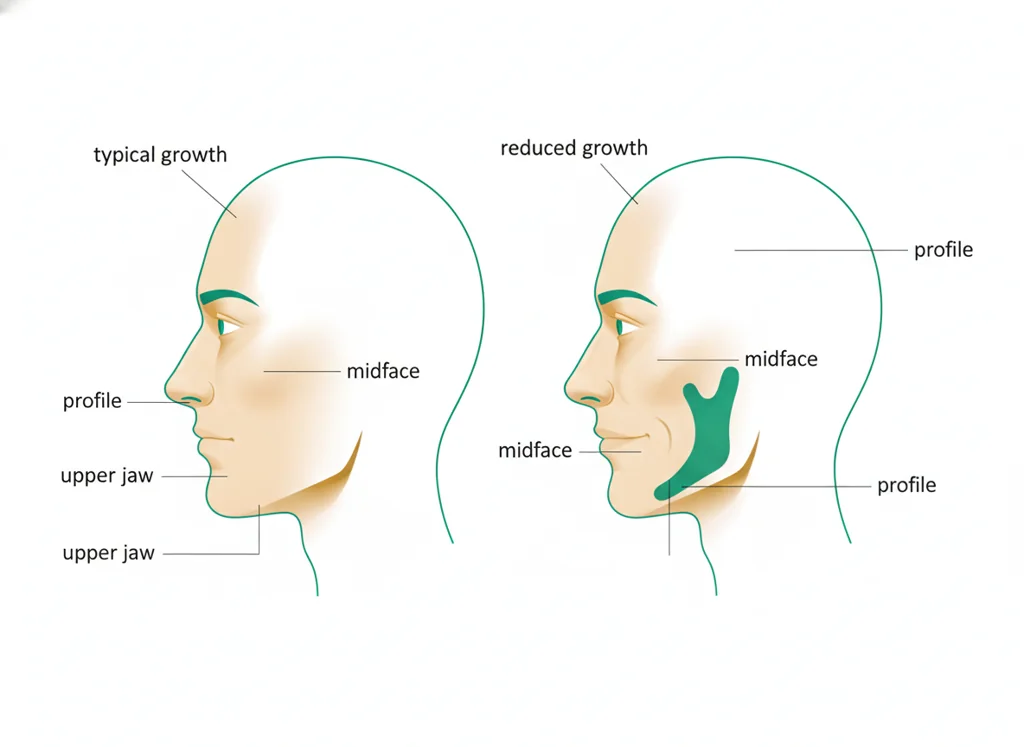
Slowed or uneven growth of a body part, such as the midface after cleft surgery, leading to a smaller or asymmetric structure.
Research citation trail (advanced)
You do not need these papers or database records to finish the lesson. They document where the plain-language explainer's claims come from and are intended for teachers or advanced readers.
- American Cleft Palate Craniofacial Association. 2024 Parameters of Care.
- Lindeborg et al. 2020, Optimizing speech outcomes for cleft palate (Curr Opin Otolaryngol HNS)
- Huang et al. 2023, Sommerlad-Furlow modified palatoplasty, older age worse (J Craniomaxillofac Surg)
- Zaluzec et al. 2019, Delay in Cleft Repair: Health Disparities (J Craniofac Surg)