

Craniofacial Research Capstone
The finale of the Baby Mateo case: turn the year into your own research question, design an experiment, and present.
All year we have followed Baby Mateo, a composite patient born with a , from the developing face to the genes and cells that build it, to the public databases scientists actually use. This capstone is where you stop being a student of the case and become a researcher of it. Pick one of the six missions below as your starting point. Each is a complete, doable study (computational, data analysis, or modeling) that you can run from any classroom or home machine using free, vetted databases. The missions are ordered by how much scaffolding they give you, from a guided run to designing your own original study. Each one shows a worked example first, so you always know what good research looks like before you start. Your job: ask a real question, design it with variables and controls, do the work, and present what you found.
This opens after you have written a medical innovation proposal in class, so you already know how to shape a question and a design. It runs as the capstone across the spring and is due by the WebXam review window, which doubles as exam prep for the research-design questions.
Plan about 45 to 90 minutes each (Mission 6, your own study, takes as long as your design needs). That is about 4 to 6 hours total, spread across the spring at your own pace. There is no daily deadline; chip away at it.
You may do this solo or in a small group. If you choose a group, submit ONE shared product per mission, plus a one-line note from each person saying what they did. The research bar is the same either way; the group rubric just adds a teamwork score. Pick the path that fits your project.
Mission 1: Is IRF6 Conserved? (BLAST)
If a gene's sequence stays nearly the same across very different animals, evolution has been protecting it, which is a strong clue that its job is essential.
Goal: Use NCBI to compare the across human, mouse, and zebrafish, and use the to argue why a conserved gene is likely important.
- compares a query sequence to a database and reports (how many positions match) and an E-value (how likely a match is by chance).
- Conservation means a sequence has stayed similar across species over evolutionary time.
- High conservation across distant species (like fish and humans) suggests strong : harmful changes were removed because the gene's job matters.
- A states a comparison and what you expect to measure, for example 'How similar is human to zebrafish IRF6?'
- Open and choose BLAST (blastp). Use human (UniProt O14896) as your query.
- Run the search and record the for the best mouse hit and the best zebrafish hit.
- State your question and a claim, then back it with the identity numbers as evidence and explain what high conservation implies about importance.
- You can run a search and read and E-value.
- You can compare conservation across two or more species.
- You can argue from conservation data to a claim about a gene's importance.
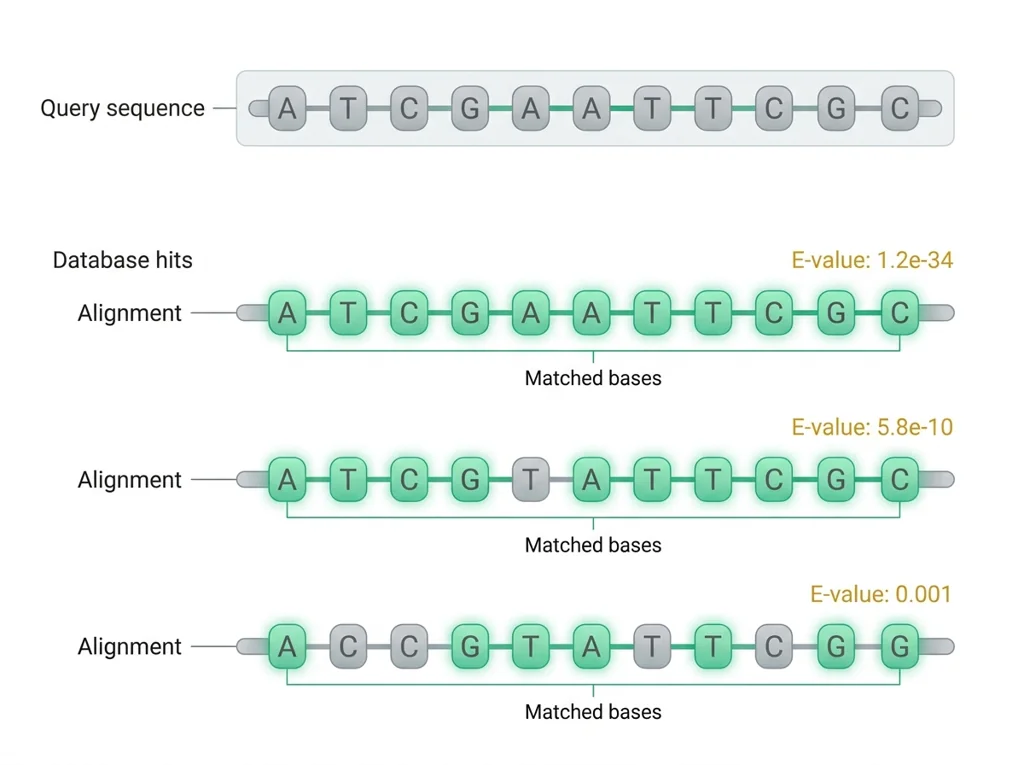
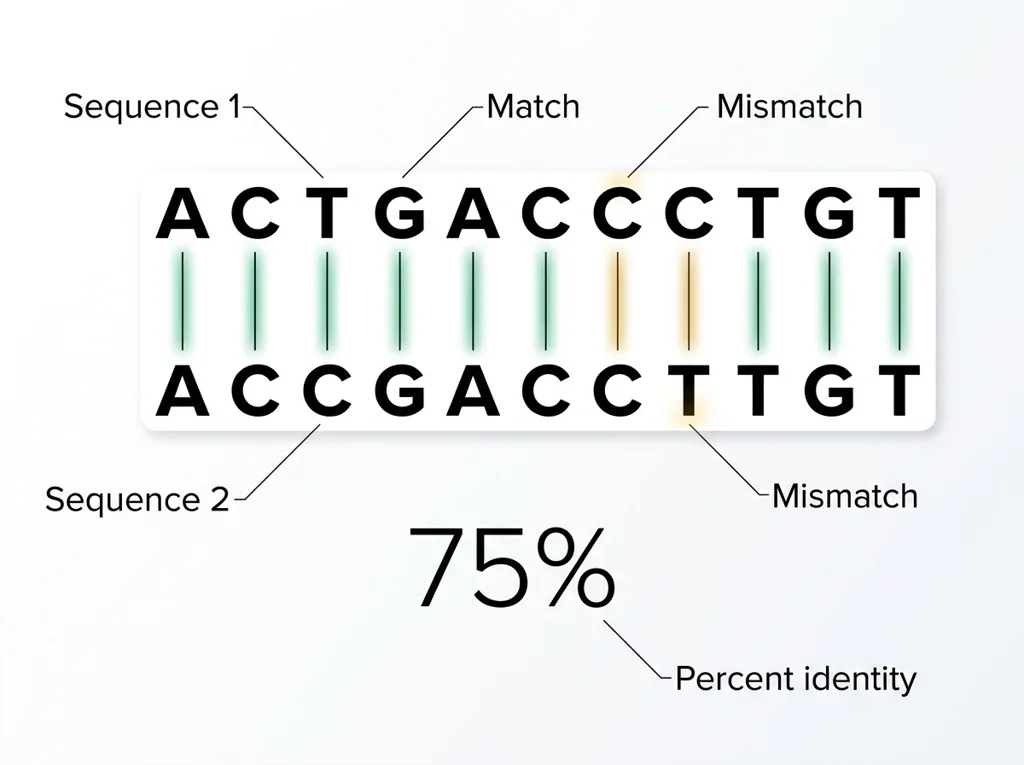
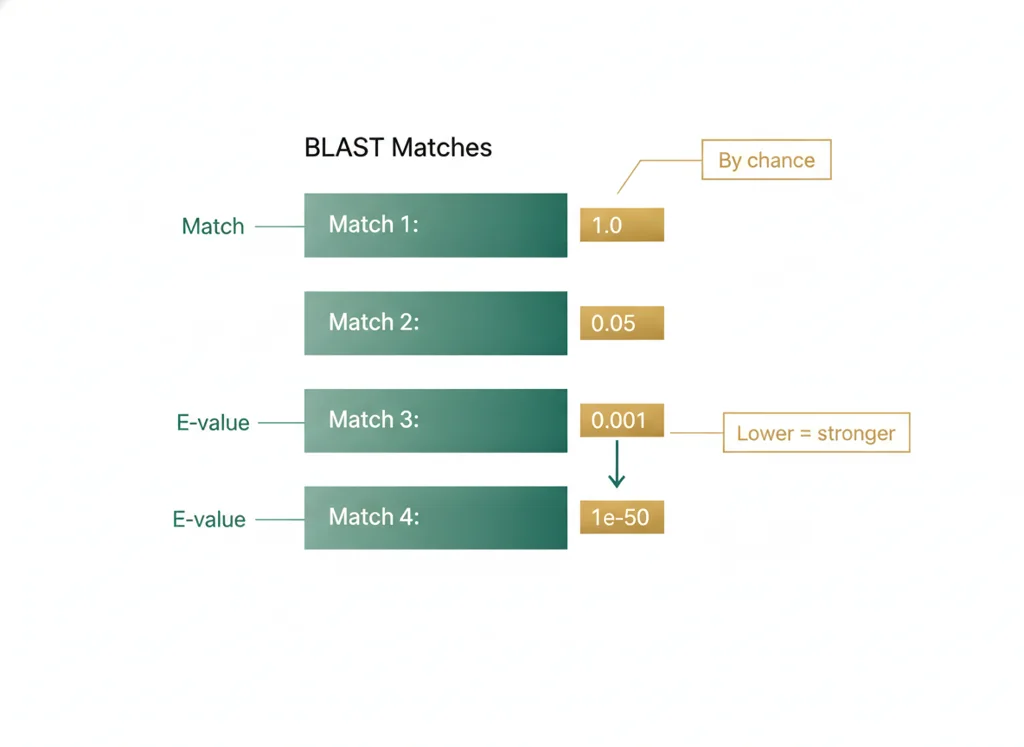
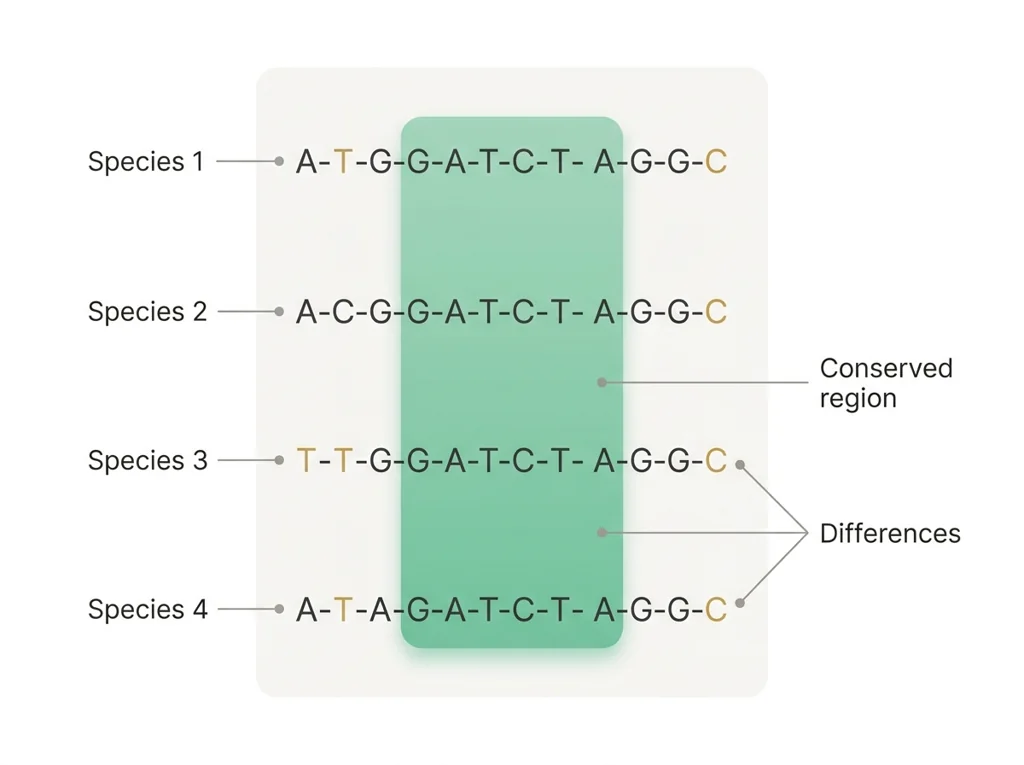
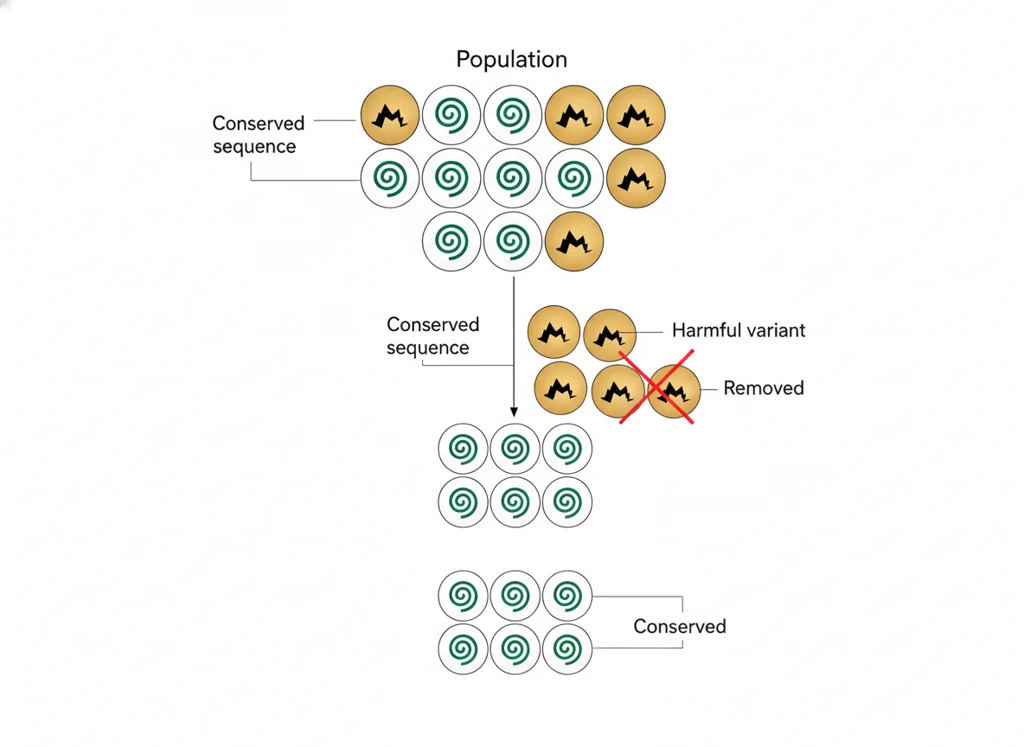
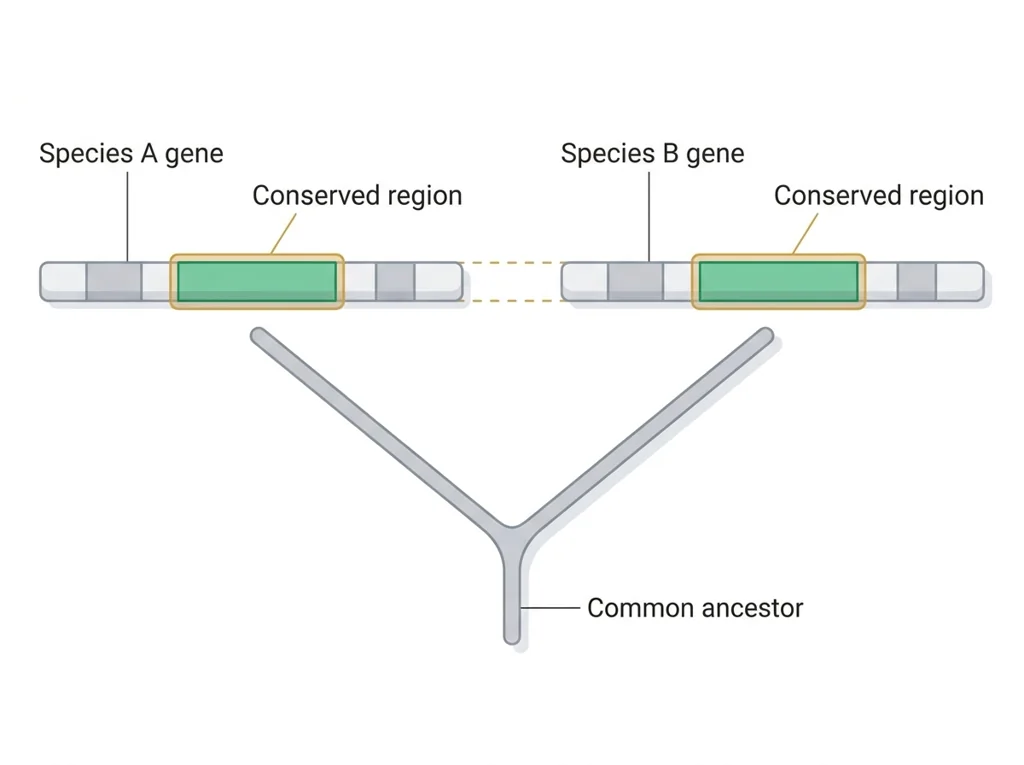
Use this model to check your own work. Match the structure and detail, but make the wording and any data your own.
Question: How conserved is the human IRF6 protein in mouse and zebrafish, and what does that say about its importance?
- Claim: IRF6 is highly conserved, which means it is doing an essential job.
- Evidence: My blastp of human IRF6 found the mouse protein at about 94 percent identity and the zebrafish protein at about 70 percent identity, both with E-values near zero.
- Reasoning: Humans and zebrafish last shared an ancestor over 400 million years ago. If the sequence is still about 70 percent identical after all that time, harmful mutations must have been removed by selection because the gene matters. A gene you can freely mutate would have drifted far more. So the conservation is evidence that IRF6 has an essential role, which fits its link to building the face.
| Comparison | Percent identity | E-value |
|---|---|---|
| Human vs mouse IRF6 | about 94% | ~0 (highly significant) |
| Human vs zebrafish IRF6 | about 70% | ~0 (highly significant) |
This model shows the level of evidence and organization needed to complete: Completes the conservation study: a cross-species identity table plus an argument that conservation implies importance.
- Name the variables and include units.
- Enter observations without changing the raw values.
- Check labels, calculations, and patterns before interpreting the data.
Keep the structure. Replace the question, facts, measurements, and evidence. Then recheck units, vocabulary, and whether the conclusion goes beyond the evidence.
Also due today: Submit a screenshot of one BLAST result page next to your table.
One exam-style question on this system. Try it before you reveal the answer, then read why each choice is right or wrong.
Tap an answer to see the full explanation. Nothing is recorded or graded.
It builds this reusable test skill: Interpreting cross-species conservation from BLAST identity.
- Name the concept or data pattern being tested.
- Cross out choices that violate that rule or the evidence.
- Justify the best remaining choice before checking the answer.
Go to Schoology to turn this in. Submit one PDF. Schoology attaches your name to your upload; on the page itself, write your period and code. Name the file: FirstName LastName - Assignment Title - YYYY-MM-DD.pdf. If you cannot get in, see Mr. Mendoza. Do not skip the work.
The most guided mission, and a strong first study if you are new to databases.
Mission 2: Structure and a Pathogenic Variant (AlphaFold)
A 's job comes from its shape, so a that changes the shape of a key region can break the protein's function.
Goal: Use the and UniProt entries for to locate the , then predict how a known would affect that region's structure and function.
- predicts a 's 3D structure; the model also reports a confidence score for each region.
- UniProt lists a 's functional regions (domains) and known disease variants.
- is a : its must keep a precise shape to grip and switch genes on.
- A variant that changes an amino acid in or near the can distort the fold and weaken or block binding.
- Open the entry for (O14896) and the matching UniProt entry. Find where the sits along the .
- On UniProt, pick one variant annotated as pathogenic (disease-linked) and note its position and the amino acid change.
- Predict, in writing, how that change would affect the 's shape and the 's ability to regulate its target genes.
- You can locate a functional domain on a structure using UniProt and .
- You can read a variant's position and amino acid change.
- You can reason from a structural change to a likely functional effect.
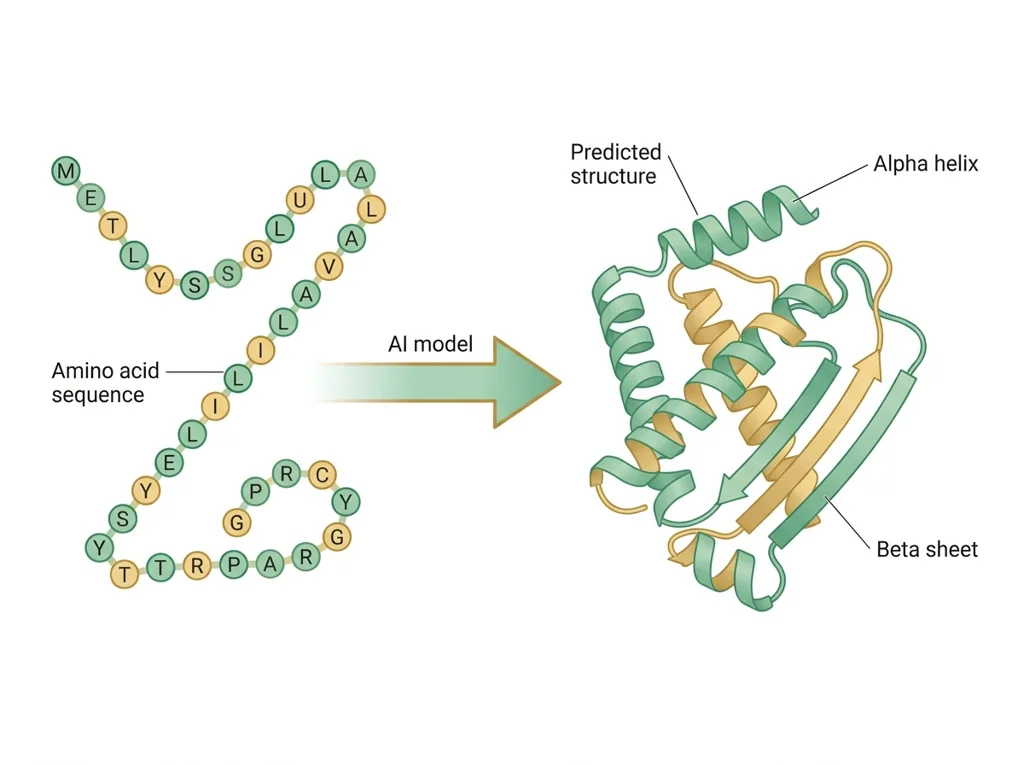
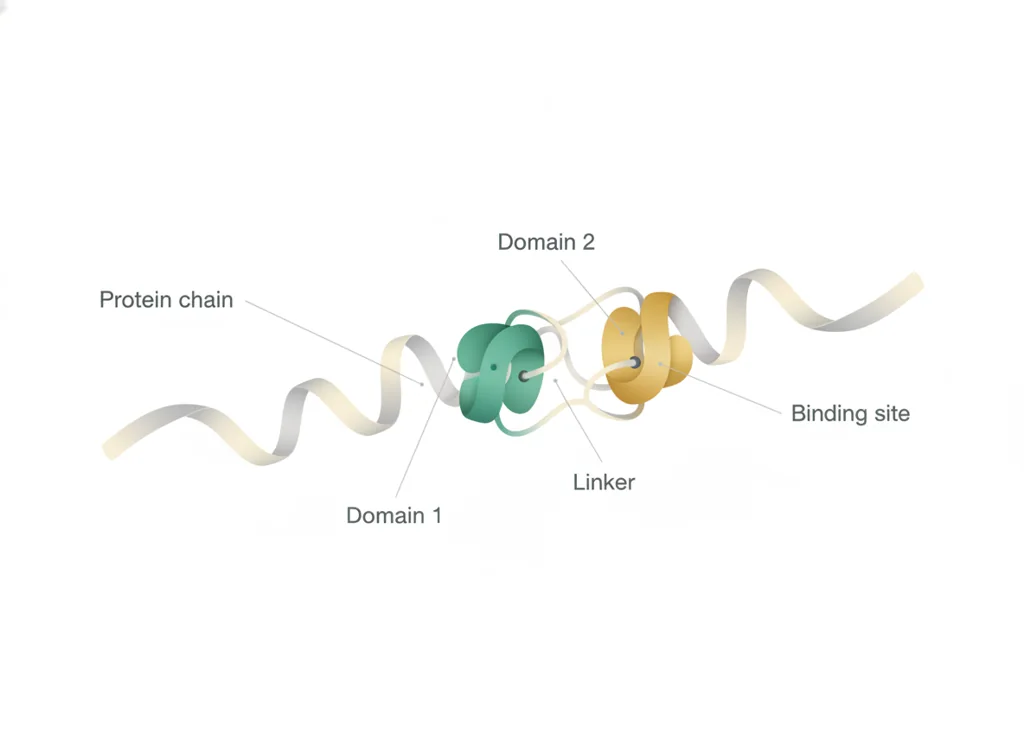
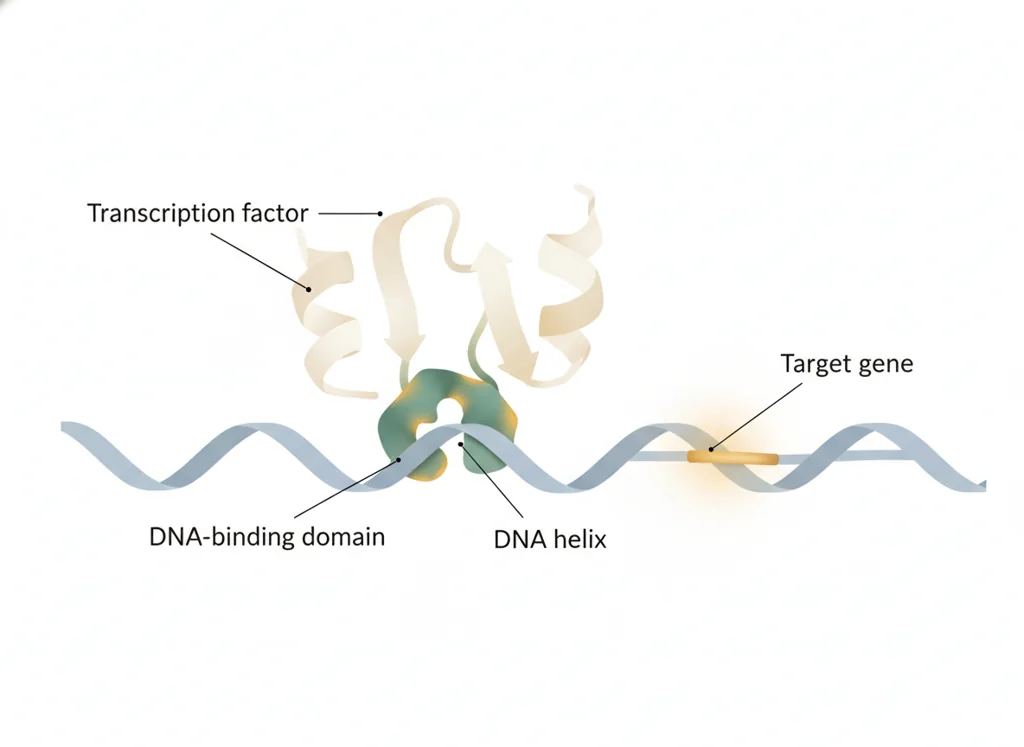
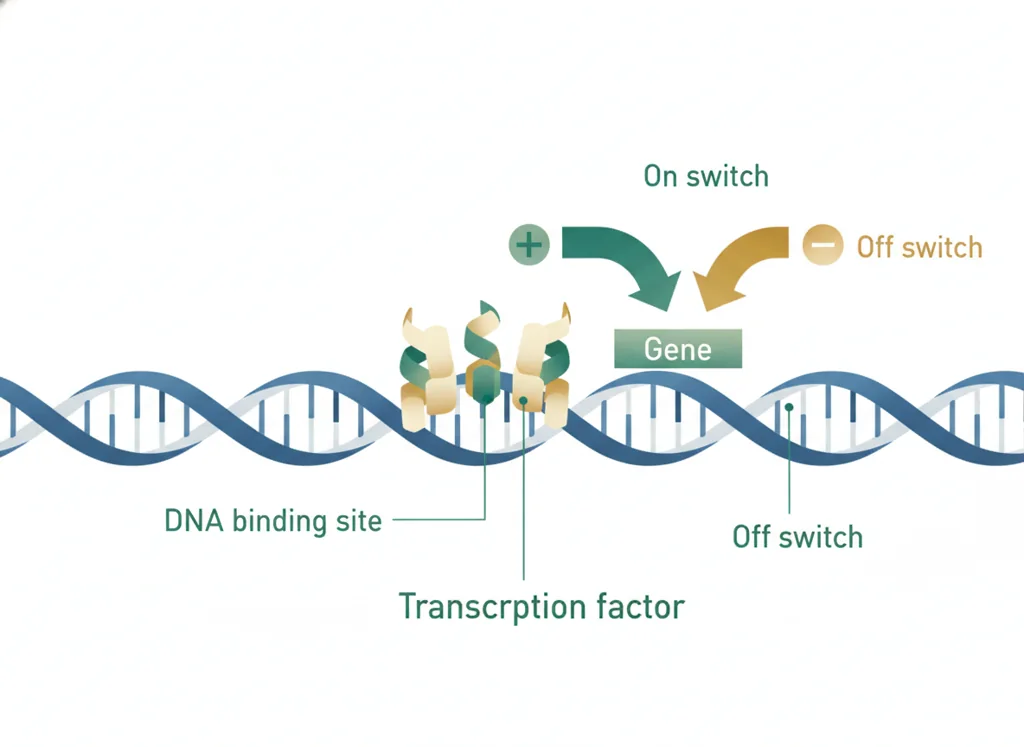
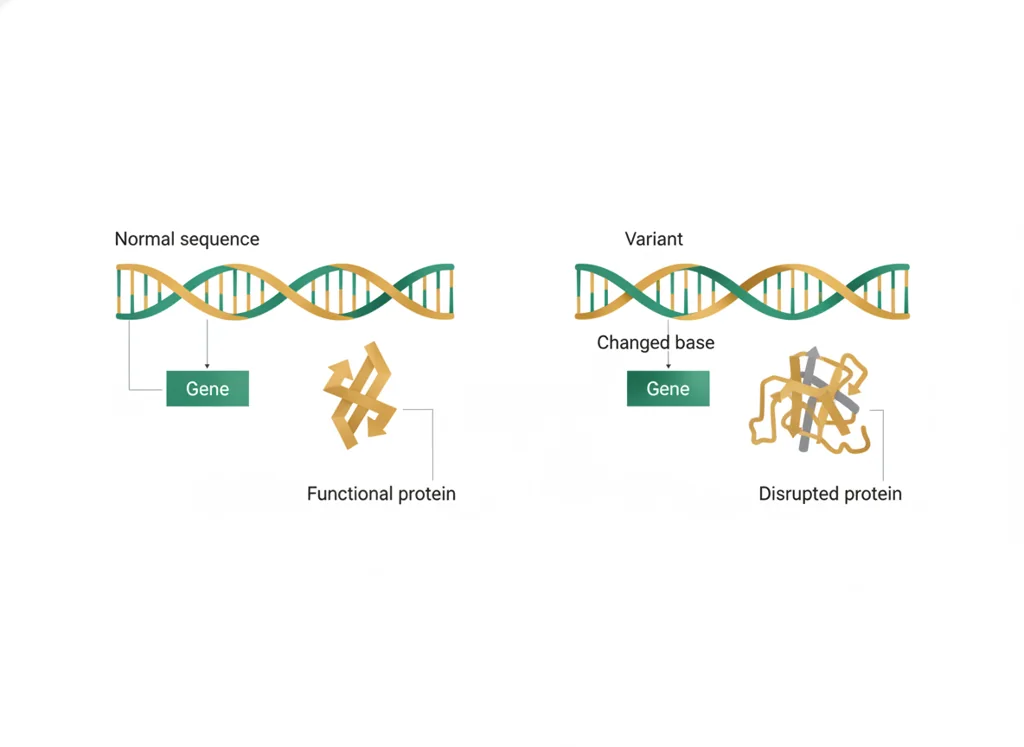
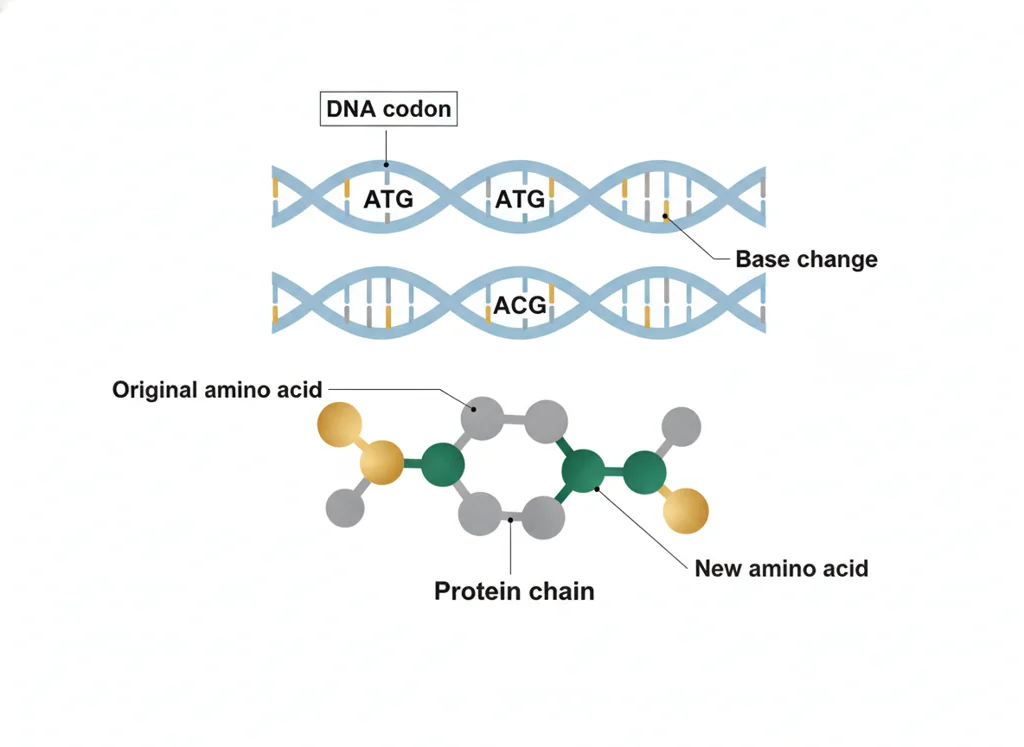
Use this model to check your own work. Match the structure and detail, but make the wording and any data your own.
Question: How would a pathogenic IRF6 variant in the DNA-binding domain change the protein's function?
- Setup: On UniProt, the DNA-binding domain of IRF6 sits near the start of the protein. AlphaFold models it as a compact, high-confidence fold of beta strands and helices that forms the surface that contacts DNA.
- Variant: I chose a pathogenic missense variant that swaps one amino acid for another inside that domain.
- Prediction: Because the changed residue sits in the part of the fold that grips DNA, the substitution likely distorts that surface. If the shape is wrong, IRF6 cannot bind its target DNA well, so it cannot switch its genes on at the right time. During the weeks when the lip and palate fuse, that lost regulation could leave the tissue without the signal it needs, which fits why this variant causes clefting.
This model shows the level of evidence and organization needed to complete: Completes the structure study: the DNA-binding domain located, a pathogenic variant placed in it, and a predicted functional effect.
- State the question and method.
- Present the observations and data with units.
- Explain the result, limitations, and next investigation.
Keep the structure. Replace the question, facts, measurements, and evidence. Then recheck units, vocabulary, and whether the conclusion goes beyond the evidence.
Also due today: Submit a labeled screenshot of the AlphaFold structure with the variant position marked.
One exam-style question on this system. Try it before you reveal the answer, then read why each choice is right or wrong.
Tap an answer to see the full explanation. Nothing is recorded or graded.
It builds this reusable test skill: Predicting a functional effect from a structural change in a domain.
- Name the concept or data pattern being tested.
- Cross out choices that violate that rule or the evidence.
- Justify the best remaining choice before checking the answer.
Go to Schoology to turn this in. Submit one PDF. Schoology attaches your name to your upload; on the page itself, write your period and code. Name the file: FirstName LastName - Assignment Title - YYYY-MM-DD.pdf. If you cannot get in, see Mr. Mendoza. Do not skip the work.
Great if you want to work with 3D structure. Pairs naturally with Mission 3 (ClinVar).
Mission 3: Surveying the Variants (ClinVar)
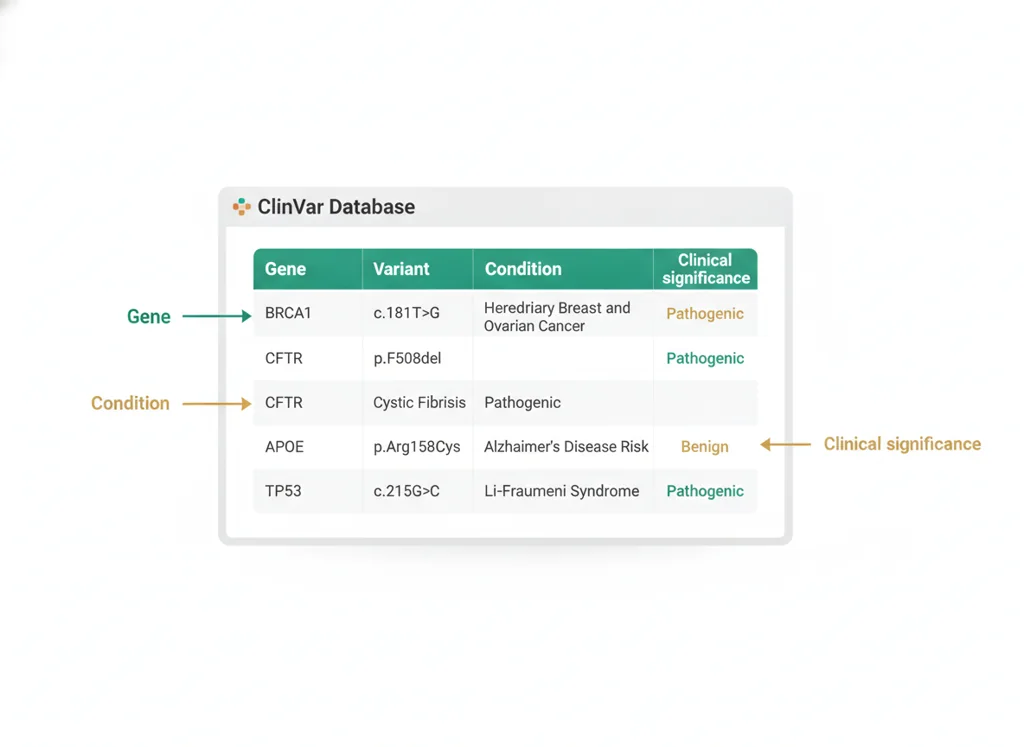
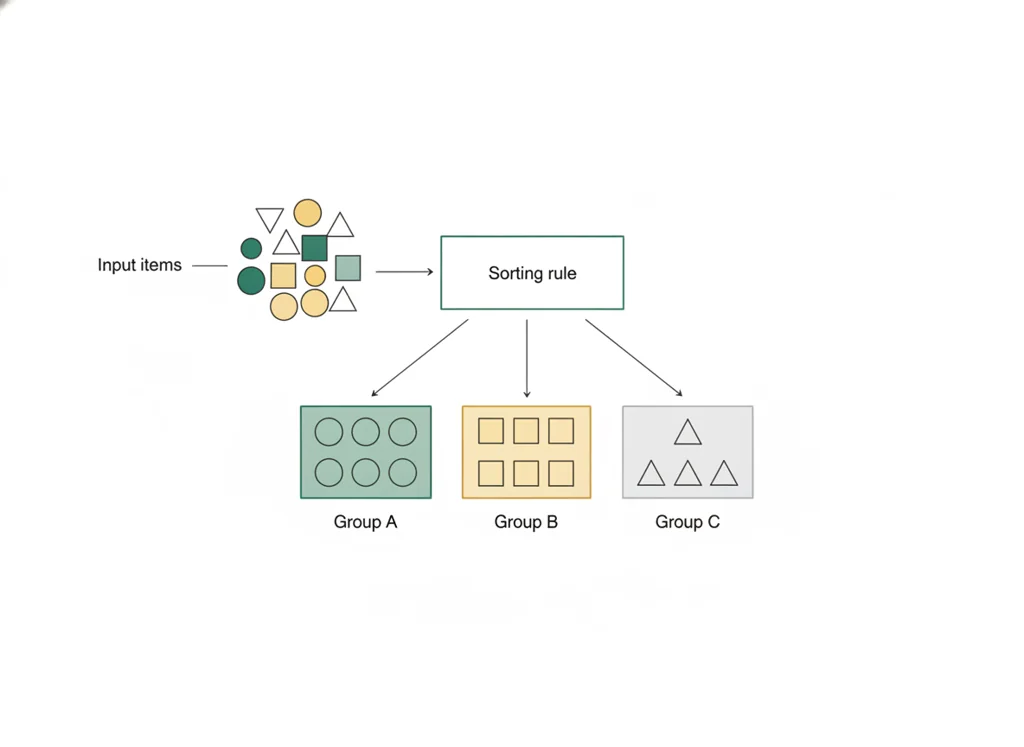
A public variant database lets you ask how a gene's reported changes are distributed: how many are known to cause disease, and how many we still do not understand.
Goal: Survey the ClinVar variants for (or another gene), tabulate pathogenic versus uncertain-significance entries, and ask a question about how the variants are distributed.
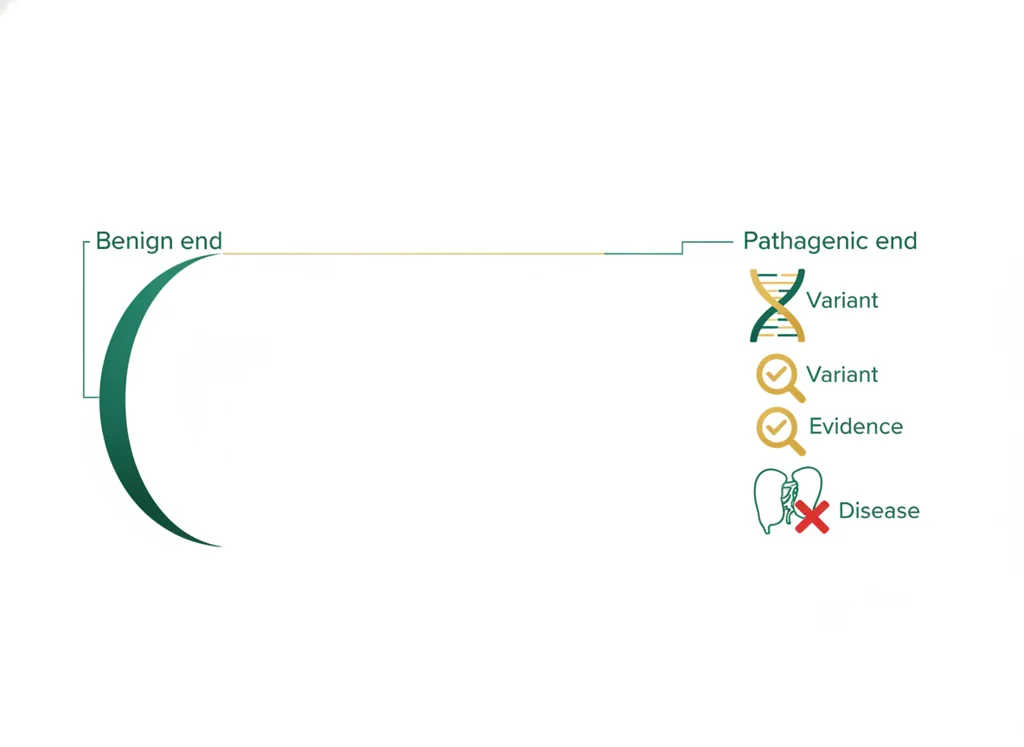
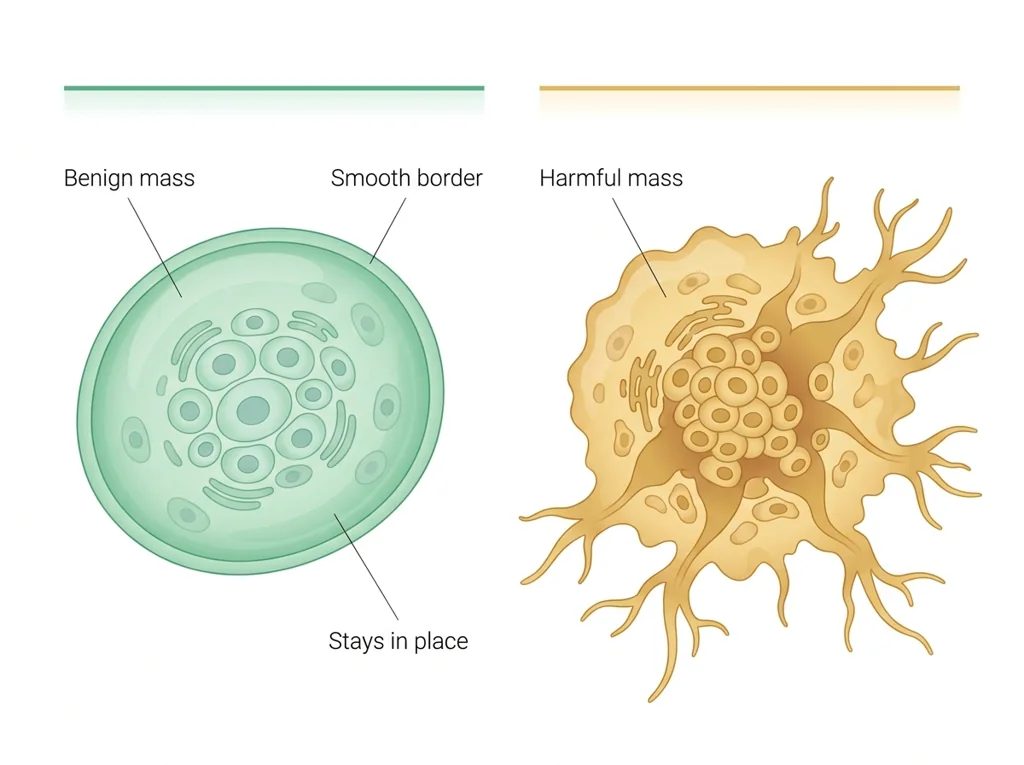
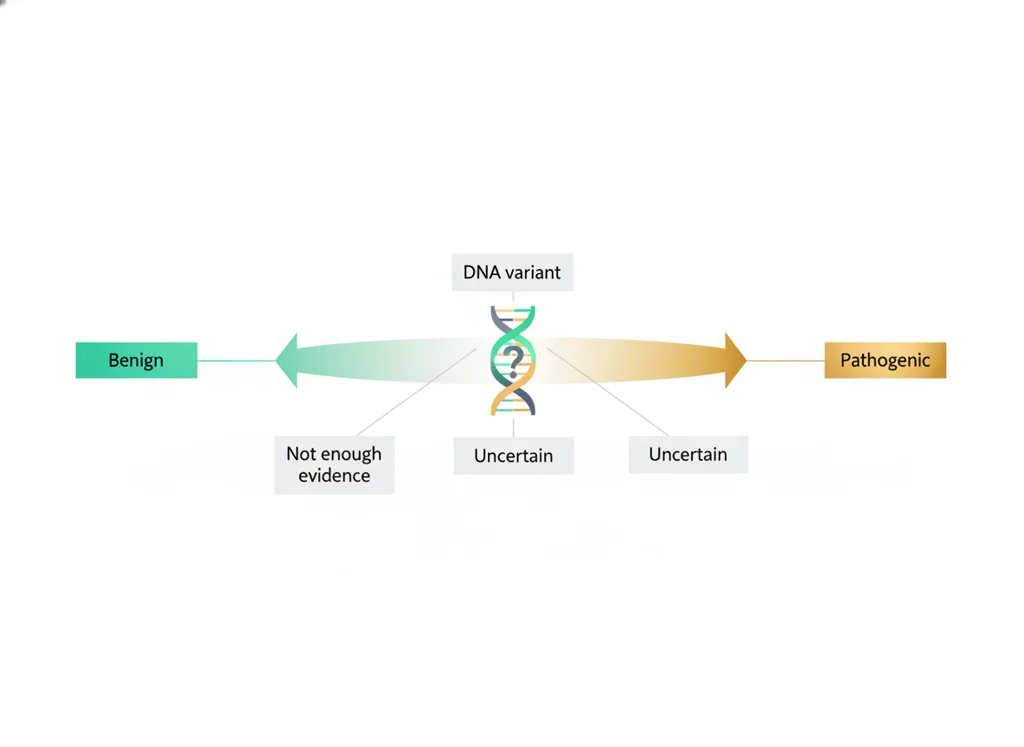
- ClinVar collects reported genetic variants and classifies them, including Pathogenic, Benign, and .
- A VUS is a real reported change that we do not yet have enough evidence to call harmful or harmless.
- Many genes have a large of VUS entries, which is an active research gap.
- A good survey question compares counts or looks for a pattern, for example 'Are pathogenic variants clustered in one region of the gene?'
- Open the ClinVar page (or search another gene such as or MSX1).
- Count the variants in each classification (Pathogenic / Likely pathogenic, Benign / Likely benign, and Uncertain significance) and put them in a table.
- Ask one question your table raises (for example, why so many are uncertain, or whether pathogenic ones cluster), and answer it as far as your data allows.
- You can navigate ClinVar and read variant classifications.
- You can tabulate pathogenic versus uncertain counts.
- You can pose and partly answer a question about variant distribution.
Use this model to check your own work. Match the structure and detail, but make the wording and any data your own.
Question: How are the reported IRF6 variants distributed, and what does the share of uncertain ones tell me?
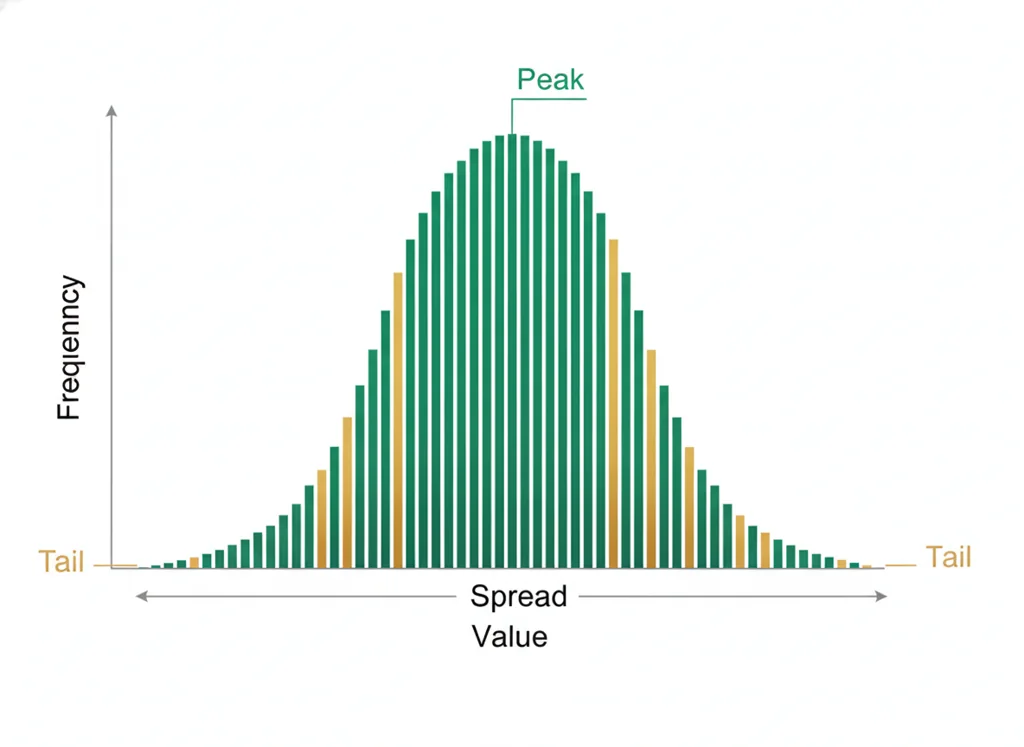
- Data: I sorted the ClinVar IRF6 entries by classification and counted each group (numbers below are illustrative of the pattern I found).
- Pattern: A large block of variants is labeled Uncertain significance, alongside a clear set of Pathogenic ones.
- My question and partial answer: Why are so many uncertain? Most likely because they are rare and have not been seen in enough patients or studied in enough lab experiments to classify. That is a real research gap: each VUS is a candidate someone could investigate. A good next step would be to check whether the pathogenic variants cluster in the DNA-binding domain, which would predict where future VUS in that region are more likely to be harmful.
| Classification | Variant count (illustrative) |
|---|---|
| Pathogenic / Likely pathogenic | a clear, sizable group |
| Benign / Likely benign | a smaller group |
| Uncertain significance (VUS) | the largest group |
This model shows the level of evidence and organization needed to complete: Completes the variant survey: a count of pathogenic versus uncertain variants and a question the distribution raises.
- Name the variables and include units.
- Enter observations without changing the raw values.
- Check labels, calculations, and patterns before interpreting the data.
Keep the structure. Replace the question, facts, measurements, and evidence. Then recheck units, vocabulary, and whether the conclusion goes beyond the evidence.
Also due today: Submit a screenshot of your ClinVar results filtered by classification.
One exam-style question on this system. Try it before you reveal the answer, then read why each choice is right or wrong.
Tap an answer to see the full explanation. Nothing is recorded or graded.
It builds this reusable test skill: Interpreting a variant of uncertain significance in a survey.
- Name the concept or data pattern being tested.
- Cross out choices that violate that rule or the evidence.
- Justify the best remaining choice before checking the answer.
Go to Schoology to turn this in. Submit one PDF. Schoology attaches your name to your upload; on the page itself, write your period and code. Name the file: FirstName LastName - Assignment Title - YYYY-MM-DD.pdf. If you cannot get in, see Mr. Mendoza. Do not skip the work.
A clean data-survey mission. Choosing a different cleft gene makes your study original.
Mission 4: Patterns in the Population (CDC Data)
Population data lets you ask whether a condition shows patterns by sex, geography, or other factors, which points to possible causes.
Goal: Use CDC prevalence data to ask a question about a pattern (such as sex or associated factors), then chart the data to support an answer.
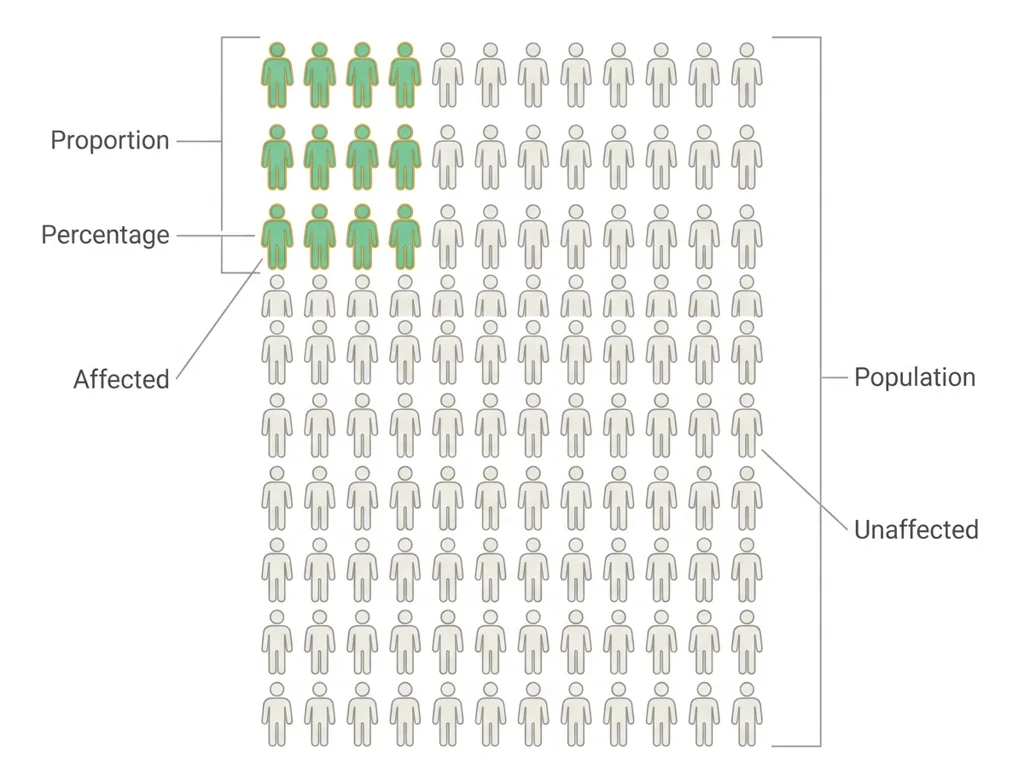
- Prevalence is how common a condition is in a population, often given as cases per number of births.
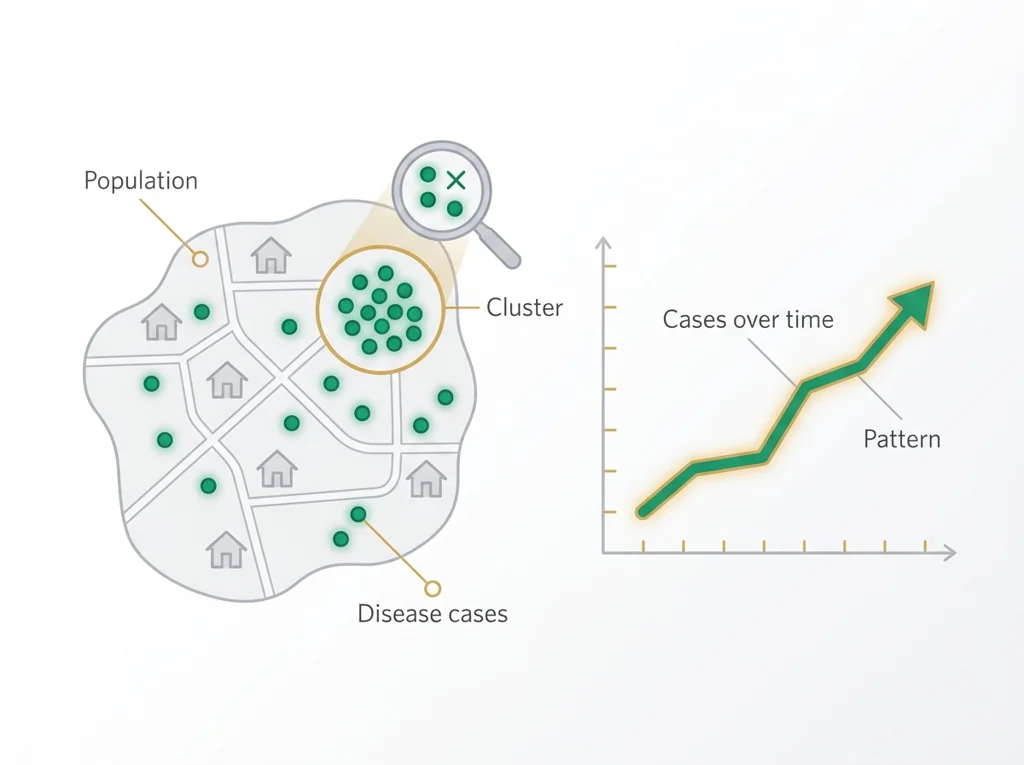
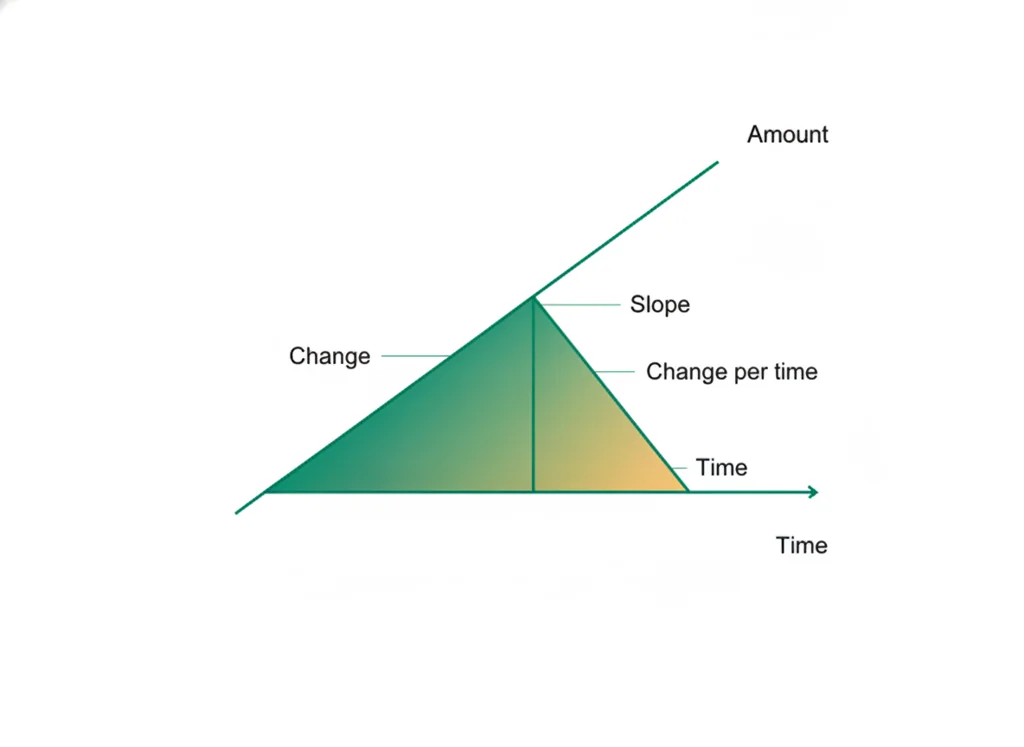
- Epidemiologists look for patterns (by sex, region, or ) that hint at causes.
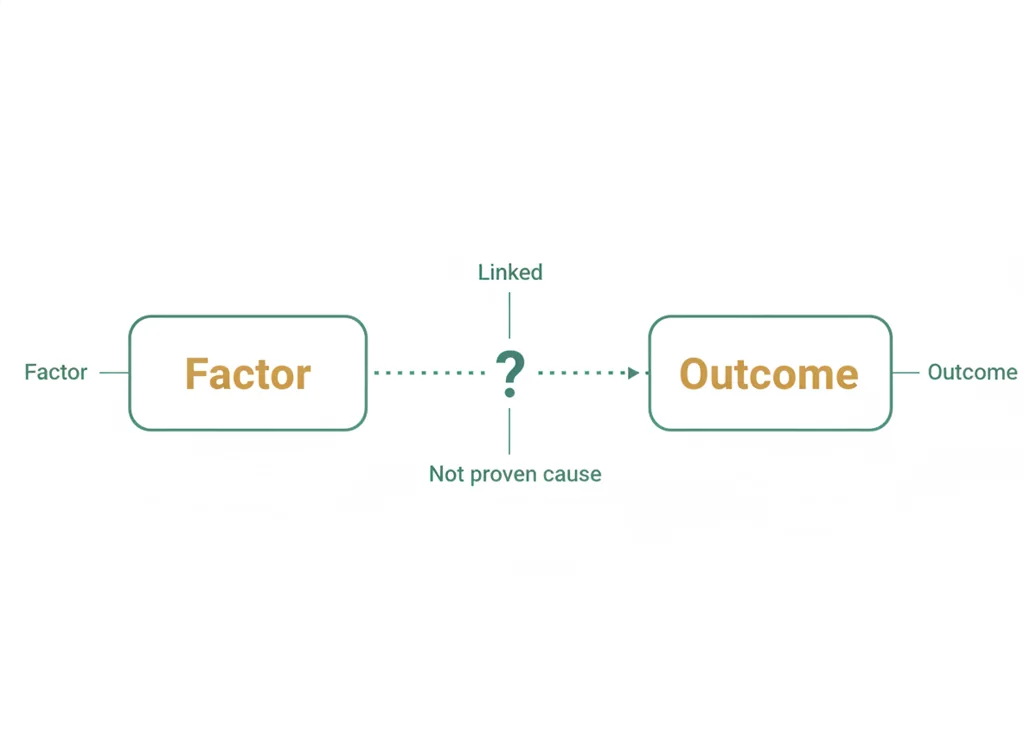
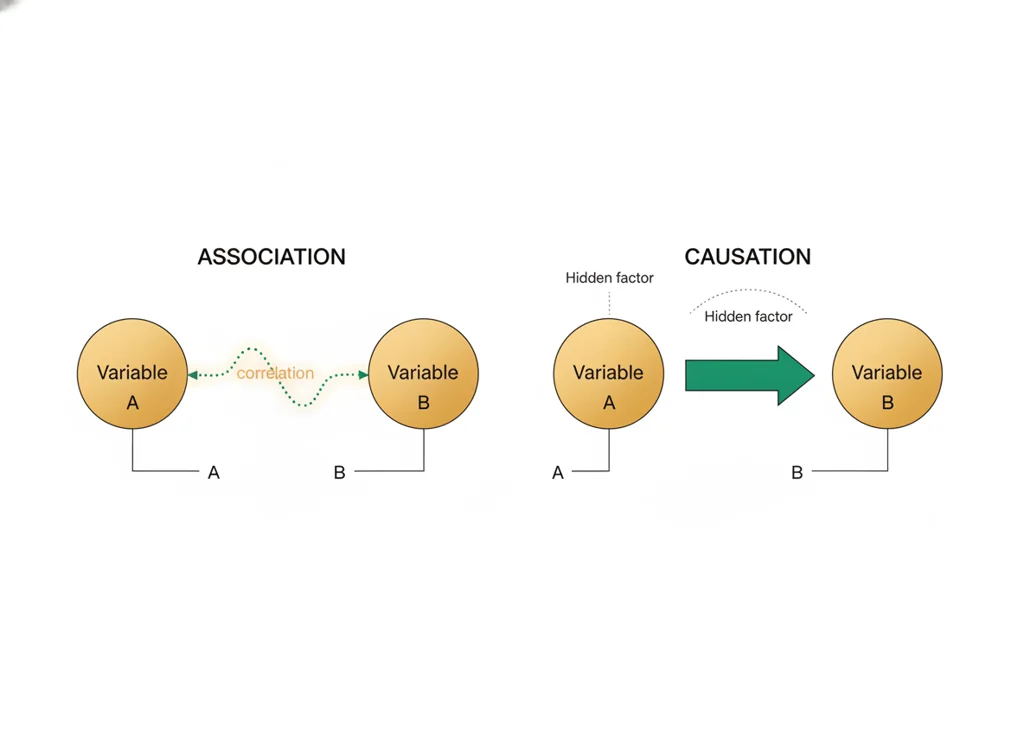
- An is something that occurs more often alongside the condition; association is not the same as proof of cause.
- A clear chart (bar or table) makes a pattern visible and is the evidence behind a claim.
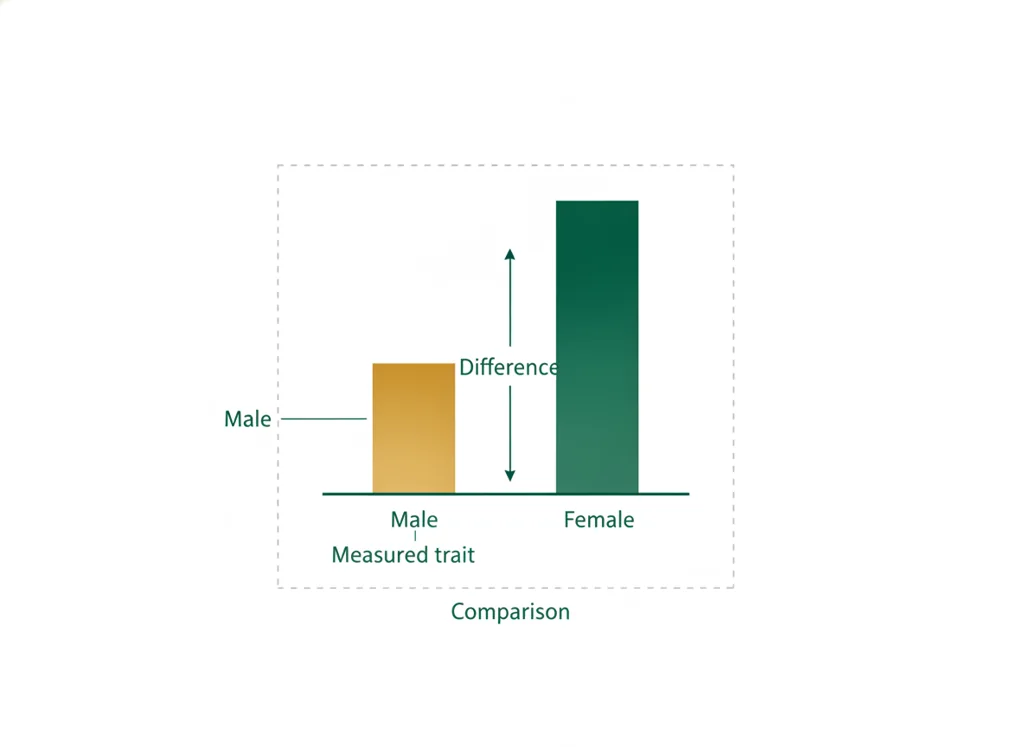
- Open the CDC lip and cleft facts page and pull at least two numbers you can compare (for example, prevalence by sex, or cleft lip with palate versus cleft palate alone).
- Pose a question about the pattern, then make a simple bar chart or table of your numbers.
- Write one claim your chart supports, and add the caution that an association is not proof of cause.
- You can read a prevalence figure from public data.
- You can build a chart that shows a pattern.
- You can state a data-backed claim and the limits of what it shows.
Use this model to check your own work. Match the structure and detail, but make the wording and any data your own.
Question: Do the CDC data show a difference in how the types of orofacial clefts occur?
- Data: From the CDC facts page I recorded the reported prevalence of cleft lip with or without cleft palate and of cleft palate alone, and I noted the page's statement that cleft lip is more common in boys.
- Chart: I made a bar chart of the two cleft types side by side so the difference is easy to see.
- Claim: The two cleft types do not occur at the same rate, and the data also describe a sex difference for cleft lip.
- Limit: These are associations. The chart shows that the pattern exists, but it does not by itself prove why; testing a cause would need the kind of gene and developmental studies in the other missions.
| Cleft type | Reported pattern from CDC |
|---|---|
| Cleft lip (with or without cleft palate) | reported more common in boys |
| Cleft palate alone | reported at a different rate than cleft lip |
This model shows the level of evidence and organization needed to complete: Completes the epidemiology study: a chart of cleft prevalence figures and a data-backed claim with its limits.
- Name the variables and include units.
- Enter observations without changing the raw values.
- Check labels, calculations, and patterns before interpreting the data.
Keep the structure. Replace the question, facts, measurements, and evidence. Then recheck units, vocabulary, and whether the conclusion goes beyond the evidence.
Also due today: Submit your chart (a clear hand-drawn or spreadsheet bar chart is fine) with your claim and limit.
One exam-style question on this system. Try it before you reveal the answer, then read why each choice is right or wrong.
Tap an answer to see the full explanation. Nothing is recorded or graded.
It builds this reusable test skill: Distinguishing association from causation in population data.
- Name the concept or data pattern being tested.
- Cross out choices that violate that rule or the evidence.
- Justify the best remaining choice before checking the answer.
Go to Schoology to turn this in. Submit one PDF. Schoology attaches your name to your upload; on the page itself, write your period and code. Name the file: FirstName LastName - Assignment Title - YYYY-MM-DD.pdf. If you cannot get in, see Mr. Mendoza. Do not skip the work.
Best fit if you like working with real numbers and charts. No coding needed.
Mission 5: When Does the Face Fuse? (Modeling)
The face is built on a schedule, so the timing of when a structure fails to fuse predicts which kind of results.
Goal: Build a model or timeline of the weeks 4 to 12 windows of facial development, then predict which window a given maps to.
- The face forms from prominences that grow toward each other and fuse during weeks 4 to 12 of development.
- The upper lip fuses earlier (around weeks 4 to 7); the fuses later (around weeks 6 to 12).
- A happens when prominences do not fuse during their window, so the timing of the failure predicts the cleft's type and location.
- A is a testable prediction tool: given a , you can read back to the window that must have been disrupted.
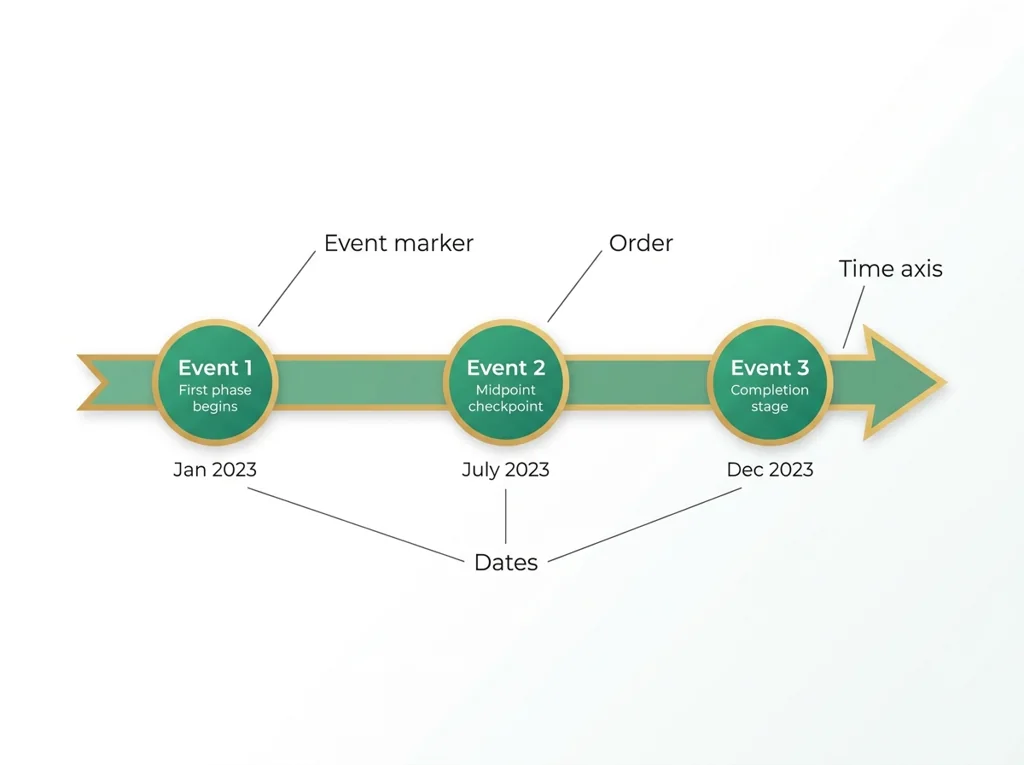
- Build a timeline (drawn or in a table) showing the lip- window and the -fusion window across weeks 4 to 12.
- Place at least two types on your timeline (for example, a cleft lip and an ) at the window each maps to.
- Given Mateo's (left lip reaching into the nose, plus an opening in the ), predict which windows were disrupted and explain your reasoning.
- You can lay out the weeks 4 to 12 windows in order.
- You can map a type to its .
- You can reason from a described back to the disrupted window.
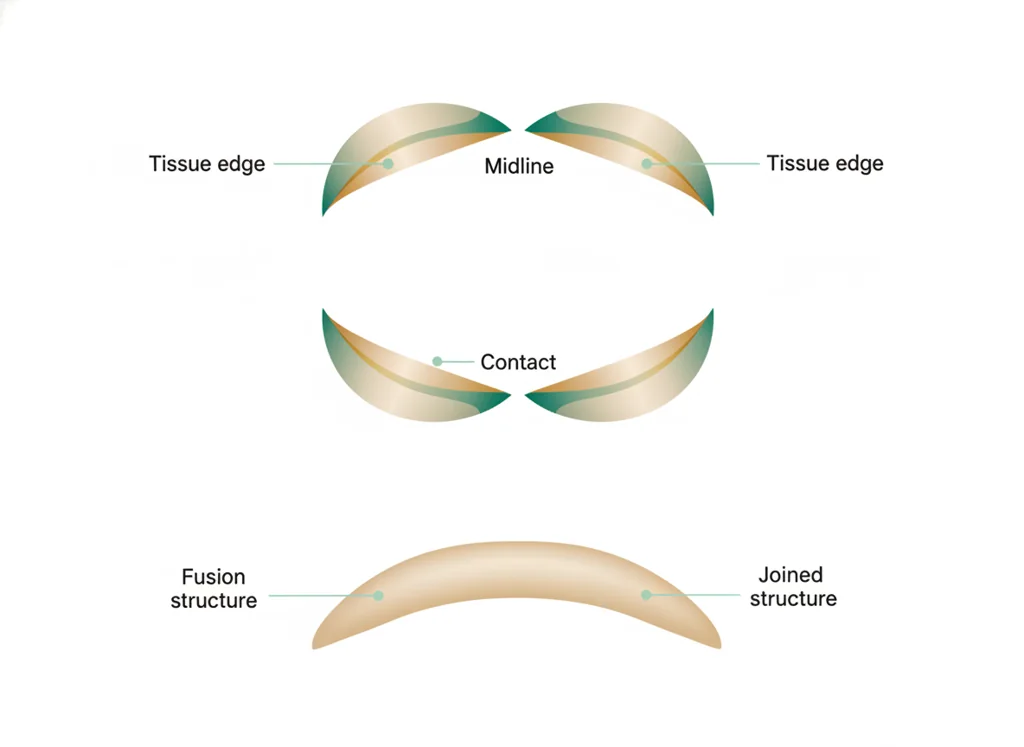
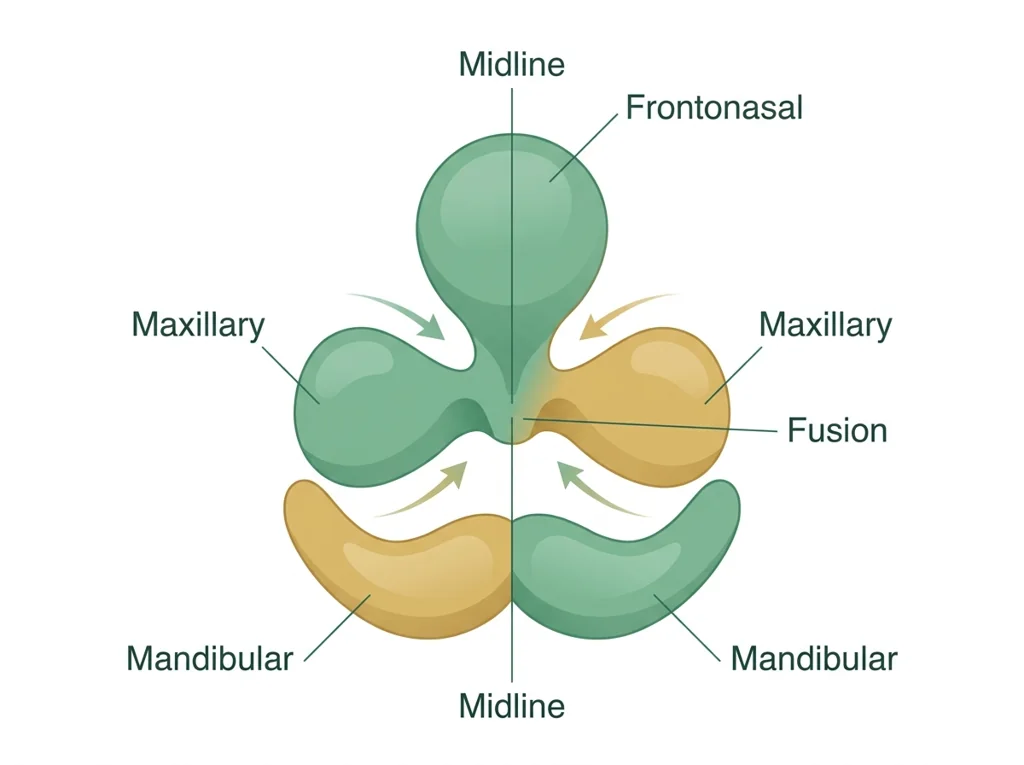
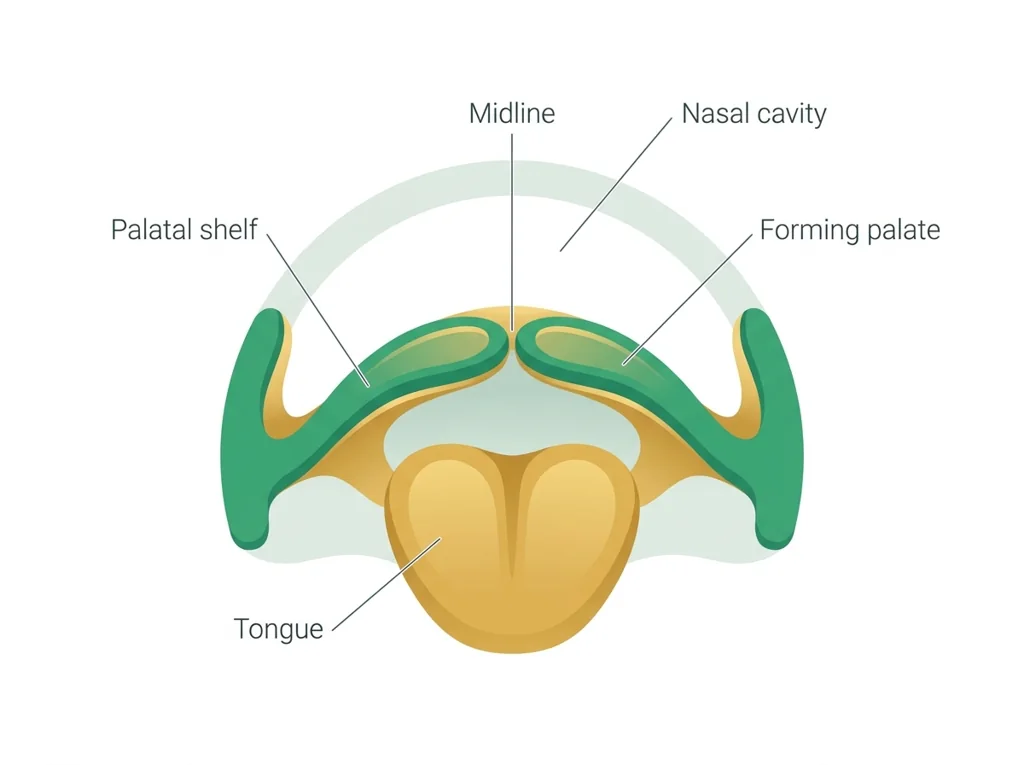
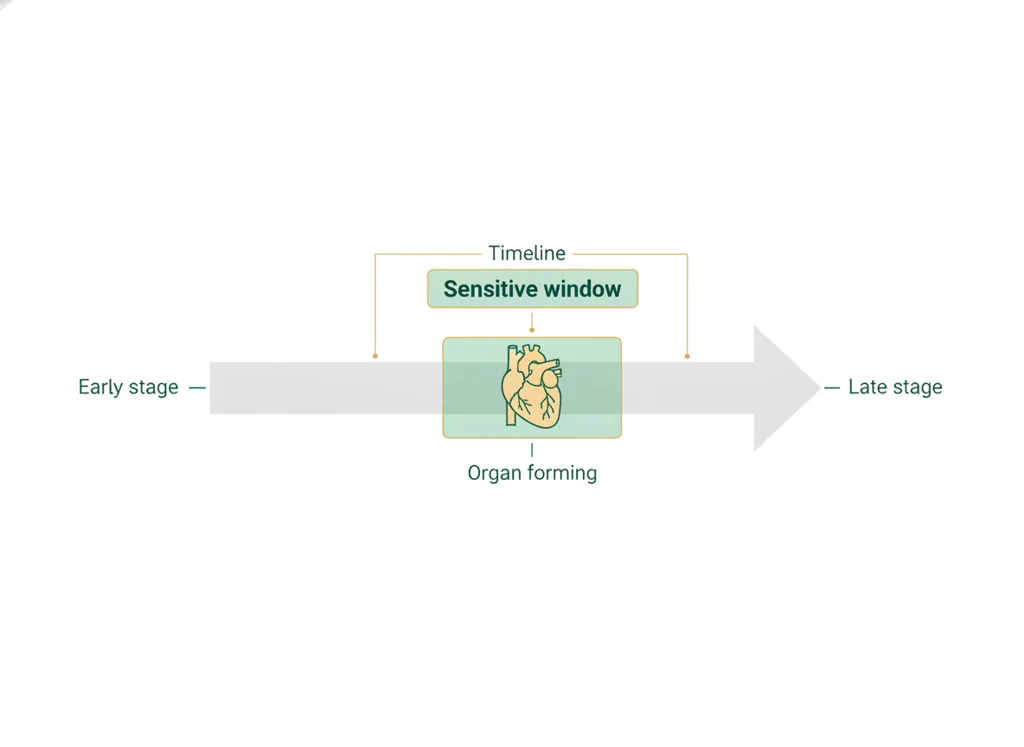
Use this model to check your own work. Match the structure and detail, but make the wording and any data your own.
Question: Which fusion windows must have been disrupted to produce Mateo's cleft?
- Model: My timeline shows lip fusion happening earlier (about weeks 4 to 7) and palate fusion later (about weeks 6 to 12).
- Mapping: A cleft lip maps to the earlier lip-fusion window; an isolated cleft palate maps to the later palate window.
- Prediction: Mateo has both a cleft lip that reaches into the nose and an opening in the palate. So my model predicts that the left-side lip prominences failed to fuse in the earlier window AND the palatal shelves failed to fuse in the later window. The lip event is on the left only, which fits a one-sided failure of the prominences on that side. This is testable: if I learned the exact timing was even earlier, I would expect the lip cleft to be more severe.
| Developmental window | Structure fusing | Cleft if it fails |
|---|---|---|
| About weeks 4 to 7 | Upper lip prominences | Cleft lip |
| About weeks 6 to 12 | Palatal shelves | Cleft palate |
| Both windows disrupted | Lip and palate | Combined cleft lip and palate (Mateo) |
This model shows the level of evidence and organization needed to complete: Completes the modeling study: a weeks 4 to 12 fusion timeline with cleft types mapped and a prediction for the case patient.
- Date and label the entry.
- Record the procedure, observation, or design decision clearly.
- End with what the evidence means and the next step.
Keep the structure. Replace the question, facts, measurements, and evidence. Then recheck units, vocabulary, and whether the conclusion goes beyond the evidence.
Also due today: Submit your drawn or built timeline with the case prediction marked on it.
One exam-style question on this system. Try it before you reveal the answer, then read why each choice is right or wrong.
Tap an answer to see the full explanation. Nothing is recorded or graded.
It builds this reusable test skill: Mapping a cleft to its developmental fusion window.
- Name the concept or data pattern being tested.
- Cross out choices that violate that rule or the evidence.
- Justify the best remaining choice before checking the answer.
Go to Schoology to turn this in. Submit one PDF. Schoology attaches your name to your upload; on the page itself, write your period and code. Name the file: FirstName LastName - Assignment Title - YYYY-MM-DD.pdf. If you cannot get in, see Mr. Mendoza. Do not skip the work.
A modeling mission with no database account needed. Strong tie back to the PBS and HBS development units.
Mission 6: Design Your Own Study (Capstone)
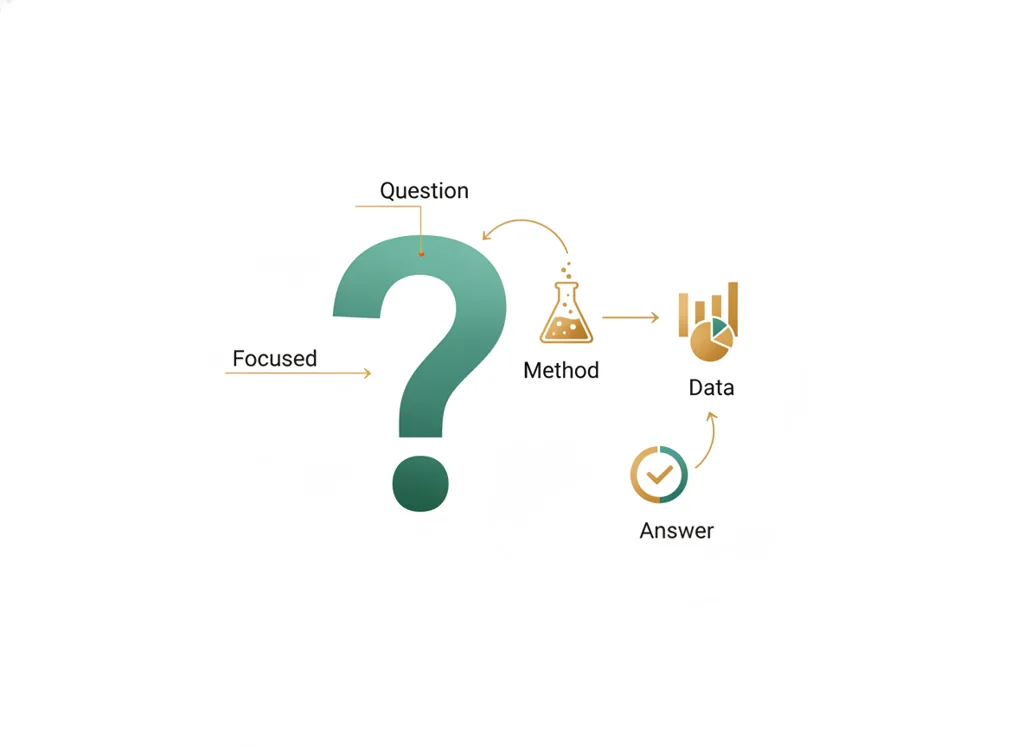
Real research starts with your own question; the skill is shaping it into a study you can actually run, with variables and controls.
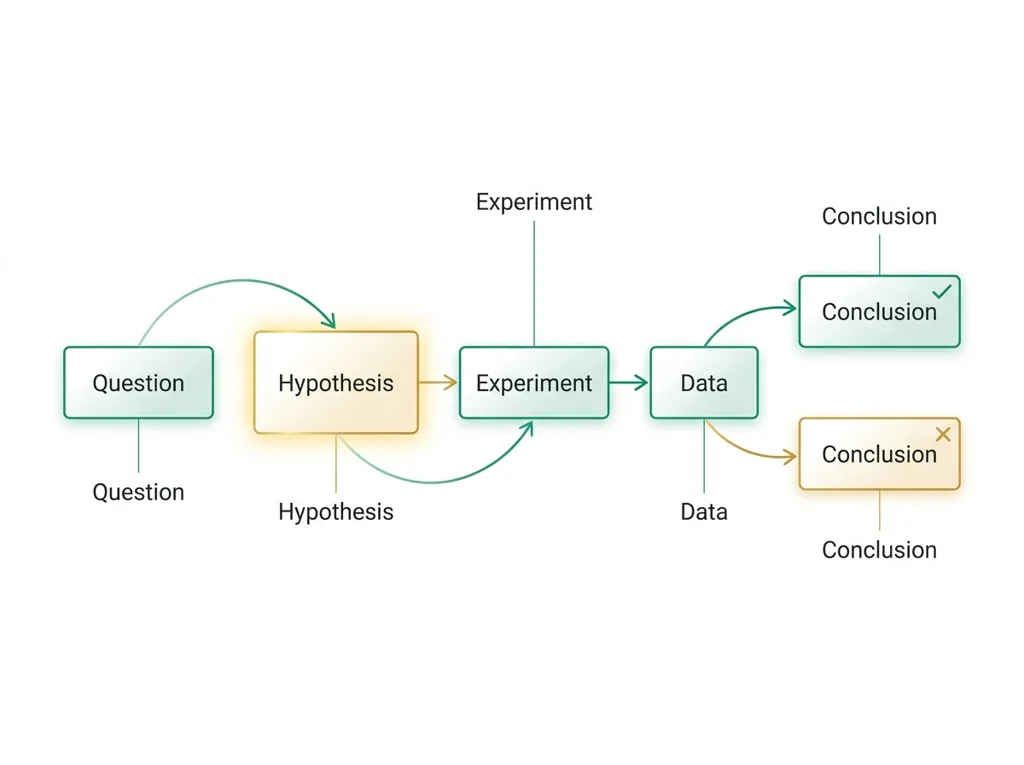
Goal: Propose an original, feasible about the craniofacial case (or a related one) and design an experiment (wet, dry, modeling, or survey) with clear variables and controls.
- A testable question is specific and answerable with data you can actually collect or pull.
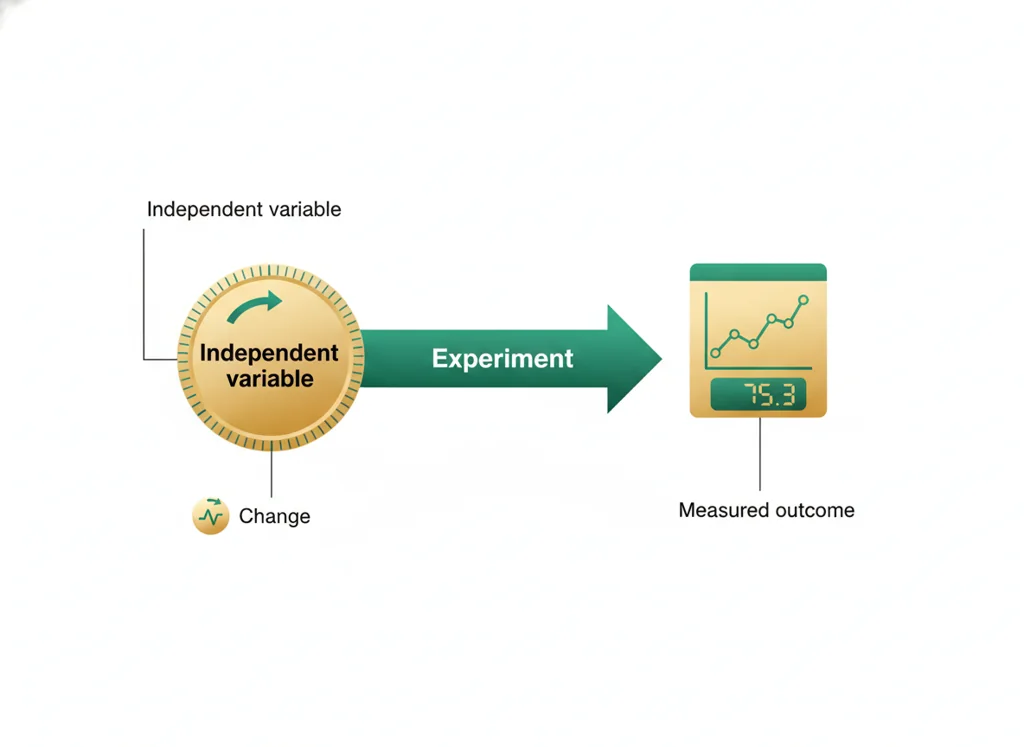
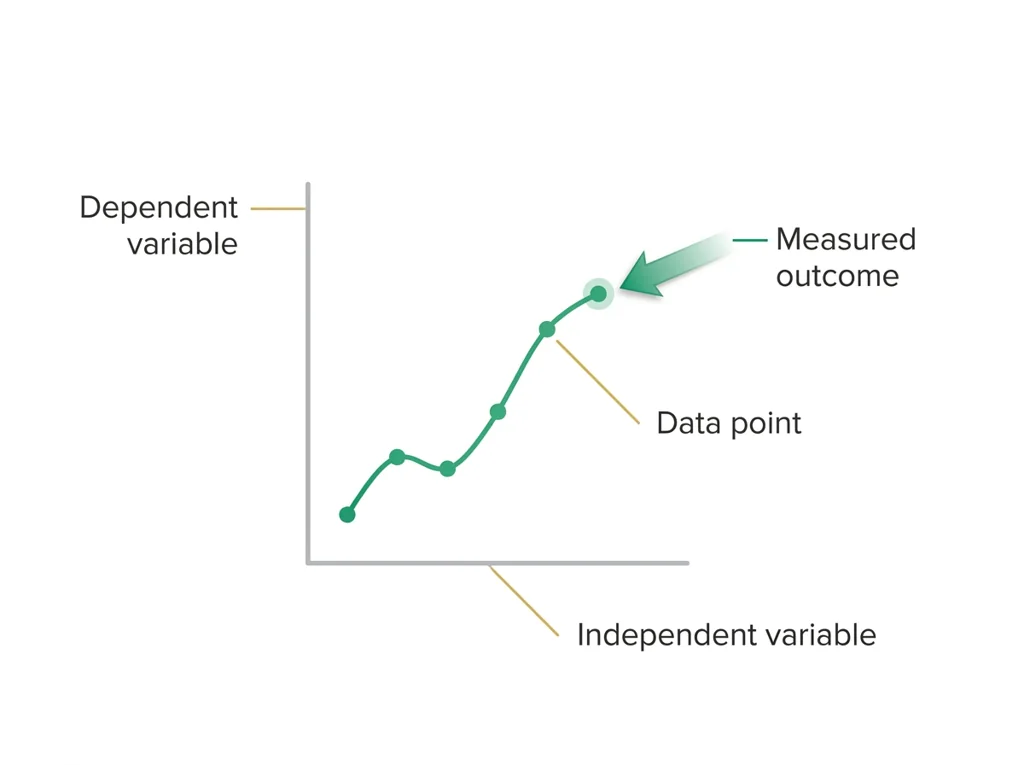
- The is what you change or compare; the is what you measure.
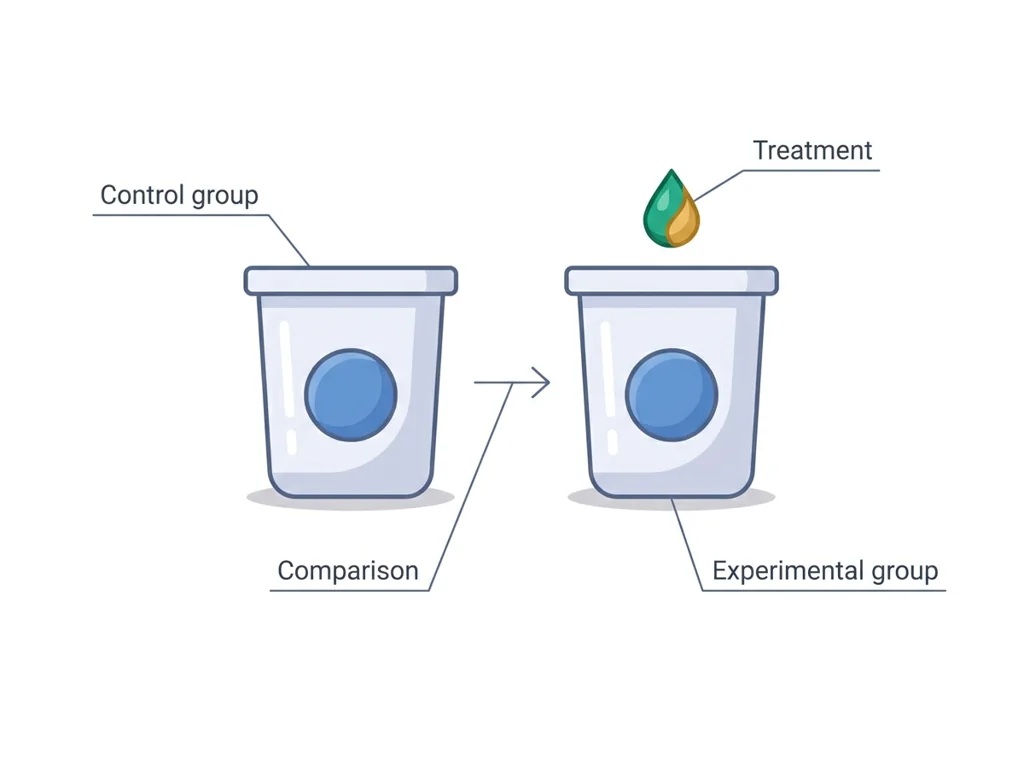
- A control or comparison group is what makes a result interpretable: it is the baseline you measure against.
- Feasible means you can do it with the tools you have (a database, a spreadsheet, a model, or a simple survey), in the time you have.
- Write one original, testable question about the case or a related craniofacial topic.
- Choose your approach (dry/computational, modeling, or survey) and name your independent and dependent variables and your control or comparison.
- Run as much of it as you can with the free tools, and present your design and any results: what you would conclude and what the limits are.
- You can write a specific, testable .
- You can name independent and dependent variables and a control or comparison.
- You can present a feasible design and reason about its limits.

Use this model to check your own work. Match the structure and detail, but make the wording and any data your own.
Question: Do pathogenic IRF6 variants cluster in the DNA-binding domain more than uncertain variants do?
- Why it is feasible: I can answer it with free tools (ClinVar for the variant list and classifications, UniProt for where the DNA-binding domain sits).
- Independent variable: classification of each variant (Pathogenic versus Uncertain significance).
- Dependent variable: whether the variant's position falls inside the DNA-binding domain.
- Control / comparison: the uncertain-significance variants act as the comparison group against the pathogenic ones, so I can see whether clustering is specific to the harmful ones.
- What I would conclude: If pathogenic variants land in the DNA-binding domain far more often than uncertain ones, that supports the idea that disrupting DNA binding is a main way IRF6 causes clefting, and it predicts that future uncertain variants in that domain deserve a closer look.
- Limit: ClinVar classifications can change as evidence grows, and my sample is only the variants reported so far.
This model shows the level of evidence and organization needed to complete: Completes the capstone: an original testable question with a feasible design, variables, and controls, plus any results.
- State the question and method.
- Present the observations and data with units.
- Explain the result, limitations, and next investigation.
Keep the structure. Replace the question, facts, measurements, and evidence. Then recheck units, vocabulary, and whether the conclusion goes beyond the evidence.
Also due today: Submit your proposal, your variable-and-control plan, and whatever results you were able to gather. This is the capstone, so make it your best work.
One exam-style question on this system. Try it before you reveal the answer, then read why each choice is right or wrong.
Tap an answer to see the full explanation. Nothing is recorded or graded.
It builds this reusable test skill: Identifying the control or comparison in a study design.
- Name the concept or data pattern being tested.
- Cross out choices that violate that rule or the evidence.
- Justify the best remaining choice before checking the answer.
Go to Schoology to turn this in. Submit one PDF. Schoology attaches your name to your upload; on the page itself, write your period and code. Name the file: FirstName LastName - Assignment Title - YYYY-MM-DD.pdf. If you cannot get in, see Mr. Mendoza. Do not skip the work.
The heart of the capstone. This is where you become the researcher, so it carries the most weight.
Pick the rubric that matches how you worked. The science bar is the same for both; the group rubric just adds a teamwork score. Each criterion is worth up to 4 points.
Each mission is scored out of 20 (five criteria, 4 points each). This is the capstone, so the goal is to show you can do real research, not just recall facts.
| Criterion | Exemplary (4) | Proficient (3) | Developing (2) | Beginning (1) |
|---|---|---|---|---|
| Science accuracy | All of the science is correct and precise, with no errors. | The science is correct, with at most one small slip. | Several ideas are partly correct, but there are some clear errors. | Major errors, or key ideas are missing. |
| Completeness | Every required part is present and thorough (data or figure AND the write-up). | All parts are present; one is a little thin. | A required part is missing or very thin. | Most required parts are missing. |
| Research design (question, variables, controls) | A clear, testable question with the variables named and a sound control or comparison. | A testable question with variables named; the control or comparison is reasonable. | The question is vague, or a variable or control is missing. | No testable question, or the design has no controls and cannot be interpreted. |
| Structure (uses the example) | Clearly follows the worked example's structure and puts it in your own words. | Follows the structure of the worked example. | Loosely follows the structure. | Does not follow the structure. |
| Clarity and vocabulary | Clear and well organized; key terms are used correctly throughout. | Clear; key terms are mostly used correctly. | Some parts are unclear, or some vocabulary is misused. | Hard to follow; key vocabulary is missing or incorrect. |
Each mission is scored out of 24 (six criteria, 4 points each). Submit one shared product plus a one-line contribution note from each member.
| Criterion | Exemplary (4) | Proficient (3) | Developing (2) | Beginning (1) |
|---|---|---|---|---|
| Science accuracy | All of the science is correct and precise, with no errors. | The science is correct, with at most one small slip. | Several ideas are partly correct, but there are some clear errors. | Major errors, or key ideas are missing. |
| Completeness | Every required part is present and thorough (data or figure AND the write-up). | All parts are present; one is a little thin. | A required part is missing or very thin. | Most required parts are missing. |
| Research design (question, variables, controls) | A clear, testable question with the variables named and a sound control or comparison. | A testable question with variables named; the control or comparison is reasonable. | The question is vague, or a variable or control is missing. | No testable question, or the design has no controls and cannot be interpreted. |
| Structure (uses the example) | Clearly follows the worked example's structure and puts it in your own words. | Follows the structure of the worked example. | Loosely follows the structure. | Does not follow the structure. |
| Clarity and vocabulary | Clear and well organized; key terms are used correctly throughout. | Clear; key terms are mostly used correctly. | Some parts are unclear, or some vocabulary is misused. | Hard to follow; key vocabulary is missing or incorrect. |
| Collaboration and shared contribution | Clear evidence every member contributed; roles are named and the product reads as one cohesive piece. | All members contributed and the product is cohesive. | Contribution was uneven, or the product feels stitched together from separate parts. | One person did most of the work, or the contribution notes are missing. |